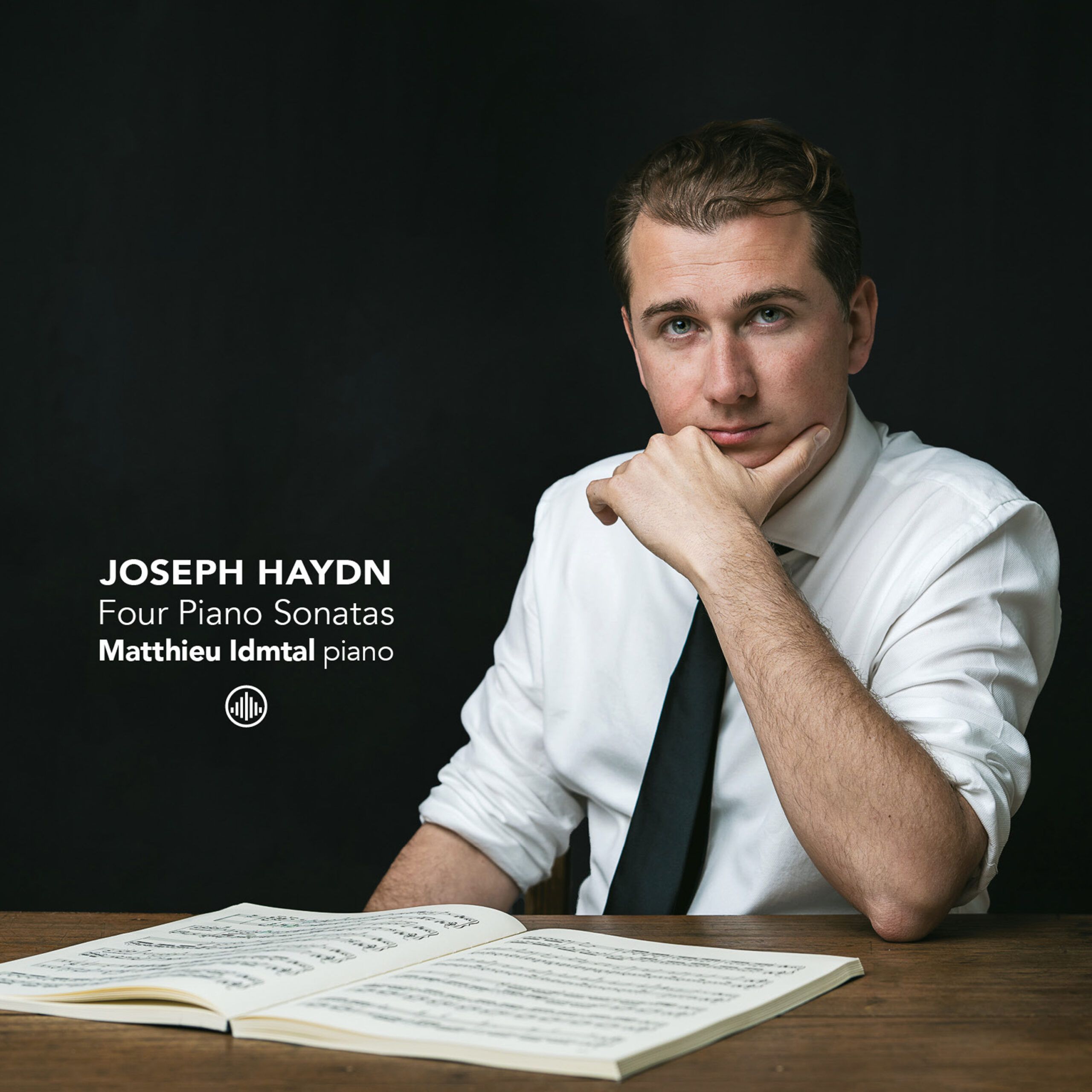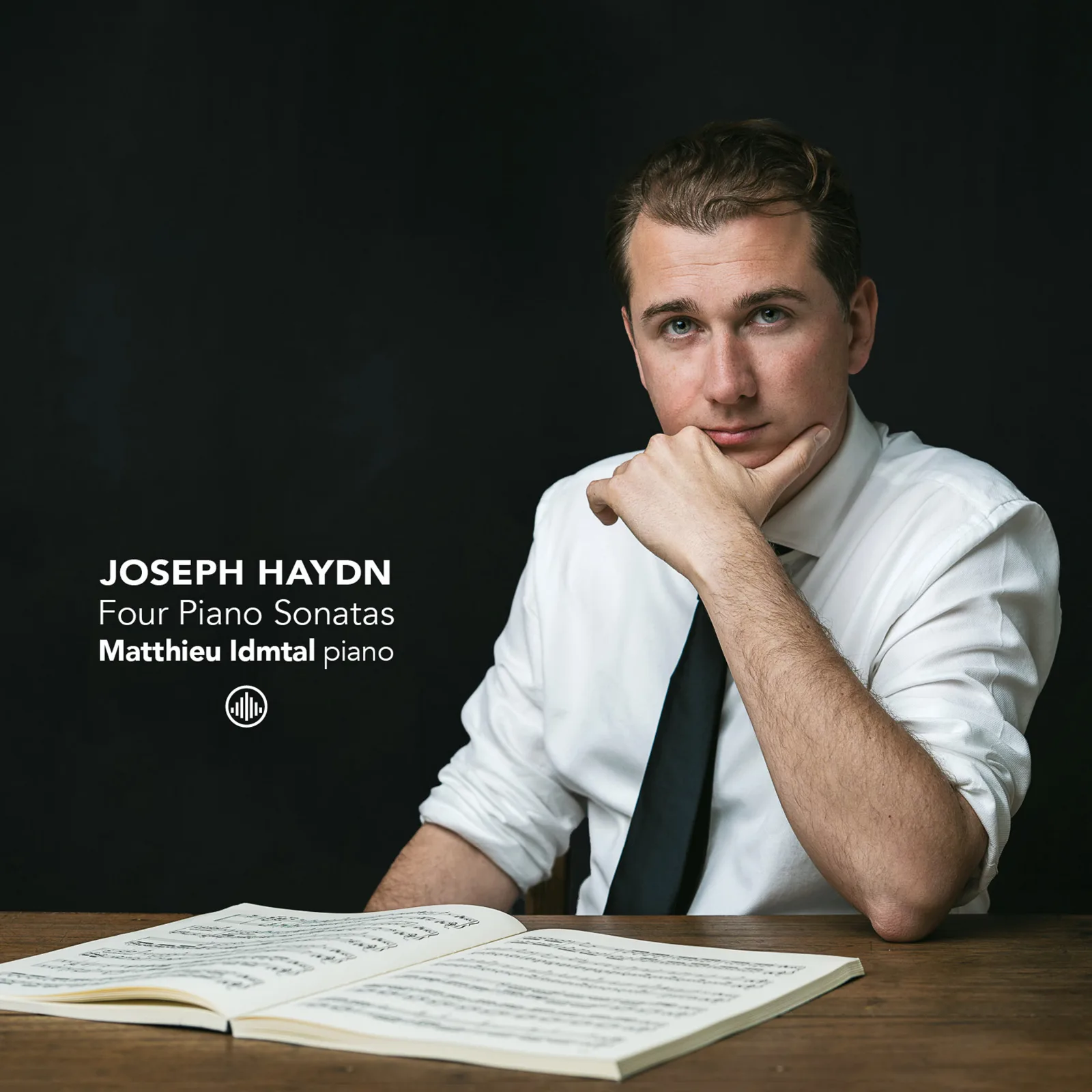
The piano sonatas of Joseph Haydn (1732-1809) are among the most inventive, surprising and versatile works in the classical repertoire, yet are still relatively rarely performed. With Four Piano Sonatas, pianist Matthieu Idmtal demonstrates how timeless, warm and moving this music still sounds today.
Those familiar with the name Matthieu Idmtal would sooner expect Chopin, Schumann or Scriabin than Haydn. The Belgian pianist has so far primarily established himself as an interpreter of (post-)Romantic repertoire. The fact that he is now coming out with an album entirely devoted to Haydn is therefore a surprise – but a very successful one.
According to the pianist himself, the recording arose from a difficult period in which he unexpectedly found solace in his instrument, and Haydn's sonatas presented themselves naturally. The inventiveness, playfulness and human warmth of this music made a deep impression and inspired him to capture four carefully selected sonatas. As he puts it himself: "As a musician you choose your repertoire carefully, but at least as often it feels as though the music chooses you."
This background is palpable in the result: this is not a dry, academic Haydn performance, but a reading full of warmth, wonder and joy of playing.
Four Faces
The choice is far from obvious. In addition to the well-known, virtuosic Es-flat major sonata Hob. XVI:49 – born out of Haydn's correspondence with Maria Anna von Genzinger, who at the time complained about the awkward hand crossings in the Adagio – and the late C-major sonata Hob. XVI:50 from the London years, Idmtal also chose two less frequently performed works: the early A-major sonata Hob. XVI:12, related to Scarlatti, and the B-minor sonata Hob. XVI:32, one of the few minor-key sonatas in Haydn's oeuvre. This spread across early and late works, major and minor keys, is precisely what makes the album interesting: it shows how broad Haydn's idiom actually is: from artless charm to almost Beethovenian tension. Idmtal does not play Haydn as a warm-up to Mozart, but as a composer with his own distinctive, capricious logic.
In the A-major sonata, the opening Andante sounds lyrical, slightly melancholic and songful in character. The minuet is brought out with restraint and playfulness, while the Trio stands out for its refined sense of nuance and detail. The finale, finally, flows effortlessly, playful in character but with clear, thoughtful nuancing that gives each phrase impact.
In the Es-flat major sonata, Idmtal manages to keep the virtuosic passages and the famous, sensitive Adagio cantabile nicely in balance. It may sound clichéd, but he really gives this movement room to breathe: he quietens down, takes a moment as if pondering a question before answering, which allows the lyricism to shine – precisely the combination that Haydn himself recommended to Genzinger at the time. Idmtal also poignantly lets through the melancholy that lies in this section; towards the end he accelerates in a way that deepens this wistful mood and strikes the listener right in the heart.
In contrast, the opening Allegro is brought with affection and depth and builds steadily. Well-judged accelerations and retardations, alternated with moments of stillness and clear pauses, give the music time to speak – something that is also noticeable throughout the album. After the slow movement, Haydn like no other transforms melancholy into joie de vivre, with an ingenious minuet in which Idmtal once again strikes exactly the right note.
The dark, unpredictable B-minor sonata forms the emotional focal point of the record and provides an ideal counterbalance after the two preceding sonatas. Idmtal sharply contrasts the restless opening passages of the Allegro moderato with what at first sight seem to be moments of great intimacy in the following, seemingly peaceful Minuet. But do not be fooled: here too an underlying tension remains present, which Idmtal gradually builds up towards an intensity reminiscent of Beethoven. He carries this line through to the finale, which – carefully considered, but no less compelling – sounds menacing and culminates in him delivering a surprisingly harsh, turbulent final chord.
In the final C-major sonata Hob. XVI:50, Haydn's humour comes particularly into play: the somewhat hesitant opening, the idiosyncratic pedal indications in the development, and an exuberant, colourful finale are delivered by Idmtal with audible pleasure – and technical suppleness. This sonata ensures that you do not remain mired in a minor mood after the previous sonata, but listen to the end of this CD with a smile on your face.
The first movement is full of humour, which Idmtal clearly understands: never over-accentuated, but applied with a light touch, with much feeling for timing. The second movement, a particularly intimate Adagio, is given a soft glow and is brought with much love and a refined touch. The third and final movement sounds playful and light, again with small retardations that give the whole thing just that little bit of spice – beautifully measured, right to the last note.
Balm for the Soul
The recording, made at the Westvest90 Studio in Schiedam – renowned for its exceptional acoustics and warm, natural sound – brings both the intimacy and theatrical energy of Haydn's music convincingly to life, with ample space for the dynamic nuances these sonatas demand. The accompanying booklet, with extensive commentary by Idmtal himself, reads smoothly and provides nice insight into why precisely these four sonatas found their way onto this CD. His poetic interpretations reveal how current this music still sounds, and underscore the timeless humanity that makes Haydn so special. The pianist himself sums up his ambition with this album aptly: "My wish for this album is simple: that it may offer the listener what it has offered me, a balm for the soul, an antidote to melancholy. Few composers know how to combine so much warmth, humor and nobility as Haydn."
That ambition is amply fulfilled. This is a thoughtfully programmed Haydn album from a pianist you wouldn't immediately associate with this music, and that makes the result all the more convincing. Idmtal proves that Haydn's sonatas need not take a back seat to those of Mozart or Beethoven in terms of originality and emotional depth, and immediately provides a fine plea for it: this music deserves a more permanent place on the concert stage. Anyone who still dismisses Haydn as polite and predictable will find the opposite presented with this recording.
A gem to treasure, for lovers of Haydn, of classical piano sonatas in general, and of pianists who dare to look beyond the obvious repertoire.