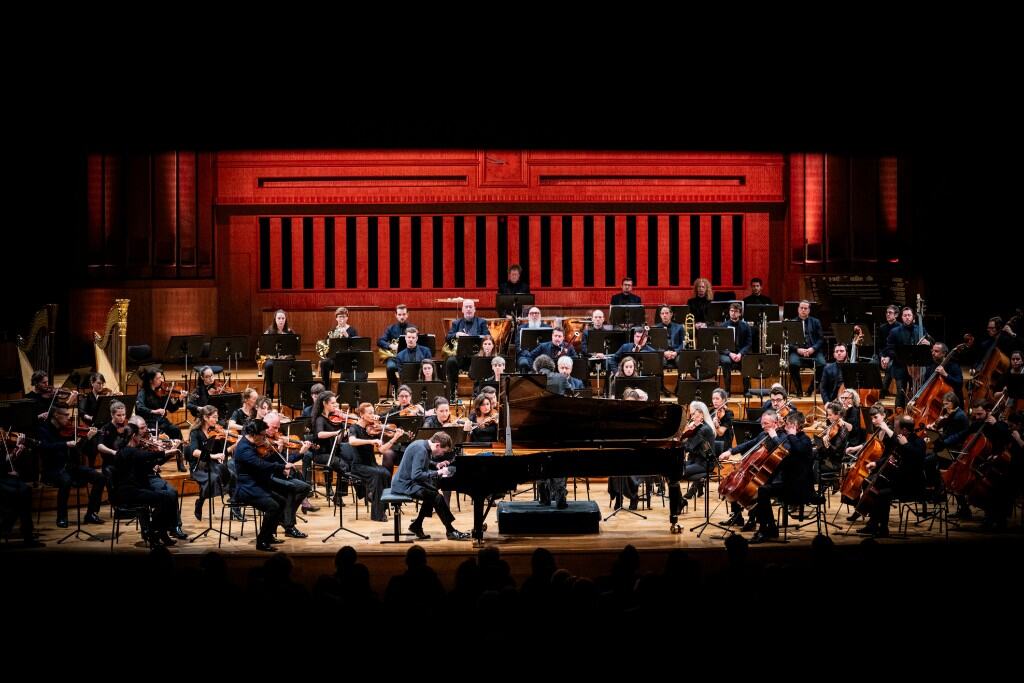
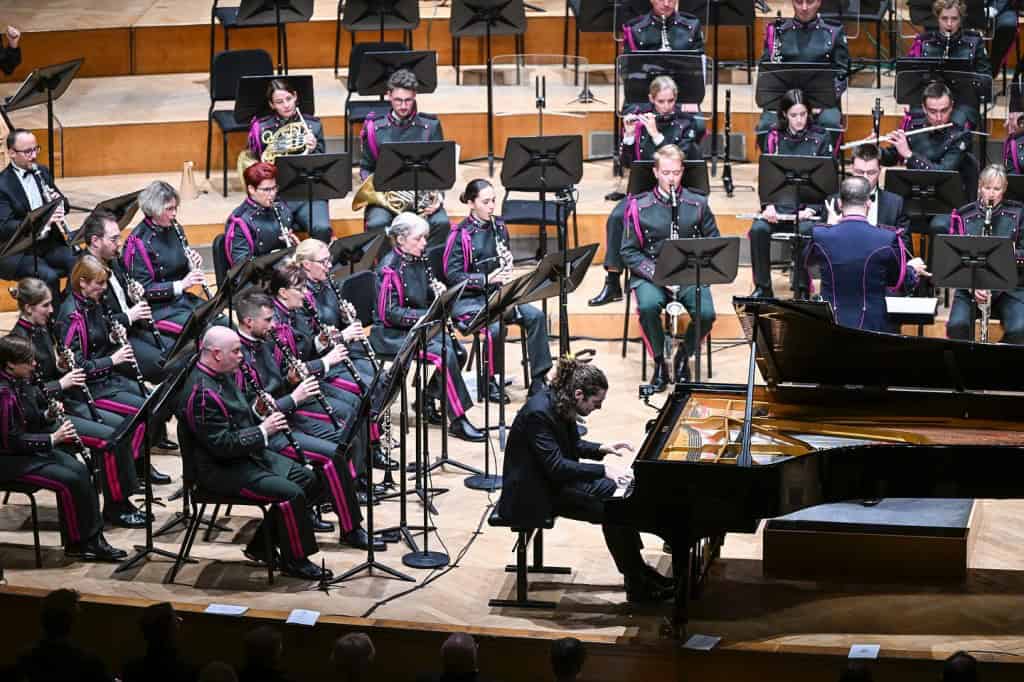
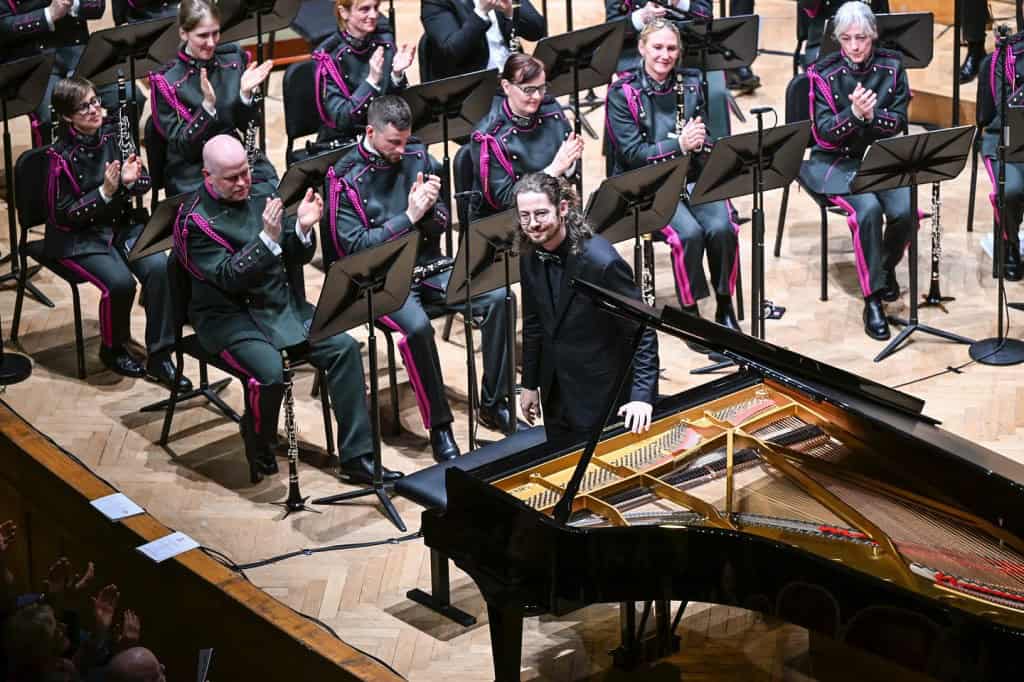
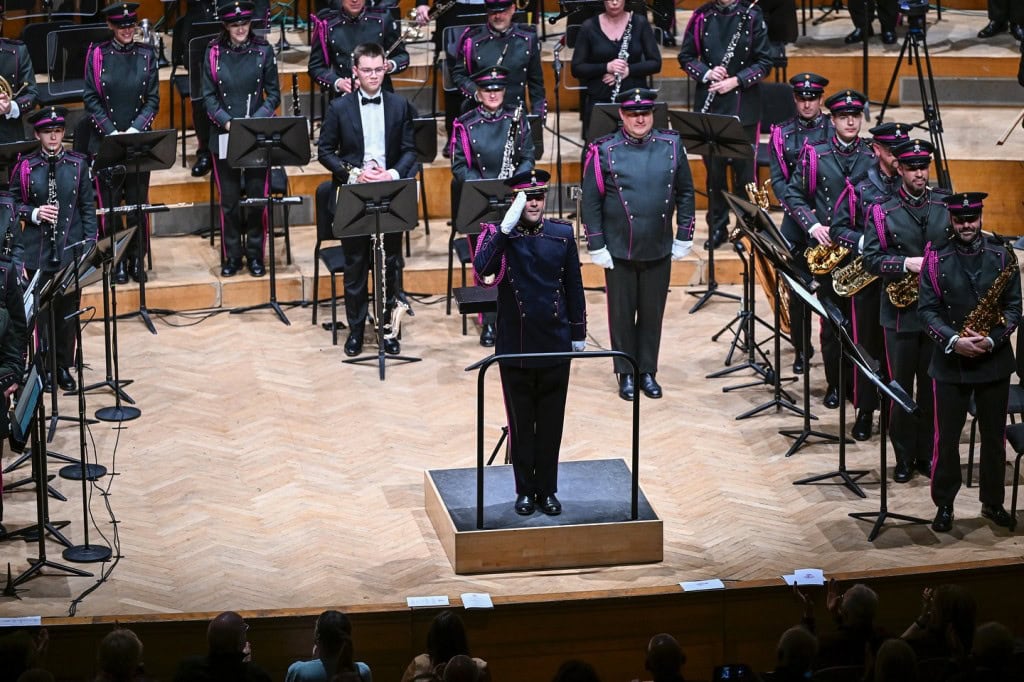
The Queen Elisabeth Competition, 88 years a success story, a symbolic name change not to be overlooked. No two without three. The third success story was the gala concert at BOZAR with which Koninklijke Muziekkapel van de Gidsen under the baton of Yves Segers traditionally celebrated the king's nameday, together with pianist Valère Burnon, Third Prize in the recent Queen Elisabeth Competition.
Now no Rach 3 or Tsjaikovsky 1! But Maurice Ravel's Piano Concerto, who would have turned 150 this year. Reason enough to give the entire concert a French perfume. Klara presenter Katelijne Boon set the tone in her bright red dress with matching 'trucs et plumes'. The program was indeed a roll of honor of French Impressionism, with Ravel at its center. It led from Chabrier, idol and spiritual teacher of Ravel, via Fauré, teacher and guiding principle of Ravel, to the star of the evening and one of the sources of inspiration in the long history of De Gidsen, Maurice Ravel.
'Esprit français'
Chabrier was not only captivated by Ravel, but also by Wagner and Adolphe Sax. And there was the Overture to the Opera 'Gwendoline' created at De Munt as convincing proof of this. Nothing better than the color palette of De Gidsen to express with epic expression and intense lyricism the heroic but tragic love of a Danish king for the Saxon princess Gwendoline. The elegant Sicilienne, which Fauré wrote at the request of his teacher Camille Saint-Saëns, led to the 'pièce de resistance', Ravel's Piano Concerto in G.
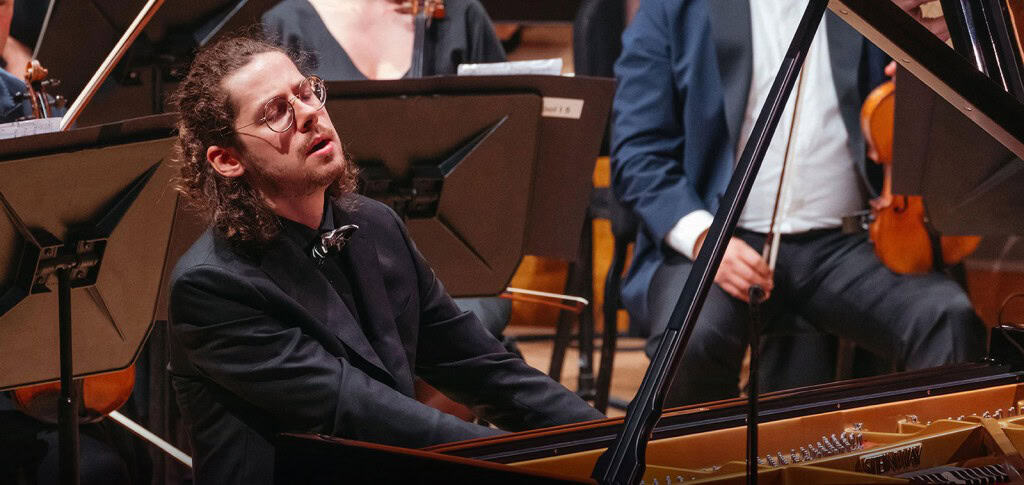
He originally planned to name this sparkling work 'Divertissement'. And that vision came closest to the interpretation Valère Burnon gave it. No showiness, no percussion stunts for the piano. Burnon's innate passion for music, his continuous search for lyricism and expression, his deep connection with the violin and with the chamber music genre transformed the opening Allegramente into a virtuosic and at the same time poetic prelude to the sublime middle section and to a devilish Presto finale. Glissandi, trills, syncopation, repeated attacks, jazzy effects, it was all there. But also delightful legatos, striking contrasts and that indefinable 'esprit français'.
Valère Burnon is a worthy laureate of the Competition. It was obvious from an early age. Because when, as an eight-year-old, he saw Anna Vinnitskaja win first prize, he knew it: "One day I will participate in the Queen Elisabeth Competition". Eighteen years, five Conservatories (Huy, Ciney, Liège, Cologne, Imola), three years as artist-in-residence at the Queen Elisabeth Music Chapel in Waterloo, countless Masterclasses, a wealth of performances, two CDs with strong French leanings, determined work, a semifinal with Mozart KV 271 and Prokofiev Sonata 7 and a Final with Rachmaninov 3 later, it was done: "Third Prize, Count de Launoit Prize, RTBF and VRT Audience Prize, Valère Burnon". Coincidentally Third, just like his mentor Jean-Claude Vanden Eynden in 1964. Equally coincidentally: as if to close the circle, Anna Vinnitskaja was on the jury!
Lucky charms
Valère also always remembers his first international competition success in Épinal 2019. "I've always been rather forgetful and when I was preparing for the first round, I realized I had left my shoes in Belgium. I had no choice but to perform in black sneakers and buy new shoes the next day. And they brought me luck because I won first prize! And during the gala with the jury members after the prize ceremony, some admitted that my sneakers had not gone unnoticed... Now a sound organization helps me, writing everything down and having a very good memory when it comes to music."
From the ballet music 'Daphnis et Cloé' commissioned by Diaghilev, Ravel made 'two orchestral suites for expanded symphony orchestra with triple-staffed woodwind section, quadruple-staffed brass section, large percussion section and a wordless choir'. This rhythmically refined dance sequence, alternated with poetic intermezzos, appealed to Arthur Prevost, who led the elite military band from 1918 to 1945. In his arrangement there is room for delightful crescendos and decrescendos, a long, subtle flute solo and playful motifs tossed about like little balls. As early as 1932, Prevost conducted 'Daphnis et Cloé' during a 'Ravel Festival' in Brussels and Ravel himself performed his Piano Concerto, with Marguerite Long as soloist.
Bridge between two worlds
Still Paris, still Ravel but experienced through George Gershwin. He met Ravel during his first trip to Paris in 1928 and described his impressions with an abundance of 'couleur locale' and with effects tailor-made for De Gidsen. The presentation of two checks for Social Works supported by Defense and the traditional marches rounded off the evening festively.