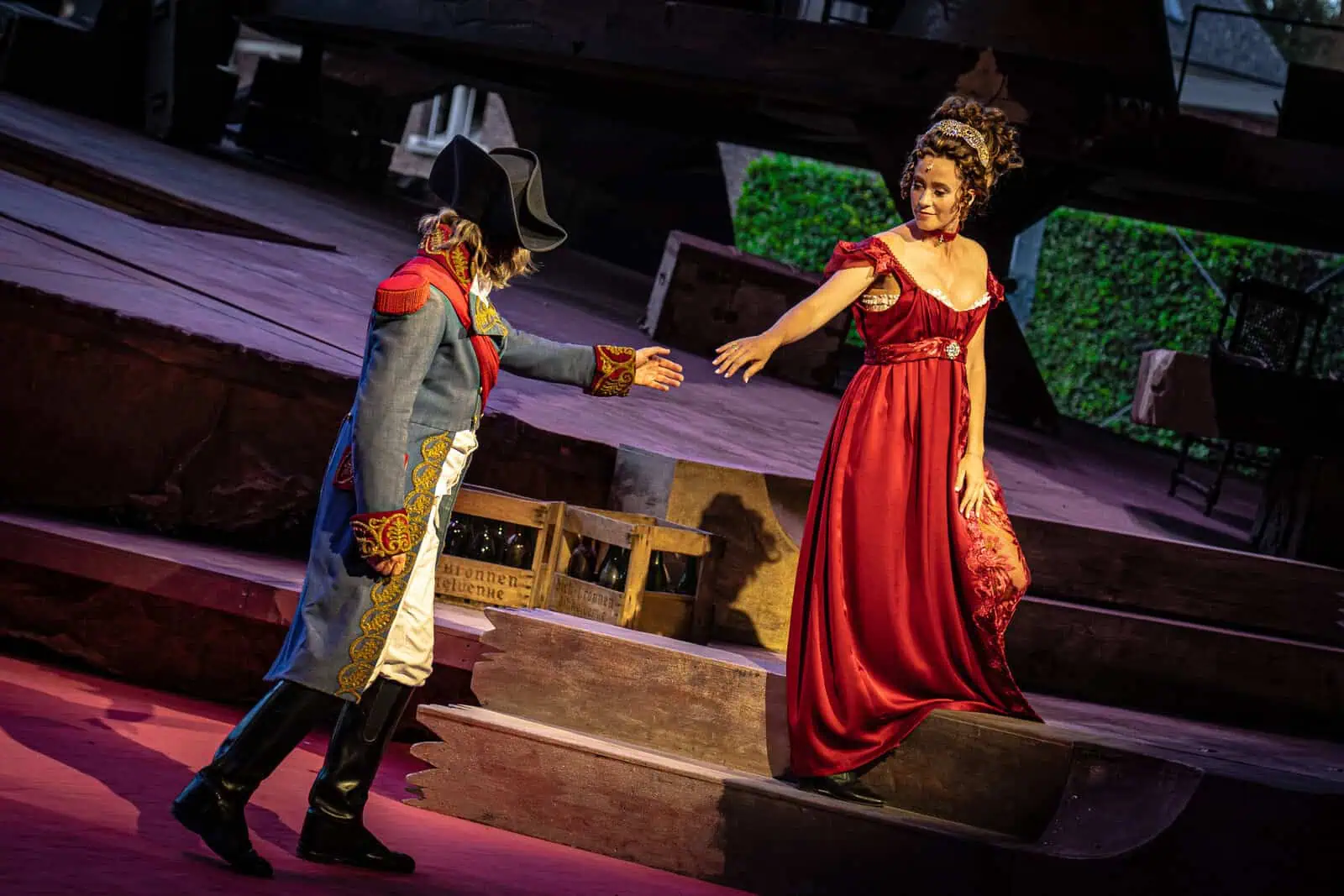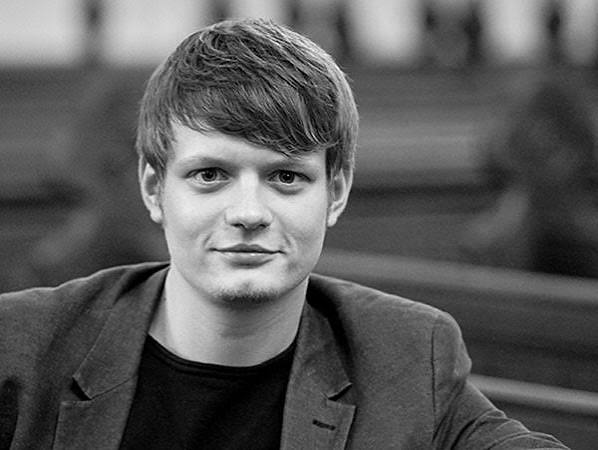
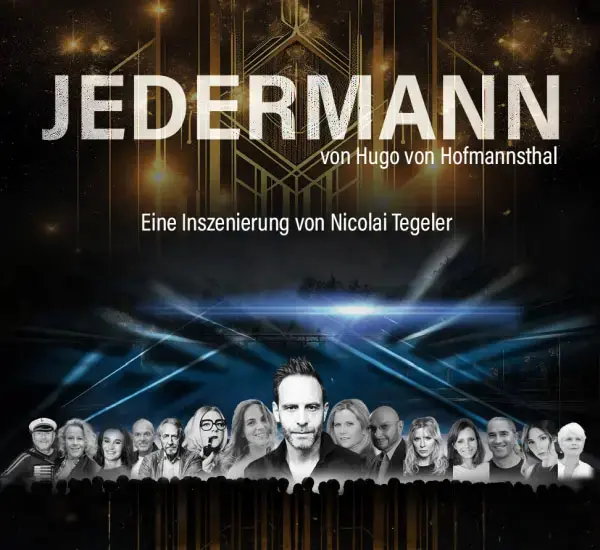
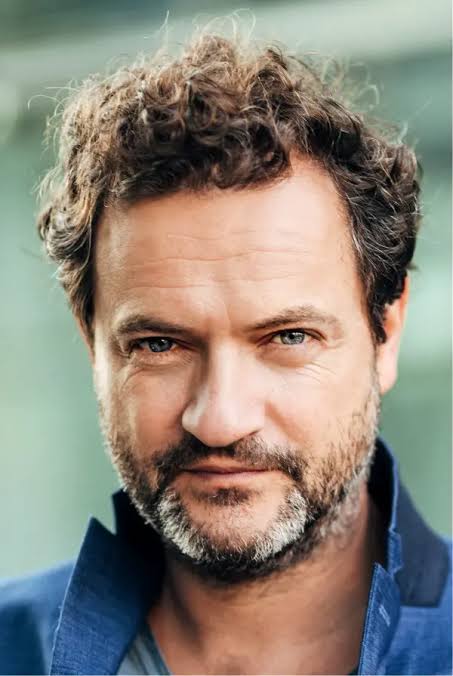
 Who is Nicolai Tegeler? For those unfamiliar with him: he is a versatile German theater maker who has emerged over the past decades as one of the most striking figures in the German-speaking cultural landscape. He began his career as an actor, spent years in front of the camera and on stage, but gradually evolved into a director, producer, and what he himself calls a "culture entrepreneur." Today he sees himself primarily as a storyteller, regardless of the role in which he works. Not just performing stories, but developing, shaping, and producing them himself: that became the driving force behind his work. With productions in cities like Bremen, Graz, Bayreuth, and Coburg, he built a reputation as someone who translates classical texts into a contemporary context. Werner De Smet spoke with him for Klassiek Centraal about his latest project: a staging of Hugo von Hofmannsthal's Everyman on the Weimar Marktplatz, in mid-August.
With this new production, Tegeler deliberately avoids copying the famous Salzburg tradition. He wants to bring Hofmannsthal's iconic work (1874-1929) closer to today's audience—not as a distant classical repertory piece, but as a direct confrontation with life's big questions. The core of his artistic vision is the conviction that art can touch and connect people, and that theater is strongest when different art forms converge: music deepens emotion, literature provides philosophical depth, and performance keeps the human at the center. "When all these elements come together, something emerges that is greater than the individual parts," he says. Tegeler sees theater not merely as entertainment, but as a place where people are challenged to reflect on themselves, their choices, and their mortality. That's precisely why Everyman has fascinated him for years.
What continues to captivate him in Everyman? According to Tegeler, the play reveals a fundamental human truth that never loses its relevance. "We all think we still have time," he says. "We postpone decisions, dreams, or reconciliations." That's precisely where he finds the enormous power of the play: it confronts people with the question of what ultimately remains when success, possessions, and appearances fall away. Although Everyman has strong religious roots, Tegeler views it primarily as an existential drama that reaches far beyond faith alone. Themes like fear, loss, guilt, hope, and the search for meaning are universally recognizable. This allows the play to also touch people who have little or no connection to religion. For Tegeler, Everyman ultimately is not about dogmas, but about human condition itself.
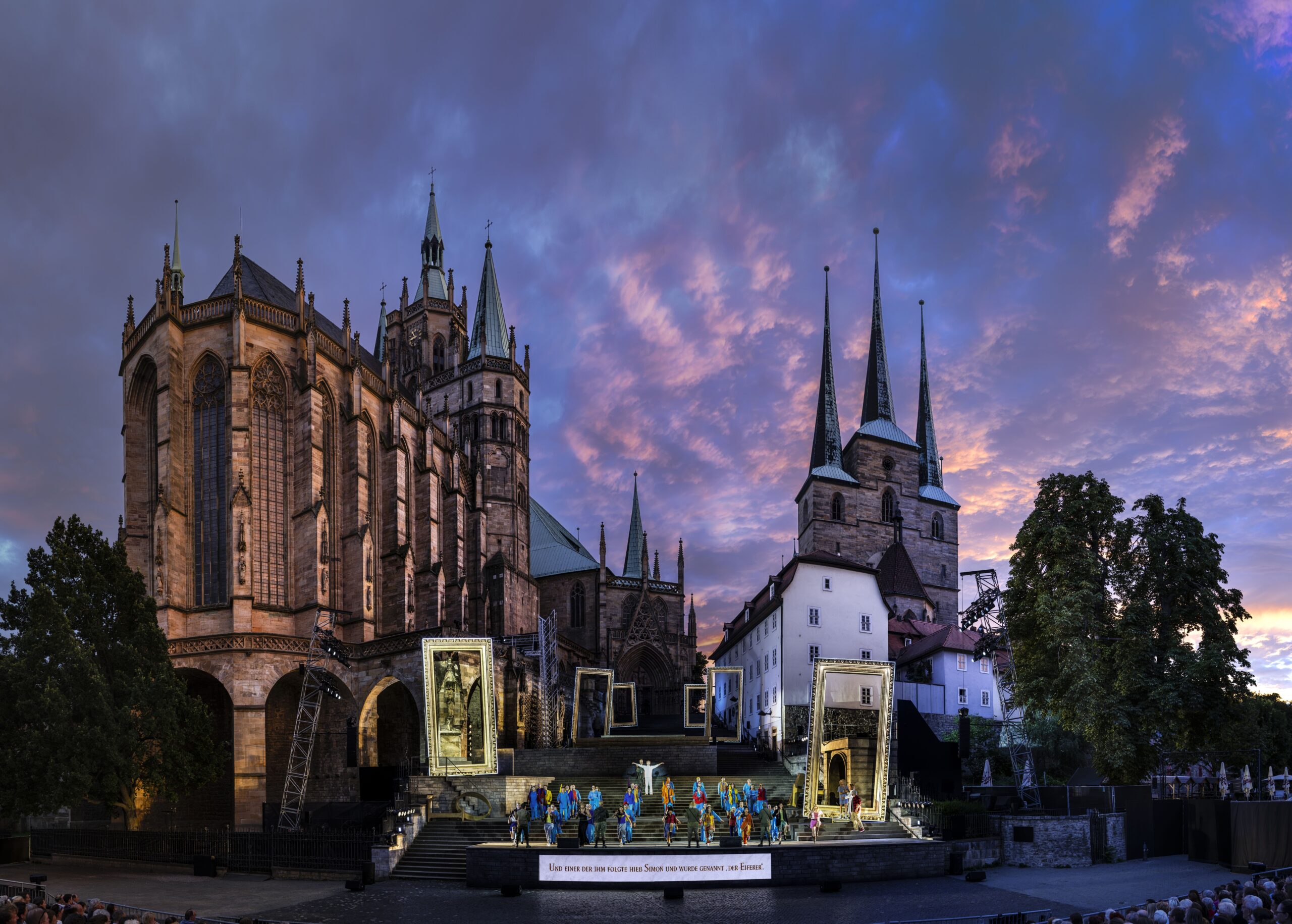
At the same time, he emphasizes that his production does not want to be a provocative break with tradition. The Salzburg Everyman remains for him a cultural monument that deserves great respect. Without the Salzburg Festival, the play might never have grown into the symbol it is today in the German-speaking theater landscape. But according to Tegeler, each generation has the responsibility to find its own interpretation. "I don't want to copy the Salzburg Everyman "," he says. "I want to tell our own version." That's precisely why the choice of Weimar plays such an important role in this production. For Tegeler, the city is among Europe's most meaningful cultural sites. Here, the legacy of Goethe and Schiller, the history of the Weimar Republic, and the heritage of the Bauhaus converge. Great art and great ideas, but also historical fault lines and human tragedies—including the proximity of Buchenwald—are part of the city's identity. "Weimar reminds us what people are capable of—for good and ill," he says. According to him, it's precisely this historical layering that makes Weimar particularly suitable for a play that revolves around responsibility, transience, and humanity.
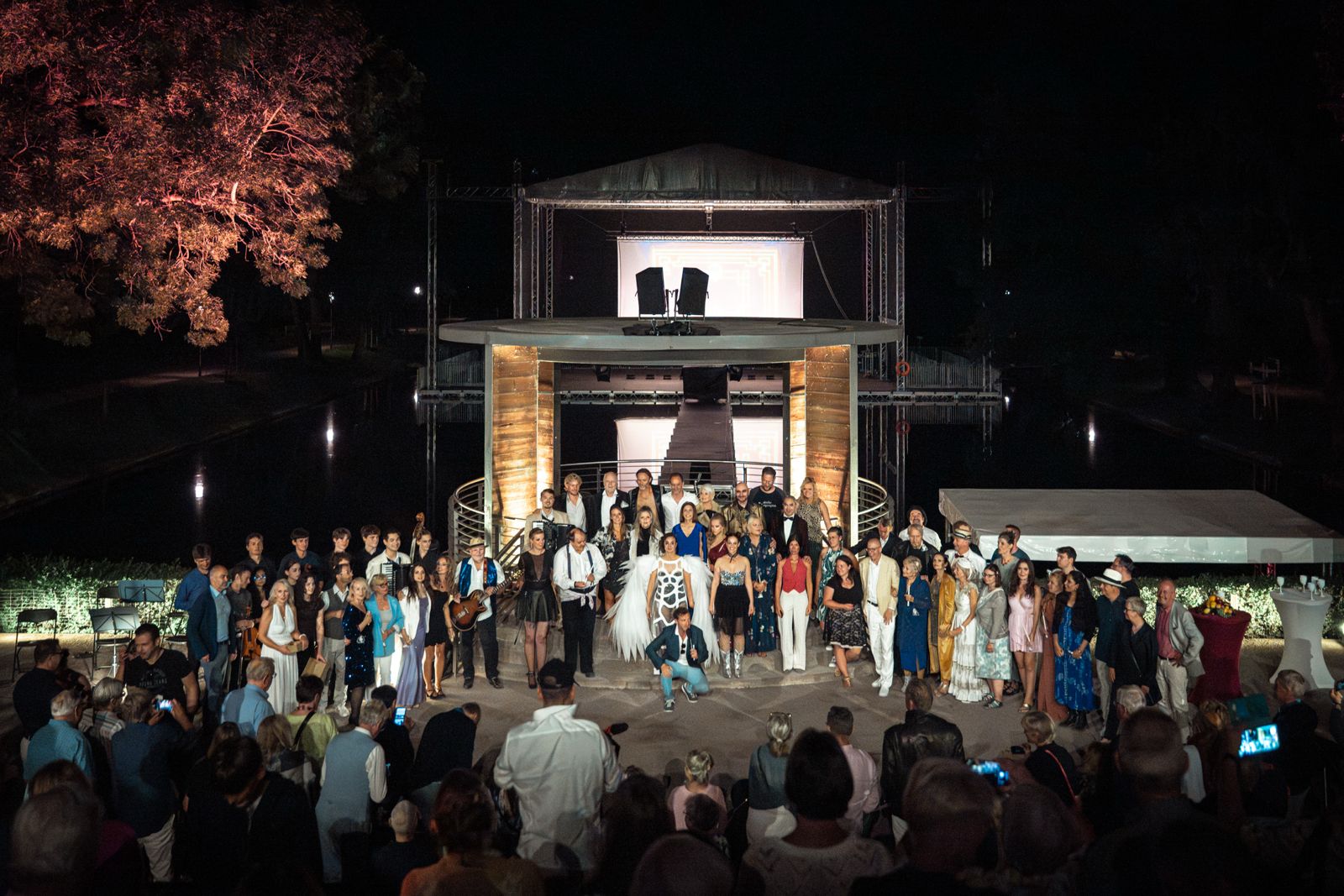 According to Tegeler, this connection with a city also directly influences the way he develops a performance. Every location has its own character, history, and audience, and that automatically changes the atmosphere of a production. An Everyman in Weimar feels different to him than in the cities where he has staged the play before. The core of the story remains the same, but the setting gives the play a different energy each time. That makes theater alive and current for him. For that reason, he also deliberately chooses performance spaces with a strong identity. He doesn't like anonymous or interchangeable theater halls without history. Marketplaces, historic locations, and special outdoor venues should become part of the storytelling. "I seek places with a soul," he says. The space thus becomes not just a backdrop, but an active conversation partner in the performance itself.
At the beginning of this new production, Tegeler therefore posed himself one central artistic question: how do you tell Everyman today in such a way that people feel immediately and personally addressed? Not as a historical curiosity or a classic spectacle piece, but as a story that speaks directly to their own lives. According to him, audience reactions show that this approach works. Many visitors initially expect a traditional evening of theater, but leave the performance visibly moved. Afterward, conversations often arise about family, loss, reconciliation, or unfulfilled dreams. That touches him anew each time, he says. The play has also personally changed him. Working for years on themes like mortality, responsibility, and the essence of life inevitably leaves marks, he says. "Everyman reminds me too of what really matters."
In an era where people are constantly distracted and rarely find peace, Tegeler also sees theater taking on an almost spiritual role again. Not necessarily religious, he emphasizes, but spiritual in the sense of a genuine encounter with oneself. "Theater can create spaces where people briefly step out of their daily flow and grapple with life's big questions," he says. According to him, Everyman today perhaps has even more power than ever because it forces the audience to reflect on what truly counts in life. What he ultimately hopes visitors take away from the performance on the Weimar Marktplatz in mid-August is above all emotion and awareness. That people perhaps finally voice what they've long wanted to say. That they become grateful for what they have. And that they realize success, money, and possessions have value, but are never what matters most.