

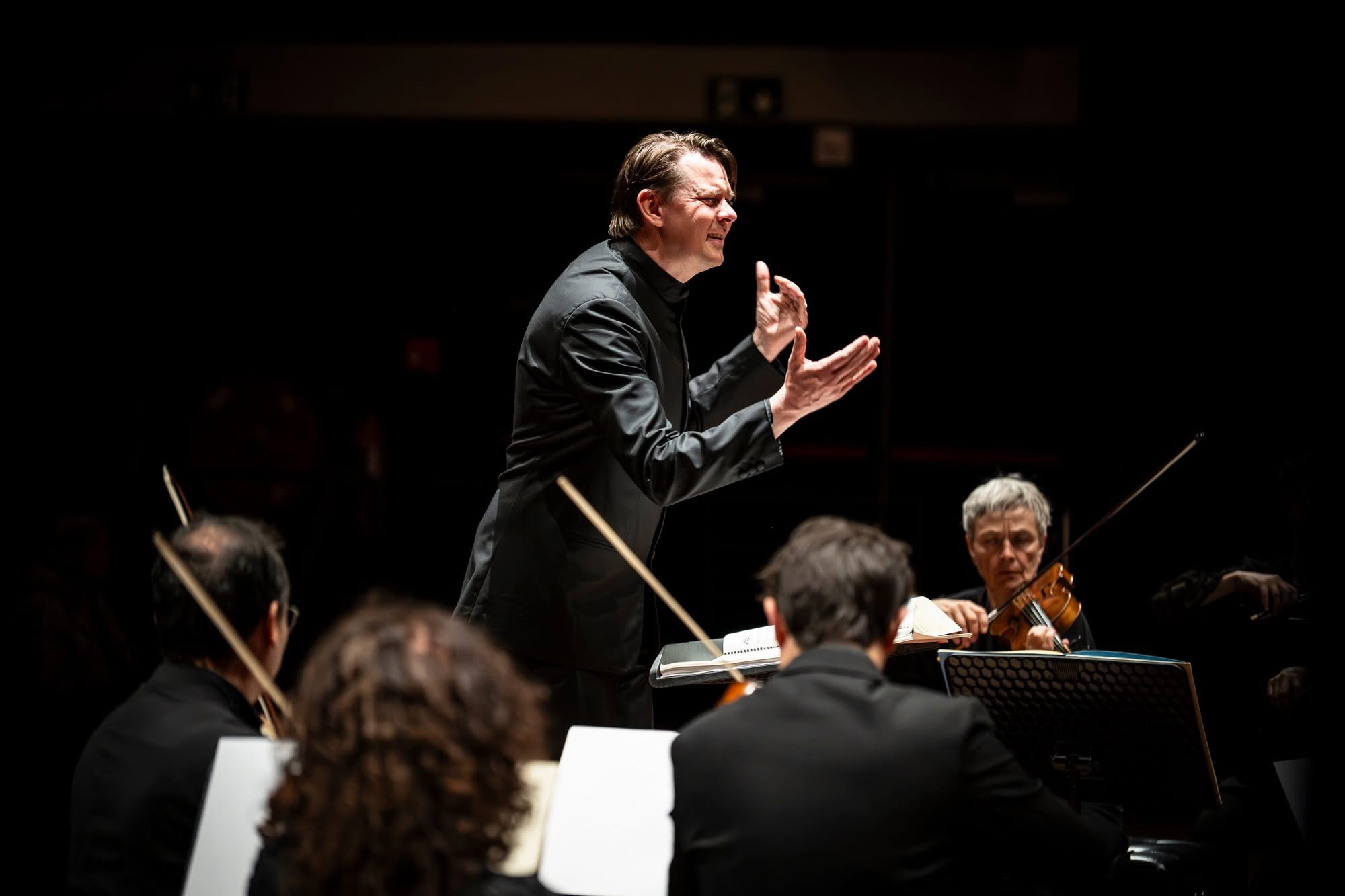
There are concert evenings that possess an almost inevitable sense of anticipation even before the first note. The performance of the Grosse Messe KV 427 by Wolfgang Amadeus Mozart (1756-1791) by the Vlaams Radiokoor at Flagey on Saturday, May 30 was such an evening. Not only because of the intrinsic monumentality of the work, but especially because of the intelligent confrontation with the Fifth Symphony by Ludwig van Beethoven (1770-1827): two compositions in C minor in which human unrest is forged into music that transcends the merely aesthetic.
Beethoven as existential prelude
That Beethoven's Fifth preceded the mass proved to be a particularly strong dramaturgical choice. Bart Van Reyn approached the symphony not as a canonized monument, but as a work that still possesses its revolutionary power. From the very first measures, he guided the interpretation firmly in the direction of tension and inner pressure, rather than towards pronounced grandeur. With visible pleasure in playing, conductor and musicians gave the symphony a fresh, spontaneous character, without detracting from its dramatic sharpness. Thanks to the transparent sound of the period instruments, no romantically expansive monumentality arose, but rather a continuously charged movement, characterized by rhythmic nervousness and a tension that barely diminishes.
The Orkest van de Achttiende Eeuw confirmed this interpretation in the sound itself: less saturated strings and sharply articulating winds provided a transparent yet tense sonority in which the motor energy of the score remained undiminished. The period instruments not only added color to this, but also a raw directness that further sharpened the dramatic impact.
Precisely in this combination of control and unrest did the symphony work as an ideal prelude to Mozart's Grosse Messe. Where Beethoven builds tension purposefully towards a gesture of triumph, he simultaneously opens up a space of existential pressure that in Mozart does not culminate in linear tension, but in a continually shifting field of tension between threat, stillness, reconciliation and contemplation.
Mozart's unfinished masterpiece
In January 1783, Mozart wrote to his father that "the score of a half mass still lies here waiting to be completed" – a reference to the work he had promised to write after his wife Constanze had survived a serious illness. She recovered, but the mass remained unfinished. Why Mozart ultimately abandoned the work after composing the Kyrie, Gloria, Credo, the sublime Et incarnatus est, Sanctus and Benedictus remains unclear to this day. What was preserved belongs to the most intriguing and layered music he wrote for choir, orchestra and soloists.
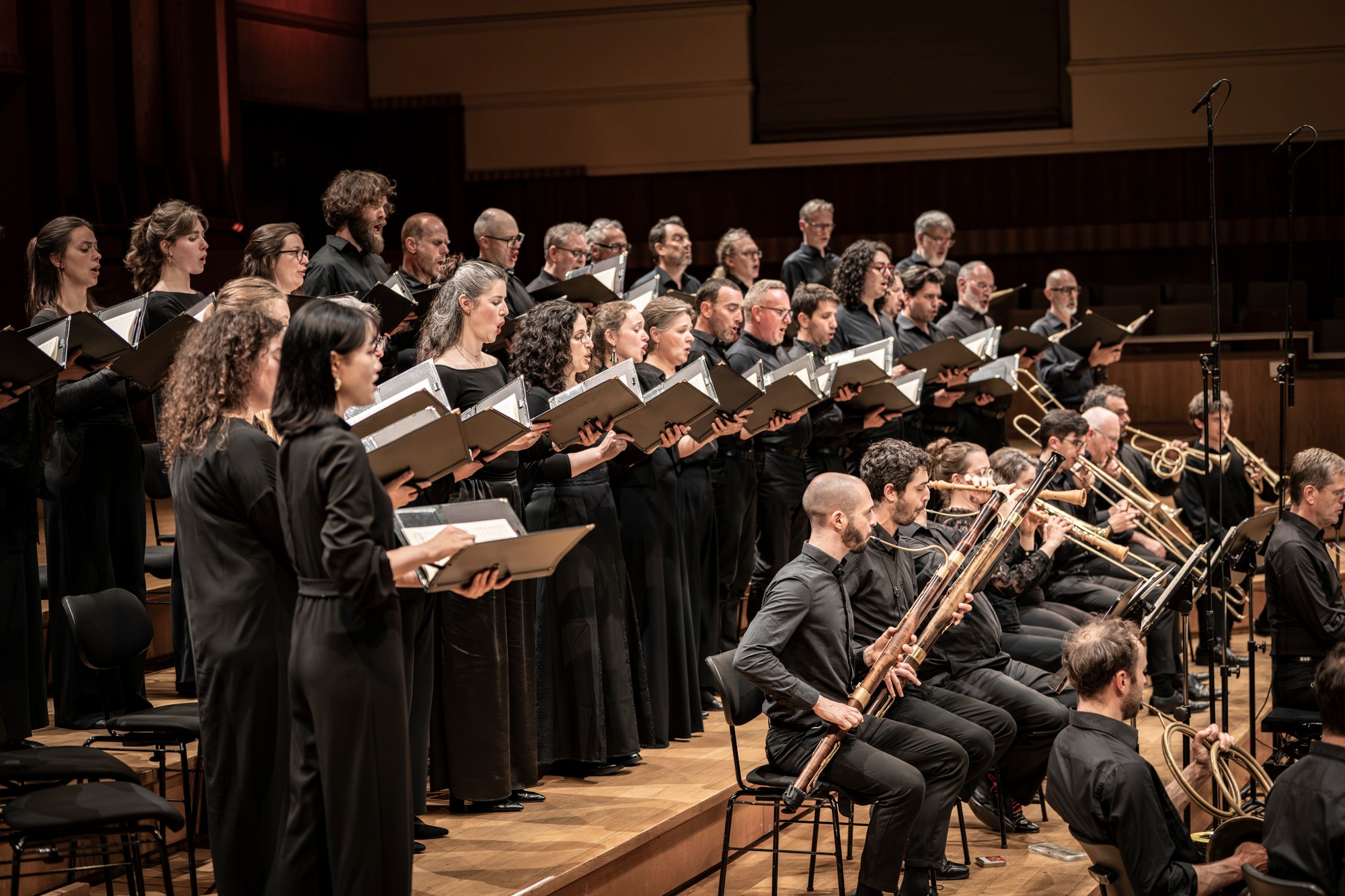 Bart Van Reyn approached this Grosse Messe not as a monument to be approached with weighty seriousness, but as living music. His interpretation breathed tension, transparency and natural musical phrasing. Even in the monumental choral passages, the texture remained clear and fluid. The influence of Bach and Händel was unmistakably present, especially in the impressive double-choir passages of the Qui tollis and the grand fugue of the Cum Sancto Spiritu.
The Vlaams Radiokoor was one of the great strengths of the evening. The choral sound combined warmth, homogeneity and precision, while the diction remained exemplarily clear even in the most complex contrapuntal passages. The heartfelt quality of the singing was particularly impressive. The choir moved between grandeur and intimacy while maintaining a tension that ran through the entire score.
The Orkest van de Achttiende Eeuw also confirmed its exceptional class. The orchestral brilliance that had already convinced in Beethoven was effortlessly carried through to Mozart. The characteristic sound of the period instruments lent the score color, transparency and elegance here as well. The ensemble combined historically informed performance practice with a striking tonal richness and precision that gave the music great vitality.
Mozart at his most human
However, the true core of this performance lay in the contemplative moments. The Et incarnatus est was no virtuosic showcase, but a moment of almost startling intimacy. A particularly successful intervention was the positioning of soprano Ilse Eerens between the obligato woodwinds rather than in front of the orchestra. This created an exceptionally close dialogue between voice and instruments, which further intensified the intimate, vulnerable atmosphere of this section. The result was music of an almost elusive beauty, which in this performance acquired an almost transcendent quality.
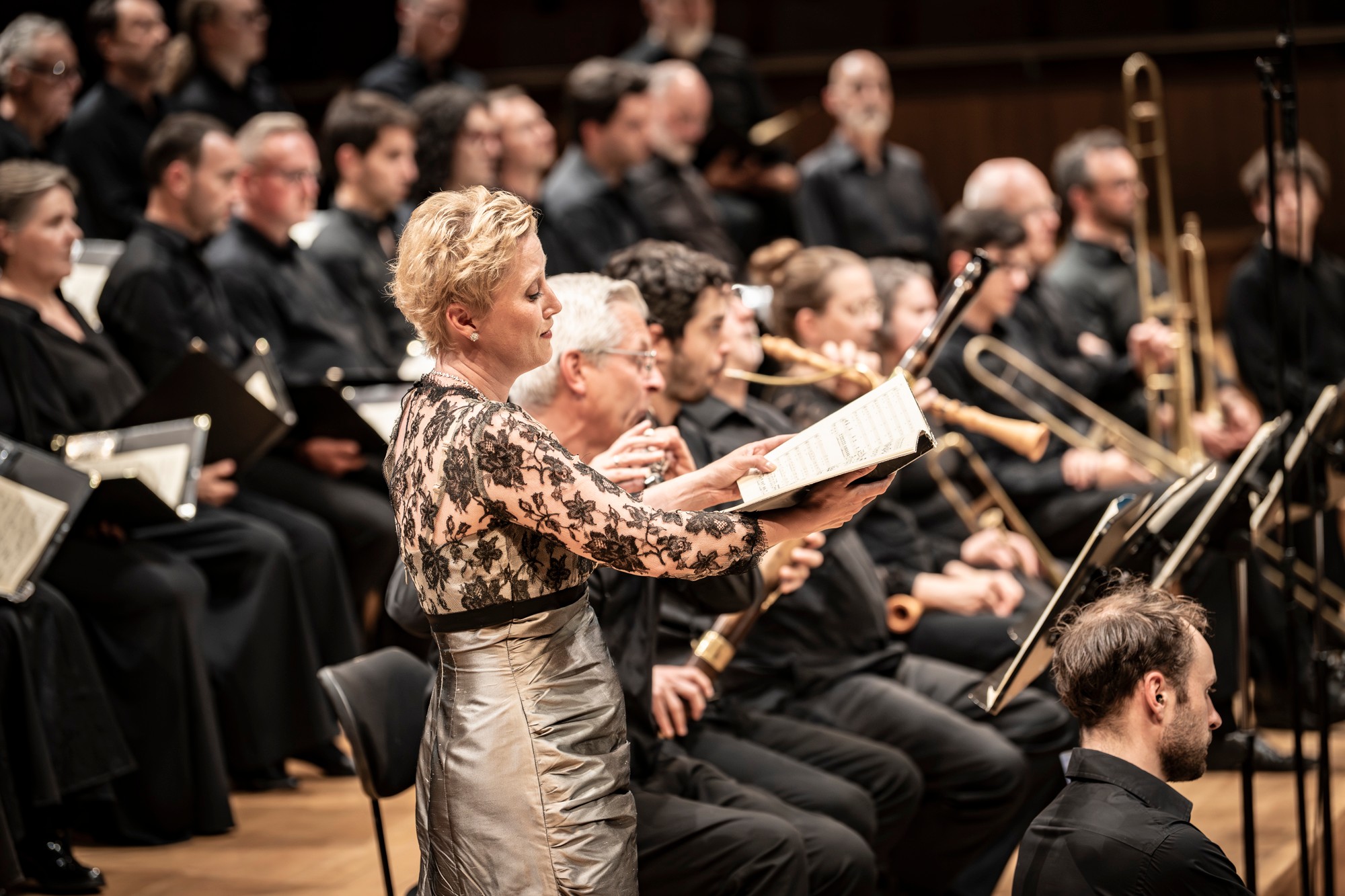 Ilse Eerens possessed precisely the right means for this. Her soprano has no ostentatious volume, but rather that rare combination of clarity and fragility that Mozart requires. The Belgian soprano knows this repertoire inside and out, and that familiarity with the work was continually evident. Her pianissimi had the quality of something on the verge of disappearing, while the obligato parts for flute, oboe and bassoon around her sounded more like an intimate embrace than a decorative framing.
The other soloists who performed in the mass also fit well within the whole. Barbara Kozelj brought a warm, dark timbre, though it did not always come fully into its own in the ensemble balance. James Way kept his tenor part remarkably restrained and stylistically pure, without the often forced heroics with which this repertoire is sometimes approached. François Heraud gave the bass lines a quiet authority, which strengthened the collective character of the reading without dominating.
Two works, one thought
With the Orkest van de Achttiende Eeuw and the Vlaams Radiokoor, Van Reyn had musicians at his disposal who did not romantically polish this music, but made its sharpness in the score audible. Through this, the connection between Beethoven and Mozart was not explained, but became naturally clear in the performance itself. Not in similarity, but in the difference between two ways of dealing with tension: Beethoven who builds it towards a resolution, Mozart who leaves it open and lets it breathe further.
In that difference, the program found its own logic. What tends towards a conclusion in Beethoven remains in progress in Mozart – and that is precisely what held the evening together.
This dramaturgical structure worked all the more powerfully because the audience, despite threatening storms, oppressive heat and the simultaneous finale of the Queen Elisabeth Competition, had turned out in remarkable numbers. The warm reception afterward underscored how deeply this combination of Beethoven and Mozart had resonated.