

Click here for the table of contents
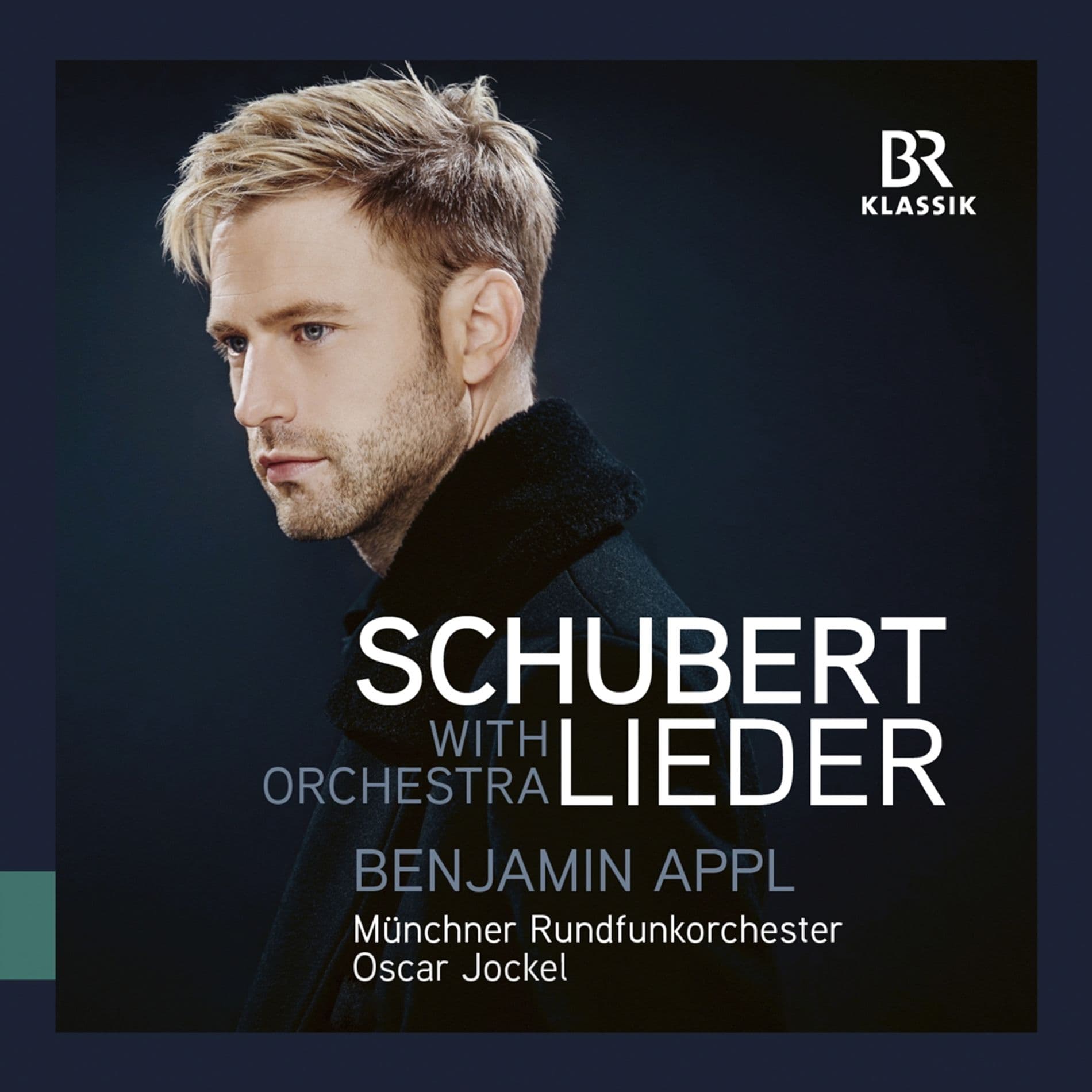
It is and remains a frequently asked, but no less intriguing question: whether the orchestration of Schubert's lieder was really necessary. The German-British lyric baritone Benjamin Appl also poses this rather obvious question in the accompanying booklet. But necessary or not (the booklet offers no satisfactory answer), the 'adaptation' (it is even more than that) from piano(forte) to orchestra is and remains a thorny issue because it results in 'incompatibility'. After all, the expressive field of force that Schubert placed in the piano part is so distinctly specific, so characteristic of his lied oeuvre and so inextricably intertwined with both the song text and the singing voice that any orchestration of it does the original serious injustice to a greater or sometimes lesser extent. However, there is still something that stands apart from this impossible transition from piano to orchestra: the orchestral colors that represent their own unique existence and, when listening, may be appreciated in exactly that way. That can be a beautifully developed contribution from the clarinet, or precisely that wonderfully gliding cello, or that peppery pizzicato of the double bass, but mind you: thus appreciated, that is no more than a tonal domain in itself. Which thus stands apart from the violation of Schubert's original. Every composer working in this field (which goes far beyond mere transcription) naturally brings his own baggage to it, and it is this interweaving with the original (the vocal line remains intact) that gives the song a new identity (or profile). You can look at it however you like, but that's how it is. For Schubert, the (art) song was inseparably linked to the piano part (or in rare exceptions the guitar), with performance in intimate circles ('Schubertiades'). We know its history, the domestic circumstances, far removed from the concert hall (where the lied has no place in my opinion anyway). Over the lied recital are distributed three German dances in the orchestration of Johann von Herbeck. Setting aside all conceivable objections within the given context, Appl and the Münchner Rundfunkorchester under Oscar Jockel form, in my view, an excellent combination in this repertoire. Appl is, unlike Matthias Goerne for example, less sonorous in the lower register or when he needs to perform grandly, but I would certainly not call that a blemish on this lied recital. Jockel allows the well-performing broadcasting orchestra in studio 1 of the Bayerische Rundfunk to breathe well with the singer, and the recording must be called successful. A serious drawback is to be found in the CD booklet, or rather not: the song texts are conspicuously absent. How does a music label come up with such a thing? Remarkable.