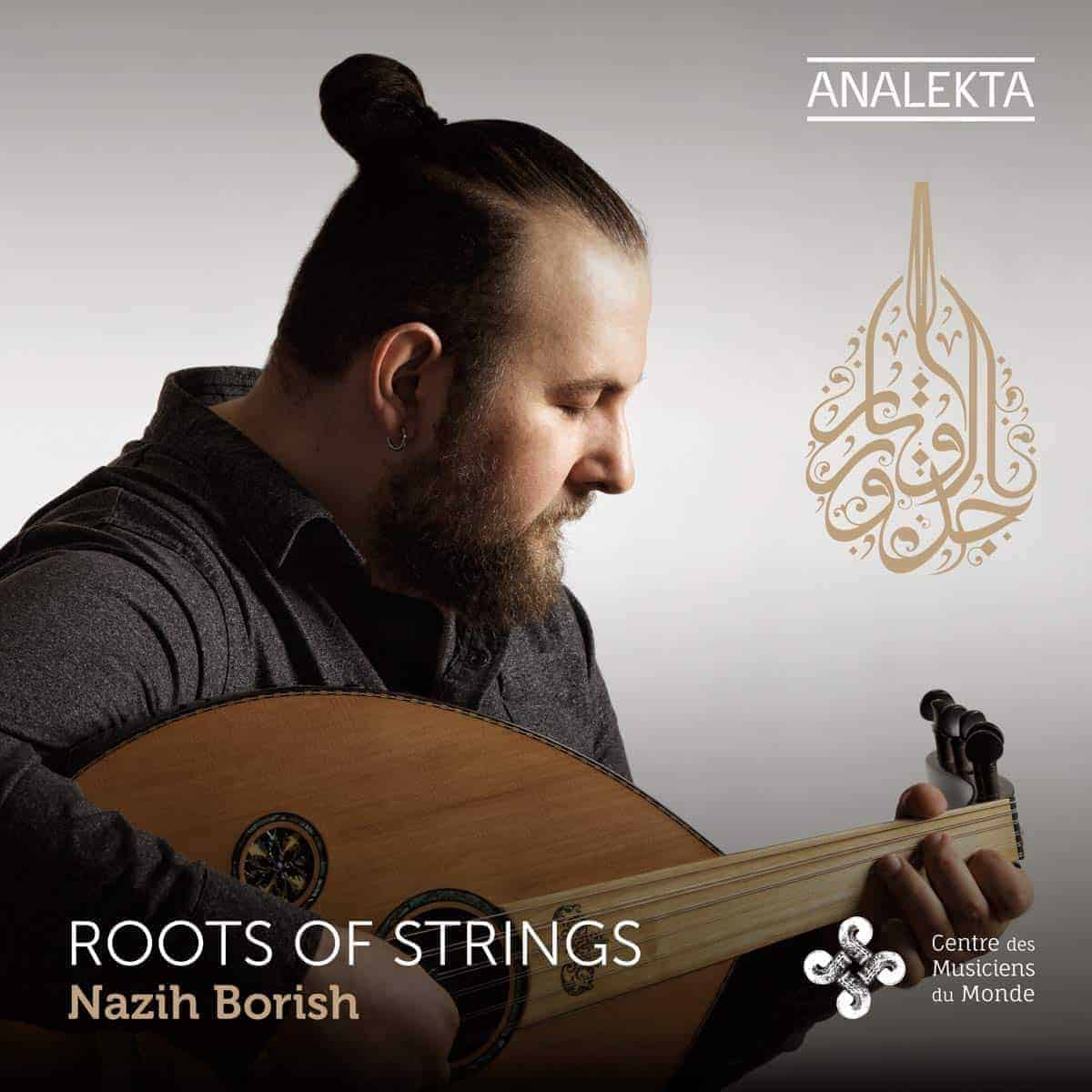
"Music is peace. It transcends the boundaries of time and space, colors and race to bring restless hearts to rest, wherever they are. It is as pure and innocent as truth. […] So let us remove barriers, open different music cultures to each other, discover them and learn to enjoy a world of love and peace." — Nazir Borish
A journey around the world, across time and space, that is the starting point of this adventure. It begins during the First World War here in Belgium on a ship of the Red Star Line to the United States. After disembarking in New York, the new music center of the States, different music genres and styles resound. Mainly three types of classical music ensembles become popular: orchestral music, chamber music and music for brass instruments of the wind band. The love for concert bands becomes typically American after military and so-called community bands become wildly popular since the American Civil War. Only in the first quarter of the 20th century does this ensemble develop into a fully accepted music genre.
American wind band
Who else than "The March King" is able to represent American harmony? John Philip Sousa (1854–1932) becomes conductor of the United States Marine Band at the age of 26, which gains prestige under his leadership. Later in 1892 the American forms his own ensemble, the Sousa Band, which becomes the standard for the American concert band. Sousa composes more than 200 works for this ensemble and Naxos has recorded this collection in its entirety. Sisterhood of the States (1915, volume 21 track 2) is a fine example of his powerful, march-like and energetic style. It is a ballet that originally bore the title Hip, Hip Hooray, a highlight in American nationalism. All then 48 states are represented by a sextet of ballerinas and in the music each sounds a characteristic tune. Unfortunately, this unique Sousa extravaganza has not been completely preserved. The recording on this Naxos cd is the result of a reconstruction. A great deal of analytical work went into it, which is why the final result stands out somewhat paler compared to other recordings in this series.
From elephant-eating snakes to flying horses
After leaving nationalist America, we travel to the imaginative world of the Chinese zodiac. Bright Sheng (°1955) chose this program because of its rich and universal character. Both the ancient Greeks, Egyptians, Indians and Babylonians knew the zodiac. About 4,000 years ago, the Chinese would also begin to believe in the twelve constellations represented by twelve animals. The first detailed description of the Chinese zodiac dates from the Han Dynasty and was written by the philosopher and astronomer Wang Chong (c.27—c.97). Since then, the legends of these astrological animals have not disappeared from Chinese literature. Sheng found this fantastic fiction perfect for a musical work. In Concerto for Orchestra: Zodiac Tales (2006, rev. 2016), the god of rain, also better known as the dragon, majestically opens this six-part concerto. The arrival of this celestial force is announced by the brass instruments and the hammering accents of the strings give the whole an almost threatening undertone. After a musical game of cat and mouse, and blissful lambs resting in the sunlight, followed by the cruelty of the snake and a serene ceremony for Sheng's mother who was born in the year of the dog, there are suddenly flying horses traveling across the sky. The journey begins quietly and slowly builds towards a heroic climax.
Oud: where cultures meet
This celestial journey along the zodiac brings us to a transcendent bridge between different musical traditions: Arabic folk music, Indian improvisation, Andalusian dances and playful jazz influences. With the oud (a stringed instrument with a long history and the predecessor of the lute) as guide, Nazir Borish (°1982) leads us with dancing fingers on the keys through these different traditions. In the title track Root of Strings (track 2) Borish brings all these influences together eclectically in a way that musically tells the history of the oud. The basis of this composition is Arabic but Indian, Iranian and Andalusian with pseudo-flamenco rhythms soon force themselves to the fore. Also Ali Baba Dance (track 4) is an eclectic number with room for improvisation. More "pure" forms of traditions are the Indian Damasrose (track 6) and the Arabic numbers Missyoulogist (track 7) and 2011 (track 8). This cd is part of a series released by Centre des musiciens du monde under the editorship of Kiya Tabassian whereby other cultures can be musically discovered and thus opens the possibility for more musical journeys.
With the double bass to StockHome
Back with feet on the ground concludes this journey with a musical walk. Four Walks (2018) by Swedish composer Britta Byström (°1977) is part of the series Walks which contains a total of some 20 works for different ensembles. Each of these walks leads "to a specific work by another composer," as Byström herself puts it. Back To StockHome contains three of these walks: A Walk to Schubert (2018) towards Schubert's Fifth Symphony, A Walk to Bruckner (2017) towards his Third Symphony and A Walk to Strauss (2018) towards his Don Quixote — only A Walk to Fauré is absent for unknown reasons. From silence a walking rhythm takes form, along the way quotations sound, creating a silhouette of the composition the music walks towards, in Schubert and Bruckner there is whistling along the way and at the end the music fades away as if it has walked past. They are three short compositions that serve on the cd as musical walks between two concertos and a piano trio that is a reworking of Jesper Nordin's (°1972) double concerto.
From military marching in the States, past heavenly forces in China and a cultural bridge from the oud to a quiet walk through the European musical landscape, this journey around the world—through time and space, through genre and timbre—comes to an end. But as the opening quotation of Nazir Borish advocated for dropping barriers and being open to other musical cultures, may this conclusion serve as the beginning of a musical discovery journey.
Information
Sousa: Music for Wind Band Vol.21- WHO: Royal Birmingham Conservatoire Wind Orchestra conducted by Keith Brion
- WHAT: Music for Wind Band Vol.21
- LABEL: NAXOS 10526210
- ORDER: JPC
- WHO: Dan Zhu [violin], Suzhou Symphony Orchestra and Shanghai Symphony Orchestra conducted by Bright Sheng
- WHAT: Violin Concerto "Let Fly"
- LABEL: NAXOS 10392499
- PHOTOS: © Peter Shin
- ORDER: JPC
- WHO: Nazir Borish [oud], Roberto Occhipinti [double bass], Joseph Khoury [percussion]
- WHAT: Roots of Strings
- LABEL: Analekta 10430312
- PHOTOS: © Youssef Shoufan
- ORDER: JPC
- WHO: Rick Stotijn [double bass], Malin Bromann [violin & viola], Swedish Radio Symphony Orchestra conducted by James Gaffigan, Västeras Sinfonietta conducted by Simon Crawford-Phillips [piano track 15]
- WHAT: Back To StockHome
- LABEL: BIS 10649289
- ORDER: JPC
[embed]https://youtu.be/7fFgBRcgYfY[/embed]