For many years, Laus Polyphoniae has been attracting renowned names from the world of early music, with a focus on European polyphonic heritage from the Middle Ages and the Renaissance. But the Antwerp summer festival also provides a platform for a new generation of vocal and instrumental artists during the so-called International Young Artist's Presentation (IYAP). For an entire Saturday, you could enjoy no fewer than six ensembles and a very broad range of composers at AMUZ, often anonymous masters or noble unknowns as well.
IYAP is an annual coaching program of AMUZ and Musica Impulscentrum. Six promising artists and ensembles, specially selected by a committee with representatives from the international music scene, were intensively guided over the past days by recorder player, singer and conductor Peter Van Heyghen and soprano Raquel Andueza. Both focused mainly on how the musicians present themselves to the audience: the story the ensembles want to tell, the structure of their program and the interaction with the public. Because simply taking the stage to make some music has long been insufficient in 2023. The historically informed performance bar, on the other hand, must be raised; the listeners should be (even) more involved in the whole thing. Or so we hear the audience being told time and again. The aim of this five-day program, as it was stated in the 2021 program book: to send the musicians reinforced back out into the world.
In Destruction
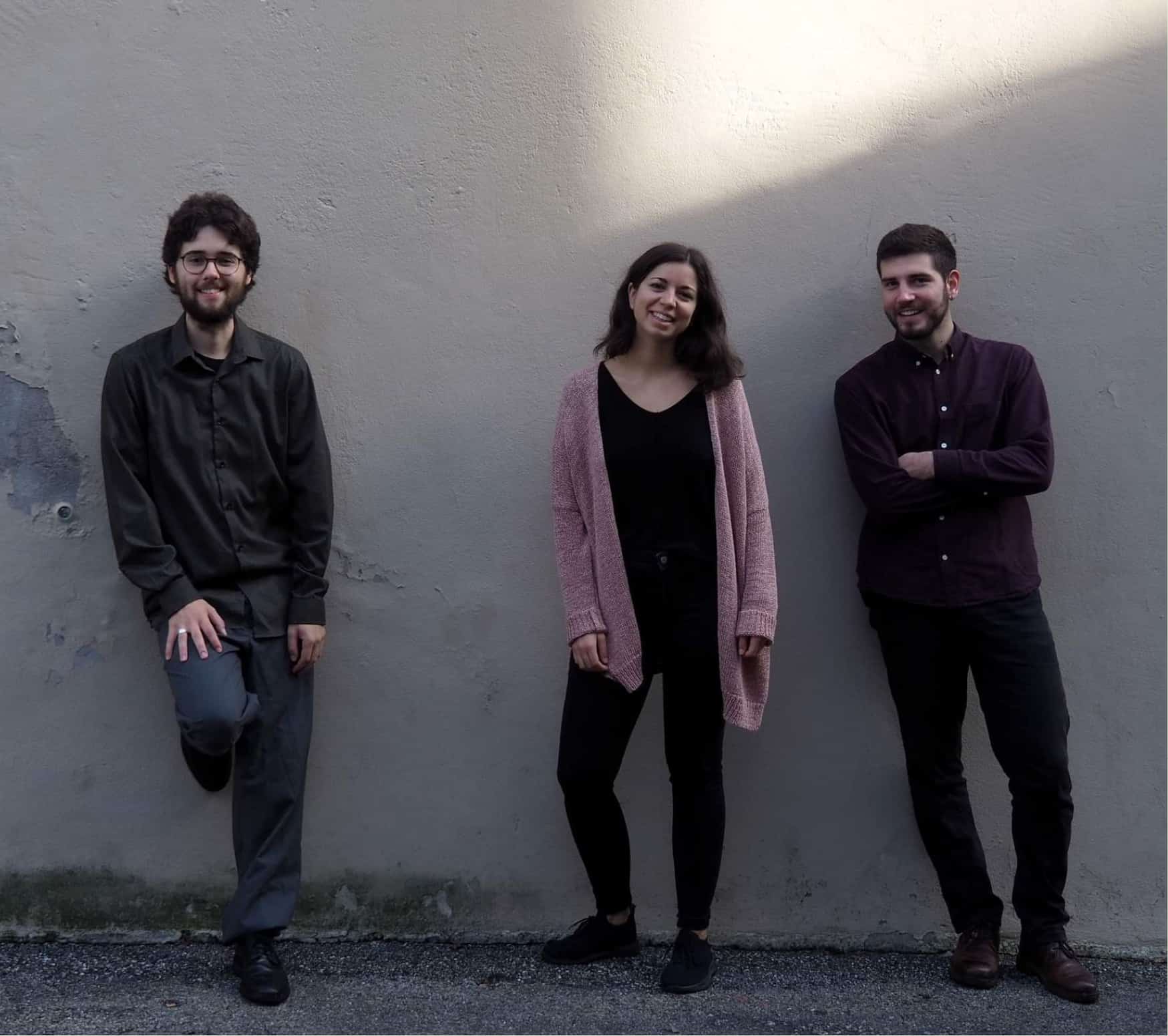
The audience to be engaged was certainly present in large numbers during this sunny Saturday, and would continue to grow throughout the day. The first concert, that of Vestigium Ensemble, was already scheduled for 10 a.m., with a new ensemble following every hour thereafter. The three-member Vestigium, composed of traverso, viola da gamba and harpsichord, led those present into post-Lully France, where a fierce debate took place in the mid-18th century over the extent to which foreign influences caused corruption of traditional musical taste. On these worrying developments, one Louis Bollioud-Mermet even published a treatise in 1746 – a work from which gambist Andrés García Fraile would provide a brief quotation in English translation. This starting point resulted in a diverse program, ranging from Lully epigones such as Pierre Danican Philidor (1681-1731) via Georg Philipp Telemann (1681-1767) and Arcangelo Corelli (1653-1713) to the 'innovation' of Jean-Philippe Rameau (1683-1764). Thus the concept was divided into two halves. First there were two excerpts (Prélude and Allemande) from the always pleasant, lighthearted but often rather interchangeable suites of a Philidor: someone who strived to imitate nature with his music. Written that way, it actually seems rather lofty than lighthearted, but never mind. Against this stood the 'degenerate' sounds of Telemann and Corelli, with their sonatas from remote regions that proved considerably more virtuosic, more energetic and certainly more colorful, exerting their influence on the compositions of Rameau, as evidenced by his frivolous, more contrasting Pièces de clavecin en concerts. The balance between the three was often subtle and unfortunately sometimes somewhat fragile. Flutist Ana Fernández Anguita took her place at the right hand of the harpsichordist, where the gambist usually sits. Might the coaches have had a hand in this? The fact is that she was sometimes a bit overpowered. A discovery was the beautifully articulated Sarabande (Largo) from the sonata in d (opus 2 no. 2) by Michel Blavet (1700-1768), one of many lesser-known composers who appeared on the program today.
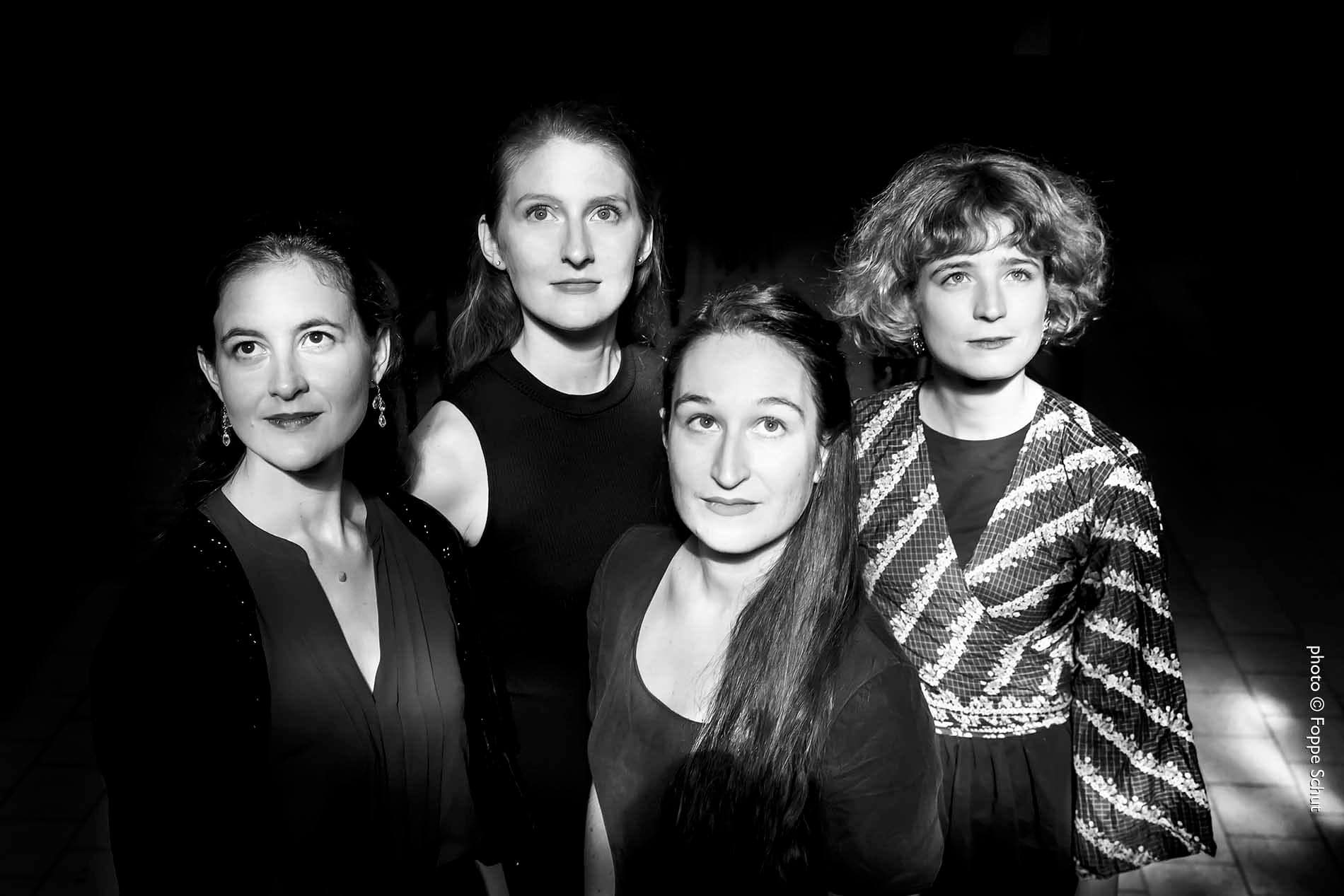
Mundus vergens in defectum. Or: the world is plunging into destruction. The first phrase that the four ladies of
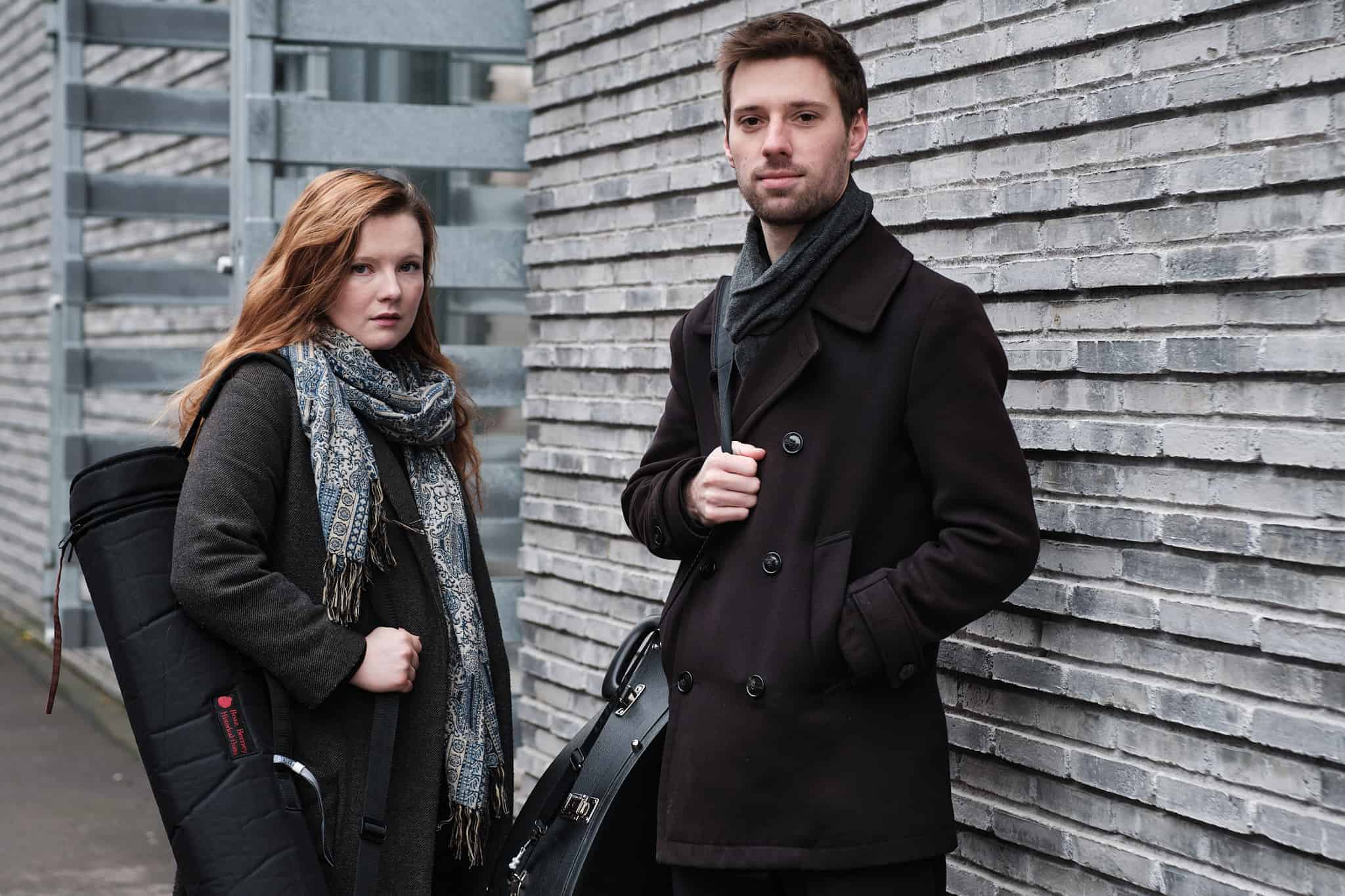
unleashed on the audience, and which gave its name to the entire program, promised little good. But although violence and war were initially sung about, with their succession of anonymous, polyphonic compositions, this quartet above all left a particularly beautiful impression. The interweaving of voices was a joy to listen to, while you could also carefully follow the evolution of each voice. Impressive! During those rather rare moments when an individual would detach from the whole, it was especially the beautiful voice of Karin Weston – "there is nothing more beautiful in life than singing" – that caught the ear. From then on there was anticipation for Rubens Rosa, an ensemble that was to perform in the afternoon and where this soprano would also take the vocal part. Throughout the sometimes solemn and sometimes restful declamation, the ensemble changed its formation with each new song. So it stood in a half-moon shape, in a cross facing each other or almost in a line. Everything was done to project the music as well as possible, even though the quartet gradually lost some of its intensity. The assembled vox populi, in any case, ate it up, treating it to a well-deserved applause, and received a brief encore in return.In his list of ten concert tips, De Standaard had also included one of the IYAP concerts, namely the third one with flutist Liane Sadler and lutenist Elias Conrad. Why precisely this one concert, and not seize the opportunity to put the entire IYAP setup in the spotlight? Likely because of a certain Maddalena Casulana, a late-sixteenth-century Italian composer who was brought into the limelight. Thus the Basel-based duo had brought along a collection featuring their arrangements of madrigals by Casulana. No unimportant lady, as it turns out, for she was the first woman in Western music history to publish her own madrigal collections. Her contemporaries praised her musical talent, we read in the program booklet – quite a substantial tome. Moreover, Casulana had personal contacts with composers such as Nicola Vicentino – possibly her teacher – and 'our' Orlandus Lassus. Equally praiseworthy was the attentive, intimate and refined dialogue that Sadler and Conrad built with each other and with the music, alternating several times with the renaissance traverso. On the other hand, these are instrumental confessions that do not come into their own in a large church. Let this be a plea to bring the audience closer to this kind of performance, by placing the musicians in the middle of the nave and having the audience sit around them, for instance. Not for the first time today was a change in program order communicated via an addendum to the program booklet. Could the coaches have had a hand in these changes? I no longer ask myself this, but merely note that in none of the six presentations was there anything really groundbreaking to mention, rather the opposite.
[embed]https://youtu.be/2AA35tgm7tI[/embed]A Piece of Italy in Cape Town
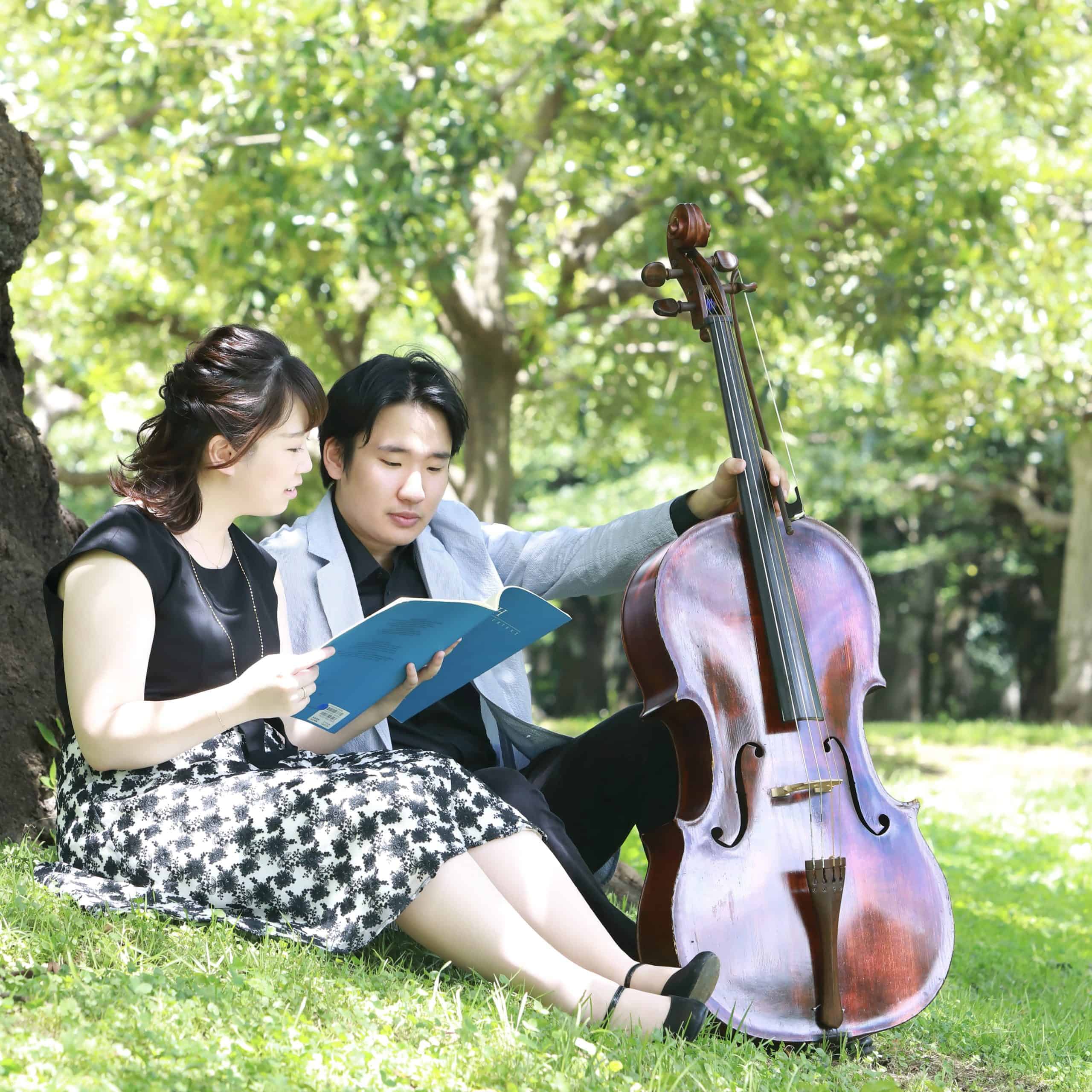
After the midday break, two Japanese musicians took the stage with the Duo Yamane. Under the arm of cellist Futo and pianoforte player Yuki Yamane were two scores: the second sonata from Beethoven's opus 102 (1815–1816) and the Variations concertantes by Mendelssohn (opus 17, 1829). With both works, the duo, which is currently perfecting itself in nineteenth-century repertoire at the Brussels conservatoire, wanted to demonstrate the relativity of the subdivision of music into strictly delineated stylistic periods. Or in other words: how classical was Mendelssohn, and how romantic Beethoven? Of the two works in D major, a convincing rendition of Mendelssohn's concertante variation series was first given. Certainly in the more serious and stormy passages, it seemed as if Mendelssohn had dedicated this work not to his brother Paul, but to this duo. So great was the fiery commitment with which this music was defended. The somewhat naive theme, on the other hand – particularly classical in its development – received a charming, respectful, but above all disarming phrasing. Curious to see how the pair would fare with Beethoven. Immediately it became clear that this next work too was not lacking in ideas. The result of a distinctive tone on the pianoforte – an instrument built by Joseph Böhm in Vienna in 1824 – and the broad, expansive sound of the cellist. The pair held each other closely in both outer movements (Allegro con brio and Allegro – Allegro fugato), and yet remarkably free musicianship was also possible. An observation that also benefited the suspenseful build-up of the Adagio con molto sentimento d'afetto. Whether Duo Yamane touched upon Beethoven's romantic soul can be debated, but the fact is that this was an entertaining performance.
With the fifth concert – it was by now 3 p.m. – there appeared just as many ladies who together formed Rubens Rosa, a young ensemble dedicated to medieval music. We had already heard singer Karin Weston. She was accompanied by, among others, the founder and vielle player Aliénor Wolteche. Add a viola d'arco, harp and lute to that, and you have quite an assorted group. Central to their program was a remarkable book: the Codex Grey, or Cape Town Codex, a manuscript of late medieval, West-European music compiled before 1506 in a Benedictine monastery in Northern Italy, and which was donated to the national library of South Africa in 1861 via the British governor of the Cape Colony, Sir George Grey. With this piece of Italy in Cape Town, Rubens Rosa touched upon one of the important starting points of Laus Polyphoniae, which is the scholarly foundation of the music that sounds there. The Cape Town Codex is such a scholarly source, and Rubens Rosa provided in various constellations a diverse selection from the 85 compositions in total found within it. It resulted in sensitive playing, though the whole could have used somewhat more character and punch. What ultimately lingered most was the surprising vocal finale. It was so disarming that a string even broke during the performance. A miracle from on high that could have occurred nowhere else but in this sacred setting.
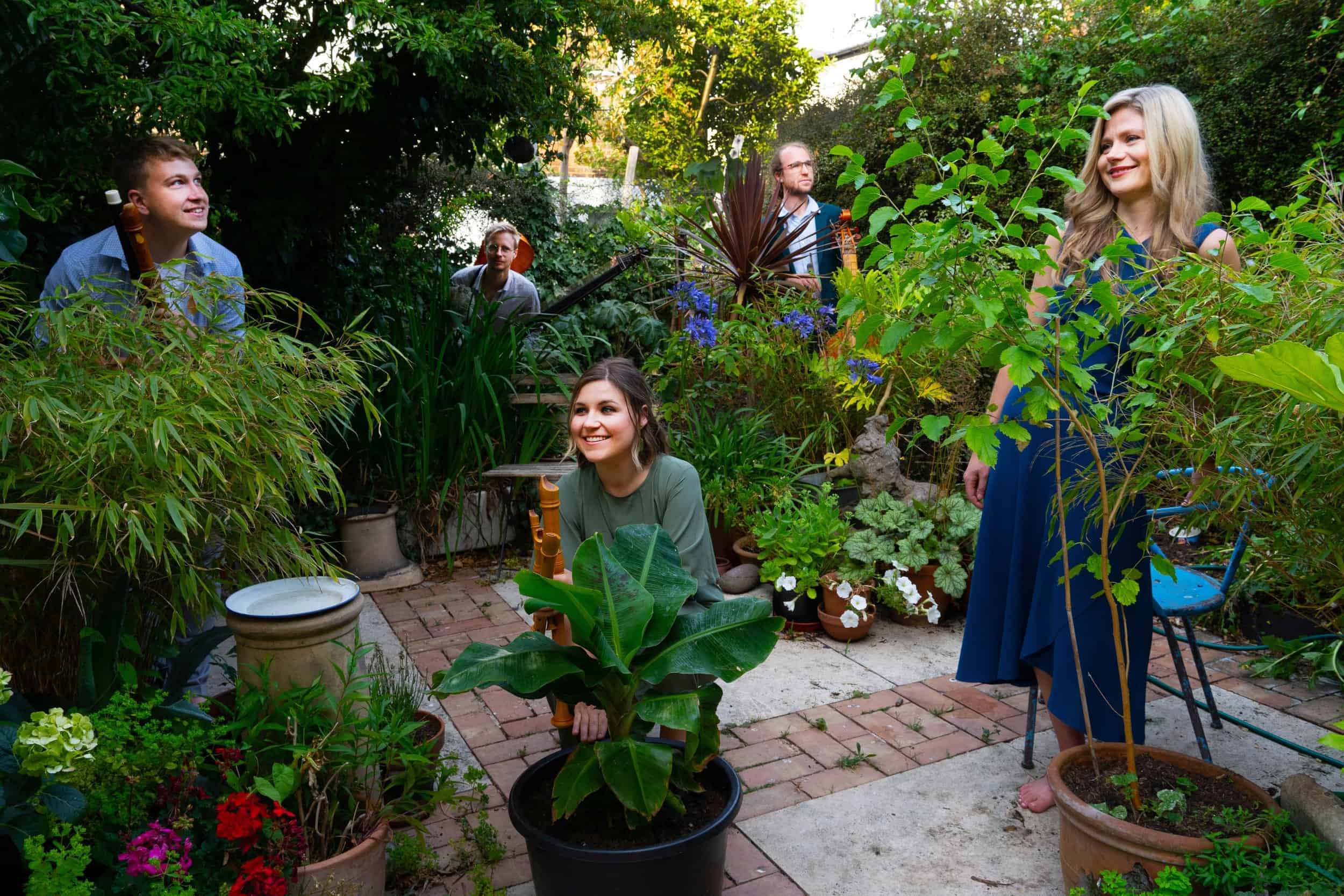
Last in the line of ensembles this afternoon wasApollo's Cabinet, and their concert was also based on an original source. Charles Burney (1726-1814), an English composer and musicologist, made two major journeys through Europe in 1770 and 1772 and sketched a very fascinating picture of European musical culture at the time in his travel report. Apollo's Cabinet followed in Burney's footsteps and took the audience on an entertaining journey that began in France and made stops in Italy (Venice), Austria (Vienna), Germany, the Netherlands, and finally Great Britain. This narrative program had already won prizes, and deservedly so. It testified not only to confident professionalism and corresponding enthusiasm, but also to exceptional virtuosity. In particular, the two nimble-fingered recorder players Teresa Wrann and Mathis Wolfer made an impression in this way. Seemingly effortlessly, they also took on the roles of narrator and harpsichordist respectively. The strength of this approach was that by listening carefully, much could be said, because the music of, among others, Michel Corrette (1707-1795), Jean-Baptiste de Bousset (1662-1725), Johann Adolf Hasse (1699-1783), and Johann Heinrich Schmelzer (1623-1680) spoke volumes and ranged from stately and intimate to playful and exuberant, and back again. The singing skills of Ella Bodeker certainly contributed to those last two qualities, although it must be said that acting suited her (still) better than singing. Early music by definition has an old-fashioned image, but Apollo's Cabinet proved with Dietrich Buxtehude and the traditional John come kiss me now that there is also plenty of humor to be found in it. It was heard, and did not go unnoticed, as (van het) Reve might put it.
[embed]https://youtu.be/IJr3kwdaL7M[/embed]A day of talent spotting during Laus Polyphoniae, a rock in the rising tide of early music festivals, and doing so for thirty years now, made one realize that there is more than just Pukkelpop or the Antwerp Bollekesfeest. So off to next year, where there will certainly be another edition of the International Young Artist's Presentation organized. In any case, the variety presented to you at such a marathon concert for just 36 euros is phenomenal. Price-quality is definitely a major distinction here. And that the jury and audience know how to appreciate, as evidenced by the large turnout. "Our most important goal is to share art with as many people as possible", artistic director Bart Demuyt told the magazine ZOUT. Well, that mission was certainly accomplished today!
WHAT: IYAP – International Young Artist's Presentation
WHO: Vestigium Ensemble [Ana Fernández Anguita, traverso | Andrés García Fraile, viola da gamba | Eliot Xaquín Dios Martínez, harpsichord]; Contre le Temps [Cécile Walch and Karin Weston, soprano | Amy Farnell and Julia Marty, mezzo-soprano]; Liane Sadler, renaissance traverso's & Elias Conrad – lute; Duo Yamane [Futo Yamane, cello | Yuki Yamane, pianoforte]; Rubens Rosa [Aliénor Wolteche, viol and artistic direction | Karin Weston, voice | Elizabeth Sommers, viola d'arco | Mélina Perlein-Féliers, harp | Asako Ueda, lute]; Apollo's Cabinet [Ella Bodeker, soprano | Teresa Wrann, recorder | David Lopez Fernandez, violin | Harry Buckoke, viola da gamba | Jonatan Bougt, theorbo and baroque guitar | Mathis Wolfer, recorder and harpsichord]
WHERE: AMUZ - Antwerpen
WHEN: Saturday 19 August 2023
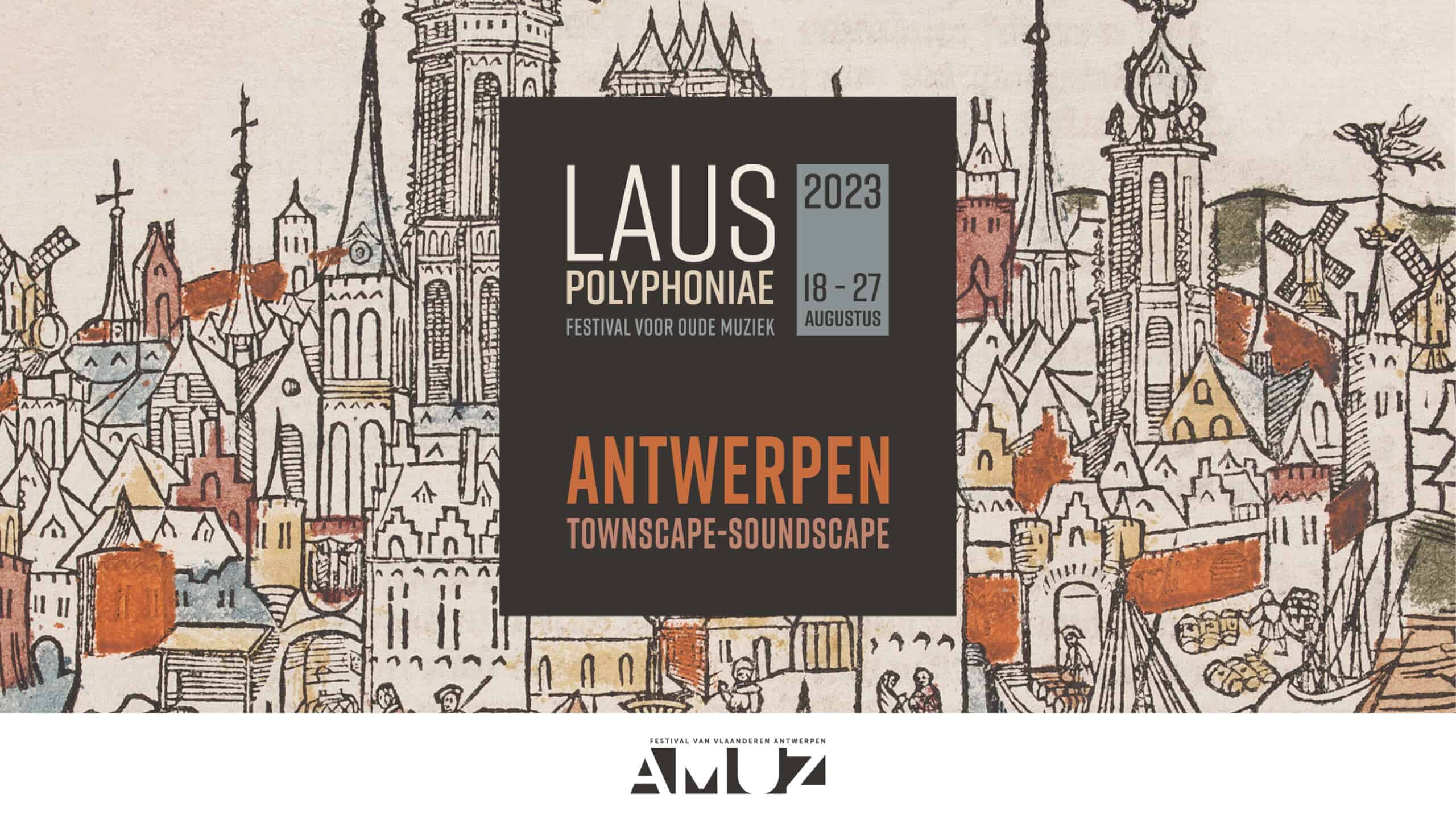
ORGANIZATION: Laus Polyphoniae 2023: Antwerpen. Townscape – Soundscape, continuing until Sunday 27 August