French premiere of Der Kreiderkreis by Zemlinsky
Golden Label Opera nomination - Der Kreidekreis (the chalk circle), created in Zurich in 1933, is an opera in three acts and seven scenes with a libretto that the composer distilled from the 1925 play by Klabund, a German writer and poet who had been inspired by a Chinese theatrical work from the Yuan period.
Der Kreidekreis is the seventh opera by Austrian composer Alexander Zemlinsky (1872-1942), brother-in-law and teacher of Arnold Schoenberg, whose works were banned by the Nazis.
The work confronts good and evil, justice and injustice, righteousness and corruption, poverty and wealth, and also incorporates a Solomonic judgment. The central character is Haïtang, whose journey from decline (she is sold to the owner of a brothel) to redemption (she becomes empress) we follow. The production by the Opéra National de Lyon is the first performance of Der Kreidekreis in France. Belgium still has to discover this opera.
As indicated in the program book of the Lyon production, Zemlinsky moves between periods and styles, but has found his own rich and incomparable musical language. In Der Kreidekreis, he aligns with the trends of his time and combines his own lyrical-expressive style with the colors of the Far East and stylistic elements of jazz music and 'Zeitoper' (the operas of the 1920s and '30s inspired by contemporary events). Zemlinsky gathers all this in a form that leans toward epic theater with spoken dialogue, melodrama and song, and does so in an admirably sober manner.
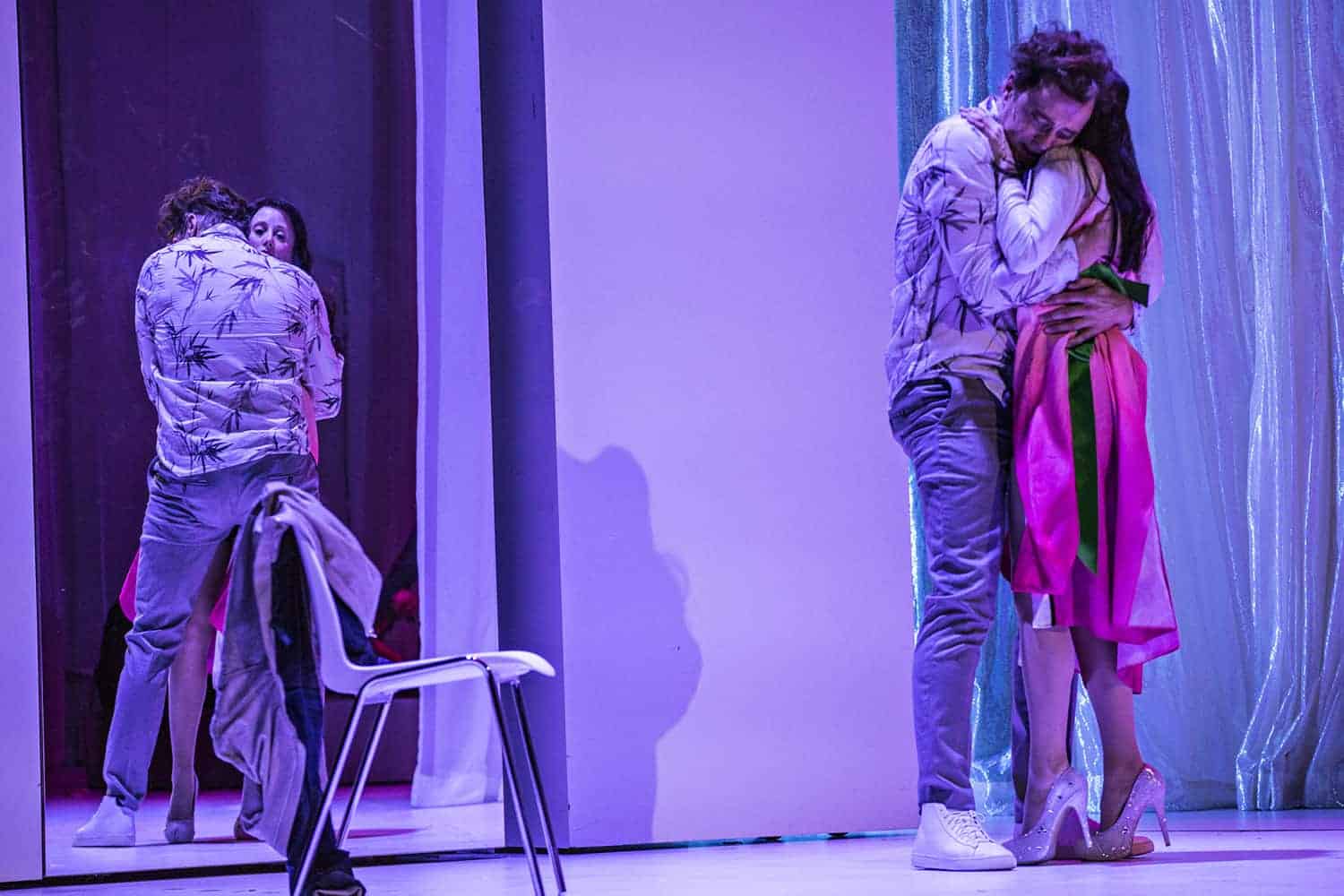
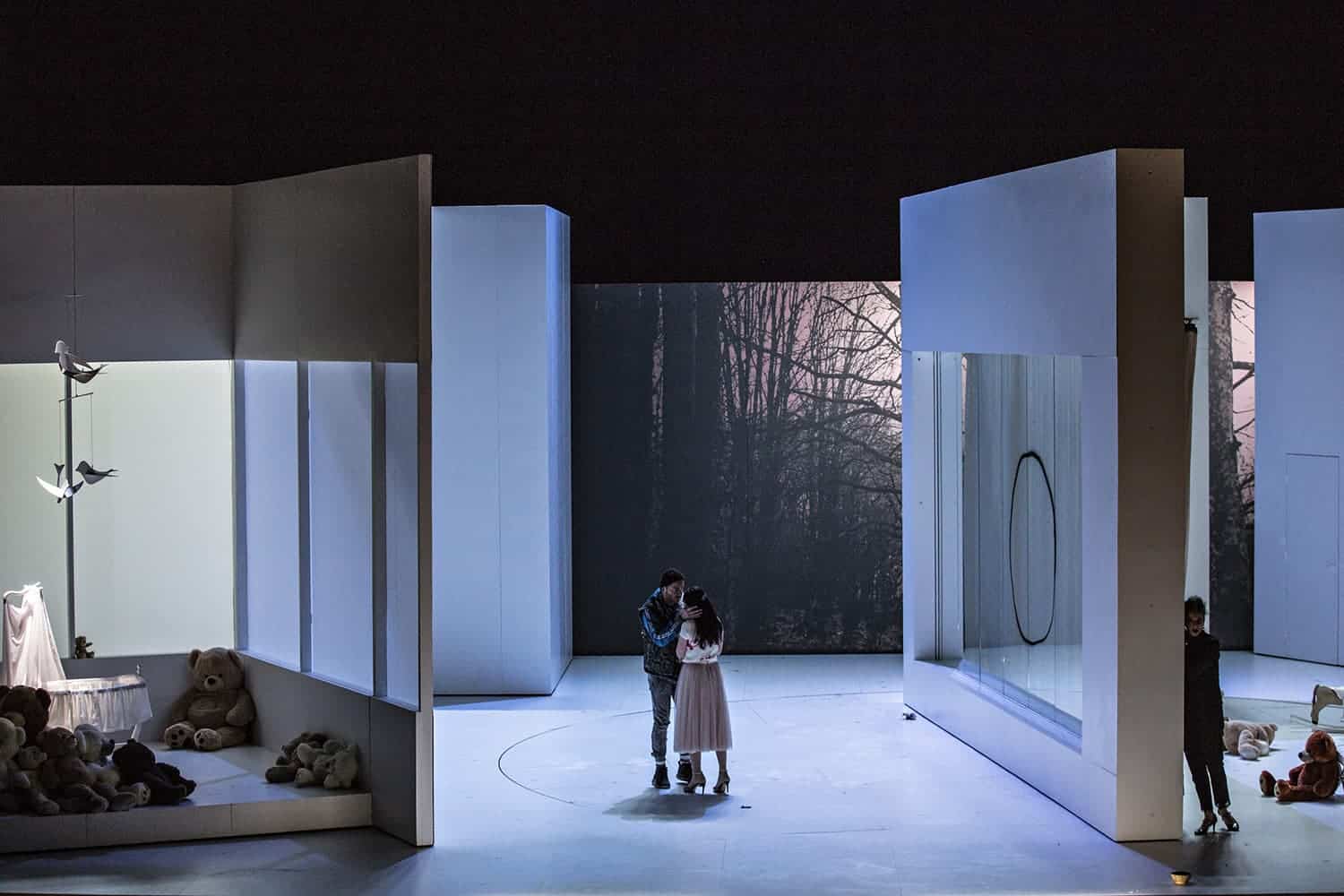
It is German conductor Lothar Koenigs who, with the orchestra of the Lyon opera, has made us discover this complex, original and refined score by the prima dramaturg and subtle tone painter that Zemlinsky was, and defended it with fervor and elegance. The staging was entrusted to Richard Brunel, who combined fable, topicality and didactics in a clearly legible production with realistic and poetic scenes in the sober yet practical and suggestive sets by Anouk Dell'Aiera, the costumes by Benjamin Moreau and the beautiful lighting effects by Christian Pinaud.
The character direction was detailed, the interaction lively and engaging, and the characters well-profiled, though primarily characterized from the socially and politically critical perspective of the staging. Thus Prince Pao is more of an agitated, lustful man when he meets Haïtang and is supposed to fall in love with her, and later a rather stiff, awkward emperor who finds it difficult to adapt to his new role. And Mr. Ma, the mandarin, is presented mainly as a brute who, admittedly, shows more humanity afterwards. Martin Winkler portrayed this character with much conviction and authority and projected the text in an exemplary manner with his powerful, bronze voice. Prince Pao came to life thanks to the temperament and allure of tenor Stephan Rügamer.
Ilse Eerens as true stage empress
It was the young Flemish soprano Ilse Eerens who performed Haïtang, the young girl who is first sold to a brothel, then to Mr. Ma (the mandarin responsible for her father's suicide), whose second wife she becomes and mother of his son, a child that is disputed by Yü-Pei, Ma's first wife, who moreover accuses her of poisoning her husband. Thanks to Emperor Pao's Solomonic judgment, Haïtang will not only be saved but even elevated to his empress (not, however, in the final scene of Richard Brunel's staging!).
Ilse Eerens exemplarily evoked the various emotional states of the young woman, her humiliation and suffering, her hope and determination and finally her happiness, illustrated by her supple and radiant voice and her nuanced and expressive vocal interpretation in all emotional registers.
Nicola Beller-Carbone brought much allure and vocal power to her rival Yü-Pei, Ma's venomous first wife. Hedwig Fassbender (the midwife), Doris Lamprecht (Haïtang's mother) and Josefine Göhmann (a flower girl) did excellently in their smaller roles. The character of Tschang-Ling, Haïtang's brother, was convincingly portrayed on stage by Lauri Vassar who (unable to sing) was assisted by the expressive recitation of baritone Julian Orlishaussen.
Good performances in smaller but characteristic roles were delivered by Stefan Kurt (Judge Tschu-Tschu), Zachary Altman (Tschao, secretary of the tribunal), Paul Kaufmann (Tong, the brothel owner) and Luke Sinclair and Alexandre Pradier (two coolies). A fine French premiere of a rich work that richly deserves rediscovery.
- WHAT: Der Kreidekreis, opera by Alexander Zemlinsky
- WHO: staging Richard Brunel, sets Anouk Dell'Aiera, costumes Benjamin Moreau, lighting effects Christian Pinaud, orchestra Opéra de Lyon, conductor Lothar Koenigs, soloists: Ilse Eerens (Haïtang), Martin Winkler (Mr. Ma), Stephan Rügamer (Prince Pao), Nicola Beller-Carbone (Yü-Pei) and others
- WHERE & WHEN: Opéra de Lyon, January and February 2018
- PHOTOS: Opéra de Lyon
- [embed]https://youtu.be/n2TSxZqlidI[/embed]