A mountain panorama in sound
On Friday, August 15, the Stadtkirche St. Wenzel in Naumburg opened its centuries-old doors. Outside, evening light settled over the square; inside, silence gave way to music. Naumburg, rooted in the spiritual and cultural tradition of Central Germany, breathes history – not as a burden, but as a living stream.
The famous Uta von Naumburg, immortalized in stone in the nearby Cathedral, has watched over time and transience since the thirteenth century. In St. Wenzel, the past still resonates literally: through the Hildebrandt organ, a masterpiece that Bach himself helped shape. What sounded that evening was more than a concert. It was a musical journey – a panorama in sound in which baroque, improvisation and the deep timbre of an alpenhorn met. The Swiss musicians Christoph Schönfelder and Rudolf Lutz invited the audience on a journey along familiar peaks, unexpected turns and deep ravines. Their guide? An organ that sounds like a mountain landscape itself: powerful, subtle and timeless.
A church opens – Hildebrandt organ: voice of stone and time
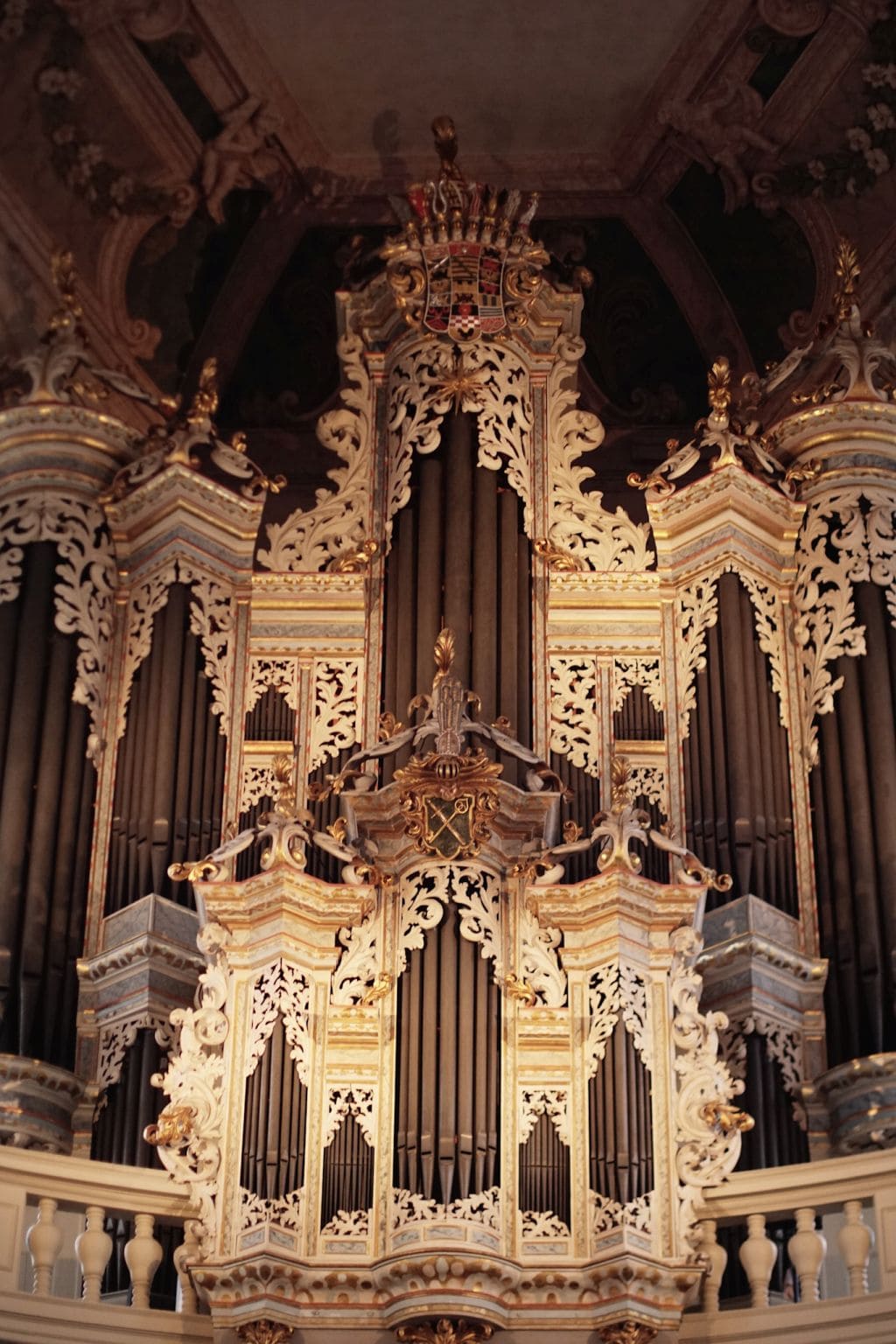
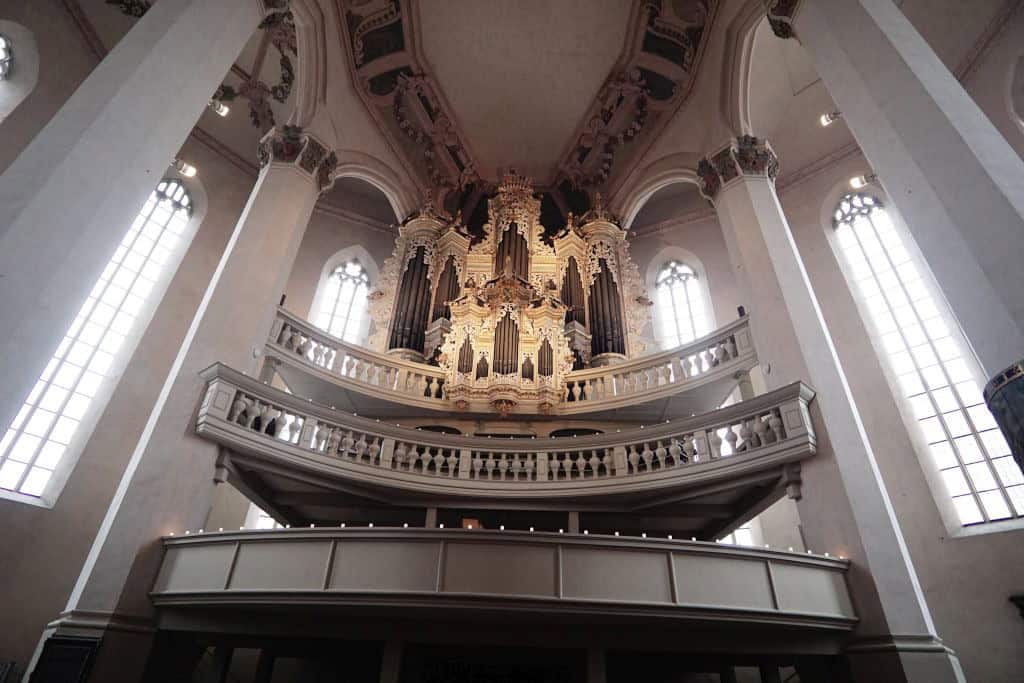
St. Wenzel is more than a church: it is a space where layers of time converge. Gothic and baroque melt into a breathing stillness, in which every detail seems to listen. Looking up, one sees the Hildebrandt organ – since 1746 a steadfast guardian above the choir, elevated and alive as a muse in wood and metal. The instrument was built by Zacharias Hildebrandt (1688-1757), pupil of Gottfried Silbermann (1683-1753), but with a voice of its own. No imitation, but an original masterpiece: expressive in conception, richly varied in tone color, characterful and singing. Under the watchful eye of Johann Sebastian Bach (1685-1750), it was designed, completed and approved. Thanks to a thorough restoration (1993–2000) by Eule Orgelbau, it sounds today as it did then – clear and warm, as if wind, wood and metal breathe together. A voice with the depth of a valley and the glitter of sunlight on mountain water.
Musicians: between heritage and exploration
Before the first note sounded, the musicians took the floor. Not a traditional concert, they announced, but a journey — with heights and pitfalls, with structure and risk. A climb, in which mist and the unexpected were also welcome. On this journey we were guided by two exceptional guides from St. Gallen, Switzerland: Rudolf Lutz and Christoph Schönfelder. Lutz, a seasoned improviser and artistic director of the J.S. Bach-Stiftung, is known for his ability to speak music – with flair, with humor, and with a charming Swiss accent. His younger colleague, Schönfelder, recently appointed titular organist of St. Gallen Cathedral, was trained by the Regensburger Domspatzen and perfected his studies in Munich and Italy. For him, improvisation is not a technique, but a mother tongue. According to Lutz, he plays as the young Bach himself might have sounded: free, virtuosic and full of imagination. And this was evident in the program that followed: an alternation of established masterworks and spontaneous creations, in which seriousness and playfulness flowed effortlessly into each other.
A concert as a journey
The musical journey unfolded like a mountain landscape full of surprises. Schönfelder was repeatedly challenged by Lutz with improvisation assignments on stops such as the Spitzflöte and Vox humana. The response was always apt: vivid, musical and surprising. Schönfelders imagination moved not only the audience, but also surprised his colleague. Later, the tables turned: during the Trio Sonata No. 6 in G Major (BWV 530), a technically demanding work with three independent voices distributed between hands and feet, Schönfelder interrupted the performance to give Lutz an improvisation assignment. A playful act of retaliation, which Lutz answered with elegant flair. Schönfelders performance of the notoriously difficult sonata was clear and brilliant. The opening section sparkled, the middle section sang, the closing section showed pure bravura. The music breathed like a climb of the organ itself – heavy, sparkling, precise.
Bach as a beacon
Amidst the improvisation frenzy, two fixed points from Bach's Orgelbüchlein also resounded: Jesu, meine Freude (BWV 610) and In dir ist Freude (BWV 615). The first sounded like a quiet stream beneath the chorale, reserved and serene. The second bubbled with rhythmic joy, dancing and light. What made these works special was their dual nature: first performed classically, then reborn in improvisation. Old forms became sound doors to new worlds. The message was clear: tradition is not stagnant water, but a source that springs forth anew each time. And Freude, joy, became the keyword of the evening – both musically and spiritually charged.
Goosebumps moment: alpenhorn and organ
An unexpected highlight came midway through the concert. Lutz appeared at the front with an alpenhorn, while Schönfelder sat down behind the organ above. What began as a sound experiment grew into a moving dialogue. The archaic sound of the horn blended seamlessly with the breathing organ sound – a symbiosis of earth and heaven, alpine valley and gothic vault. For many in the church: an unforgettable moment of goosebumps. Later, Lutz also brought two folk melodies from the Appenzell region, including the melancholic Wälserli. He sang and played, simple and disarming. The audience smiled – moved by the purity of the moment.
La Folia – four hands, four feet, fireworks
The apotheosis did not delay. On the centuries-old theme La Folia, Schönfelder and Lutz improvised together — four hands, four feet, one organ. What began as a playful dialogue grew into a fiery climax. The Hildebrandt organ thundered, the audience held its breath. Virtuosity, pleasure, fireworks. A fitting finale for an evening full of discoveries.
One-time and unforgettable
Improvisation lives in the moment — and disappears in it. What Schönfelder and Lutz created that evening will never sound quite the same again. And that is precisely where the magic lay: whoever was there, young or old, experienced something that cannot be repeated. A musical journey, etched in memory.
Art in dialogue
Parallel to the concert, a small exhibition of contemporary works by artist Roland Lindner took place in the church. His installation Tore gehen auf — an open door behind which countless keys are visible — spoke to the imagination of many visitors. A striking metaphor for what Schönfelder and Lutz did: that evening they opened countless doors of sound. Via the Hildebrandt organ, they entered worlds that remained hidden to those who merely look, but reveal themselves to those who listen.
Lingering echo
When the last sound faded and silence once again took possession of the nave of St. Wenzel, the space remained filled. Not with music, but with memory. Of an evening in which two musicians sought the unknown, together with their audience — far beyond the horizon of the predictable.