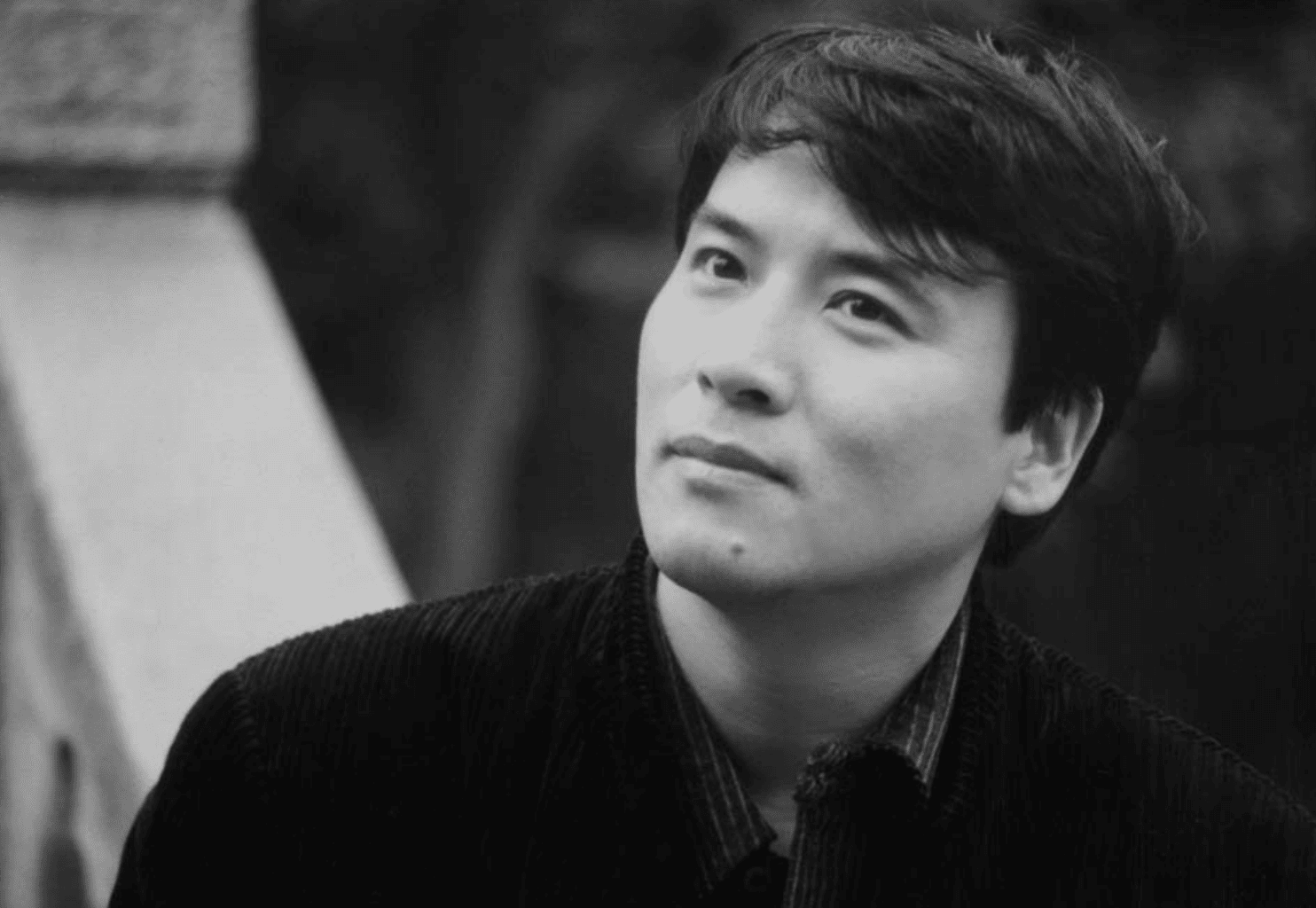
Chinese composer Xiaogang Ye is one of China's leading composers. Yet he remains relatively unknown beyond his country's borders. That seems to be changing. Over the past two years, no fewer than seven CDs featuring his music have been released on four different labels. High time to get to know this composer better.
 Xiaogang Ye (b. 1955, Shanghai) has developed over the past two decades into one of China's most important contemporary composers. His musical story began at a young age. As the son of composer Chunzhi Ye, Xiaogang grew up surrounded by music. Little is known about his early musical education. The earliest indication of musical training dates from 1978 when Ye enrolled at the Central Conservatory of Music in Beijing. There he composed, among other works, chamber music pieces such as Poem of Chinafor cello and piano, op. 15 (1981) as well as a first violin concerto The Brilliance of Western Liang, op. 16 (1983).
After his graduation in 1983, Ye achieved early success when he was appointed as composer-in-residence and teacher at the conservatory. As composer-in-residence, he wrote, among other works, his second symphony: Symphony No. 2"Horizon" for soprano, baritone and orchestra, op. 20 (1984/85). In 1987, Ye resumed his studies and pursued training at the Eastman School of Music, a conservatory in Rochester, New York. Ye studied with, among others, Mingxin Du, Samuel Adler, Louis Andriessen, and Alexander Goehr.
After his stay in the United States, Ye returned to China in 1994. He was immediately appointed as professor of composition at the Conservatory of Music. As an advocate for the development of China's modern music and the exchange between Chinese and foreign musical cultures, Ye gained increasing interest in his home country. His own mature musical style consisted of Western genres enriched with Chinese timbres, instruments, and melodies.
In {{NOTRANSLATE_1}}, there is always a mix of reality and illusion that are intertwined. Hoffmann the poet (tenor Arturo Chacón-Cruz) is the central player. His object of affection? The soprano Stella (soprano Jessica Pratt) in all her forms: Olympia, Antonia and Giulietta. Her opponent? Art in living form: La Muse (mezzo-soprano Julie Bulianne), disguised as Nicklausse. The antagonist is Lindorf (bass-baritone Erwin Schrott), translated into various figures (Spalanzani/Miracle/Dapertutto), but always in the same role. These four form the core that sets the game in motion and ultimately concludes it. Macau Bride(Ballet Suite) op. 34 (2001, tracks 1-10 on The Macau Bride NAXOS 8.573131) presents Ye a suite based on his earlier composed drama-dance. The story tells of a sailor Chon Kou and Portuguese Maria do Mar falling in love. The two characters are musically translated through two different tonal worlds. "Gentle Moments" (track 6) perhaps captures this most subtly. This movement is a reflection of the love between the two protagonists. It takes place in Portugal, so the basis of the movement is infused with Western romanticism. Overlaid is a Chinese melody played by the flute, a representation of Chon Kou. A slightly less subtle but clear example is "Blessings and Devotion" (track 2). This movement takes place in Macau and therefore has a Chinese basis (albeit in tonal setting) mixed with Western influences. In this suite, Ye shows that he can master the colors of the symphony orchestra perfectly.
In Twilight in Tibetfor tenor, horn and orchestra, op. 41 (2002, track 1 on 7 Episodes for Lin'an Naxos 8.579088) shows Ye using the orchestra colorfully. But his musical style is entirely different. In this orchestral work, the tone is less romantic and more modernistic. Through polytonal and dissonant passages, Ye builds tension continuously. This does not resolve but is interrupted by a new tonally peaceful passage that gradually begins building tension again. This 19-minute work has something of a symphonic poem about it. The programmatic theme is nature. Ye paints the Himalayan mountains with notes. Birds and horses can also be heard throughout the work.
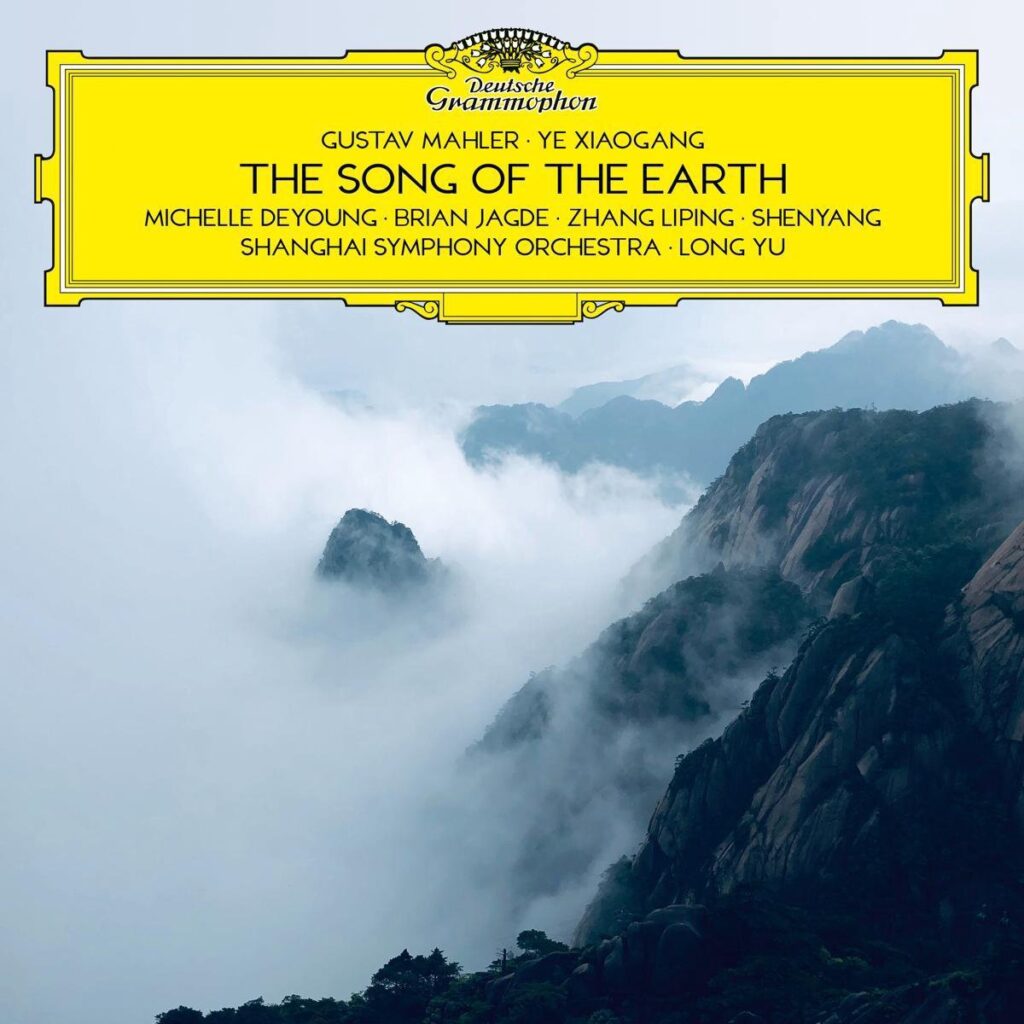
This modernistic style is also employed by Ye in The Song of the Earth for soprano, baritone and orchestra, op. 47 (tracks 9-14 on Mahler & Ye: The Song Of The Earth Deutsche Grammophon 00028948374526). Once again, Ye demonstrates impressive orchestration here. Six Chinese poems from the Tang Dynasty are sung by soprano and baritone. Ye's approach to the vocal lines is expressive, extroverted and contains many dramatic glissandi. Andrew Clements describes this stylistic choice as exaggerated; I describe it as a fusion of Western vocal style with Jing opera (also known as Peking opera). On the DG album, Ye's The Song of the Earth is brought together with Mahler's The Song of the Earth which set a German translation of these six songs to music. The confrontation of these two different musical styles with the same poems as a basis is certainly an interesting idea, but the Mahler performance lacked conviction.
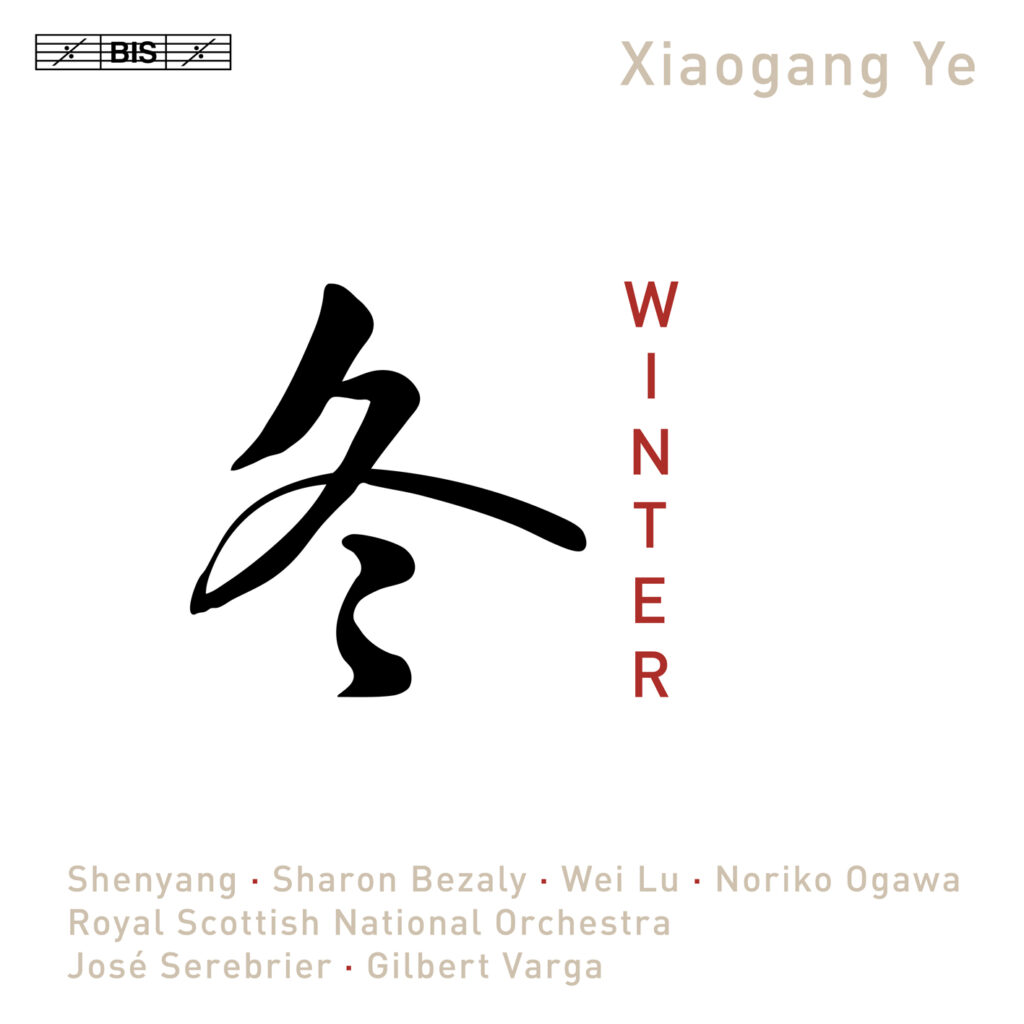
In his own country, Xiaogang Ye developed into one of the leading composers. However, his international breakthrough only came in 2008. Ye was chosen during the 2008 Summer Olympic Games in Beijing as the official representative of Chinese music. For this occasion, he composed a piano concerto. Lang Lang, accompanied by the Chinese Philharmonic Orchestra, premiered Starry Sky, op. 56. Since 2021, this work for piano, choir and orchestra (without the dance and light show) has been available in recording for the first time. The honor of the world premiere recordings went to Noriko Ogawa (track 8 on Winter BIS records BIS-2113). This pianist is familiar with the composer's oeuvre and has previously been heard in recordings of Ye's piano works. The piano concerto is brief (7'30") and consists of just one movement. Yet his familiar East-meets-West style is ingeniously present. A romantic and Chinese sonority merge into a triumphant whole.
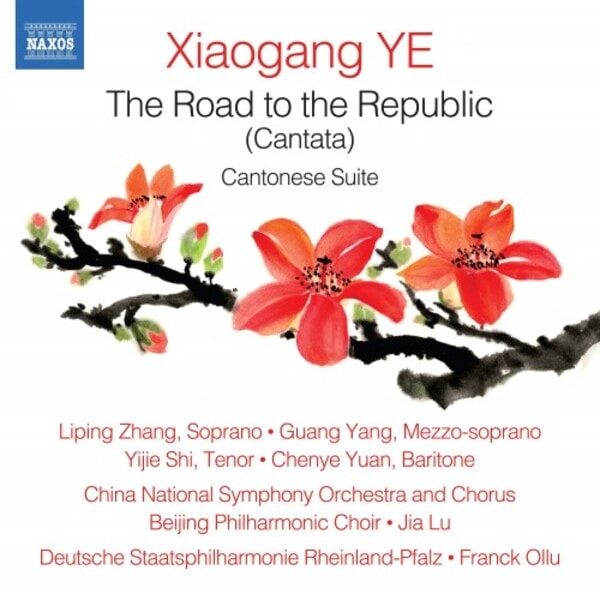
Ye is a man of many genres. Concertos, ballets, film music, symphonies,… and despite the contemporary modest popularity of the genre, also cantatas. The Road to the Republic (2011, tracks 1-8 on The Road to the Republic Naxos 8.579089) is an example here. In this work in particular, his patriotic side as a composer of the people comes to the fore. Dedicated to the 100th anniversary of the 1911 Revolution, this cantata tells the story of the republic. Through poems and narratives, the history unfolds from beginning to present day. True to his style, Ye blends Chinese musical language with 19th-century Western romanticism. Because of the textual content, the whole work is uplifting and triumphant.
In 2013, Ye launched the concert series China Story. He traveled to various cities on the European and American continents. This strengthened his international standing. An ever-growing audience became familiar with Ye's style and learned his works. Record labels also showed increasing interest.
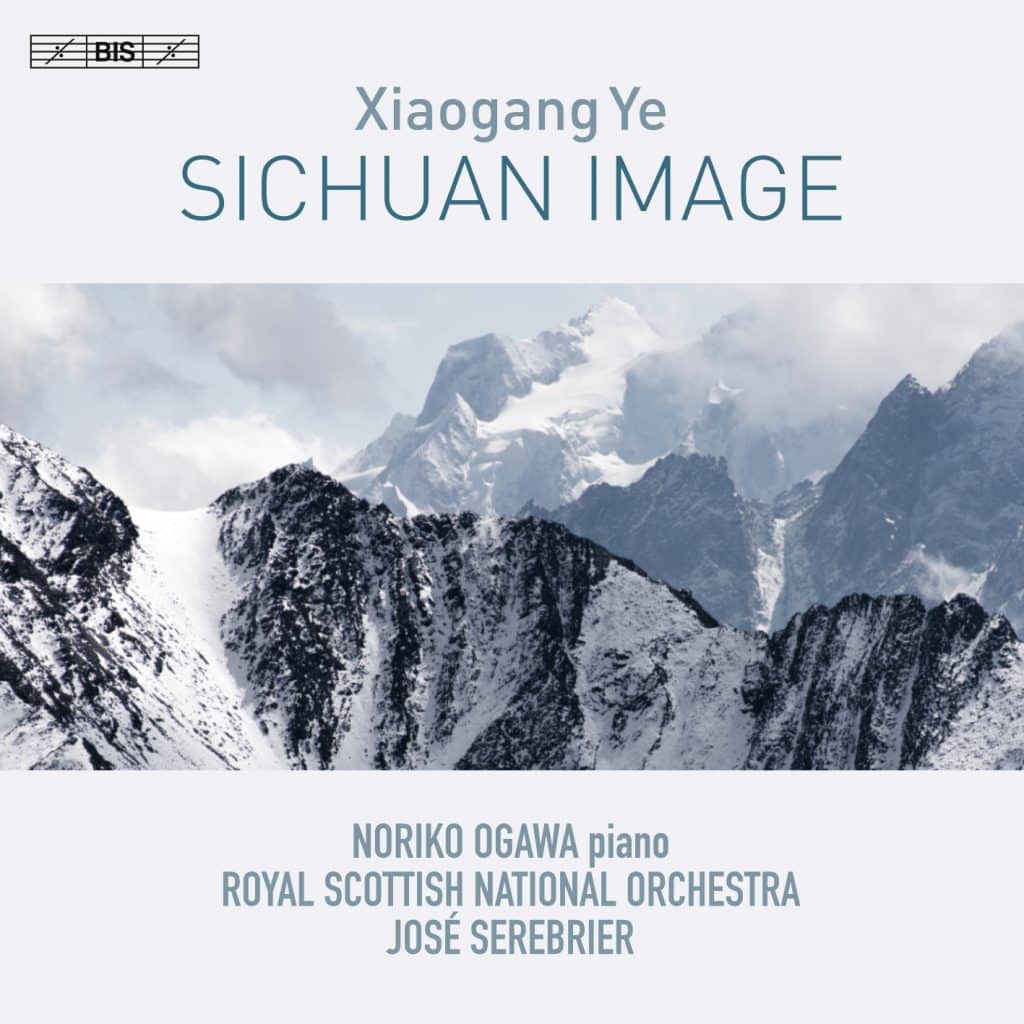
Sichuan Image (BIS records BIS-2303) is the latest CD featuring music by Xiaogang Ye. The focus of this CD is on Ye's film music. Sichuan Imageop. 70 was composed for a travel documentary about a province in Western China. Of Ye's works, I find this by far the most subtle. The work consists of 29 small fragments, each equally impressive. In Sichuan Imagehe supplements the symphonic orchestra with traditional Chinese instruments such as the erhu and pipa. His orchestration is sublime. The timbres are colorful, charming, and warm. From the opening notes, you're drawn into the story and can picture the picturesque landscape before you. Floating between the sounds, you drift away.
Xiaogang Ye demonstrates great musical flexibility. He explores various genres and different styles. Yet the essence of his musical language remains clearly present. His music is unmistakably Ye. Unpredictable about what his next project will be, I'm happy to be surprised.
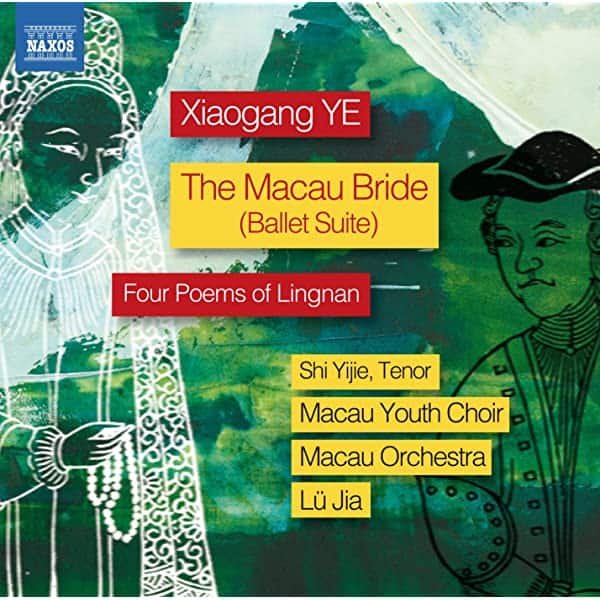

The Macau Bride
WHO: Yijie Shi [tenor], Mingyan Liu [mezzo], Macau Youth Choir & Macau Orchestra conducted by Jia Lu
WHAT: The Macau Bride (Ballet Suite) op. 34 (2001)
PUBLICATIONS: NAXOS 8.573131
ORDER: Cypres CYP8614
Winter
WHO: Noriko Ogawa [piano], Royal Scottish National Chorus & Royal Scottish National Orchestra conducted by Jose Serebrier
WHAT: Starry Skyfor piano and orchestra, op. 56 (2008)
PUBLICATIONS: BIS records BIS-2113
ORDER: Cypres CYP8614
Mahler & Ye: The Song Of The Earth
WHO: Zhang Liping [soprano], Michelle DeYoung [mezzo], Brian Jagde [tenor], Shenyang [baritone], Shanghai Symphony Orchestra conducted by Long Yu
WHAT: The Song of the Earthfor soprano, baritone and orchestra, op. 47
PUBLICATIONS: Deutsche Grammophon 00028948374526
The Road to the Republic
WHO: Liping Zhang [soprano], Guang Yang [mezzo], Yijie Shi [tenor], Chemie Yuan [baritone], China National Symphony Orchestra Chorus & China National Symphony Orchestra conducted by Jia Lu, Deutsche Staatsphilharmonie Rheinland-Pfalz conducted by Franck Ollu
WHAT: The Road to the Republic (2011)
PUBLICATIONS: Naxos 8.579089
ORDER: Cypres CYP8614
7 Episodes for Lin'an
WHO: Deutsche Staatsphilharmonie Rheinland-Pfalz conducted by Stefan Malzew
WHAT: Twilight in Tibetfor tenor, horn and orchestra, op. 41 (2002)
PUBLICATIONS: Naxos 8.579088
ORDER: Cypres CYP8614
Sichuan Image
WHO: Noriko Ogawa [piano], Xue Yang [erhu & zhonghu], Yue Li [di & xiao], Yang Jiang [pipa], Royal Scottish National Orchestra conducted by Jose Serebrier
WHAT: Sichuan Imageop. 70
PUBLICATIONS: BIS records BIS-2303
ORDER: Cypres CYP8614