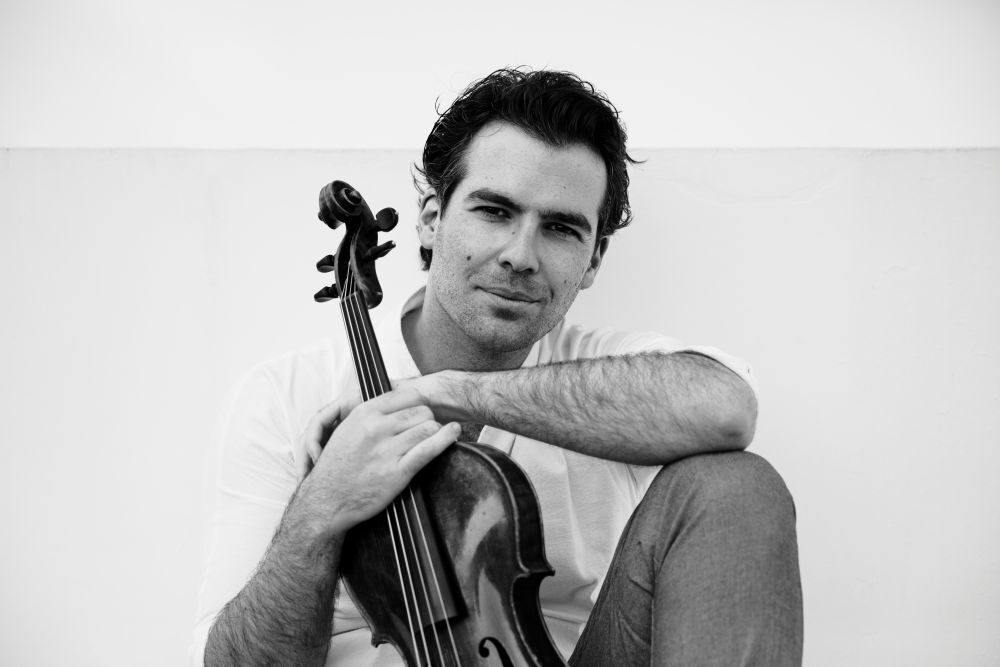
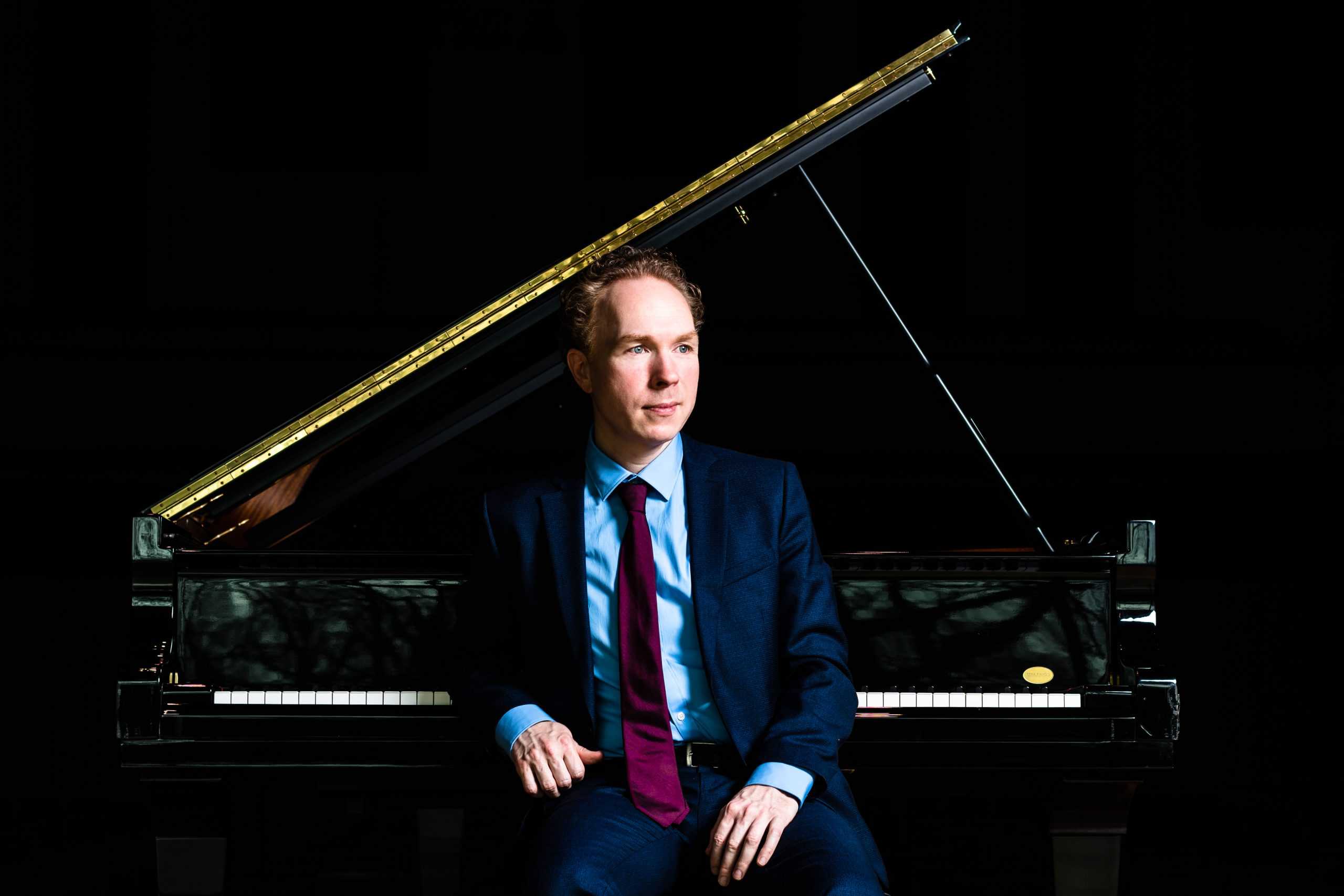
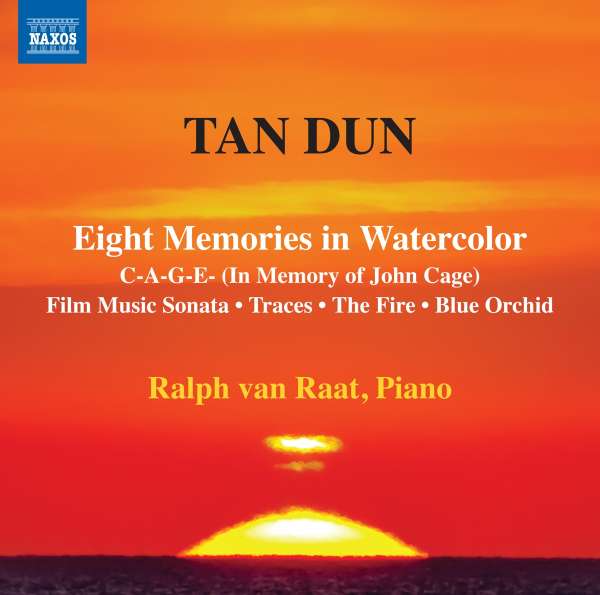
Chinese and Western musical languages merge in the work of Tan Dun (b. 1957). In his Eight Memories in Watercolor (1978, rev. 2002) he paints dreamy scenes that reference Chinese culture. The music has an apparent simplicity but is technically demanding. Ralph van Raat interprets the works with masterful skill. Echoes of traditional instruments can be heard in his piano playing.
Tan Dun (b. 1957) is a Chinese composer and conductor. In his compositions, he blends Chinese and Western musical traditions and enriches them with unconventional "instruments". For example, Water Passion After St. Matthew (2002) and Water Concerto (2007) make use of water bowls as percussion instruments. And as the title already suggests, Dun uses exclusively paper in his Paper Concerto (2008) to produce music. This Chinese composer made his name through film scores. For the film Crouching Tiger, Hidden Dragon (2000) he won the Oscar for Best Original Score, and for Hero (2002) the Grammy Award for Best Score Soundtrack for Visual Media. In 2017 he received a Golden Lion for his complete body of work.
Eight Memories in Watercolor (1978) is one of Dun's earliest piano works. It is his opus 1. Dun composed the work after leaving Hunan for Beijing to study at the conservatory. The Great Proletarian Cultural Revolution (1966-1976) had just ended and the Chinese Republic was opening up to the rest of the world. Western, modernist music found its way to the Chinese capital. Dun immersed himself in the new sounds and blended them with beloved folk melodies from his hometown. His Watercolor expresses Dun's homesickness. As "a diary of longing" he describes it. On his latest Naxos CD, you can hear the 2002 revision. Pianist Ralph van Raat, who specializes in 20th and 21st century music, performs the piece.
The work consists of eight short movements. Each melody is a musical reflection of Chinese culture. "Missing Moon" opens this collection. Using playing techniques such as grace notes, the piano imitates the Chinese instrument the guzheng. To perform this imitation well, the keys must be struck delicately and at the right speed. Van Raat knows how to play this technique with the appropriate intonation.
In the second part "Staccato Beans," bold and daring musical lines form a dreamy sound image. The whole thing sounds like a Chinese ink drawing.
Both the musical and technical highlight of these musical watercolors is part 7 "Floating Clouds." The difficulty of this section is maintaining control over the and piano-dynamics. The delicate stream of notes must sound like a silken water veil. Once again, van Raat proves his musical and technical skill. With his refined impression, he knows how to move the listener.
These watercolors end with the cheerful "Sunrise." This movement is based on the water-splashing festival of the Dai people. The energetic drums of this festival echo in fff-chords and staccatos on the piano. Van Raat brings this textural contrast to life in a dance-like style.
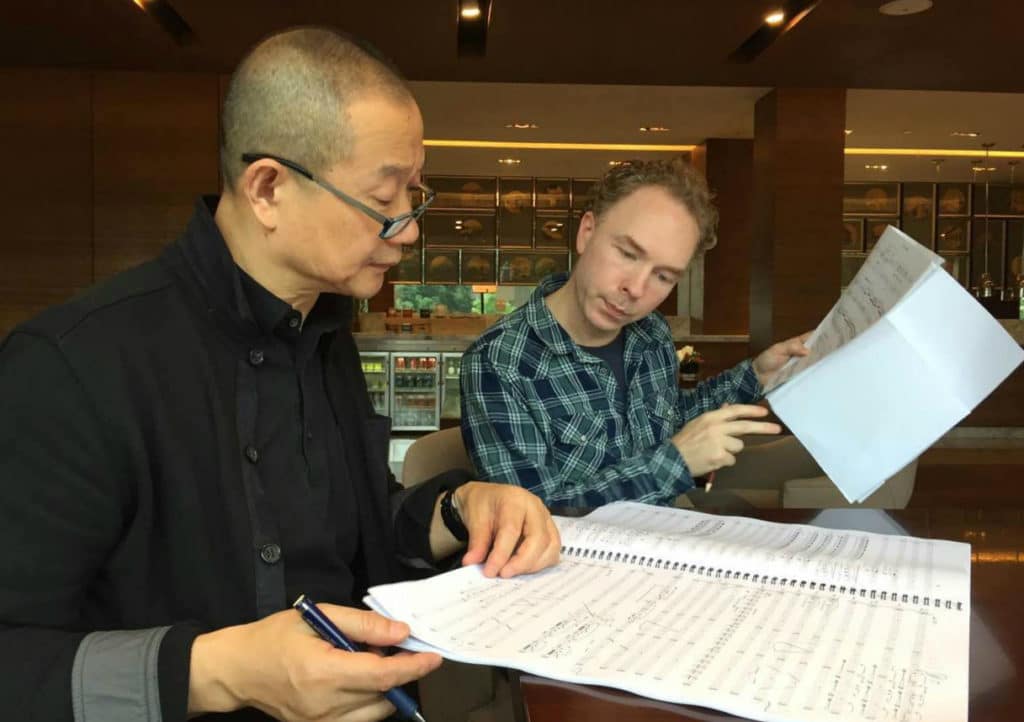
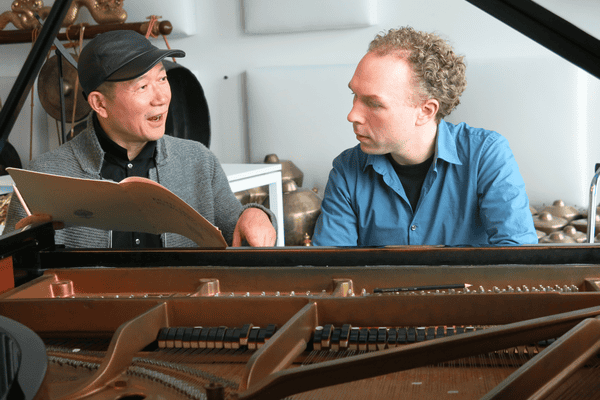
After theEight Memories in Watercolorthe CD continues withC-A-G-E- (In Memory of John Cage) (1993) a tribute to Dun's mentor,Film Music Sonata (2016), Traces (1989, rev. 1992),The Fire (2020) andBlue Orchid (2020) based on Beethoven'sDiabelli Variation. The work The Fire is hereby released on CD for the first time. The title refers to his earlier composition Piano Concerto "The Fire" (2008), composed for Lang Lang and the New York Philharmonic. Dun created this solo version especially for Ralph van Raat. The result is virtuosic and dramatic.
{{NOTRANSLATE_1}}{{NOTRANSLATE_1}}{{NOTRANSLATE_1}}{{NOTRANSLATE_1}}{{NOTRANSLATE_1}} 5/5
- WHO: Ralph van Raat [and piano]
- WHAT: Tan Dun: Eight Memories in Watercolor
- PUBLICATIONS: NAXOS 8.570621
- ORDER: Cypres CYP8614