As tradition dictates, the final evening was interrupted by 'the bell,' followed by the customary words of thanks and praise from the chair of the Queen Elisabeth Competition, Gilles Ledure. This happens every year just as the second candidate of the evening—and simultaneously the last of the twelve—is about to perform. Wouldn't it be better to spare this noble gesture of a brief address until after this final candidate has finished playing?
It does add unnecessary nerves, and that's precisely what someone doesn't need in such a stressful situation. This observation aside, it in no way detracts from the competition as a whole. What's truly disruptive is interrupting the performance of this last candidate. The thanks, which we wholeheartedly support, are absolutely warranted—but please, at a different moment.
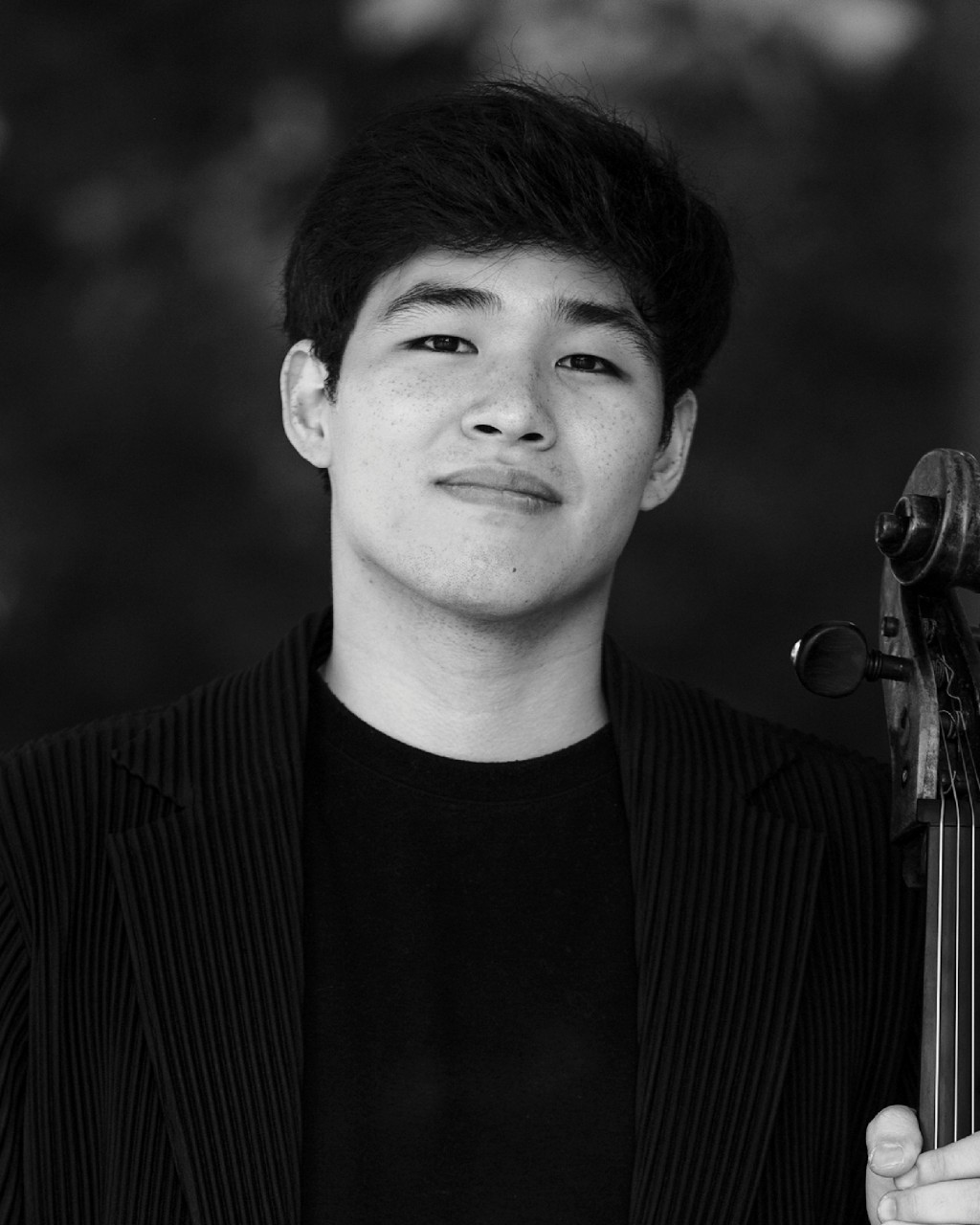
Fang Man (b.1977) – Four Odes to the Tidings of Flowers
Speaking of a sharp opening that's rather aggressive… The cellist employs tight, hard, grinding strokes to make this first movement resonate. The mystery in this work comes through, yet it's more a matter of charging ahead with an excess of youthful energy. The orchestra seems louder than necessary. Byun pulls out all the stops with virtuosity, and because the orchestra plays so loudly, he—like everyone—has to exert himself mightily just to be heard above the overwhelming orchestral sound. His second movement contrasts sharply with the first, being very subtle and delicate, but somewhat 'too much' of a good thing—the listener's attention begins to wane. The third movement jolts you back to attention with an energetic opening that continues and again demands much from the cellist. His tempo is brisk, and then he settles into that beautiful, soothing Bach chord. Part four is intense; there are no beautiful phrases to be heard, no phrasing. Plenty of technique, virtuosity, but rather little personal interpretation.
Henri Dutilleux (1916-2013) – A Whole Distant World
This work has much to offer; had it been chosen as the set piece, it would have been worthwhile. The vast majority of set pieces are consigned to archives anyway, and rightly so. Strong opening followed by warm depth and delicate bowing. Here someone reveals himself as a true musician. This five-movement concerto, which had its world premiere in 1970 performed by Mstislav Rostropovich (1927-2007), does live on, but not sufficiently. Phrasing and breathing: they're not quite there. So much more could be drawn from this work, more personal interpretation. What we're hearing now are simply the notes on the score, complex virtuosity. Making music—that's what could really happen here. The work cries out for it, and we do get part of it, yet it doesn't fully satisfy.
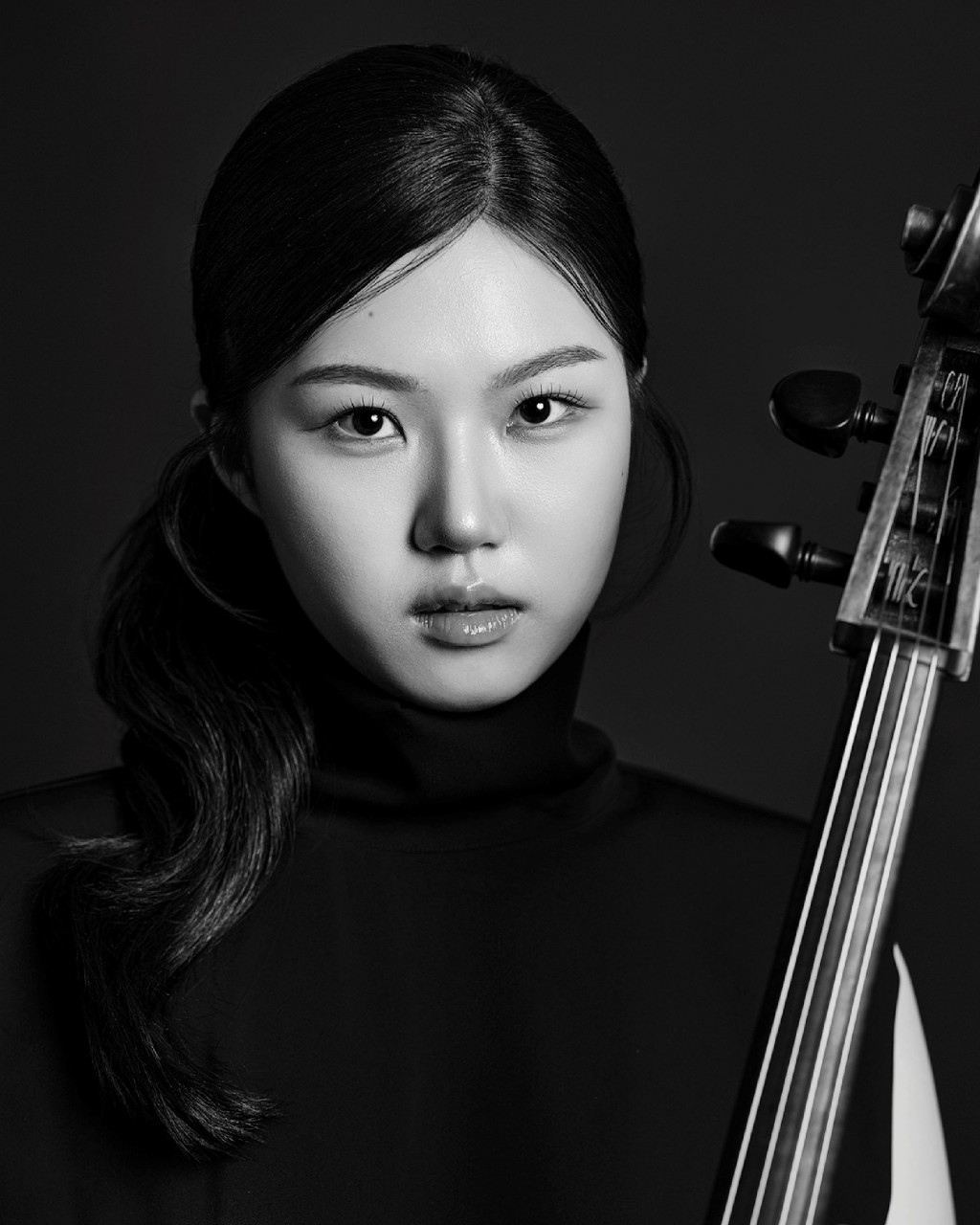
Dmitri Shostakovich (1906-1975) – Concerto No. 1 in E-flat Op. 107
Is this a competition in kinetic theory? Good heavens, it makes you nervous, but that's how she plays too. Rushed. In the few musical phrases of this first movement, there's no real substance. The storm of orchestral noise suits her fine; she plays fast, fierce, virtuously. Pure technique. The second movement she's chosen offers considerable potential for musical contribution through delicate playing. Unfortunately, everything moves to the same uniform beat. Where's the phrasing? The singing? There are grand full bows, there's so much space and freedom written in by the composer—use it then! Sometimes it's there, but she sticks too closely to the notes on the page and doesn't really inhabit the work.
Witold Lutosławski (1913-1994) – Concerto
For the third time, we get a work that had its world premiere with Mstislav Rostropovich on cello. Moreover, both concertos of the evening premiered in the same year. The very long, drawn-out opening has something going for it—originality, highly virtuosic and yet also quite lyrical. With her very resonant, warm instrument, Tae-Yeon Kim delivers a truly commendable performance. This concerto pushes the boundaries of cello playing and focuses strongly on virtuosic passages interrupted by chaotic brass that sound exactly like the horns of cars in an impenetrable traffic jam. Kim fulfills her task of being highly virtuosic with complete dedication, and she adds phrasing wherever she can. Quite a remarkable achievement.