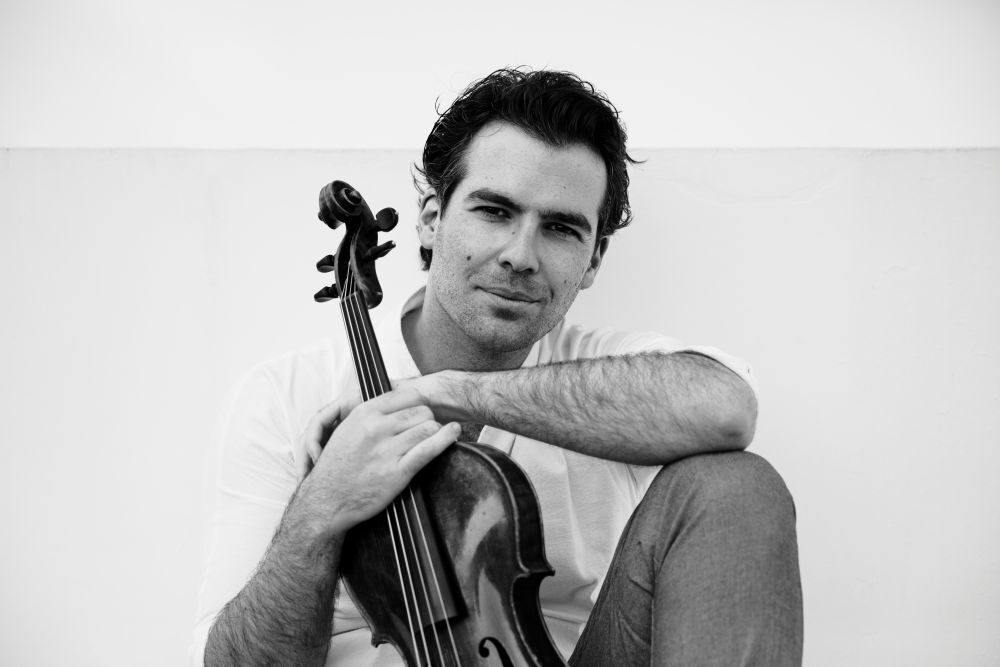
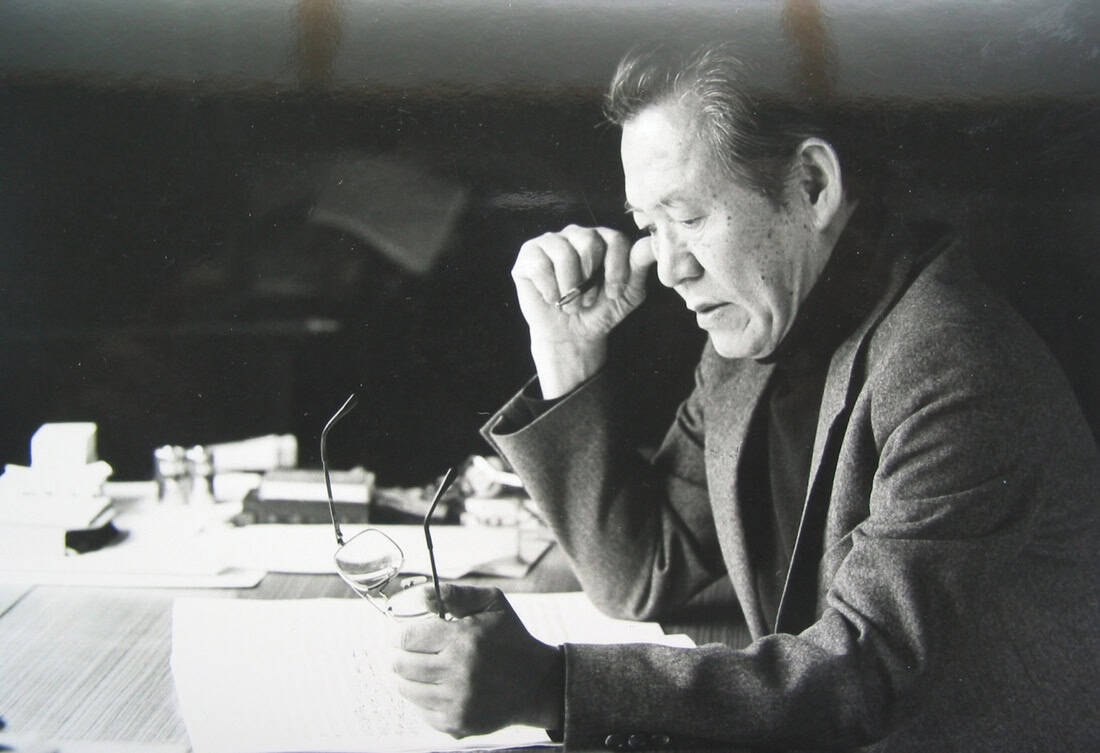
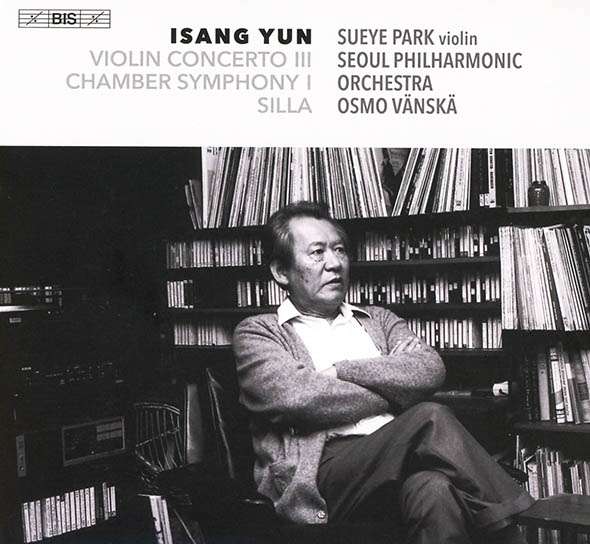
Traditional Korean music, European avant-garde, and an impressive command of timbral colors—these are the three hallmarks that perfectly capture the style of Korean composer Isang Yun (1917-1995). The album proves this point brilliantly. Isang Yun (BIS2642). The Seoul Philharmonic Orchestra under the baton of Osmo Vänskä performs no fewer than three of Yun's orchestral works. For the violin concerto, they are joined by Korean violinist Sueye Park. Together they deliver an impressive performance with meticulous attention to timbral nuances.
The album opens with the orchestral legend Silla (1992). The title refers to one of the Three Kingdoms of ancient Korea (57 BCE to 935 CE). Through various musical lines—each played by a different instrument or instrumental group—a rich sonic spectrum is created. These individual lines are each independent and fascinating in their own way. To fully appreciate the work, it's worth focusing on a different line with each listen. Each time you experience it slightly differently and hear something new.
In {{NOTRANSLATE_1}}, there is always a mix of reality and illusion that are intertwined. Hoffmann the poet (tenor Arturo Chacón-Cruz) is the central player. His object of affection? The soprano Stella (soprano Jessica Pratt) in all her forms: Olympia, Antonia and Giulietta. Her opponent? Art in living form: La Muse (mezzo-soprano Julie Bulianne), disguised as Nicklausse. The antagonist is Lindorf (bass-baritone Erwin Schrott), translated into various figures (Spalanzani/Miracle/Dapertutto), but always in the same role. These four form the core that sets the game in motion and ultimately concludes it. Violin Concerto III (1992), the Korean influences are very clearly audible. For instance, in the second movement [track 03], Sueye Park manipulates her violin's sound to something between a haegeum (Korean fiddle) and an erhu (Chinese fiddle). The ornamentation used is also a reference to Korean folk music.
As the final work comes a chamber symphony. Yun composed a total of five symphonies and two chamber symphonies. The chosen work on the album is Chamber Symphony I (1987), composed for two oboes, two horns, and string orchestra. Once again, the musical play with timbral color stands out from the very first movement [track 05]. The many glissandi and vibrati in the strings emulate the playing technique of a haegeum . In this work too, there are various individual lines that must move together at certain moments and independently of each other at others.
The oeuvre of Isang Yun is known for its stylistic complexity and technical challenges. The many individual lines must sound clear and balanced, the numerous ornamentations must be carefully coordinated, and precise attention must be paid to timbral nuances. The Seoul Philharmonic Orchestra under Osmo Vänskä delivers an outstanding interpretation across all three of these dimensions.
{{NOTRANSLATE_1}}{{NOTRANSLATE_1}}{{NOTRANSLATE_1}}{{NOTRANSLATE_1}}{{NOTRANSLATE_1}} 4.5/5
- WHO: Sueye Park [violin], Seoul Philharmonic Orchestra conducted by Osmo Vänskä
- WHAT: Isang Yun – Three Late Works
- PUBLICATIONS: BIS Records BIS2642
- ORDER: Cypres CYP8614