A romantic journey of discovery through the neo-gothic heart of the Harz Mountains and an intimate festival between music and history
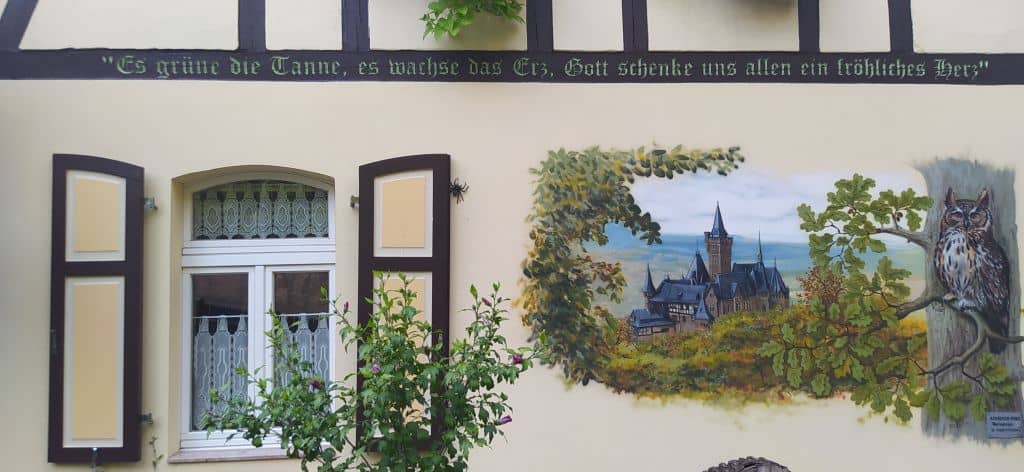
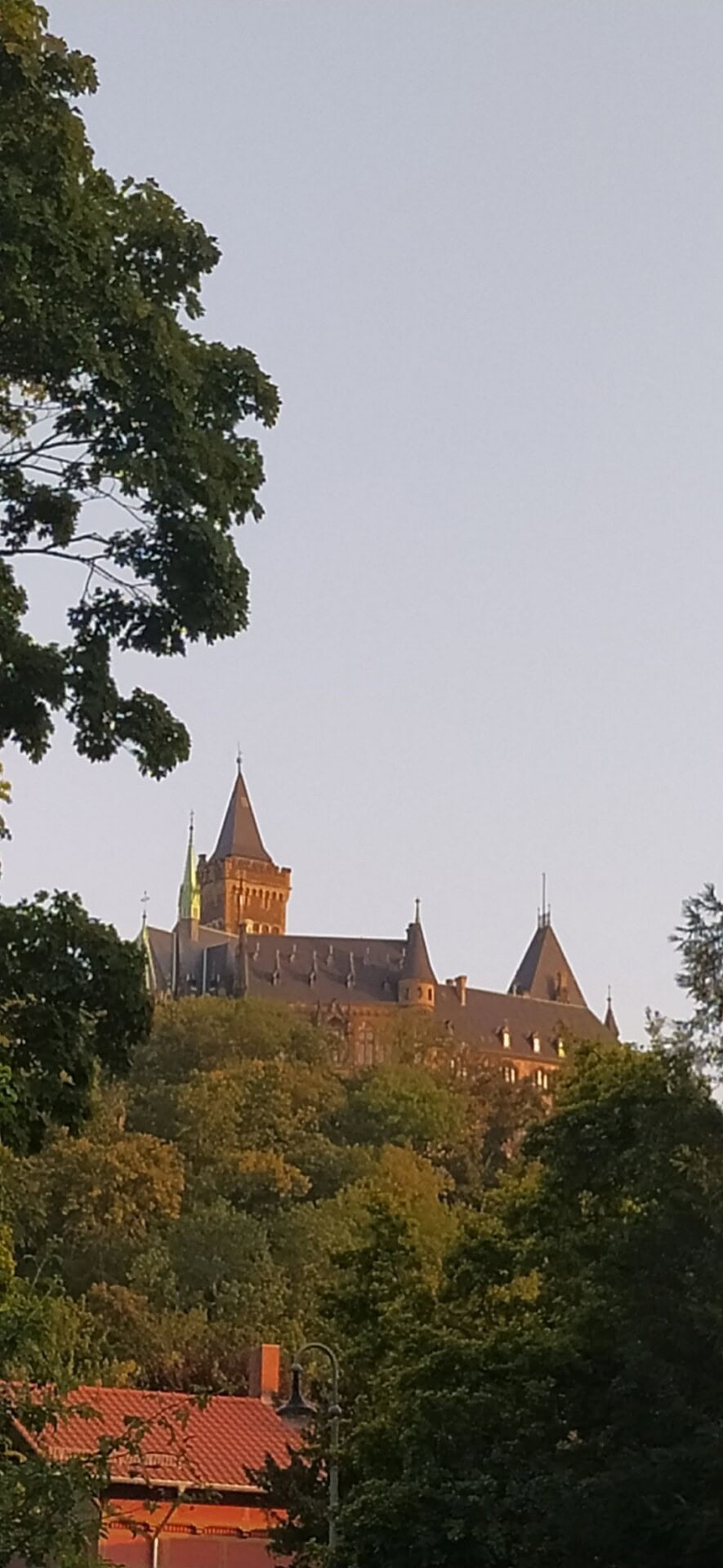
In 2025, the Wernigeroder SchloßFestspiele celebrate their thirtieth anniversary. This festival distinguishes itself within the European classical music landscape as an intimate total experience, in which music, space and history merge in a unique way. The neo-gothic Schloß Wernigerode, situated high on the edge of the Harz Mountains, forms the beating heart of this event.
During the annual Wandelkonzert, a musical journey of discovery unfolds through the building – an experience that appeals not only to the ear, but also to the imagination and memory. The performance was provided by soloists from the Philharmonisches Kammerorchester Wernigerode. Although some passages were not entirely flawless, the musicians played with audible dedication and enthusiasm. The young and dynamic ensemble of the Rundfunk-Jugendchor Wernigerode, on the other hand, brought a particularly pure ensemble sound that made an impression.
Schloß Wernigerode: a living neo-gothic heritage
Originally built in the twelfth century as a fortress for the counts of Stolberg, Schloß Wernigerode acquired its present neo-gothic appearance in the nineteenth century under Otto zu Stolberg-Wernigerode. With its towers, bay windows and richly decorated halls, it reflects the romantic fascination with medieval knightly life. Today it is regarded as one of the best-preserved neo-gothic residences in Germany and as a vibrant cultural centre.
The Wandelkonzert: six stops, six sonic worlds
On Wednesday, 13 August 2025, the castle was transformed into a living musical labyrinth. Small groups of approximately 35 listeners moved through the halls, with each room offering a musical experience tailored to its acoustics. This year's theme was Romanticism, with a special reference to Hans Christian Andersen (1805–1875). In commemoration of his 150th anniversary of death, his work will also be highlighted in an autumn exhibition in the castle. Fragments from Andersen's Harzreise and fairy tales served as atmospheric framing, although the connection to certain musical pieces sometimes felt a bit contrived.
Musical highlights per location
On the "Apfelbaumterrasse", the Rundfunk-Jugendchor Wernigerode opened the concert under a blazing sun. Two a cappella songs formed the opening: the melancholic Abschied vom Walde by Felix Mendelssohn Bartholdy (1809–1847) set the tone immediately. It evoked the feeling of Joseph von Eichendorff's poetry, with the forests and valley as a backdrop unfolding before our eyes. The choir then performed the moving folk song Wenn ich ein Vöglein wär, a fitting beginning to the musical journey.
In the "Fürstinnengarderobe", Rasch und mit Feuer, the third movement from Robert Schumann's (1810–1856) Phantasiestück op. 73, was heard in an arrangement for cello and piano. Despite a slight imbalance in the performance, the cellist convincingly captured the emotional core of Schumann's music. The sound of the electric piano was less convincing and detracted somewhat from the intimacy of the moment.
After a tour through various richly decorated rooms, the audience arrived in the "Schreibzimmer of count Otto zu Stolberg-Wernigerode". There, a violinist performed the Ballade from the third sonata by Eugène Ysaÿe (1858–1931). The performance was intense and virtuosic, though stylistically somewhat outside the Romantic framework. It demanded concentration from the audience, but offered a powerful expressive experience.
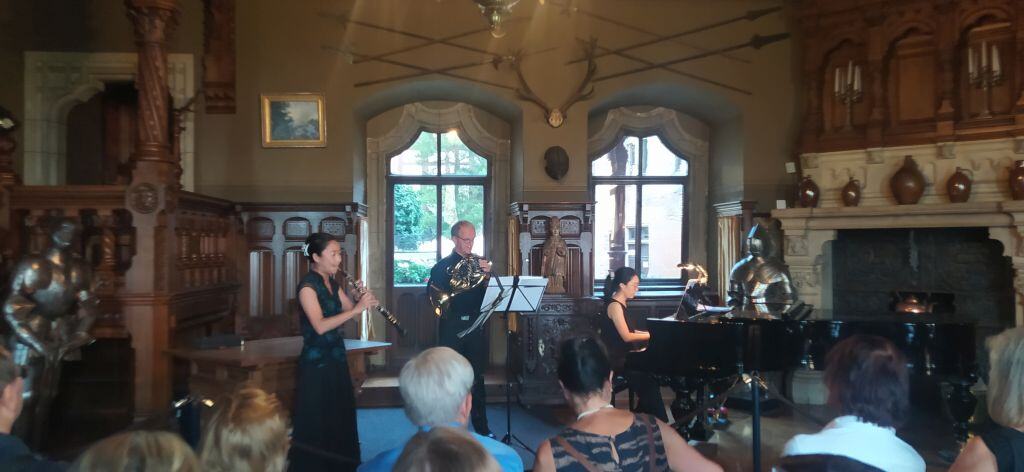
In the imposing "Halle", flanked by hunting trophies, the first movement of Carl Reinecke's (1824–1910) Trio in a minor was performed. With its warm, lyrical melodies and classical structure, the piece fit perfectly with the Andersen theme. For me, this was the musical highlight of the concert, although the "Festsaal" may well have brought the greatest musical discovery.
From the music gallery came two exquisite works for transverse flute and piano. Die Nachtigall by Carl Reinecke, based on a fairy tale by Andersen, enchanted with its simple, clear melody. Pan et les Bergers from Jules Mouquet's (1867–1946) La Flûte de Pan depicted pastoral life in impressionistic colours. Just as the emperor once dined here with music in the background, we enjoyed these elegant gems.
The finale took place in the "Schlosskirche" and was both impressive and moving. The Lacrimosa from Wolfgang Amadeus Mozart's (1756–1791) Requiem, performed by all participating musicians, poignantly expressed the Romantic theme of transience and longing. This was followed by the intimate Romanze in G major for horn and organ by Max Reger (1873–1916), performed flawlessly and with great dignity.
It is noteworthy that this chapel is equipped with an authentic Romantic pipe organ, specially designed for this chapel. The Walcker organ has a warm, rich sound that perfectly suits the space and late Romantic aesthetics.
As a finale, Horch, was kommt von draußen her by Carl Theil (1862–1932) was performed – a light-hearted conclusion. The choir ended with a modern arrangement of I Say Thank You for the Music, a festive encore that spontaneously prompted the audience to join in clapping.
Context and commentary
Art historian Katrin Dziekan provided the contextual commentary. Her in-depth knowledge and vivid anecdotes gave the music added meaning. She succeeded in linking past and present to one another in a tangible way.
A breath of sound and space
Was the climb to the castle, in scorching heat, worth it? Without doubt. The Wandelkonzert proved to be the beating heart of a festival that lifts classical music out of its traditional framework and lets it breathe anew – in dialogue with space, history and audience.
Although not every performance was refined in every detail and some moments seemed a bit awkward, the inspiration prevailed. The musical journey of discovery, spread across the characterful halls of the castle, offered a rare combination of authenticity, adventure and emotion.
The Wernigeroder SchlossFestspiele demonstrate that classical music doesn't need velvet chairs or strict etiquette to move people. Here music comes to life – palpable, powerful and full of meaning. For anyone who wants to experience classical music as a journey full of wonder, breathing room and deep resonance, this festival is a warm recommendation.