

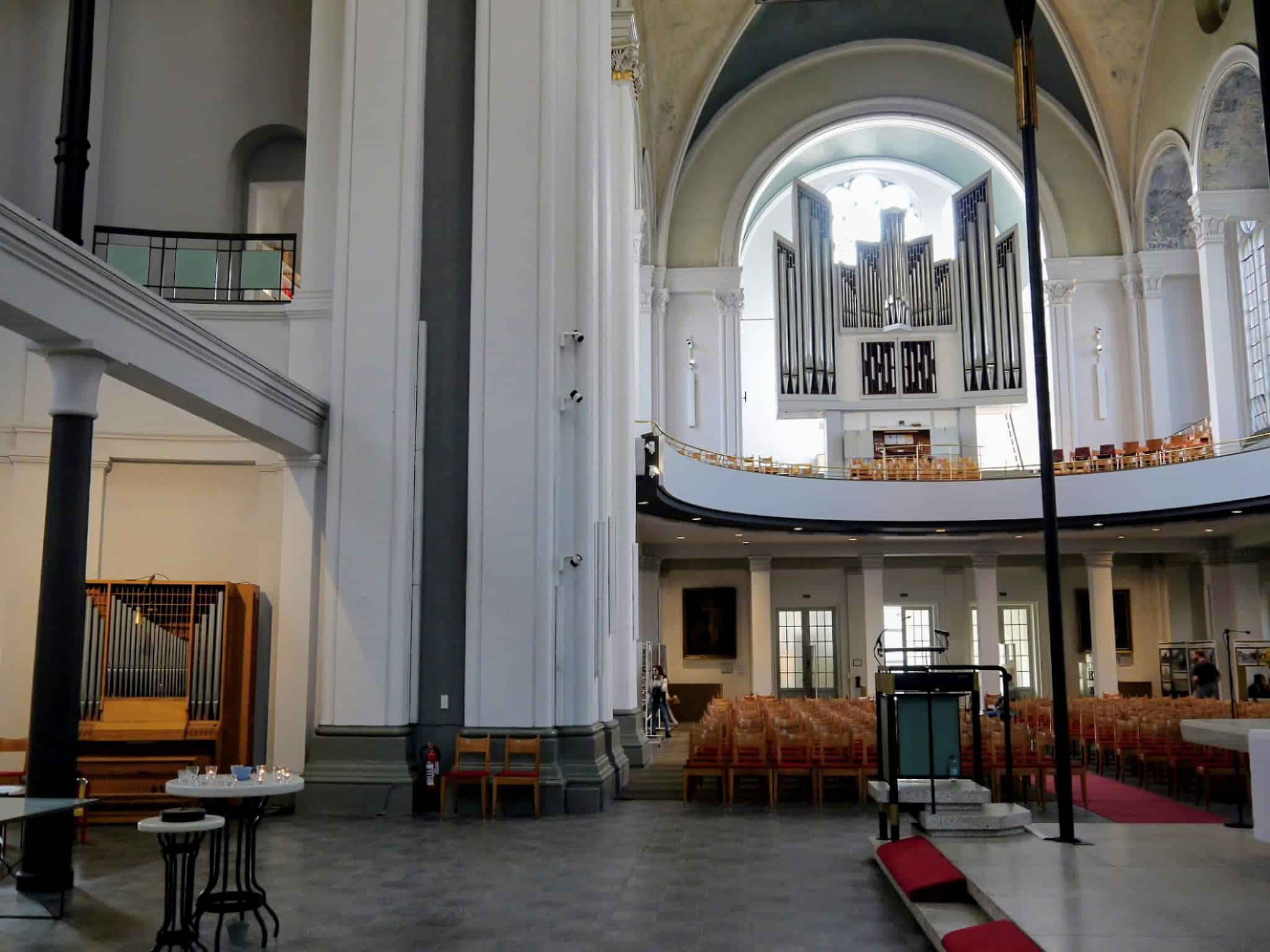
The St.-Thomas-Kirche in Berlin rarely appears on the usual checklist of the hurried city tripper. However, whoever takes the trouble to leave the tourist routes and descends through Kreuzberg past the Engelbecken and Bethanien will discover a place where history and sound intersect with an almost tangible intensity.
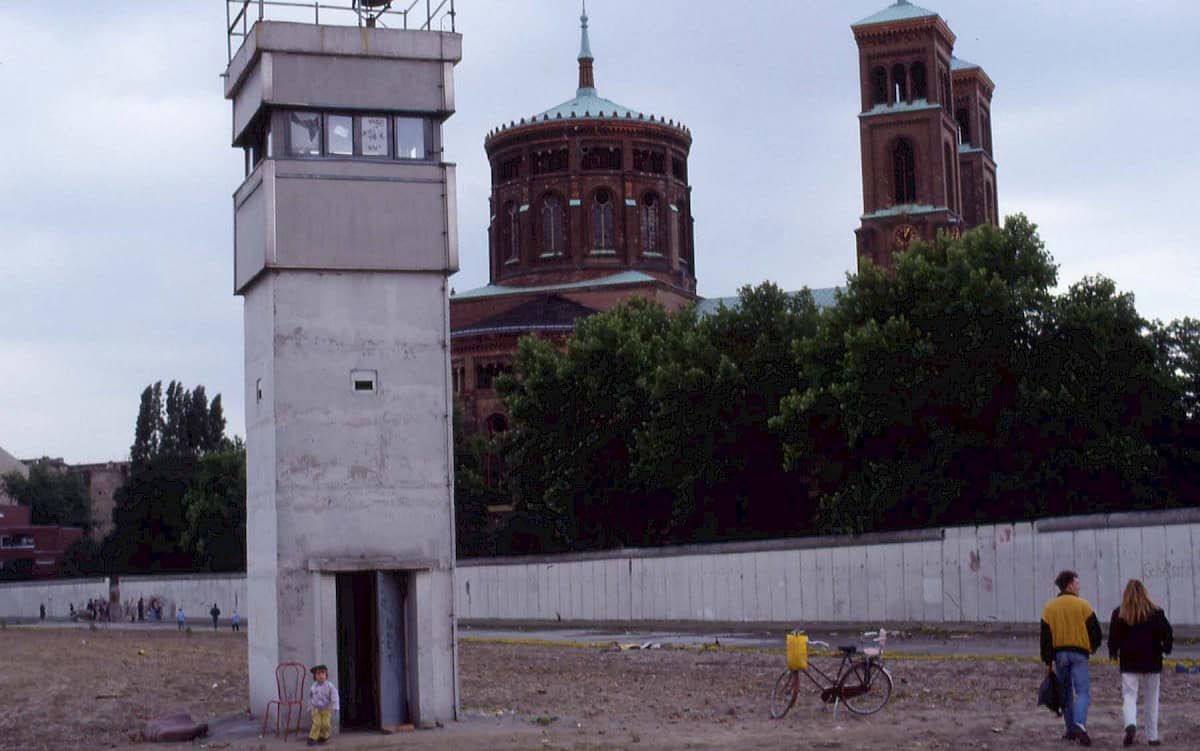 Built at the end of the nineteenth century for what was then the largest evangelical congregation in the world – with room for some three thousand souls – this church bears its past like both a scar and a promise. The devastation during the Second World War and its later location near the Berlin Wall still resonate in the space. The reconstruction gave the building not only its form back, but also a new function as a living music venue. With the installation of the Beckerath organ, the church regained a voice.
The organ, built in 1970 by Rudolf von Beckerath, seems tailor-made for this space: it can whisper without disappearing, but also unfold into a sound that becomes almost physically experienced. It is an instrument that does not overwhelm, but gradually builds a field of tension into which the listener is drawn.
Whoever enters the church on Wednesday afternoons at noon for the concert series "30 Minuten Orgelmusik" comes not only to listen, but to experience. Under the dome, the organ sound unfolds as a breathing mass that fills the space while simultaneously seeming to shape it.
On Wednesday, April 15, Johannes Weber performed the recital. He opened with the Allegro moderato from the First Sonata, op. 65 by Felix Mendelssohn-Bartholdy (1809–1847). As an opening work, this proved a particularly effective choice. Mendelssohn anchors this movement on the chorale "Was mein Gott will, das g'scheh allzeit", which runs as a subliminal thread through the fabric. Weber did not so much make this melody explicitly apparent, but let it grow organically within a clear registration that made the structure of the work visible.
Then followed a triptych of improvisations on evangelical Easter hymns: "Christ ist erstanden", "Erschienen ist der herrliche Tag" and "Wir wollen alle fröhlich sein". Weber proved himself a storyteller par excellence. He first presented each hymn in its recognizable form, only to then break it open into variations that jubilated as much as they hesitated. The registrations were well chosen: from transparent flutes to full, almost orchestral tutti's; you could even hear bagpipes emerging in the sound picture, as if the Easter celebration also carried an archaic, folk-ritual undercurrent. Remarkable was how he, in the midst of Easter euphoria, left room for doubt. Dissonances twisted between the harmonies, like questions that cannot simply be sung away. As if he wanted to suggest that the Easter story too is not free from friction – and perhaps finds its meaning precisely in that.
The finale came again from Mendelssohn, with the Allegro maestoso e vivace from the Second Sonata, op. 65. Here the organ sounded in full glory: monumental without becoming cumbersome, lively without sacrificing precision. Weber held the narrative arc taut, with a rhythmic sharpness that made the space pulse.
That this church lies off the beaten path ultimately proves an asset. Whoever enters here finds not a museum, but a living sound space. The experience evokes associations with organ recitals in St Paul's Cathedral in London, but remains here in Kreuzberg rawer and more direct – and precisely for that reason particularly compelling.