

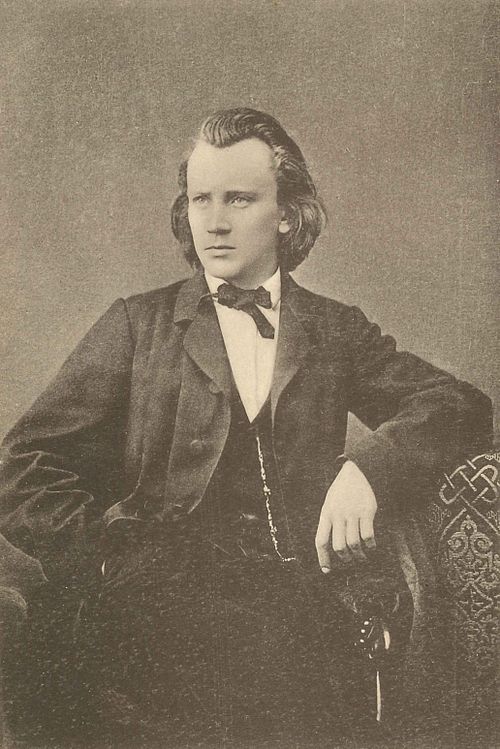
"A German Requiem" by Johannes Brahms (1833-1897) deliberately distances itself from the liturgical framework of the Mass for the Dead. The work is not a prayer for the deceased, but a meditative space for the living, built on words that comfort without promising and that acknowledge without explaining.
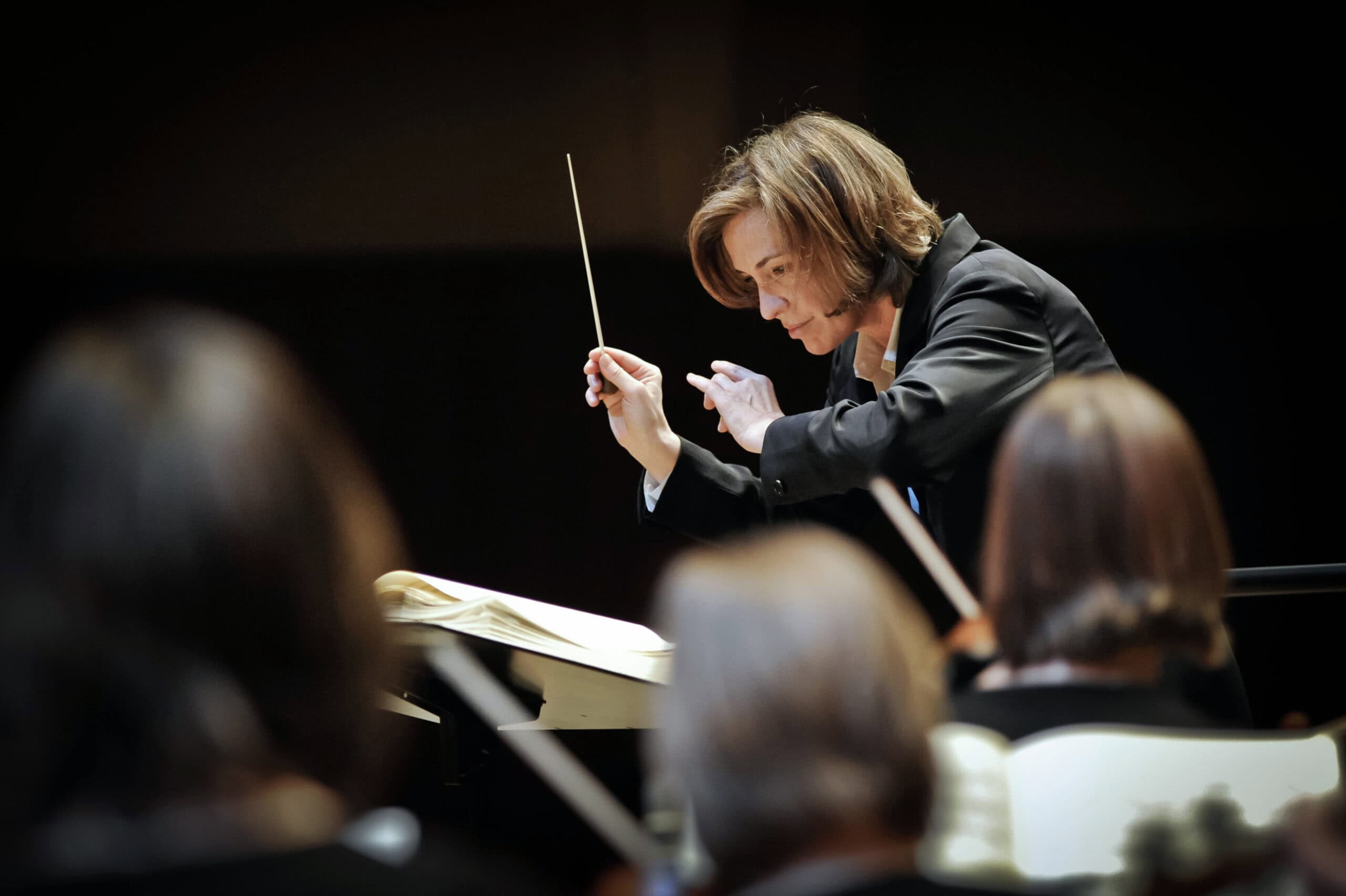
On Friday, January 23, the Insula orchestra and the chamber choir accentus under the direction of Laurence Equilbey gave compelling shape to this fundamental attitude in deSingel. Their performance approached the Requiem not as a Romantic monument, but as a carefully constructed line of thought, in which music and text questioned each other reciprocally. It became not only a moving, but also a gripping performance, with Equilbey holding the score as a living textual map before him and bringing every word to its full meaning. For those who know the Biblical and Lutheran textual layer from within, this reading was not merely heard, but experienced as inner confession. In a time when loss and uncertainty color our society, Brahms' message sounded all the more compelling.
A tentative beginning
The opening section Selig sind, die da Leid tragen was not presented by Equilbey as a solemn starting point, but as a tentative beginning. The tempo remained broad, without stiffening; the dynamics were restrained, as if the music first had to assure itself of its own weight. The strings sounded transparent and vulnerable, while the choir articulated the words with remarkable softness. Accentus sang here not to impress, but to remain close, listening to the meaning of each phrase.
These opening sounds were preceded by a short baritone solo by John Brancy from the chorale "Wer nur den lieben Gott lässt walten" (BWV 93) by Johann Sebastian Bach (1685-1750). The transition to Brahms' opening measure proceeded seamlessly, as if both works were part of one and the same line of thought. This introduction functioned not merely as a programmatic gesture, but as a substantive reflection: Bach does not express certainty, but an attitude of perseverance. Those who entrust themselves to God are not spared from suffering, but find direction in it. The text does not speak of reward or redemption, but of patience and steadfastness. In precisely this way, this chorale touches on Brahms' conception of comfort, which is not offered as an answer, but as a moral possibility.
This dramaturgical choice immediately gained weight at the beginning of Brahms' first movement, where a slight threat became audible in the low strings. Grief and anger at the loss were not smoothed away, but implicitly present. The comfort suggested here was not confirmed, but cautiously placed in the space – as something that can only gradually unfold. The silences between phrases also gained meaning: not as interruptions, but as breathing space in which listening itself became part of the moral process. From that moment on, the listener was drawn into an uninterrupted musical stream, carried by the tight union of choir and orchestra, which complemented each other with sensitivity and nuance.
Architecture, intellect and serenity
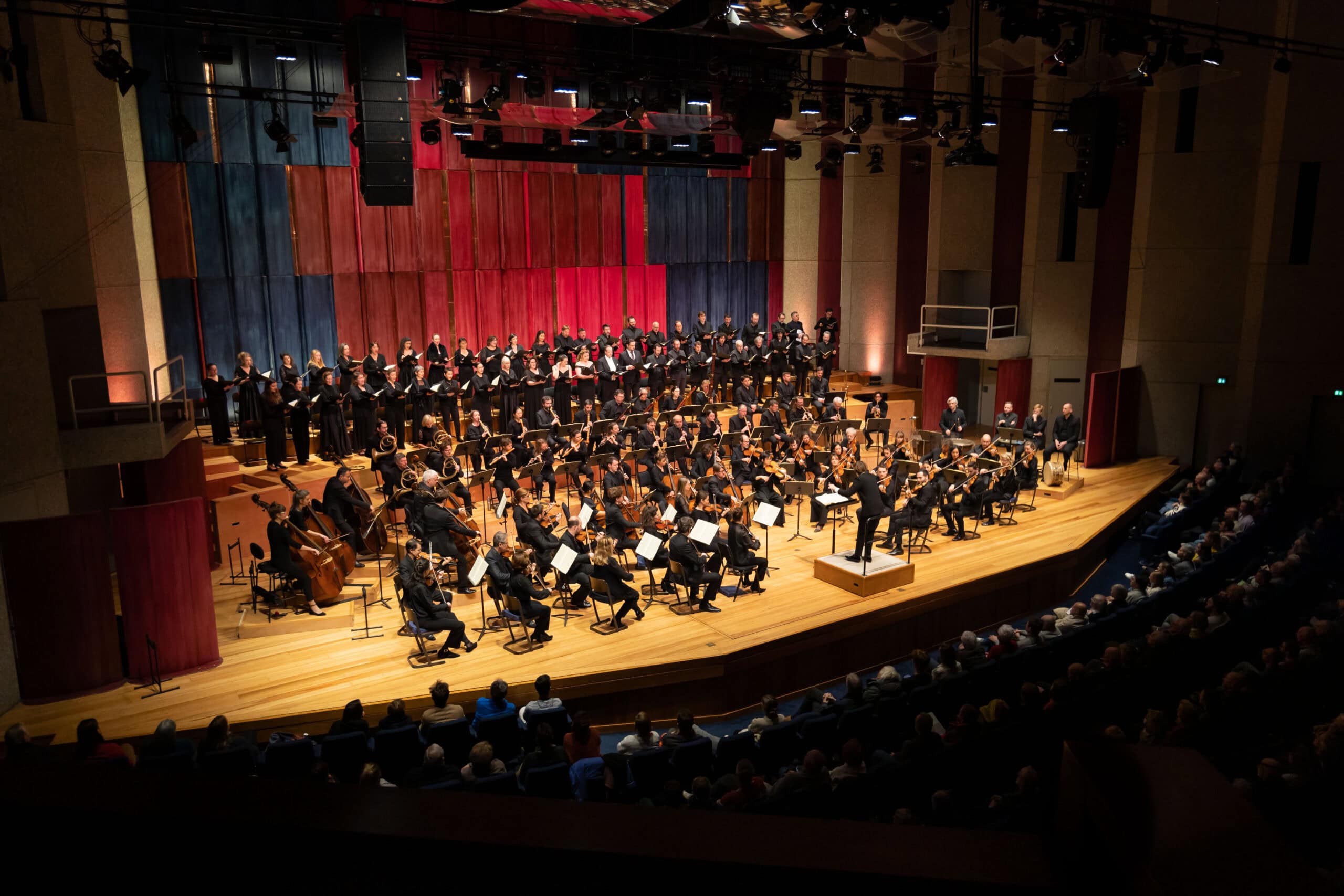 In the second part, Denn alles Fleisch, es ist wie Gras, the architectonic power of Brahms' composition came sharply to the fore. Equilbey made the march-like threat of the beginning audible without letting the weight dissolve. The historical instruments of Insula orchestra gave the sound a rough edge, making the textual theme of transience tangible. In contrast to Klemperer, who has the horns traditionally scream extra, Equilbey let them speak in turn and thus emphasized the reflective power of the piece. The timpani player delivered a starring role, with subtle but tingling accents that reinforced the emotional tension of words such as 'Schmerz', 'Seufzen' and the jubilant exclamation of 'jauchzen' and the long-drawn-out 'ewige Freude', whereby for a believing listener the transience and hope became even more deeply felt.
In this way, a nuanced sound sculpture emerged that gave the texts breathing room and followed the emotional logic of the work. The transition to 'So seid nun geduldig' was not abrupt, but organically built up, as if the music slowly reoriented itself. The final choir 'Aber des Herrn Wort bleibt in Ewigkeit' sounded not triumphant, but steadfast: no victory, but perseverance.
The third part, Herr, lehre doch mich, formed the intellectual focal point of the Requiem. Here the human being explicitly questions the measure of his existence. Baritone John Brancy gave this passage a restrained seriousness. His singing was free of rhetoric, his phrasing carefully weighed. He assumed the role of narrator, with each phrase thoughtfully considered and almost tangibly conveying the search for counsel and enlightenment. The interplay between soloist and choir made this moment particularly gripping: the emphasis on 'trösten' turned doubt into hope. This dialogue culminated in a sharply articulated final fugue, in which accentus united precision and tension convincingly. The exceptional intelligibility of the German text – both in the choir and soloist – proved crucial here: words were not merely sung, but carried and contemplated, making textual exegesis the core of the interpretation. The polyphony was not displayed, but made subservient to the work's line of thought.
Wie lieblich sind deine Wohnungen traditionally functions as a lyrical point of rest, but Equilbey avoided any form of complacency. The lightness of the movement was sustained by smooth phrasing and natural breathing in the choir. It was even delivered with a light dance-like quality, a surprising turn that immediately engaged the listener in the serene contemplation of Brahms' radiant, almost tangible promise of the eternal home. The choir sounded open and transparent, making this movement a moment of equilibrium as the centrepiece of Brahms' composition.
From intimacy to confrontation
 Then Brahms' structure was briefly disrupted again and the choir sang, accompanied by organ, Brahms' song "Magdalena" from the Marienlieder op. 22, no. 6. Thus the focus was convincingly shifted from faith to human experience. The text presents Mary Magdalene not as a holy figure, but as a woman who grieves, seeks and waits by the grave. Her sorrow is tangible, but not hopeless; it is a sorrow that springs from love and memory. Brahms' setting follows this ambiguity: restrained, almost narrative, without emotional climax. As in the Requiem, consolation is not proclaimed here, but carefully prepared – as something that only becomes possible through proximity.
Thus the intimacy of the fifth movement, Ihr habt nun Traurigkeit, gained even more dramaturgical weight. Soprano Eleanor Lyons sang with a clear, unforced timbre that seamlessly matched the comforting yet vulnerable text. Her interpretation avoided any form of sentimentality: consolation was not expressed, but suggested. In her simple white dress she appeared almost as an angel, bearing a message of hope without diva affectation. As a counterweight to the narrative baritone voice, her singing took on a contemplative, almost visionary character. The choir sang sitting, which affirmed the angel's words without ever sounding overwhelming. The orchestra accompanied with a delicate weave in which every phrase had room to breathe. 'Ich will euch wiedersehen' sounded like a promise that cut to the bone.
The sixth movement, Denn wir haben hier keine bleibende Stadt, brought renewed unrest and movement. Equilbey built it with great structural clarity and gradually drove the tension towards the apocalyptic outcry 'Der Tod ist verschlungen in den Sieg', which almost sounded like a reckoning with the question 'Tod, wo ist dein Stachel?'. Accentus showed its full dynamic range here, without the sound ever hardening. The baritone solo gained exceptional intensity: the confrontation with death became palpable in a fulminant way, followed by a hymn of thanksgiving from the choir, carried by lovely woodwinds that lingered long in the ear. Yet the drama remained embedded in musical logic, never contrived for effect.
From farewell to acceptance
Then resounded – sung by part of the choir – the chorale "O Welt, ich muss dich lassen" from Brahms' Elf Choral-Vorspiele op. 122, no. 11, once again not as a break, but as dramaturgical reinforcement. The passage offered a moment of stillness after the storm of emotions from the previous movement. Here farewell became not a dramatic gesture, but an exercise in acceptance – a contemplative pause in which faith was not professed, but experienced.
The final movement, Selig sind die Toten, closed the circle with striking calm. Where the opening movement still sounded tentative, anxious and searching, this conclusion radiated resigned clarity. Equilbey chose a broad but not rigid tempo, in which silence and sound balanced each other. The choir sang with restrained intensity that gave the conclusion its special serenity – not as an answer, but as acceptance. The earlier present grief and anger gave way to trust and gratitude in 'folgen ihnen nach'; the circle was closed with a final restrained but radiant verse of the chorale "Wer nur den lieben Gott lässt walten", sung by Brancy, followed by a long silence and hesitant applause that swelled steadily.
Chorales as moral key
The choice to surround "Ein deutsches Requiem" with chorale arrangements was more than a programmatic gesture; it functioned as a substantive key to the work itself. The chorales added an extra dimension to Brahms' architecture: they functioned as connecting texts that deepened the transitions between the movements and clarified the logic of the seven-part structure, while simultaneously serving as inner commentaries on grief, hope and consolation. They made audible how Brahms inscribes himself in the Lutheran tradition of Bach, while simultaneously reinterpreting that tradition: from faith as dogma to faith as attitude, from promise to acceptance. In that sense, the chorales functioned as textual and musical mirrors to Brahms' Requiem: they deepened the understanding of what is sung there – consolation not as an answer, but as shared experience.
The power of consolation
What sounded Friday in deSingel made clear in an impressive way how timeless and relevant "Ein deutsches Requiem" remains. Not as a merely religious ritual or as a historical monument, but as a shared reflection on loss, finitude and human compassion. Laurence Equilbey brought an outstanding exegesis: every word in German was articulated with precision and charged with meaning, so that text and music continually stood in a subtle dialogue with each other. For those who actively followed the Biblical and Lutheran textual layer, the performance became more than a musical reading; it became a form of confession – not spoken, but experienced.
The Insula orchestra performed as a full conversational partner of the outstanding choir accentus: thinking along, responding, and continually listening. The woodwinds coloured the sound, brass and harp provided warmth, and the timpani player added a reserved but palpable tension, without ever forcing. On top of that, the soloists gave an extra human, intimate dimension: John Brancy lent the baritone passages a restrained seriousness that made doubt tangible, while Eleanor Lyons' pure, unforced soprano brought the consoling words almost visibly to life.
Through this, every phrase of Brahms' Requiem – for believing and non-believing listeners alike – became a poignant experience of comfort and inner contemplation. At a time when collective certainties are increasingly fragile and answers rarely convince, Brahms' refusal to present comfort as an answer comes across all the more powerfully. The listening process itself became an exercise in attention and presence: an invitation to feel, to live through, and to reflect on what is lost but cannot be undone.
Comfort was not served this evening as a solution, but as an attitude. It was the willingness to listen, to bear, and to stand by what cannot be healed. What we heard was not a performance, no mere experience, but a lived moral act: a slowly unfolding conversation between text, music and human compassion, that challenged the listener to introspection – precisely as Brahms once intended.