

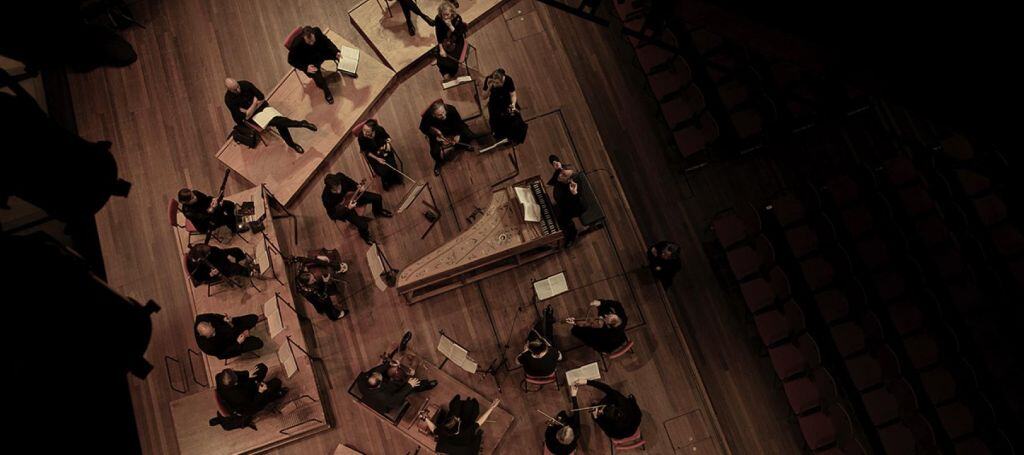
Thursday evening, September 4, 2025, the Danish baroque ensemble Concerto Copenhagen, led by harpsichordist and conductor Lars Ulrik Mortensen, delivered an outstanding concert in the Henry Le Boeuf Hall at Bozar. With a carefully curated and intelligently structured program, the ensemble not only showcased the rich musical tradition of Denmark, but also underscored its status as a leading ambassador of historical performance practice.
Händel spoke, sang and danced anew
The evening opened festively with the Water Music Suite No. 1 by George Frideric Händel (1685–1759). In a fresh rearrangement of the movements, and with a lively but never hurried tempo, this frequently performed suite gained new lustre. The articulation was sparkling, the phrasing breathed freedom, and the dynamics — often subtle, sometimes exuberant — kept the listener continuously engaged.
Under Mortensen's precise yet airy gestures, the woodwinds sounded expressive and elegant, while the strings played warmly, driven and dancelike. The Water Music shed all museum-like stiffness and became again what it originally was: a rushing river of sound, intended to delight, to celebrate and to connect.
Old music, new life
Mortensen then briefly addressed the audience. He explained his ensemble's mission: "We want to bring music as if it was written yesterday." Not an empty slogan, but an artistic guiding principle that remained palpable throughout the entire concert.
Concerto Copenhagen did not play in a historicizing manner, but with vitality. Every phrase testified to conviction, spontaneity and enjoyment. Intonation problems were absent; on the contrary, the ensemble stood out for its purity, balance and warm, homogeneous sound. The oboes and horns excelled in accuracy and character — clear, lustrous, elegant.
Forgotten voices: Scheibe and Hartmann
After the familiar Händel came a bold, yet worthwhile choice: music by Johann Adolf Scheibe (1708–1776) and Johann Ernst Hartmann (1726–1792), composers from the transitional period between Baroque and Classicism. Mortensen provided their work with context and a touch of irony: as a small nation, Denmark often imported composers, in this case both from Northern Germany. Yet they gave their new homeland's musical life a distinctive character.
Scheibe's three-part Sinfonia in B-flat sounded fresh, direct and transparent. Hartmann's four-part Symphony No. 1 in D surprised with its melodic inventiveness and emotional power. Concerto Copenhagen brought both works with refined ensemble playing, a lively sense of form and a dynamics that felt natural. The music was not merely performed, but sounded with love and insight.
Dialogue in depth: restrained grandeur
As the program's finale, Concerto Copenhagen chose the well-known Cello Concerto in C by Joseph Haydn (1732–1809) — a work whose popularity owes not only to virtuosic flair, but also to its refined structure and intimate eloquence. Haydn's music here carries no pathos, but speaks in clear lines and subtle dialogues.
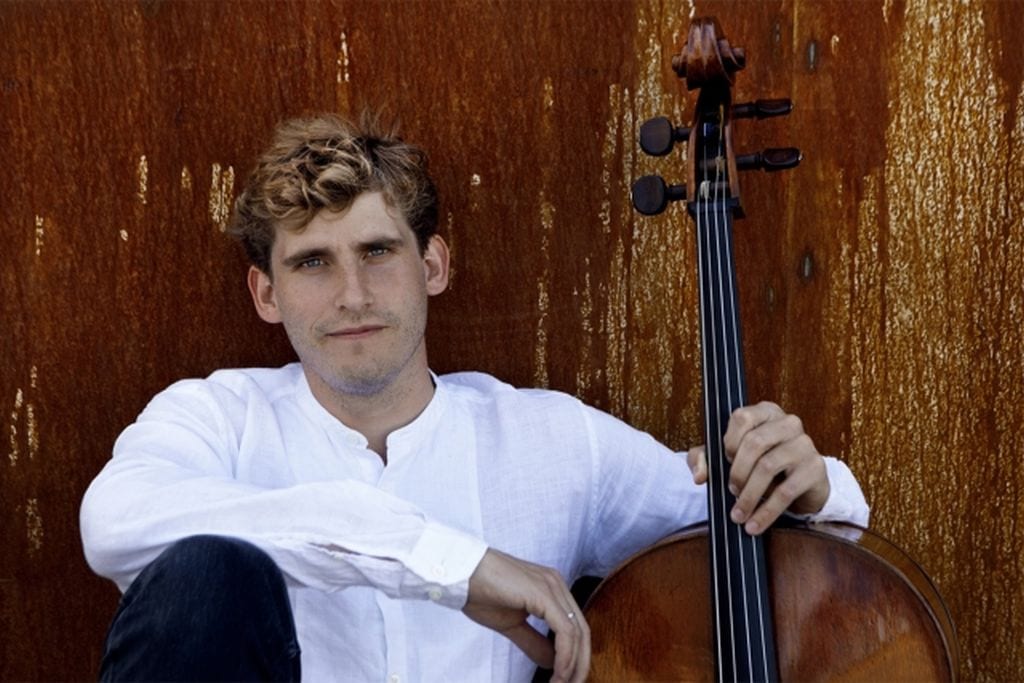 Danish cellist Andreas Brantelid set the tone from the outset with a reading that sought more than effect: an interpretation that listened, reflected and connected. Rather than a virtuosic performance — and Haydn certainly would permit such — Brantelid chose an approach in which musical logic and emotional nuance went hand in hand. His playing was warm in tone, free of artifice and characterized by a rare naturalness.
The dialogue with the ensemble — not an accompanying machine, but an active conversational partner — proceeded organically and vitally. Mortensen did not merely follow the soloist, he breathed with him, anticipated, and led subtly when necessary. The cadenza in the first movement remained anchored in the classical spirit: virtuosic, yes, but with an inner balance that transcended mere display.
Particularly strong was the slow second movement (Adagio), in which Brantelid let the melody sing with an introspective intensity that never became sentimental. Each motif was given space to breathe, yet remained firmly embedded in the larger trajectory. In the rondo-form finale (Allegro molto) the sun broke through completely: rhythmic alertness, ingenious accents and an infectious lightness without frivolity.
Haydn may be an old acquaintance in the concert hall, but Brantelid and Concerto Copenhagen proved that new insights are always to be found — if one listens with open ears and plays with heart and mind.
Encore with finesse
Instead of a solo virtuosic showpiece, Brantelid chose a subtle gesture: together with the ensemble's principal cellist, he performed two movements from a suite for two cellos by Giovanni Battista Sammartini (ca. 1700–1775). A tender and festive epilogue, underscoring the connection between soloist and ensemble — a final musical bow, in intimate simplicity.
A musical tribute to Denmark
This concert was part of the cultural programming surrounding the Danish EU presidency and proved that greatness does not always lie in programmatic weight or monumental orchestrations. Concerto Copenhagen offered no pompous spectacle, but a musically rich and stylistically coherent program that subtly brought past and present into dialogue.
Mastery without artifice
With this performance, Concerto Copenhagen confirmed that historical performance practice need not compromise on freshness, imagination, or relevance. The musicians combined virtuosity with refinement, precision with expression, and brought music that spoke, sang, and lived.
Lars Ulrik Mortensen proved himself a master of his craft — not only as a harpsichordist, but especially as an inspirator. Andreas Brantelid convinced with depth and integrity. Together, they wove, with the ensemble, a musical tapestry that touched both connoisseurs and new listeners.
Let us hope that these musical ambassadors from Denmark will soon find their way back to Belgium.