Ballet Vlaanderen gets premiere: for the first time this modern and innovative classic may be performed by a company other than the Monegasque house.
Faust was born from the mind of German author Johann Wolfgang Goethe. The story is inspired by the 16th-century alchemist and practitioner of black magic, Johann Faust, an ambitious scholar who, in exchange for unlimited knowledge and worldly pleasures, sold his soul to the devil (Mephistopheles) and the Faust legend derived from this person.
Goethe had difficulty accepting classical and Christian teachings and maintained an unconventional way of thinking for his time. The Faust motif has developed over the centuries into an important theme in Western literature and produced many literary, artistic, cinematic and musical works. The adjective 'Faustian' implies a situation in which an ambitious person, disregarding all integrity, wants to achieve his goal in his pursuit of knowledge and insights, thereby crossing the line.
Maurice Béjart, son of philosopher Gaston Berger, enjoyed delving into spirituality, religions and philosophy. With that background, he created the ballet Faust in 1964 to music by Hector Berlioz, in which the ambivalent spirit of mankind is central. Choreographer Jean-Christophe Maillot ventured into this difficult and intriguing subject matter several decades later as well, but chose Eine Faust Symfonie by Franz Liszt and his brother, Bertrand Maillot, composed an additional introduction. The work is performed live by the Antwerp Symphony Orchestra under the direction of Dominic Grier.
Choreographer Jean-Christophe Maillot
Jean-Christophe Maillot is the current artistic director of Les Ballets de Monte-Carlo, a name that resonates in the dance world. He has over eighty works to his name: from large narrative ballets to shorter choreographies. A rich body of work that embraces both the diversity and tradition of dance. His ballets are performed worldwide by the most important houses. With the full-length ballet Faust from 2008, Jean-Christophe Maillot not only paid tribute to Maurice Béjart, he also won the prestigious Prix Benois de la danse for best choreography that year. The ballet immediately became one of the calling cards of Les Ballets de Monte-Carlo. Choreographer Jean-Christophe Maillot recently received the Life Time Achievement Award, one of the most prestigious awards in the classical ballet world for his extensive career. His work consistently displays a unique mix of showmanship, sincerity and artistic virtuosity.
Ballet Faust
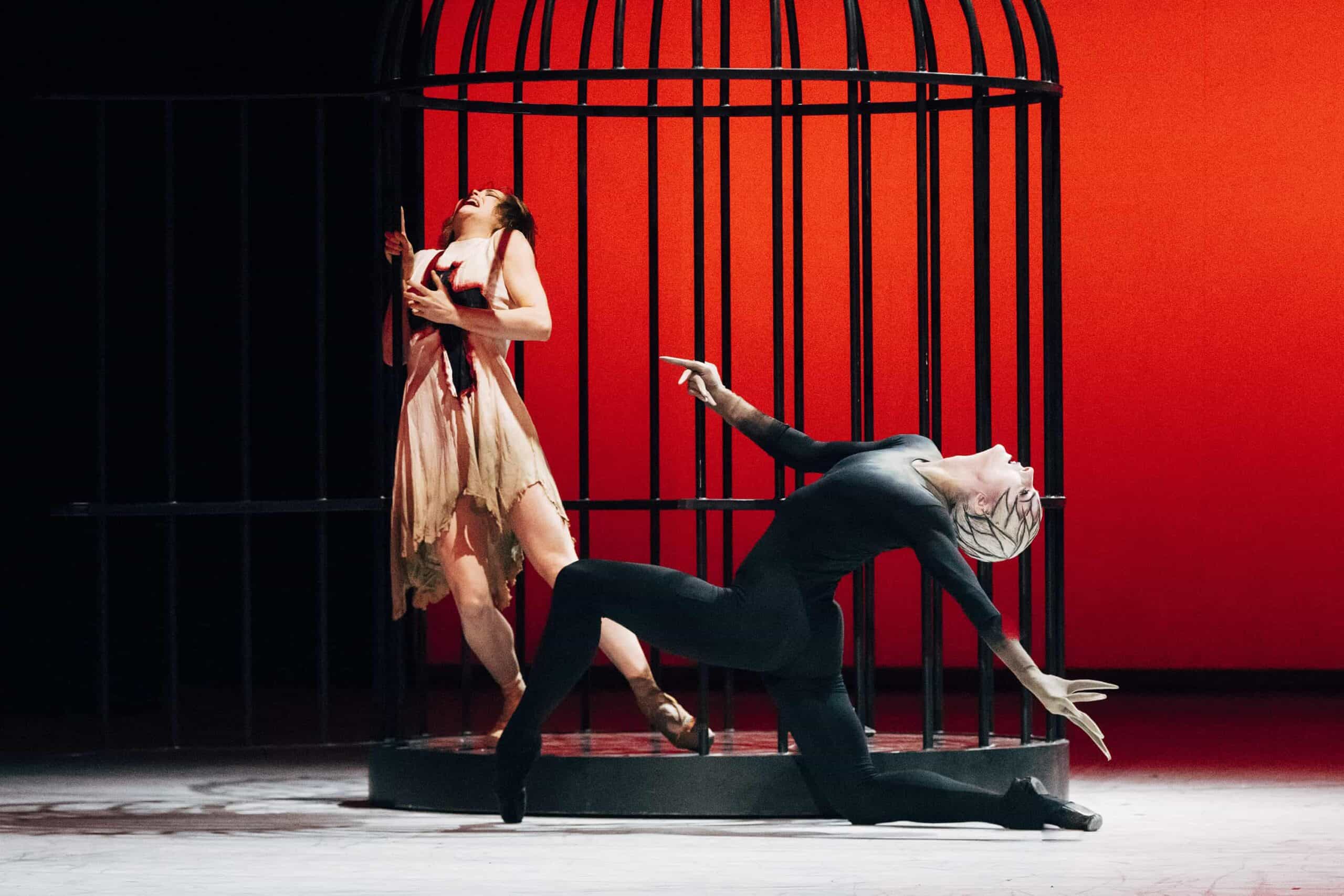
In Liszt's Faust-Symphonie we find, just as in Goethe, three main characters: Mephistopheles, Faust and Marguerite. Maillot added a fourth figure: Death, for whom he creates a visual identity. A black androgynous figure with graceful long fingers like tentacles. An intriguing character. He created that role tailored to Belgian prima ballerina Bernice Coppieters, who began her international career in Antwerp. In 1991 she moved to Les Ballets de Monte-Carlo under the artistic direction of Jean-Christophe Maillot. The meeting resulted in an artistic partnership that would last more than twenty years. Now she was responsible for rehearsals at Ballet Vlaanderen. Here Drew Jacoby alternates with Nini de Vet in this fascinating role, principal Nancy Osbaldeston dances the role of Marguerite alternately with Juliet Bernett, Faust is a role perfectly suited to principal Wim Vanlessen and Claudio Cangialosie and Mephistopheles: Sébastien Tassin.
Staging
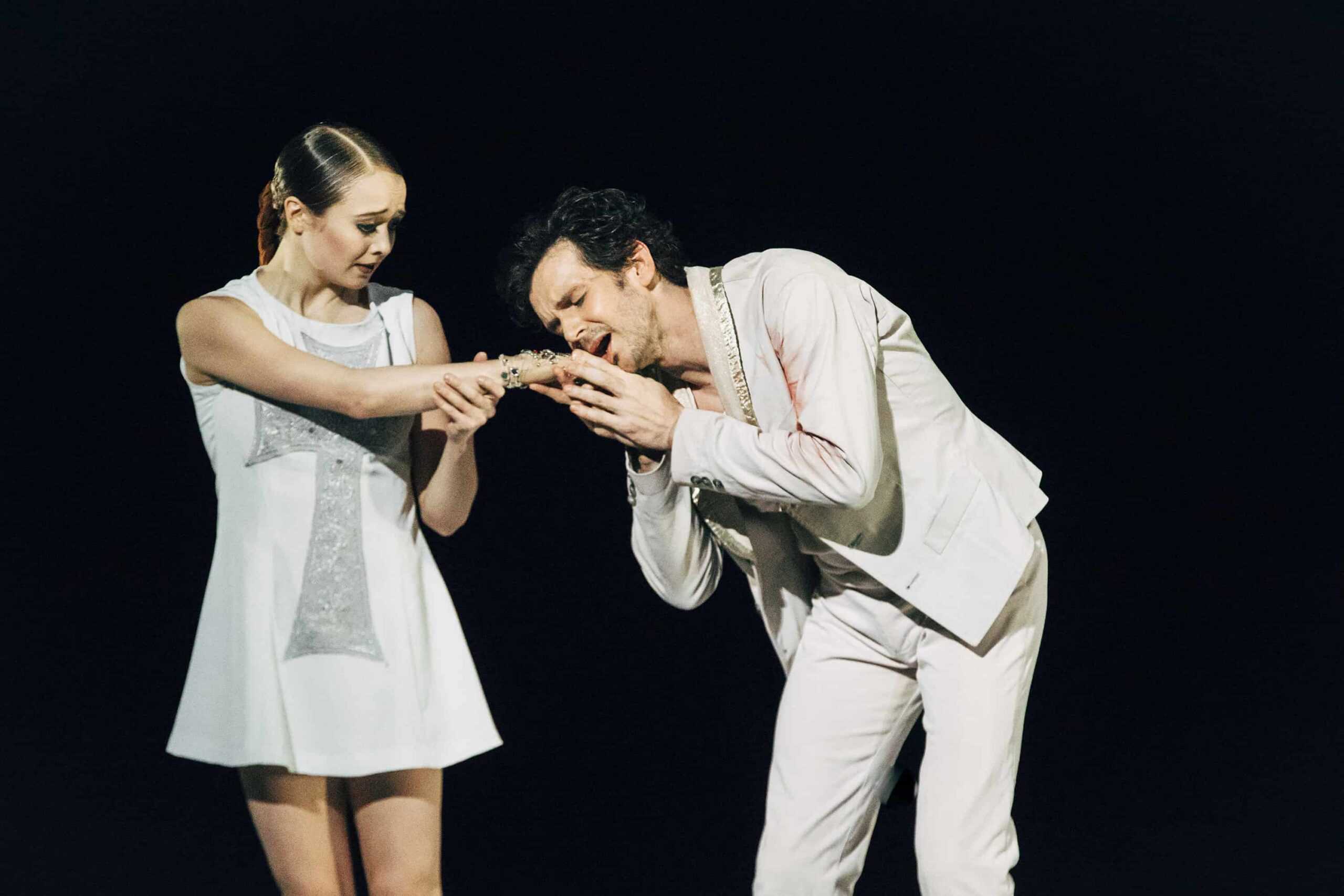
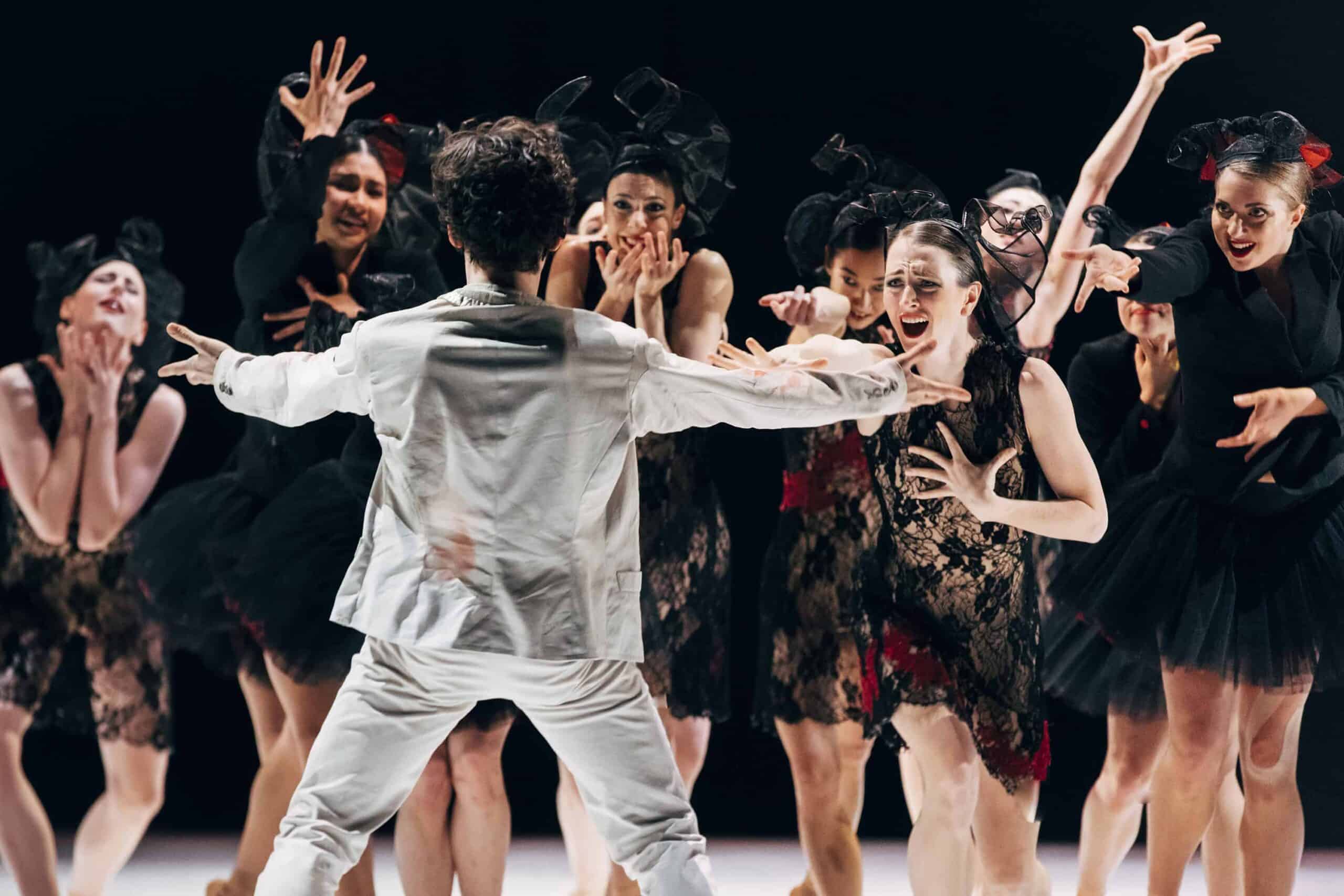
In the opening scene a gigantic hourglass is visible. Time that slips away like sand through our fingers. Also the frail silhouette of a lovely girl. Do we still have plenty of time, or does the time remaining become tormentingly subjective? Bertrand Maillot composed a chilling sound for the opening scene, imposing and threatening. Death strides diagonally slowly across the stage. Not the man with the scythe, but a mysterious figure. Gasping echoes, like Death's hot breath in the neck of every mortal. The sound gradually transforms into a combination of electronic sounds and fragments of Liszt's symphonic score. Eight men dance two by two, as the coupling of spirit and body, moving in coordinated structures. They are besieged by devils, led by Mephistopheles. These recoil briefly before approaching Death, but their instinct to gain power over people prevails. The dancers extract as it were the vibration from the music. The lighting is phenomenal: constantly changing in circles, squares, trapeziums that center the action. The devils approach the men, pull the couples, a union of two apart. The temptations of Mephistopheles are first frightening for Faust, but the prospect of power and pleasure are too great. The eternal conflict between good and evil. The Devil, greedy and manipulative, even brings forth a giant throne as a symbol of power and soon there is a crack in the resistance. Faust succumbs. Later the bill will be presented to him. Heaven on earth is presented to Faust. He may choose from a selection of beautiful lovely girls, dressed in delicate little dresses with a cross in front as a sign of their virginity. Faust desires Marguerite.
In the second act, the inevitable happens. On the left hangs an inverted tree with an apple on the outermost branch. The Earthly Paradise revisited. A surrealist image that evokes works by Magritte or Dali. Margeurite is deeply fascinated by it. The moment she wants to pick the apple, the tree rises up. Out of reach. The curse of Adam and Eve is postponed for a moment. On the right stands a gigantically high cross, the spiritual foundation of good and evil, with a bed beneath it. What is so beautiful about this production is the alternation between group scenes and the interplay between two central figures on that immense stage: Faust and Mephistopheles, Faust and Marguerite, or Marguerite and Death. Yet they never appear lost in space because their performance is so intense and captivating. Mephistopheles brings Faust to the action with seven-league strides or leads him away from it, as if he were master of time and space. The detailing is astounding. Death is a permanent companion, directing our actions from afar. Marguerite sits on the bed and Death stands central on the stage. Death gives movements that spread like electrical currents in waves through space from one person to another. Marguerite is played like a puppet. Or else Death observes, standing there self-consciously and sensuously, one leg slightly bent, her upper body slightly twisted, an arm on her hip. Seductive as a diva, only to strike when the time is ripe, deadly as a black widow. Then the inevitable happens. Lifted by Faust, Marguerite wants to pick the apple. They come just ten centimeters short and then Mephistopheles rushes to help and lifts both of them. The apple is picked. The inevitable has occurred. Here the production shifts. Faust and Marguerite cavort like lovesick teenagers across the stage, Death and Mephistopheles dance in euphoric parallel movements. Death and Mephistopheles measure their power: sometimes rivals, then companions. Marguerite becomes pregnant. The cross lies fallen against the backdrop. A distraught Marguerite loses her unborn child. The entire cross turns red as in a flood, as does the cross on her dress.
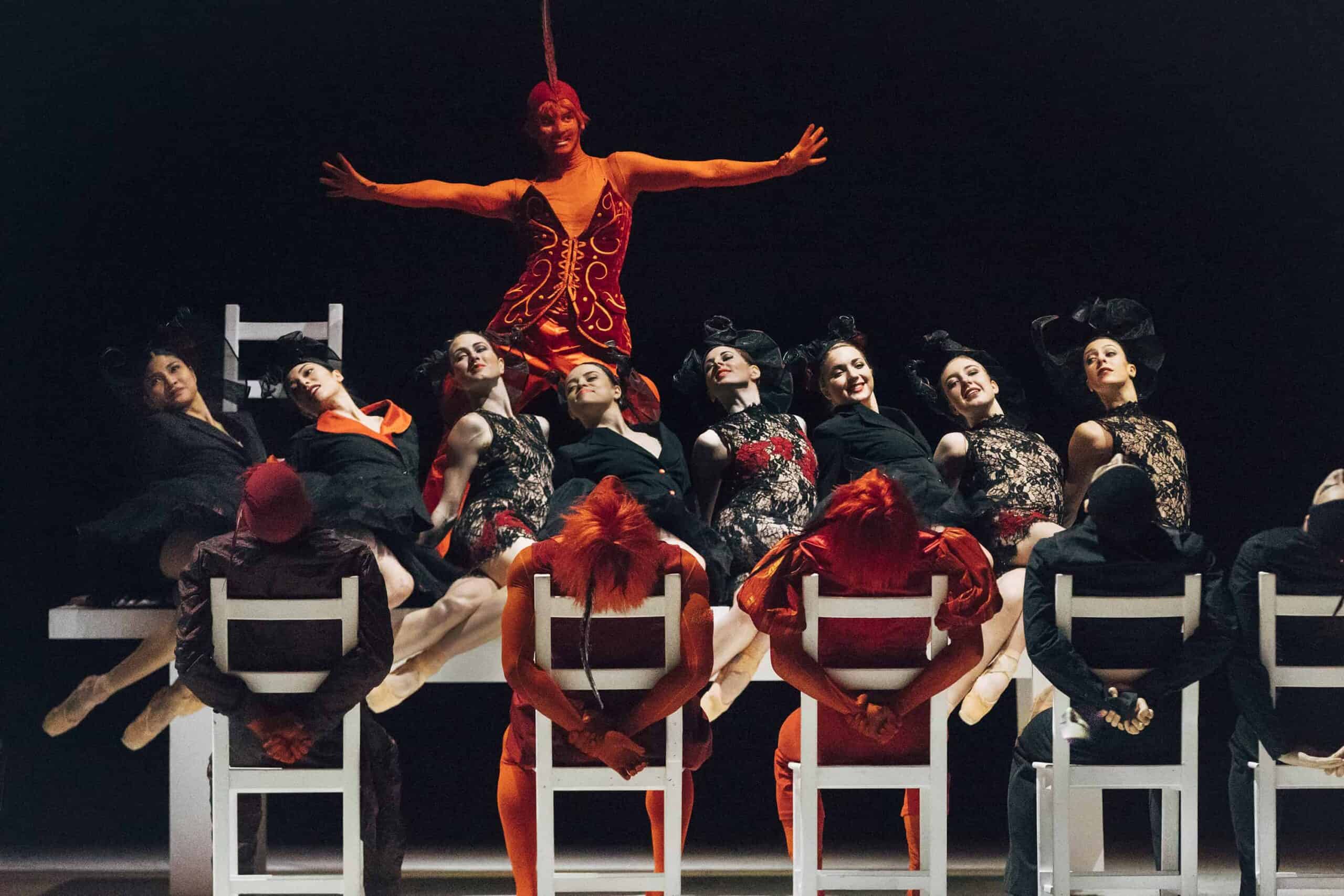
When the curtain rises for the third act, a white rectangular table stands center stage and rows of white chairs are lined up on both sides. Where have we seen that before? There are multiple references: Ravel's Bolero, images from Cabaret during the action. We have arrived at a house of pleasure. An orgasmic feast unfolds before the spectator's eyes: there is copulation in all possible variations: couples making love, group sex, anal sex. A demonic scene in which devils and humans indulge their lust in a hedonistic tableau. Death sucks the life out of Faust mouth to mouth. The debt is paid. The production ends with an iconic image. A meter-high glowing ladder descends and Death slowly climbs upward: Stairway to Heaven. Task accomplished. Death always has the last word.
Maillot is not limited to one style. This choreography is a dialogue in which traditional pointe work and avant-garde interact with strong acting performances on top. Brilliant and richly appointed throughout.
'Faust' is a powerful, devilishly clever, intellectual and danceable production. The second cast held the audience spellbound for two hours with this impressive chef-d'oeuvre and was rewarded with minutes of standing ovation. The main cast with Wim Vanlessen as Faust and Nancy Osbaldeston as Marguerite may perhaps give a more intense and nuanced interpretation of their character, but the difference will be minimal. With this ballet, in which not only unique and demanding roles are reserved for soloists, but also the entire company can show what it is worth, Ballet Vlaanderen once again proves its level of excellence.
- WHAT: Ballet Faust by Jean-Christophe Maillot to music by Franz Liszt
- WHO: Ballet Vlaanderen, Antwerp Symphony Orchestra conducted by Dominic Grier
- WHERE & WHEN: Stadsschouwburg Antwerpen, 20 to 28 January 2018