

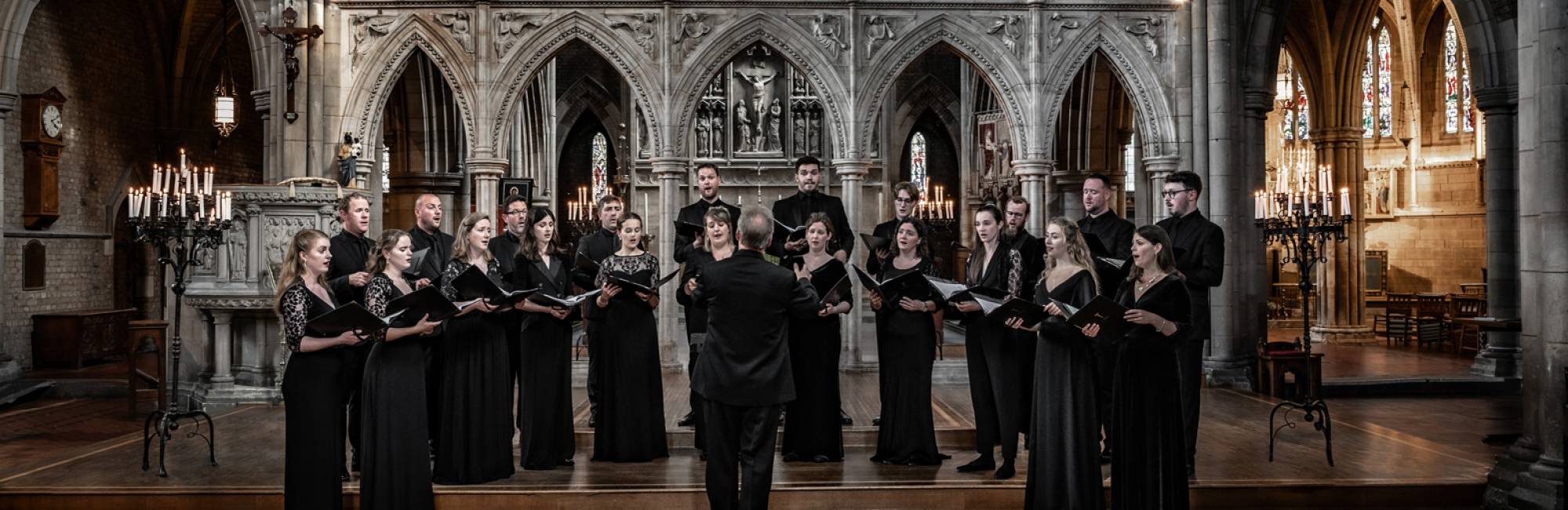
The fantastic Laus Polyphoniae in the equally fantastic Antwerpen opened with a line-up to reckon with: Tenebrae under the direction of Nigel Short brought sections from Tenebrae Responsories by Tomás Luis de Victoria, followed by his six-voice Missa pro Defunctis, the requiem he composed following the death of Maria van Spanje in 1603, his patroness. Those who know Victoria and the choir Tenebrae know that on paper this is already a match made in heaven.
The concert was broadcast live on Klara. The sizeable audience, some 700 people, waited patiently until the 8 o'clock news was over and the presenter had finished her introduction. Then the first notes of Versa est in luctum resounded. Immediately the sound went deep. Within the first seconds, the first shivers appeared. It sounded ethereal, but never sterile or polished. Especially bass and tenor had at times something distinctly Spanish in their timbre, almost a grain de la voix. Would that be the harbinger of the rest of the evening?
The first part consisted of music from the Tenebrae Responsories. I know: it gets a bit confusing when ensemble and composition share the same name. There is a good reason for that, by the way, which those interested can easily look up. This music for Holy Week describes the suffering, crucifixion and burial of Christ in a particularly moving way. Victoria often starts from relatively simple harmonies, but knows how to transform them into masterful moments of rhetoric and expression.
The entry of Amicus meus was swift and energetic, a character trait that continued to return throughout the performance. At the same time there was that beautiful tenderness in the soprano parts at passages such as ponentes milites and volventes lapidem, the rolling away of the stone from the tomb. The open ending was also shaped beautifully. The diction of the choir was impressive, though in the acoustics of the Handelsbeurs it didn't come across equally clearly everywhere.
The requiem then began with restrained strength. Tenebrae let the music speak for itself. Even those who don't understand a word of Latin felt what this music was about.
The Gregorian chant, which Victoria frequently weaves into this composition, was exemplarily delivered by the ladies of the ensemble, each time carefully alternated between intonatio and response. The sturdy opening of the work contrasted nicely with the long musical lines in passages such as the invocation of Jerusalem. What was striking throughout the performance was how well the ensemble knew which passages formed the musical or textual emphasis. Nothing seemed accidental.
The particularly concentrated audience could only savour that.
Victoria differs from his great contemporary Palestrina by regularly incorporating small dissonances into his music. Tenebrae brought those exactly as they should be: subtle, but unmistakably present. Just enough emphasis to let them speak, without ever seeking effect.
From time to time there were also those extremely soft entrances from the soprano. Risky, almost weightless, but all the more impressive for that.
An absolute interpretive highlight was the Offertorium Domine Jesu Christe. I can imagine that for the average, and even for the experienced concertgoer, an hour of uninterrupted polyphony is not self-evident. This part, however, formed a natural caesura. The soundscape of the torments of hell and dark abysses had something almost cinematic. And I haven't even mentioned Libera eas de ore leonis yet: deliver them from the lion's mouth. Victoria and Nigel Short at their best.
Speaking of Nigel Short: he remains a particularly amiable conductor with an extremely clear and vocal conducting style. That should come as no surprise. He sang for many years with The King's Singers and breathes vocal music. That you hear and see in his direction. He gives the music space. Tactus where it's needed, broad arcs where they belong. A pleasure to watch and, I suspect, also to sing under.
And so the Missa pro Defunctis moved on towards its end. It sometimes seemed as if Victoria himself deliberately chose more diversity in the composition. The responsorium constantly alternates between Gregorian chant and choir, with numerous vocal and textual highlights. One example suffices: quando movendi sunt caeli et terrae.
With the final Kyrie, the concert ended in restrained silence. Only many seconds later did Nigel Short lower his arms, after which thunderous applause erupted.
My conclusion is simple: this was a concert of exceptional standard and an ideal opening of Laus Polyphoniae. Victoria remains for me the composer who, like no other, knows how to combine Roman solemnity with Spanish passion. Perhaps that also explains why his music continues to score so well with a Northern European audience.
Tenebrae proved once again to be an excellent advocate for that repertoire. The technical mastery is downright impressive: the intonation, the balance, the diction and the control over the large dramatic arcs were of the highest standard. At the same time, Nigel Short lets his singers sing. His direction is never dictatorial, but always supportive.
If I may make a small comment after all, it concerns my personal taste. Tenebrae represents the very best of British choral culture: refinement, discipline and perfection. Every so often I wish for a little more rough edges in Victoria, a little more patina or risk. Not because anything was lacking, but because the music might perhaps be able to bear it.
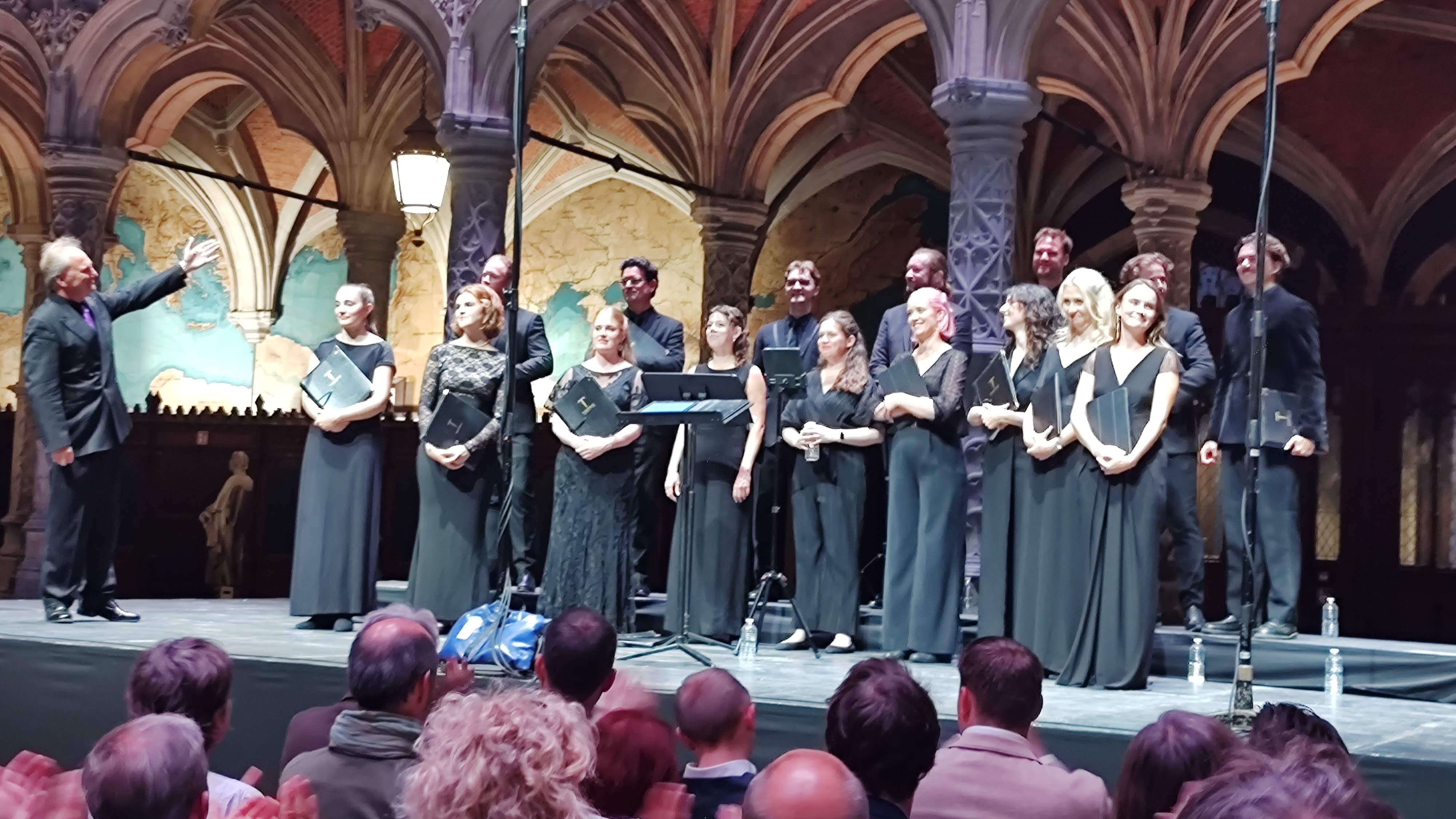
And then there is the location. The Handelsbeurs remains of course a magnificent concert hall and a logical choice for a festival like Laus Polyphoniae. Yet I keep catching myself dreaming of a church vault and a more sacred acoustics for this liturgical music. But perhaps those are indeed straining at gnats.
What ultimately matters is that over 700 people visibly enjoyed an opening concert that will be remembered for a long time. That is enough to look forward with great anticipation to the rest of the festival.
To be continued.
header photo: Sim Canetty-Clarke