


Discussing a new work is always a challenge. There is no performance history yet, no tradition, no reference point with which to compare. I therefore approached Uw Vlees en Bloed with an open mind and relatively unprepared. Well, I do read Olyslaegers and listen to Neve, so I wasn't completely blank slate. When I reviewed my notes afterwards, I saw these words recurring especially: goosebumps, emotion, rage, consternation, hope, beauty. This turned out to be a surprisingly accurate summary of the evening.
What immediately stood out was that the collectivity of the performance took precedence. At no point did anyone demand a prominent role for themselves. Of course there are soloists, but music, word, choir and ensemble continually flow into each other. The result is a rich palette of colors in which the diversity of voices and roles only strengthens the whole, both in the music and in the way story, characters and ideas take shape.
That richness was apparent from the beginning. The opening choir was downright powerful. It immediately became clear how much this passion owes musically to Bach, but equally clearly you heard the signature of Jef Neve everywhere. The music winks at centuries-old models without ever becoming a pastiche.
The Dutch text also stood out. It is remarkably singable in its setting, and perhaps also written that way. That seems obvious, but in our language it is anything but a given. The collaboration between Jeroen Olyslaegers and Jef Neve proves to be particularly fruitful here. The music serves the words, strengthens them, colors them in and sometimes brings them with a force that goes straight to heart and mind. Exactly what Neve always strives for.
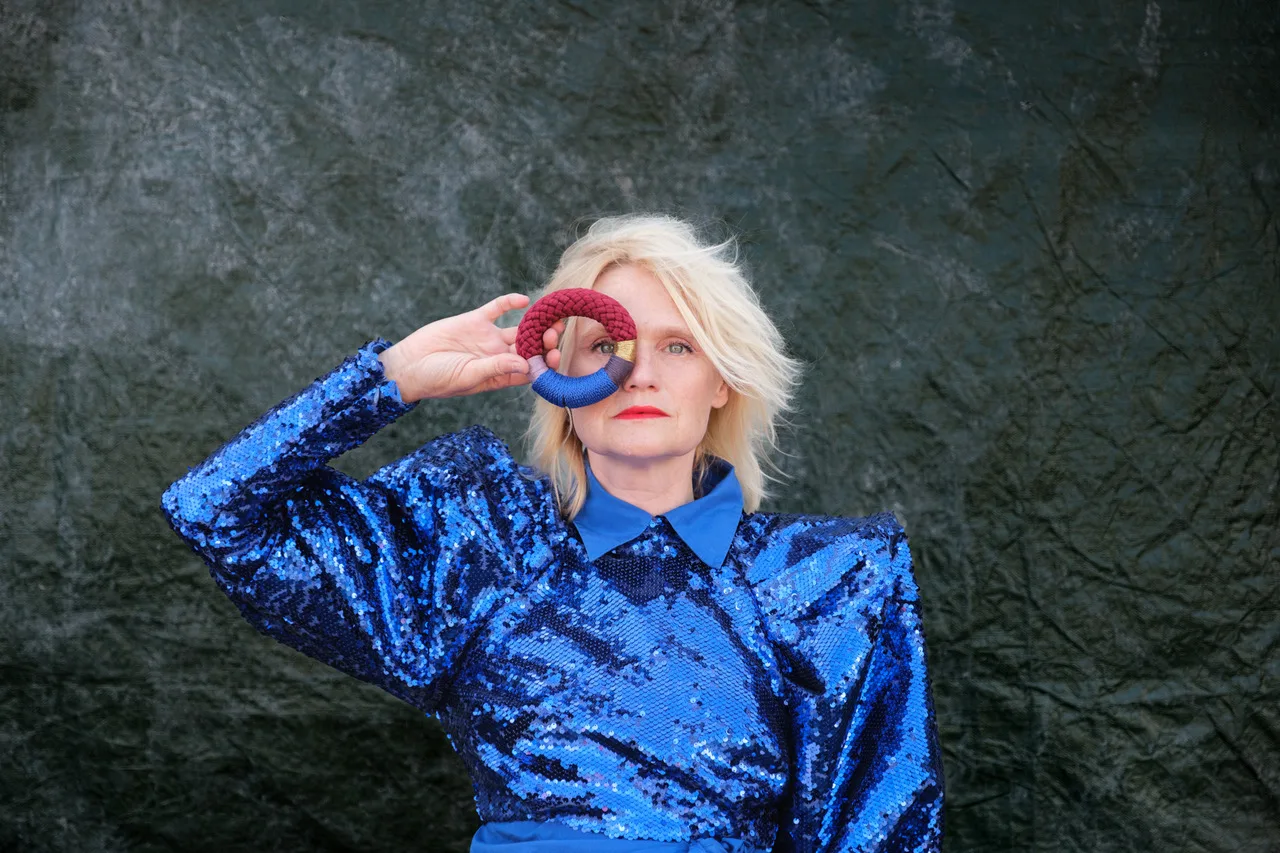 The first voice to guide us through the story is that of the narrating mother, sung by An Pierlé. Not an evangelist as in Bach, but a mother who is simultaneously witness and protagonist. Initially she moves in recitative form, accompanied by continuo, again a clear reference to the passion tradition. But gradually she acquires a completely unique place in the score. Perhaps it takes some getting used to, but Pierlé quickly takes you along. She sang everything from memory, which in itself is impressive given the extent of her part. Her natural voice moreover regularly added an extra interpretive layer to the text.
The choir of Vocaal Ensemble Reflection was equally impressive. Turbae, chorales, even arias: everything was delivered with ease and conviction. As in Bach, the chorales shift from identification to rejection. First they give their heart to the lamb, later they turn against it. That evolution worked particularly strongly, both musically and substantively.
The ensemble B.O.X. also made an extraordinary contribution. Their color richness was apparent early on, among other things in the passage where it is sung that "it doesn't matter". The instrumental commentaries and interjections continued to add new dimensions throughout the evening. What was particularly striking was the extraordinarily homogeneous interplay. Together the musicians built a sound world full of patina, nuance and color. From violin to trombone, every instrumental voice gained meaning within the larger whole. Whenever an instrument stepped out of the fabric for a moment, it never happened arbitrarily. Each small solo moment was beautifully played and gave extra relief to the text and music. Pieter Theuns on theorbe literally and figuratively provided a solid foundation. Especially when the lamb sings "I fear that poisonous gift," his accompaniment had something of Bach-plus about it: supportive, refined and emotionally charged.
It is not until page nine of the libretto that the lamb appears. This led me to a reflection that did not leave me for the rest of the evening. This passion is unmistakably modeled after the passion narratives we know. It is different, yet surprisingly recognizable. During the concert I was continually struck by the thought that between humanism and Catholicism there exists a large group of people who do not feel completely at home in either camp. Not a gray zone, but rather a rainbow of convictions, doubts, interpretations and sensibilities. In this, I believe, lies one of the great strengths of this work. Everyone finds their color somewhere.
When Mady Bonert appears as the lamb, it becomes clear how central this figure is. The lamb unmistakably represents Christ without ever being explicitly called Christ. Bonert sings that role with incredible quality and commitment. Notably, this figure, which in traditional passions is almost always performed by a deep bass, is here sung by a high soprano. And yet the impact is exactly the same. Perhaps even greater because the vulnerability becomes even more tangible.
What particularly struck me was the force with which words received musical color. Olyslaegers already writes with remarkable imagery, but Neve knows how to give certain words an extra charge. "Betrayal," "whispered," "suffering," "anguish," "patriarchy": each time the music seemed to etch those words even more sharply in memory.
There were also moments of pure emotion. The aria "Keep bleeding, dear heart" was truly beautiful. Shortly after, the interlude for "The lamb is depressed" caused once again those typical goosebumps for which music needs no more words. And when the lamb speaks the paraphrase of Christ's prayer: "let this cup pass from me," accompanied by only a few piano chords, emptiness, fear and abandonment take on an almost tangible form.
Gradually, current affairs also creep increasingly prominently into the narrative. Climate activism, social media, populism, toxic leadership: the lamb is confronted with the challenges of our time. It has "illegally attached itself", is mocked, threatened and ultimately condemned by an increasingly vociferous public opinion.
In an earlier interview with Klassiek-Centraal, Neve had said about the work that passion narratives ultimately always concern people who confront society with its shortcomings and are therefore sacrificed themselves. As I listened to the accusations, the populism, the fake stories and the ever-louder chorus, I realized how aptly that thought is developed here. The lamb is both individual and mirror. Not only of Christ, but also of every person who dares to ask uncomfortable questions.
A crucial moment for me came when the lamb appears before the court. The high priest figure reproaches him that science is his god. The lamb's answer, in my view, touches on both the core of humanism and Christianity:
"I myself have no need of God here. Findings suffice, deeds are desired."
That is perhaps the most philosophical point of the entire evening. Olyslaegers does not deny the existence of God anywhere. Rather, he poses the question of what we ourselves are willing to do. Because ultimately, we will have to do it ourselves.
From that moment on, the second part hurtles forward at a breathtaking pace. The Peter figure betrays the lamb. The Judas figure realizes he has been a follower. Fake stories, vox populi and the so-called man of the people take the stage. The leader of democracy finally decides: "I will wash my hands. Sort it out yourselves." A reference to Pilate could hardly be clearer.
Meanwhile, An Pierlé continues to shine as the narrating mother. The child, beautifully performed by Lisa Lowyck, forms a moving counterpoint. Her continual questions to her mother and concern for the lamb's fate makes the story relatable and human.
An absolute highlight was the great aria in which the lamb sings:
"What reigns in me now is abandonment."
The emotional impact of that was enormous. Not because a god has abandoned it, but because friends, neighbors and fellow human beings let it down. That makes the message all the more confronting.
And then the lamb disappears.
Or so it seems.
The mother alludes to walls that tremble and rocks that crack. The child asks: "Is the lamb dead?" Then the Old Woman appears and concludes the story. Is there then a kind of resurrection? She reveals:
"Many times stewed, never perished. I am the lamb."
The ending is both simple and deeply moving. While the child calls out: "Mama, look what I can do!" and proudly replies "Jump higher", a beautiful closing chorale sounds. No grand miracle. No spectacular resurrection. Simply life going on. Goodness that refuses to disappear.
A fellow concert-goer told me afterwards that the text in itself is already a masterpiece. I agree. But the music that Neve set to these words elevates them to another level. Especially in the most poignant passages, text and music come together so seamlessly that they pierce the soul.
The performers also deserve renewed praise. Mady Bonert, An Pierlé and Lisa Lowyck were excellent. The choir sang with conviction and inspiration. The ensemble played colorfully, alertly and committedly. Patrick Windmolders conducted it all with a clear, calm hand. Never theatrical, never obtrusively present, but continuously the invisible force holding everything together.
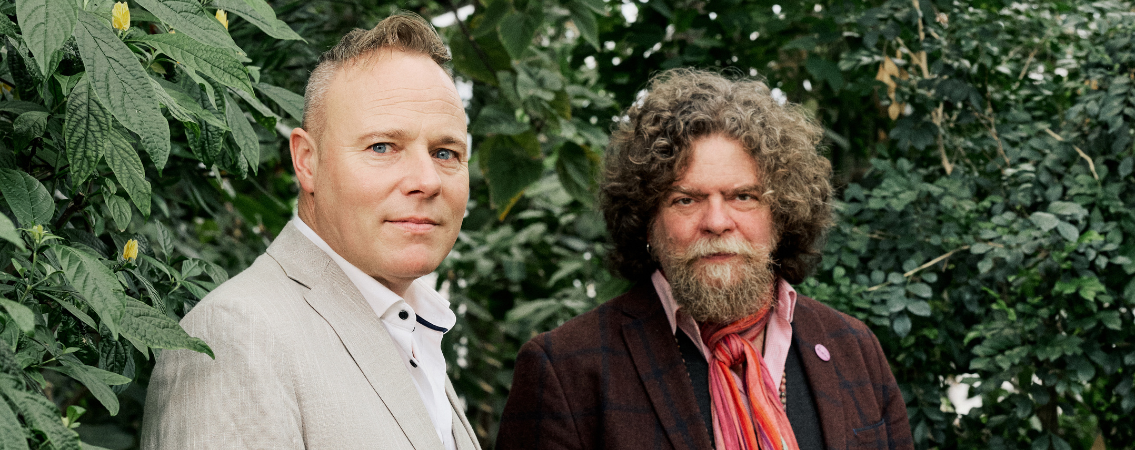
This work and this performance are of a level that I would unhesitatingly call cathedral-worthy. Not because it is a religious work, but because it invites reflection on the great questions of human existence. On guilt and responsibility. On the role of the masses. On what we expect of leaders, of gods and especially of ourselves.
That is the great merit of Olyslaegers and Neve. They update an age-old narrative without doing it violence. They enrich it without denying it. They show that the passion is not a museum piece, but a living form that still has something essential to say today. For believers, for humanists and for all those people who find themselves somewhere in that broad rainbow between the two.
And somewhere between Bach and today, between faith and humanism, between despair and hope, they strike precisely the right note.