


On Friday, February 11, the premiere of Symphony IV by Luc Van Hove takes place in Antwerpen. That's why a philosophical discussion about the artistic significance of the symphony, the zest for life of opera, the changing role of the composer and the importance of learning to listen anew.
Luc Van Hove: "I am now sixty-five. But with my experience, my life experience, with the man I am now, but also the musician and the composer, I ask myself how I relate to the orchestra as an instrument and to orchestral music. I mean: simply making an orchestral work an sich, so absolute music. What musical thoughts can you still develop? What are the challenges, how do you place it in this time? And: who on earth can still get anything out of a symphony, who still writes a symphony? Does it make überhaupt sense to throw yourself into such a large complex musical development? That demands quite a lot from the listener - attention and sustained attention. That is an artistic question. Can it still mean something for people, does it have potential in it to convey something, such that the person has an artistic experience from which they benefit? As with any work of art, that is ultimately the intention. It is an invitation, either to listen or to look so that it brings about something in the person, that is the dialogue that art engages with the 'user' - if I may say so so irreverently. But despite those questions, at a given moment you still set off. I have chosen my path as a composer, there is my power of expression, my expression -- I have now found that. My life bears witness to it."
Symphony IV
The basis of Van Hove's new symphony is a division of the twelve tones of the octave into two mutually complementary groups of eight and four tones. As in much of his recent work, he attempts to bring about a symbiosis between the traditional style in which tones are organized hierarchically and a contemporary approach in which each tone is equally valid. He calls this style post-tonal. The piece consists of three short sections that ultimately culminate in a larger whole in which the musical material from the shorter sections is reused, relaunched or composed out, but then in the larger symphonic context.
 Van Hove: "I came up with that idea through a work by Polish composer Witold Lutoslavski, Livre pour Orchestre. He literally made a book, it's also called 'book', with, indeed: premier chapitre, deuxième chapitre, troisième chapitre and then finally the chapitre final. In the finale, the great symphonic development is fully realized, those first three little chapters are actually just small teasers. That is actually the core of Lutoslavski's idea. He connects those different little chapters with musique intermediaire, so intermediate music where you're supposed to not listen, typically in his aleatoric style. It just runs on for a bit, those are three clarinets playing together. Very simple little tunes. But then you can chat or shift your position or blow your nose, he says himself. And then it moves on to the next little chapter, but the nice thing about it is that as a listener you just get used to it, then you think: oh it's another one of those intermediate pieces. But after the third chapter that little tune doesn't stop but gradually transitions into that enormous finale. So that intermediate music gradually invites you to demand your attention back and then you go along with the enormous story. That is Lutoslavski through and through. That's why I wanted that four-part structure.
Moreover, I wanted to tackle the symphonic genre once more, that is to say write absolute music. Pure and simple music, tell an abstract musical story. And then I arrived at sections. Because developing a certain line of thought in different sections is also pleasant for the listener, because it rounds off a certain idea. The first section is a kind of introduzione, the second section a scherzo. The third section is really a kind of interludium, a kind of pause section that is actually closest to Lutoslavski's musique intermediaire."
Story without words
"I always like to use the word 'story' but that is of course in a metaphorical sense, because I mean a story without words. Still, it is a story. You have a sense of presentation, of beginning, you also have a sense of development. You feel a certain antagonism between musical ideas, contrasts. You have a whole bag of tricks to evoke a sense of drama, of event. Something happens, the listener is guided by a whole musical event. It lasts thirty-seven minutes but it is subdivided into smaller events. What they tell is the experience of the sound that is led through space and through time. And that evokes emotions. Yes and those emotions, they are a consequence, it is not the starting point."
Story with words: the opera La Strada
"A highlight in my career is the opera La Strada (libretto: Eric De Kuyper), commissioned by the Koninklijke Vlaamse Opera, based on the film of the same name by Federico Fellini. It premiered at the end of January 2008, but the commission itself dated back to 2002. So it was a very long process.
And those were wonderful experiences. First the creative process itself and then gradually the process of realization, the production, the rehearsal time, the dedication of all the performers, the house itself. In that sense it is a collective work, where everyone has their specific task and in which a process must emerge that respects everyone's task and gives them the freedom to excel in it. Since then I have had great admiration for the role of the conductor in the realization of my pieces. It is after all the conductor who molds and shapes the work. As a composer you can draw everything nicely and indicate accents, dots, fortes and mezzofortes, but ultimately you hand over your composition. Because the real thing is the work of the conductor, who ensures the right pauses, timing and tempo. And takes into account the acoustics of the hall, based on the potential of the singers, the specific characters of the voices, and so on. In the case of La Strada that was Koen Kessels. It is very important that people understood the message of La Strada. That came from the fact that opera is not just music. Opera is also text, is also image. You see the people, you see the story, it is word, you see it happen. And music supports that happening and makes it live. Opera lives."
Analytical approach
"When I obtained my piano diploma I felt that composition would ultimately be my direction. Oddly enough, I wanted to involve the discipline of music analysis at the same time. Compositionally I was drawn to the analytical approach, the structure itself. Throughout my life I have taught music analysis alongside composition. In the meantime you do grow in style and in expressiveness. And that is ups and downs, there are also deep valleys, where you really doubt everything.
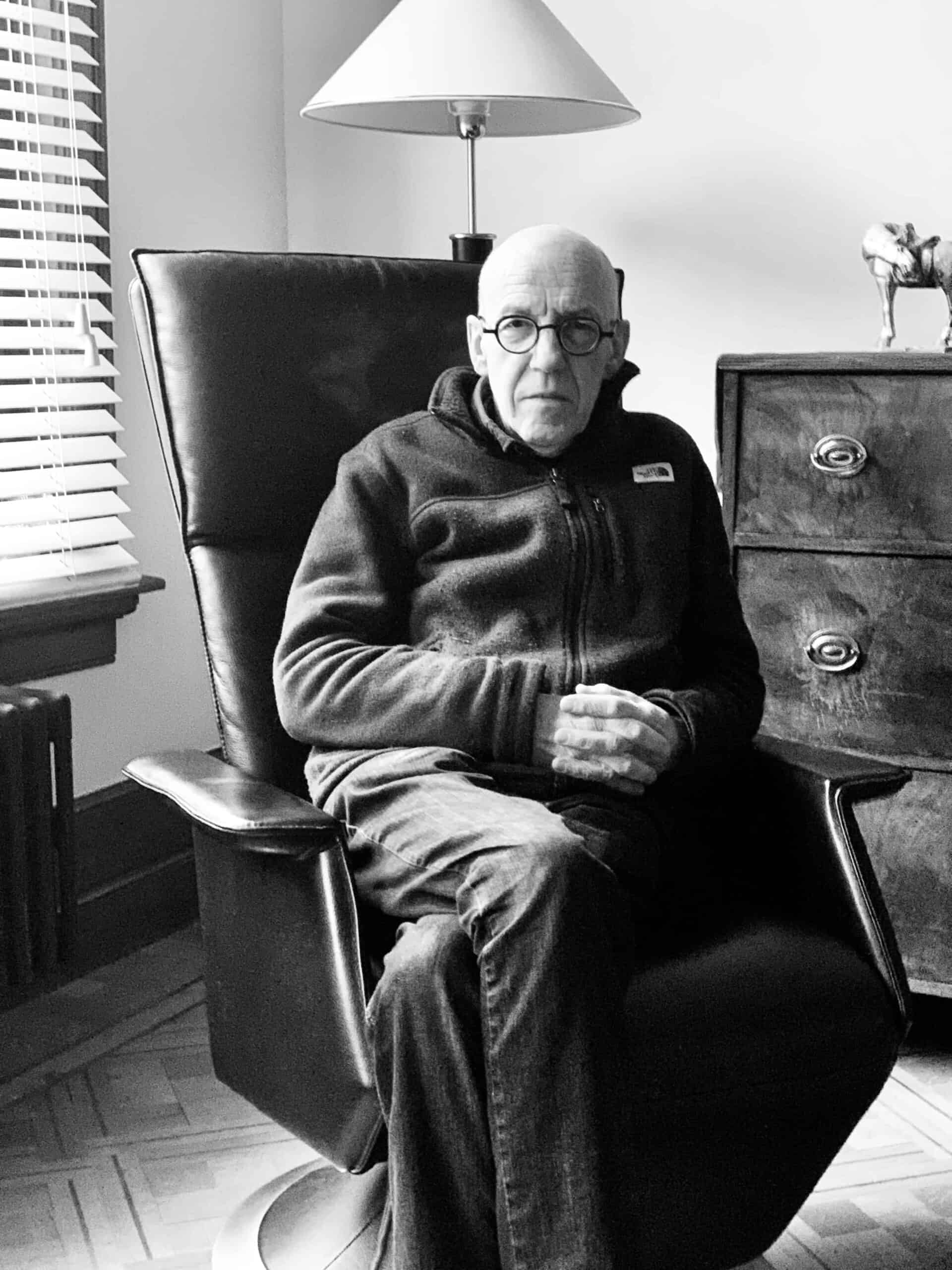 You could compare it to mysticism. Mystics also have moments of great connection and on the other hand they also have long nights of barrenness and formlessness. Creative people like me have that too. You have moments of desiccation, rigidity and then moments when it suddenly evolves in a very simple and organic, natural way. Some people then pick up a book or go for a walk, but for me it works well if I keep engaging with music. I get a lot from playing piano, that is always an enormous stimulus to feel the connection with music again."
Tonal and atonal
"I am a product of my family, of my parents, of tonal music. I grew up with it, heard a lot of music throughout my youth, always eighteenth and nineteenth century. I am crazy about it. And then you become a composer and enter a world that rejects that. And in that you must find your place as a young man, as a composer, musician, find your voice. It is that dichotomy between the harmonic old hierarchical tonal thinking, the logical linguistic structuring of the great German romantic tradition and above it the second layer that came to me since my adulthood, namely the expression of the twentieth-century human. I have tried to unite them and I am still trying. I don't want to completely abandon my love for the tonal because then I am not authentic. But I try to do something structural with it because I have a strong belief in music that is linguistic in that way. In that sense one of my great examples is the French composer Olivier Messiaen. He tried to give every note a place in his thinking, in his system. He didn't just write anything. And I feel like a kindred spirit in that. I also cannot just write a note. No, for me the notes must have meaning from their mutual relationship. I seek structure, just as music was in the past."
Inside and outside
"I often say that to my composition students: you have the inside of the music - how are the notes organized, what chords, what functions. But you also have the outside of the music and that is what people perceive first. How does it sound, what do I hear?
That outside has become much more important. Many young composers, with or without the help of electronic means, start from the outside of the music, so from a sound experience. That sound experience is expanded into a story. You have for example collaborative composers. We also always gave that advice to our students: collaborate with instrumentalists. Sit together, make a piece together if need be, explore the instrumental possibilities, investigate the sounds and let it inspire you. Some people work not only with instrumentalists but also with technicians and videographers. Then it becomes a total concept where composing is just one part. See for example my former student Stefan Prins. His compositions are theatrical events."
Other historical line
"My writing style could still be placed in a very clear historical line, but that has already become non-existent for a whole number of composers. They are no longer concerned with it or have other histories. Many composition students at the conservatory want to write film music because that appeals to them. There is also demand for it, in video games and TV series, you name it. Everywhere music is needed. For those people, the history they fall back on is that of film music.
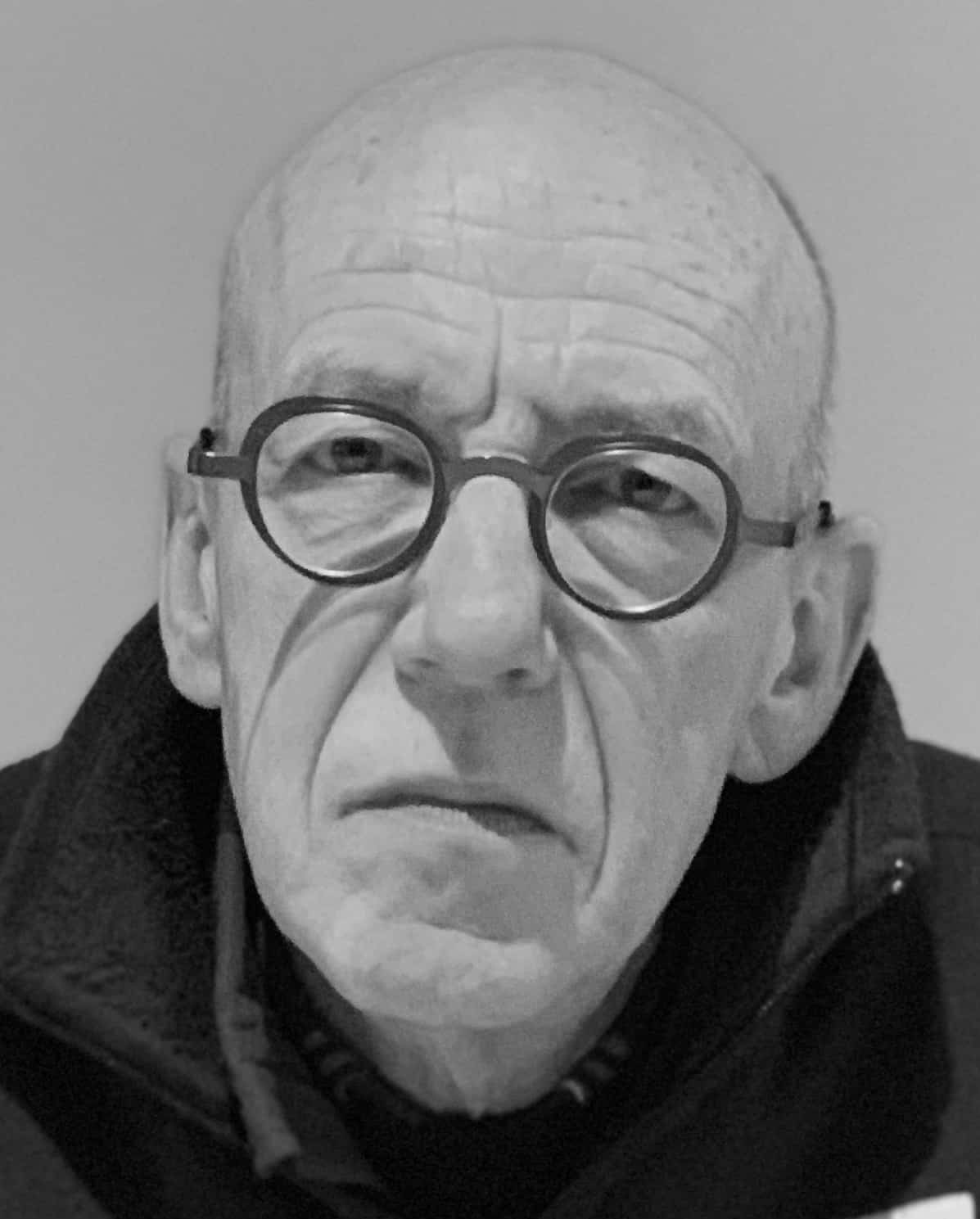 There is also a different role for a score. Many new scores are no longer an indication, a starting point with which a musician can do something. You also have scores that have no dynamic or tempo indication but merely notes. It is a very rich palette. You can no longer say: where are we now? No, it has become a mosaic."
Unbiased listening
"I think it is important that people rediscover listening as such. Forget about system and tonal and atonal for a moment, those are all just words that once had some meaning but that is not what it is primarily about. It is about the quality of listening, the sound and how unbiasedly you can listen to sounds. Because music is ultimately sound art, nothing more or less. A sound is a very refined form of a noise. And we are learning to listen again in a different way. And in that, I believe, lies the future of contemporary music. That is to maintain unbiased listening. The novelty, time and again, of pure listening."
- AGENDA: Friday 11 February, Symphony IV by Luc Van Hove, Antwerp Symphony Orchestra conducted by Elim Chan. Koningin Elisabethzaal, Antwerpen.
- TICKETS: www.antwerpsymphonyorchestra.be
- PHOTOS: Wynold Verweij