


The region east of Antwerpen, a wooded environment where wealthy gentlemen from the port city built their palaces and country estates in the 16th century, is nowadays simply called the Voorkempen. In the still residential surroundings of Schilde, Zoersel, Malle, Schoten, Ranst … a small but original music festival celebrates its 50th anniversary, with concerts spread from spring to autumn 2023.
With its 50 years, the festival is getting quite close to the venerable, albeit larger-scale Festival van Vlaanderen. They may cling to the old spelling der Voorkempen, but otherwise the organizers are up to date. On various locations, the Festival der Voorkempen tries to seduce and surprise the music lover and the casual concert-goer with, on the one hand, the 'familiar repertoire' and on the other hand music 'to discover'. It is striking how many 'great performers and ensembles' have become friends with the fine, rural festival over the years: Alexander Melnikov, Anneleen Lenaerts, Marie and Sophie Hallynck, Werner Van Mechelen, Roeland Hendrickx, Pierre-Alain Volondat, Jean-Claude Vanden Eynden, Cyprien Katsaris, Roel Dieltiens, Carlo Willems, Oxalys, Het Collectief, Eliane Rodrigues, Guido Deneve, Robert Groslot, Benjamien Dieltjens,…
OLD and NEW
[caption id="attachment_50082" align="aligncenter" width="1024"]
 © Cannibal[/caption]
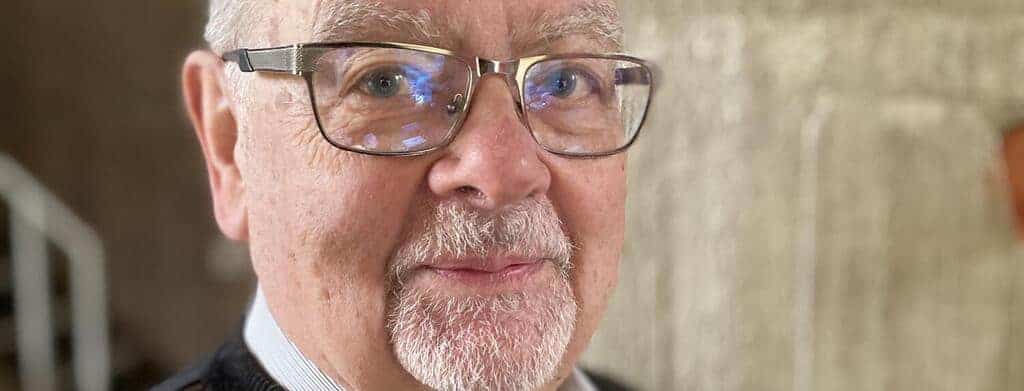
The festival that in 1973 primarily offered Haydn-Mozart repertoire has since profiled itself by paying more than special attention to contemporary music and the organ. The latter has everything to do with the presence of the restored 'Silver Organ' de Forceville of Broechem, an instrument that is praised by, among others, Bernard Foccroulle. The preference for contemporary music is closely linked to the musical taste and conviction of Raymond Van Soens who more than thirty years ago became chairman from voluntary assistant, Chinese-voluntary chairman. From a young age, Raymond has been fascinated by music that is being made now or certainly not older than Stravinsky and Bartók. In the 1960s, he surprised the exam jury at the music academy with work by a certain Ligeti, he listened to avant-garde in Paul Collaer's radio broadcasts and spent part of his free time as a student engineer-architect at Ghent University at the IPEM. There he learned, among others, Louis De Meester, Lucien Goethals, Karel Goeyvaerts through to Xenakis (with whom he shares the same diploma) and he got the chance to fully experiment himself with sine, pulse and noise generators and electronic music.
CREATIONS
The Festival der Voorkempen has meanwhile built a fine tradition of 'creations' that it commissioned from Luc Hove, Bram Van Camp, Frits Celis, Wilfried Henderickx, Wilfried Westerlinck, Alain Craens, Jan Vandamme, Stefan Van Puymbroeck, Piet Swerts, Matthias Coppens, Frank Nuyts, Petra Vermote, Erika Budai, Luc Brewaeys, Peter Welfens, Jan van Landeghem,…For the gala concert of 22 June, they knocked again at Hanne Deneire, whose opening also featured 'Katsu' (2001).
 Hanne Deneire let himself be inspired by the powerful symbolism of the concept of Trinity and wrote 'Trinity', a work for three performers who have a special bond with the Festival der Voorkempen: violinist Wibert Aerts, accordionist Philippe Thuriot and percussionist Gaetan La Mela. The fact that Hanne Deneire could write with specific performers in mind only positively influenced the process. But even more meaningful is that 'Trinity' also contains three layers, three themes. She herself speaks of a musical journey, a captivating voyage of discovery that explores the essence of connection, harmony and spirituality. After a short 'trou musical' of accordion and percussion, the gala concert concludes with the poignant 'Quatuor pour la fin du temps' (1941) that Olivier Messiaen wrote in the concentration camp, inspired by texts from the Book of Revelation. It is precisely 35 years ago that the Festival der Voorkempen also had this music performed by Robert Groslot, Walter Boeykens, Marjeta Korosec and the very young Roel Dieltiens, during a concert that is written in the annals of the festival. In 1988, Karel Goeyvaerts provided the introduction to this legendary work that leaves everyone speechless, in 2023 that role is reserved for Roel Dieltiens, who knew Etienne Pasquier well, cellist and fellow prisoner of war with Messiaen in Stalag VIII-A in Görlitz.
On Sunday 8 October 2023, the festival closes its doors with Bernard Foccroulle and Roel Dieltiens, two friends and veterans of the Festival der Voorkempen, who will make a shared dream come true in Broechem. For every organist, but also for every cellist, the music of Johann Sebastian Bach forms the heart of their repertoire. What better could these musicians choose than the three sonatas BWV 1027, 1028 and 1029 for gamba and harpsichord in a transcription for organ and cello?
Thursday 22 June 2023 at 20:30 in C.C 'Werf44', Schoolstraat 44 in 2970 Schilde
Celebration concert. Creation Hanne Deneire and Quatuor pour la fin du temps by Olivier Messiaen, will be broadcast on Klara in the autumn
Friday 22 September 2023 at 20:30 in the Sint-Elisabethkerk in 2980 Zoersel
Bart Jacobs and Les Muffati, organ concertos by G.F. Händel.
Sunday 8 October 2023 at 16:00 in the Onze-Lieve-Vrouwekerk, Gemeenteplein, 2520 Broechem,
Closing concert. Bernard Foccroulle and Roel Dieltiens, three sonatas by J.S. Bach.
Listen here to the conversation that Katelijne Boon held with Raymond Van Soens, the driving force behind the festival.