More "gala" a concert cannot be: Flemish Minister-President Jan Jambon invited the 27 EU ministers of culture for this concert, on the eve of his meeting with those ministers. Belgium continues to hold the EU presidency until the end of June.
No better warm-up for them than Beethoven's 9th symphony. The European anthem is based on it and the 9th premiered exactly 200 years ago. This time it was not an adapted Karajan version of it. Impossible with Beethoven biographer and conductor Jan Caeyers. It was a dream of his to perform that work under ideal conditions. That means with his own Le Concert Olympique and the Viennese Arnold Schoenberg Koor. Also a premiere this evening by the way: it is the start of a concert tour bringing the 27 most important works of the composer to 27 European countries, the project Beethoven27. Very fittingly, the concert bears the title Call for peace. But enough dry facts, now let the music speak.
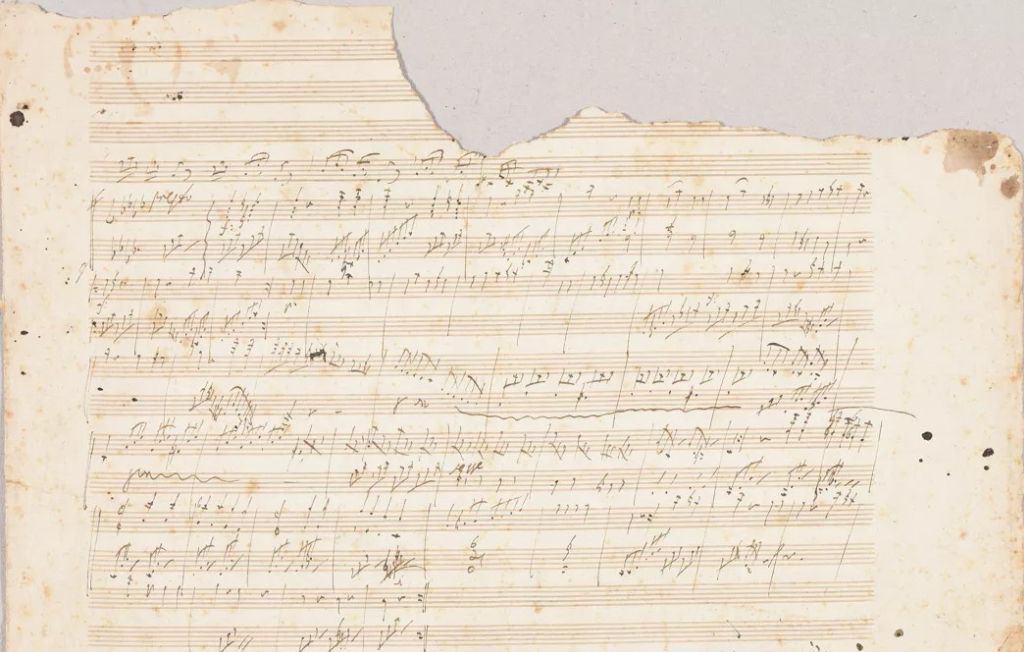
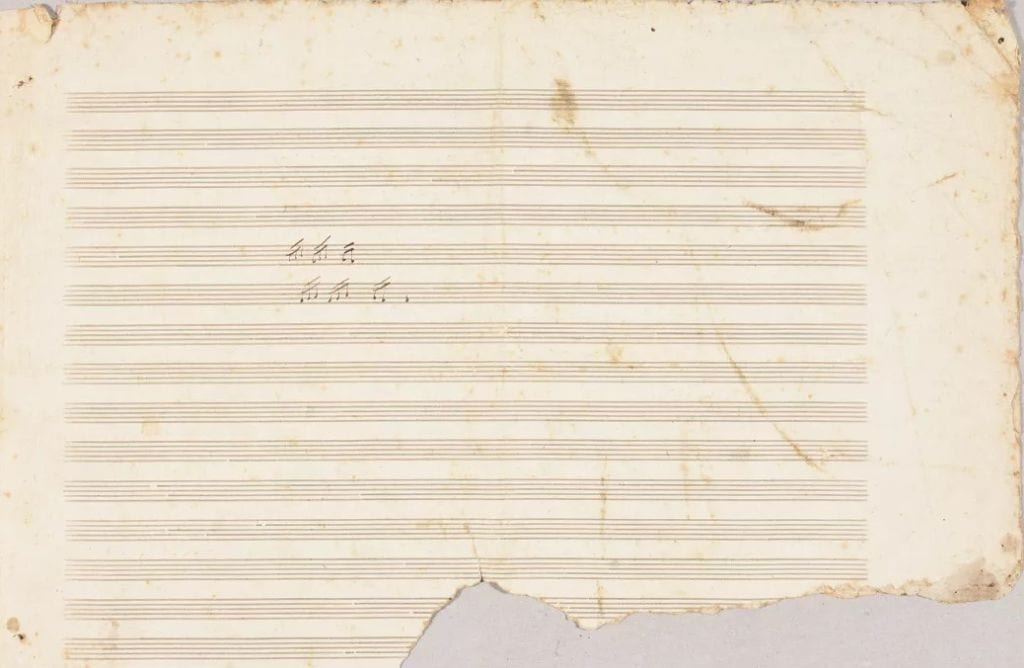
Still one more thing. A piece of Beethoven manuscript recently acquired by Flanders was handed over by culture minister Jan Jambon for preservation and study to Bart Demuyt of the Alamire Foundation, the international study center for music from the Low Countries. A nice gesture and a good example for his colleagues to show how Flanders handles European heritage. It concerns a rare music sketch for the last movement of Beethoven's very first piano sonata, which he wrote when he was 26. Most of the many musical inspirations he noted down in this way have been lost.
Not only the Ninth was on the program, but first there was the Choral Fantasy. Beethoven composed that about 15 years earlier and it would become the model for the ninth symphony, because – never tried before – he chooses to end that fantasy with a choir. If the ninth is an ode to peace and joy, then the Choral Fantasy is an ode to beauty, according to Caeyers.
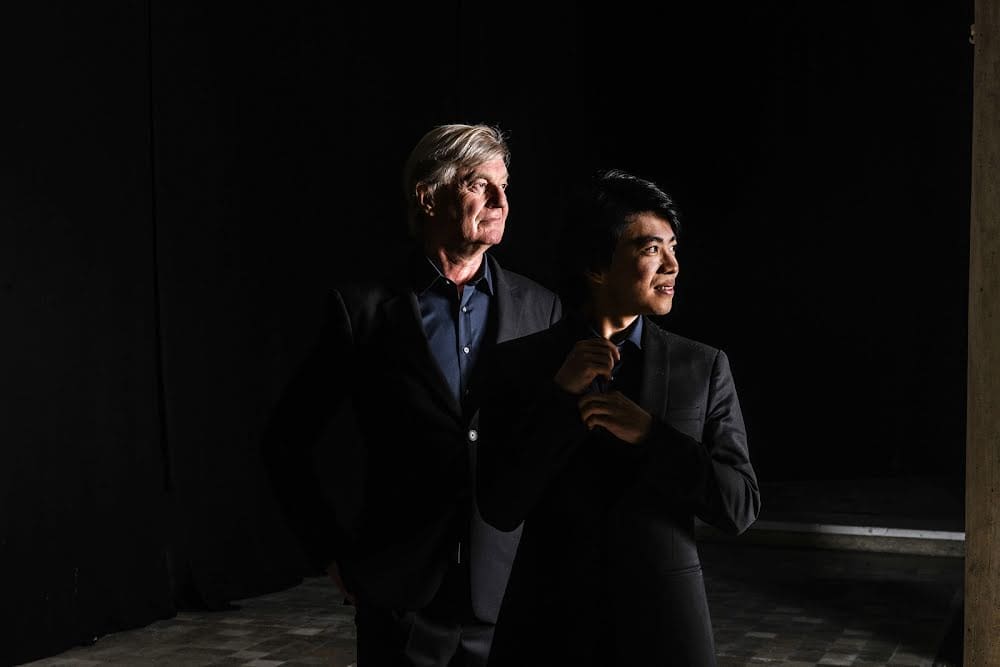
It is pianist Kit Armstrong who guides us with his fresh and delicate touch to that sparkling beauty, to the strings and the brass and ultimately to that excellent choir. The American Armstrong goes through life as a prodigy and is one, how could it be otherwise when Alfred Brendel was your mentor and Caeyers crosses your path. He takes him along on his Beethoven27 tour through Europe, together with that well-trained orchestra which under the driving leadership of the conductor lets us hear that stepping stone to the Ninth.
And then that Ninth, also quiet and hesitant at the start, but quickly that powerful rhythm of that well-known theme and the repetitions and variations. You might get the impression that Beethoven too was a repetitive musician. But let us rather stick with innovative inventiveness. And then that second movement, that Molto Vivace, it always reminds me of his dancing 7th symphony.
With a swinging swing Caeyers keeps his Concert Olympique in check. You wonder how all this would sound if he had at his disposal one of those famous symphonic orchestras or precisely not? You have to admit that here a conductor is at work who is thoroughly committed to the composer. All too often too much attention goes to the performer, too little to the creator. And Caeyers? He is steeped in Beethoven. Score? Unnecessary! The orchestra plays a gripping adagio under the expansive gestures of a restrained conductor. He becomes completely different when the alarming tones suddenly stop and bass Hanno Müller-Brachmann storms onto the stage and with his magnificent voice asks: "Nicht diese Töne", it must sound different, more joyful. Then that overwhelming romanticism breaks loose. With restraint and in full display the conductor triumphantly pulls his orchestra, choir and soloists towards that "Ode an die Freude" and towards that "Elysium" where the soloists and especially soprano Lenneke Ruiten lead us delightfully into.
Indeed, on stage it burns with divine fire, the "Götterfunken" sparkle from it. This was truly a concert worthy of Beethoven.