

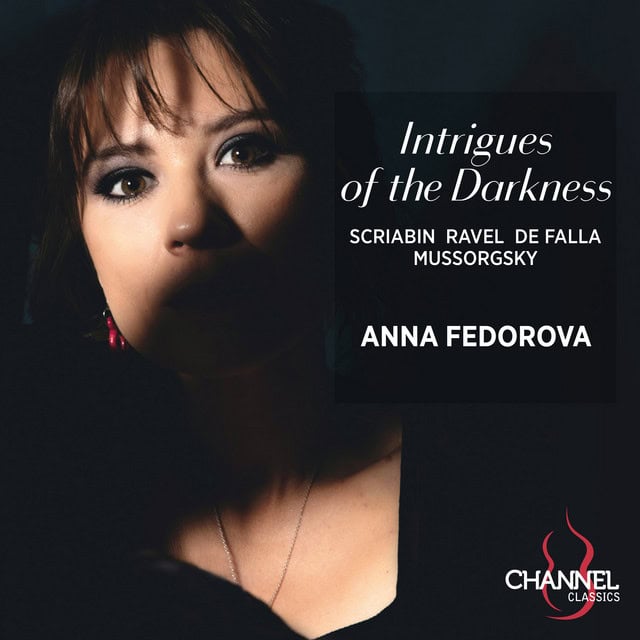
A fascinating and at the same time adventurous exploration of the intrigues of darkness: that is what the Ukrainian Anna Fedorova, residing in the Netherlands, primarily promises the listener: music that is on the one hand programmatic in character and on the other hand extremely virtuosic. No small feat, even for the most distinguished master pianist, but Fedorova disappoints on no account.
This recital breathes pure magic in a blood-curdling journey that takes us to the end of the night (albeit fortunately not as Louis-Ferdinand Céline presents it to us), but from darkness towards true light, alternately ghostly, mysterious and seductive, from the nightmare-plagued Ninth Sonata by Skrjabin to the romantic-transcendent Gaspard de la nuit by Ravel and subsequently the ghostly El amor brujo by De Falla, culminating in Mussorgsky's equally powerfully imaginative Pictures at an Exhibition, which at its tumultuous finale makes the light at the end of that long tunnel almost tangible in The Great Gate of Kiev (which must certainly have held strong associative meaning for Fedorova).
The extremely chromatic opening work, Skrjabin's Piano Sonata No. 9, nicknamed 'Black Mass', essentially sets the tone for the entire visionary programme. Rarely will so many expressive layers be stacked upon one another in a single-movement sonata with a duration of scarcely nine minutes as in this work. There dwells in this opus so much fantasy and mystery that it yields a breathtaking multifaceted panorama. Although it must be said that the formal structure had to take a back seat to this. Undoubtedly Skrjabin's conscious choice.
That Fedorova has managed to strike the right interpretative note in these so different piano works without any gaps may in itself be called an achievement of great magnitude: she winds herself chameleon-like through the countless, often virtually elusive mood images with the help of her faultless technique. The recording made by Jared Sacks is equally brilliant, with a separate compliment for piano technician Charles Rademaker, who has ensured a sublime wing sound (apparently a Steinway D).
