

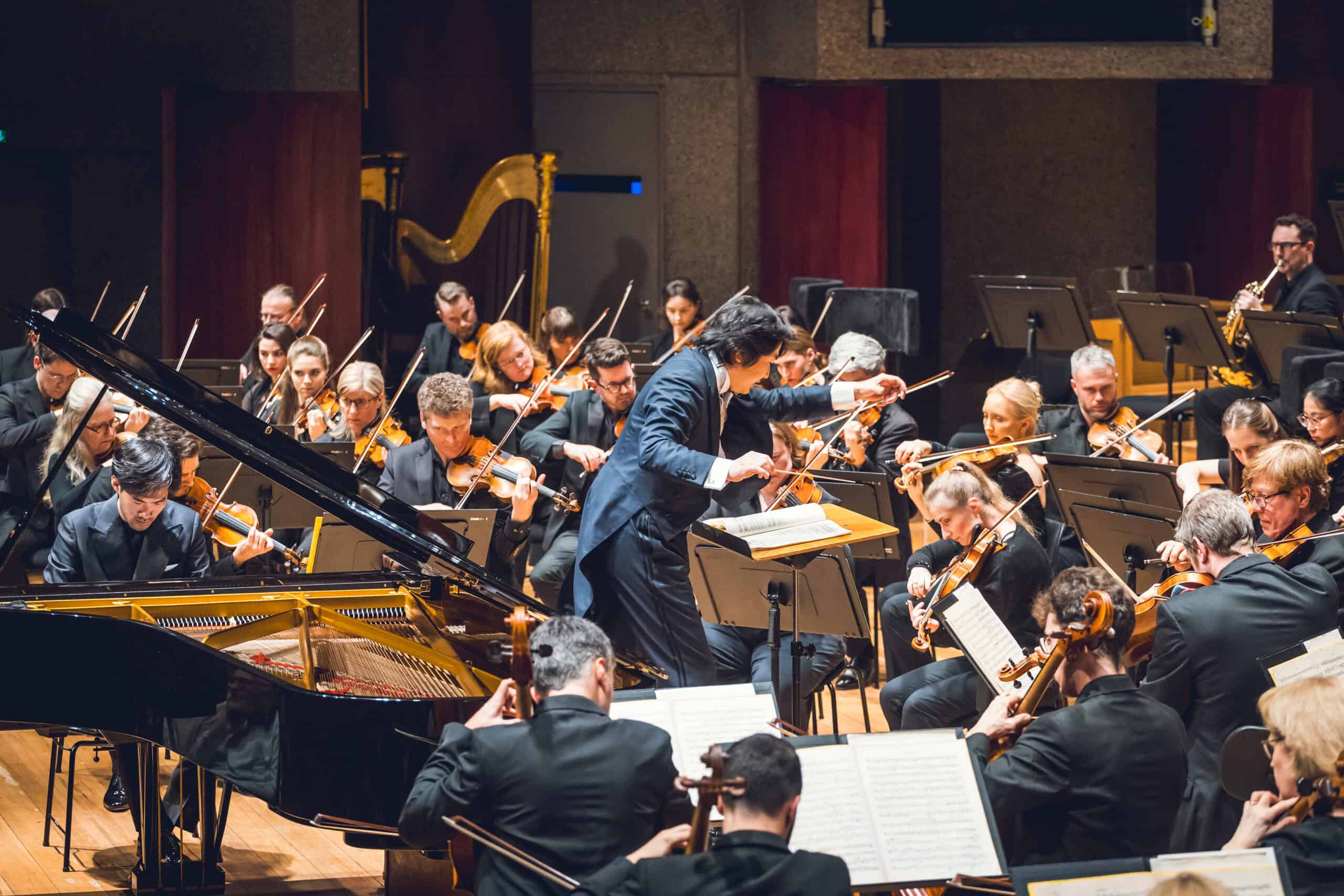
When an orchestra with the international reputation of the City of Birmingham Symphony Orchestra (CBSO) tours through Europe, expectations are naturally high. At deSingel on Saturday, March 7, the ensemble, under the direction of chief conductor Kazuki Yamada, presented a program that promised both orchestral virtuosity and pianistic brilliance: a British overture by William Walton (1902-1983), the iconic First Piano Concerto by Pjotr Iljitsj Tsjaikovski (1840-1893) with renowned Bruce Liu as soloist, and after the intermission Pictures at an Exhibition by Modest Moessorgski (1839-1881) in the colorful orchestration by Maurice Ravel (1875-1937).
From the very first note, there was tension in the hall; the soft rustling of programs ceased and everyone felt that something special was about to happen.
Sparkling energy
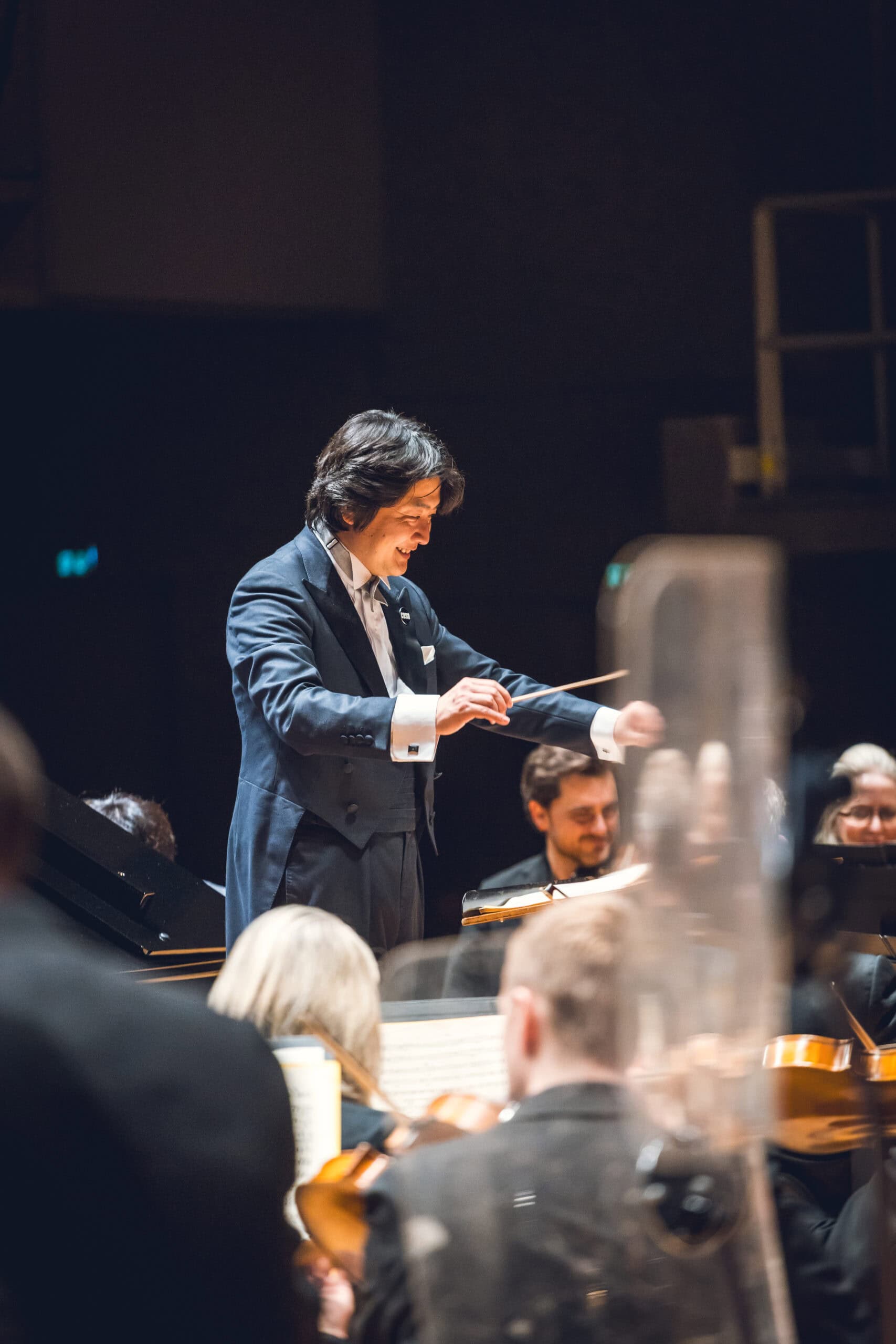 The evening began with Walton's overture Portsmouth Point, a brief but spectacular orchestral work that since its premiere in 1926 has held a permanent place in the British repertoire. Walton was inspired by a satirical engraving by Thomas Rowlandson depicting the chaotic harbor life of Portsmouth – and you hear that bustle in the music too.
With a clear, precise gesture and a sharp sense of rhythm, Yamada kept the orchestra tightly together. The CBSO responded alertly and played with impressive precision: nervous rhythms, pointed accents, and an almost jazzy energy gave the music a contagious pace and a lightly sparkling character. The brass section gleamed with bright projection, while percussion, woodwinds, and strings made the motor of the score run smoothly. Striking was how Yamada subtly encouraged his musicians with short nods and raised thumbs.
The audience was immediately captivated and the orchestra was able to fully demonstrate its virtuosity. The rhythmic sparkle of Walton laid the foundation for the rich spectrum that would later come to fuller expression in Tsjaikovski and Ravel.
Dialogue of fire and breath
This was followed by one of the most popular concert works in the romantic repertoire: Tsjaikovski's Piano Concerto No. 1. As soon as the monumental opening chords rolled through the hall, it became clear that Yamada had chosen a broad, warm orchestral sound. With Bruce Liu, the audience experienced a pianist who, since his victory at the International Chopin Competition in Warsaw (2021), has become one of the most sought-after pianists of his generation. His playing immediately stood out for an elegant, clear touch that remained airy, transparent, and lively even in the most virtuosic passages.
It soon became clear how close the musical bond was between Yamada and Liu. Orchestra and soloist seemed to breathe in perfect symbiosis, as if every note formed an intimate conversation. In the first movement, Liu's natural phrasing was particularly striking. The quick runs and arpeggios sounded effortless, but never as mere technical display. He always kept the melodic line central, so that the music remained breathing and exciting. The great cadenza made an impression with Liu's flawless technique; every note was carefully placed and the audience listened breathlessly.
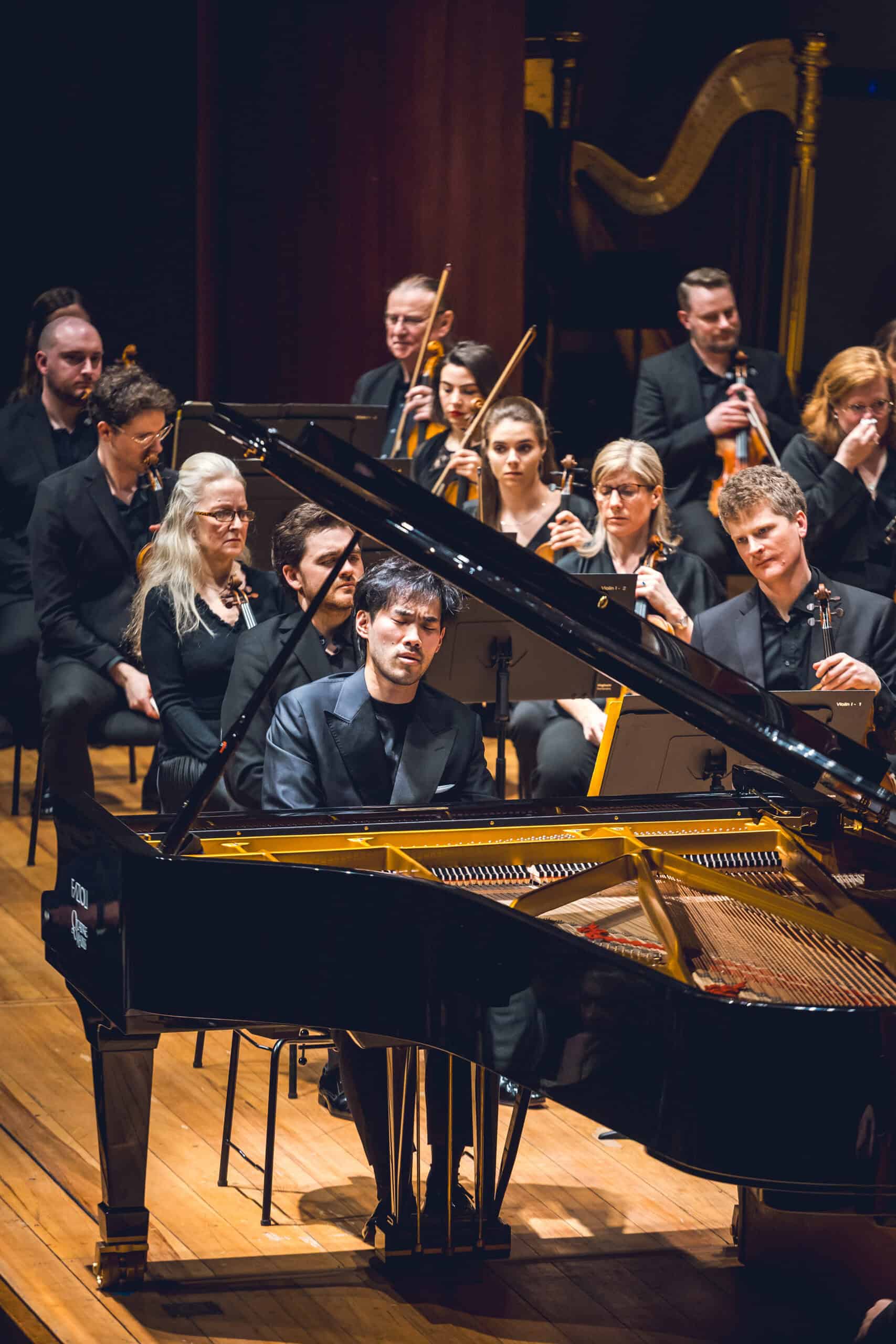 The Andantino semplice brought a moment of stillness. Liu played the lyrical lines with an almost poetic refinement, while the orchestra laid down an airy, transparent tapestry of sound. Delightful were the ethereal solos of flute, oboe, and cello, which added extra color to the intimate character. Once again it became clear how carefully Yamada maintained the balance between soloist and orchestra. In the Allegro con fuoco that followed, the temperament of the music then came fully to the fore. Pianist and orchestra found each other in an energetic dialogue that was progressively built toward the climactic finale. The finale unfolded like a fiery fireworks display, with the orchestra never overshadowing the piano. The applause sounded like a warm embrace for a performance that through virtuosity and musicality deeply moved the listeners.
With Fantaisie-Impromptu, op. 66, by Frédéric Chopin (1810-1849) as an encore, Bruce Liu again enchanted the audience. His playing combined brilliant virtuosity with lyrical depth. Liu's touch remained light and transparent, and every nuance seemed to be carefully painted, as if the piano whispered stories that only this evening could sound like. The audience hung on his every note, mesmerized by his virtuosity.
Orchestral painterly art
After the intermission, the CBSO had all the space to showcase its qualities in Pictures at an Exhibition by Modest Moessorgski, in the orchestration by Maurice Ravel. This orchestral version has become one of the most colorful scores in the symphonic repertoire, a veritable showcase of orchestral imagination and richly varied sonorous splendor.
Yamada proved to be an excellent guide. The orchestra made every brushstroke of Ravel audible, from the softest detail to the largest orchestral color surfaces. The various Promenades, under his direction, received a natural breathing quality, as if the audience was walking along the paintings together with the composer. The orchestral solos that colored these walking moments sounded impeccably clear and characteristic.
Gnomus came across sharp and grotesque, with angular accents in brass and percussion. When another Promenade subsequently appeared, the music seemed to come to rest briefly – a short breath before the next scene. That scene was The Old Castle, and here followed one of the most beautiful moments of the evening. Like a lonely troubadour, the alto saxophone floated above the foundation of cellos and double basses; the hall held its breath, enchanted by the melancholy of the melody.
The CBSO let each painting be heard how homogeneous the ensemble is: warm, well-sustained strings, characterful woodwinds and a brass section that can deliver powerfully without ever losing balance. In Tuileries, the woodwinds danced lightly through the orchestral texture, as if children were running playfully through the Parisian garden. The Ballet of the Chicks subsequently brought a playful lightness, effervescent and mischievous in character.
The monumental finale The Great Gate of Kiev grew into an impressive apotheosis. Yamada built the tension carefully, step by step, towards a luxuriant climax in which brass, strings and percussion created an overwhelming grandeur.
A shared celebration
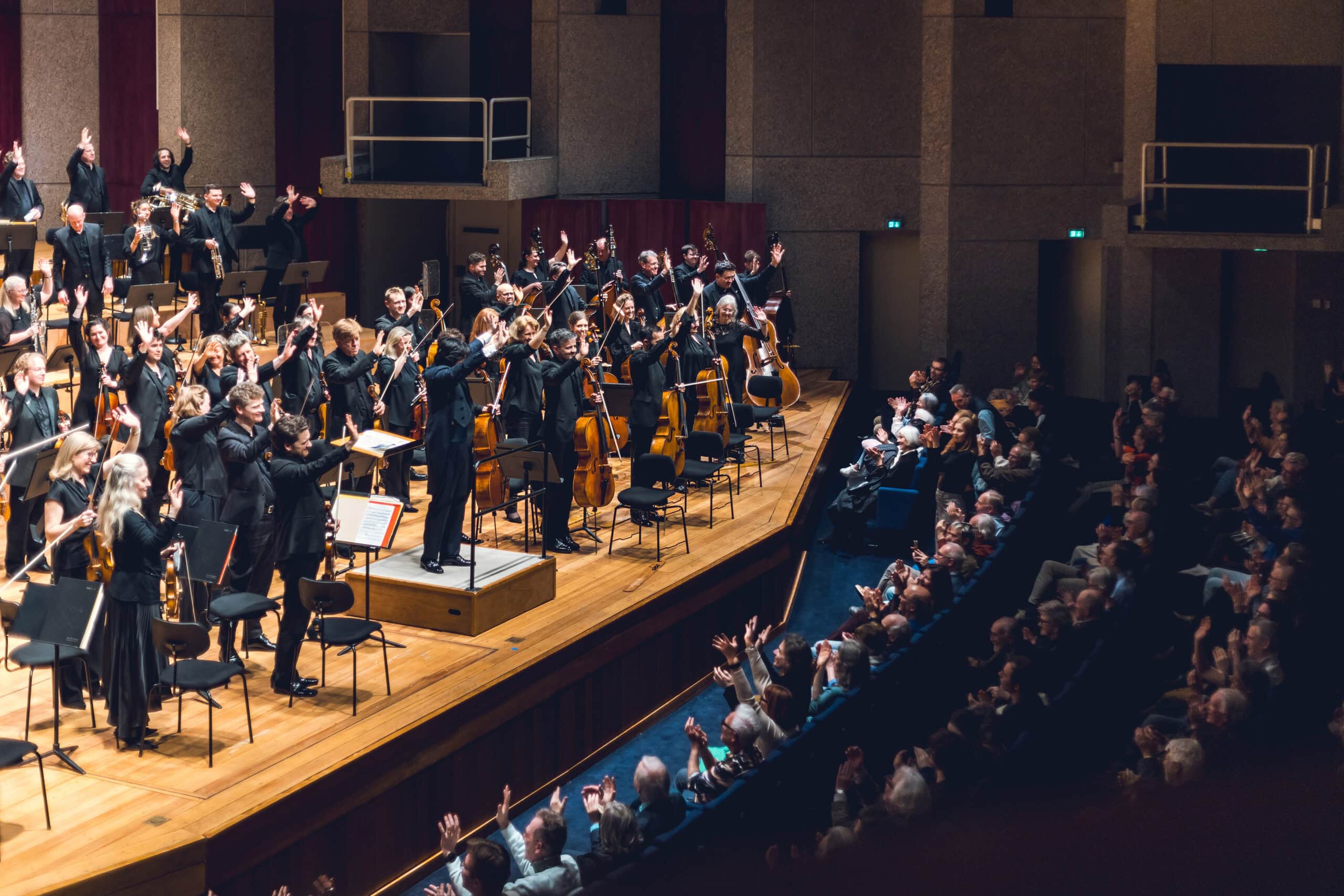 Throughout the entire concert it was striking how visibly Yamada inspired the CBSO. The musicians played with infectious enthusiasm, as if they themselves were part of a celebration of sound and virtuosity.
The audience in the sold-out Blauwe Zaal responded enthusiastically. The orchestra thanked with a moving encore, the rousing A Pine Forest in Winter from the Nutcracker by Tsjaikovski, a radiant cherry on top of the musical cake. Conductor and musicians took their leave waving from a satisfied audience, who went home with hearts full of music.