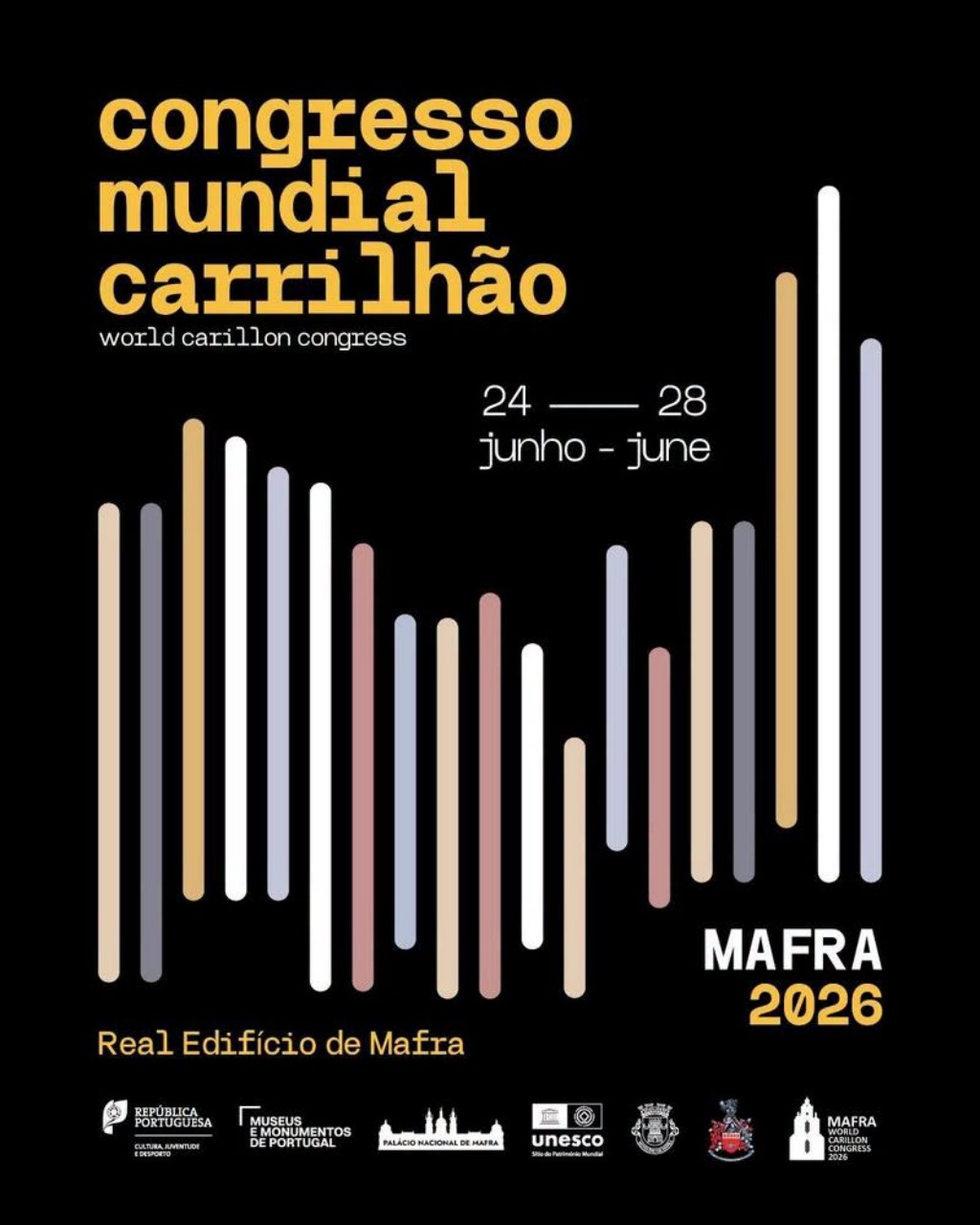
Every three years the World Carillon Federation organizes a congress, each time in a different country as long as that country has at least one carillon, a recognized or recognizing carillon association and of course also at least one carillonneur who holds the position of titular of at least one carillon. Our old Low Countries have many carillons and carillonneurs, but how does it stand in Portugal, the host country of the congress?
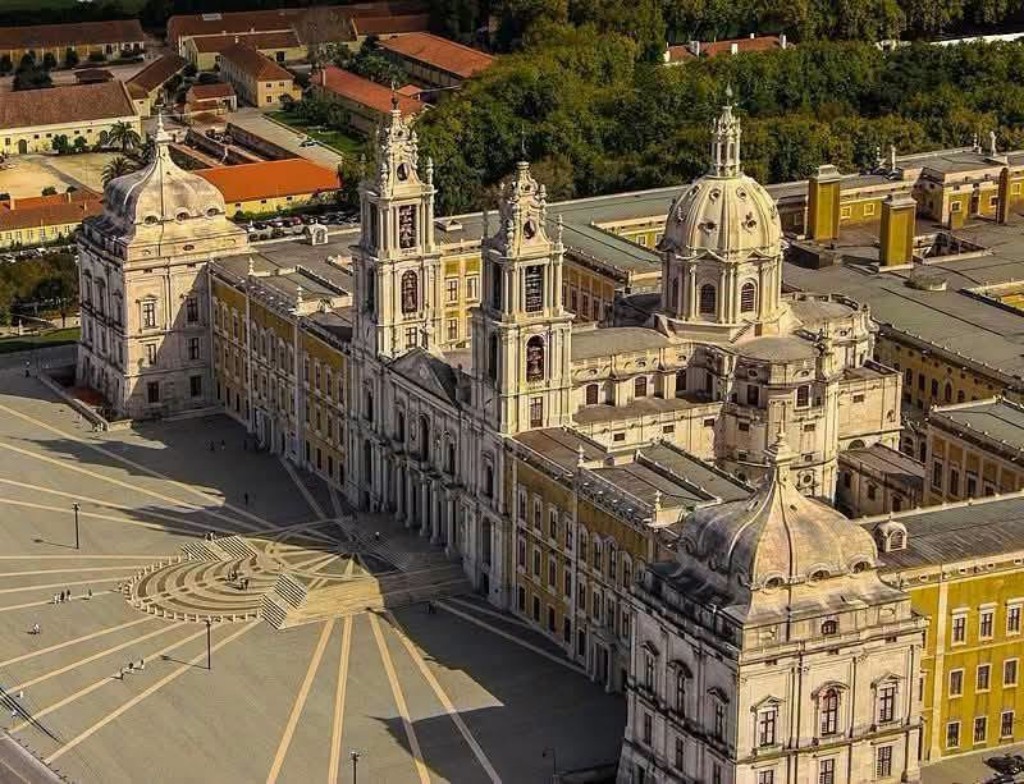
In the good old days of feudal kings and colonies where they plundered all riches like masses of golden ornaments from the 'wild Indians' (yes, that's how our teacher in second grade – 1967 – still spoke about the 'Indians' in America and the 'Negroes' in Africa: savages…) those kings became enormously wealthy. There was no need to worry about one palace more or less and trade flourished. Thus there was intense trade between Portugal and the so-called Southern Netherlands, with Antwerp as an especially important port. The Portuguese king John V visited our regions and heard the carillon there. Such a spectacular thing he wanted too and when he heard that it 'cost so little', he suddenly ordered two. The basilica under construction of the then also under construction Mafra palace, now UNESCO World Heritagehad two towers and so each tower would get a carillon. One made in Antwerp and one made in Liège. The king must have sensed the Flemish-Walloon conflict already. 250 years later in Belgium one would speak of the waffle iron policy: one gets this, the other gets that, needed or not. In any case, two bell founders benefited. The Walloon carillon was a flop of an instrument. It was played three times at the inauguration and then they silenced those metal kettles in the shape of bells, to this day.
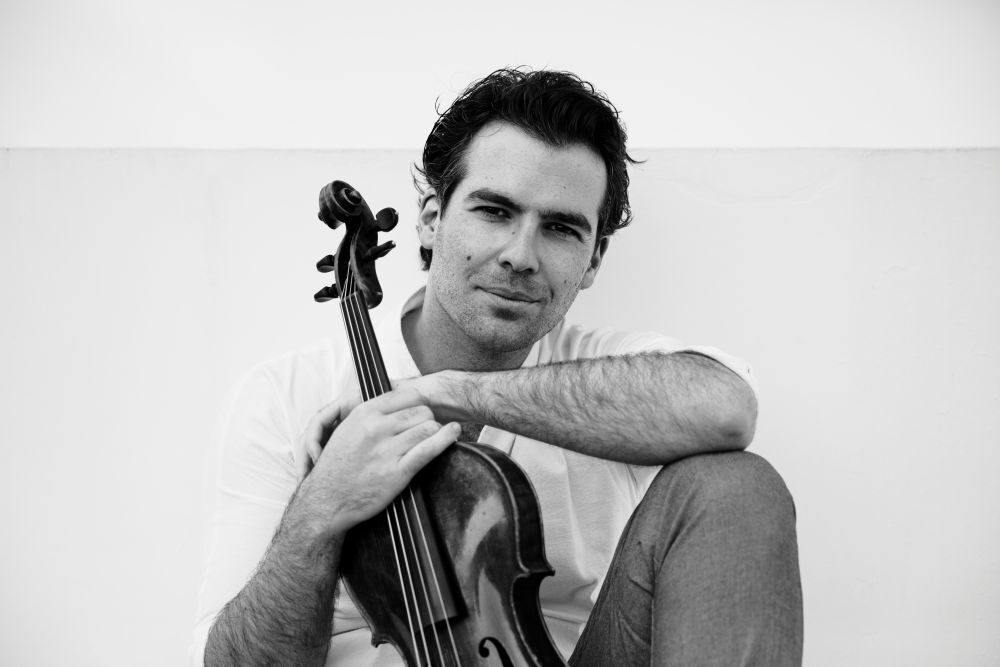
Fortunately, the Antwerp carillon by founder Willockx was of the right caliber. Bells with a beautiful fresh and at the same time somewhat melancholic sound, very well tuned. Unfortunately, the instrument fell into disrepair over the many years. There must be devoted people who 'dedicate themselves' as it's called and if your country has only one instrument, it's difficult to keep enough people motivated to learn to play it, maintain it, give concerts and enthuse the population. This partly succeeded in the 1980s when the quality instrument was restored. However, it didn't take long before there was neglect again due to lack of proper vision. Until the very talented musician Abel Chaves, trained at the Royal Carillon School in Mechelen, after much sweat and toil again got enough people pointed in the same direction to make the necessary efforts so that the Willockx instrument was again responsibly playable in a safe environment. Oddly enough, Covid 19 lent a hand: the instrument had just been thoroughly restored and Abel started carillon concerts via streaming on various channels like YouTube and Facebook. That had miraculous success and gave the carillonneur, but also those responsible the necessary courage and conviction to do more.
Mafra Congress more than 'a congress'
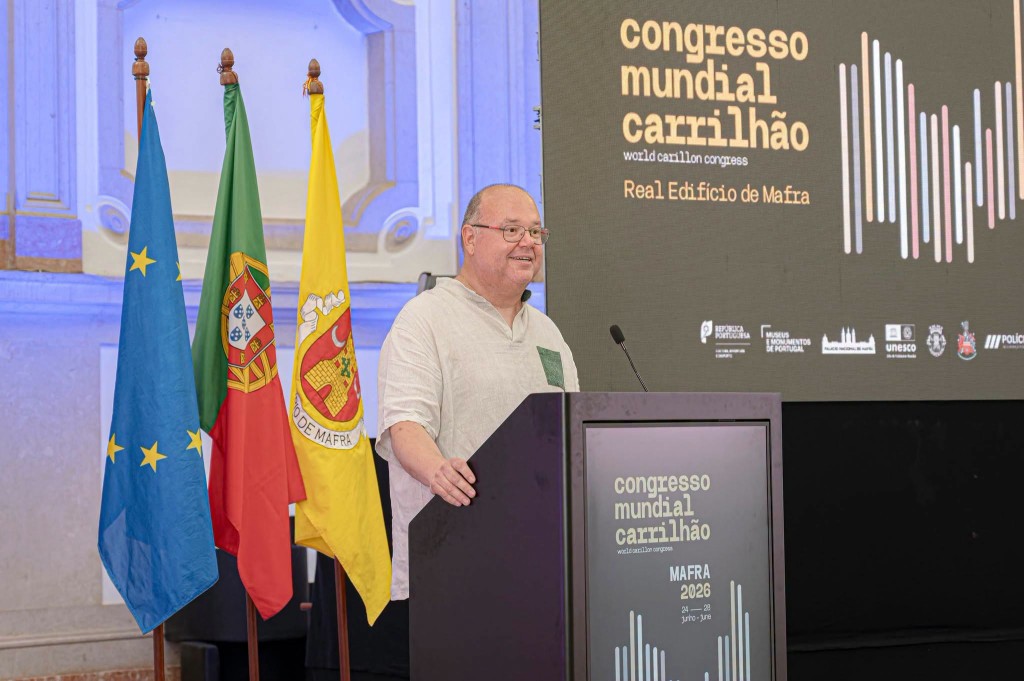
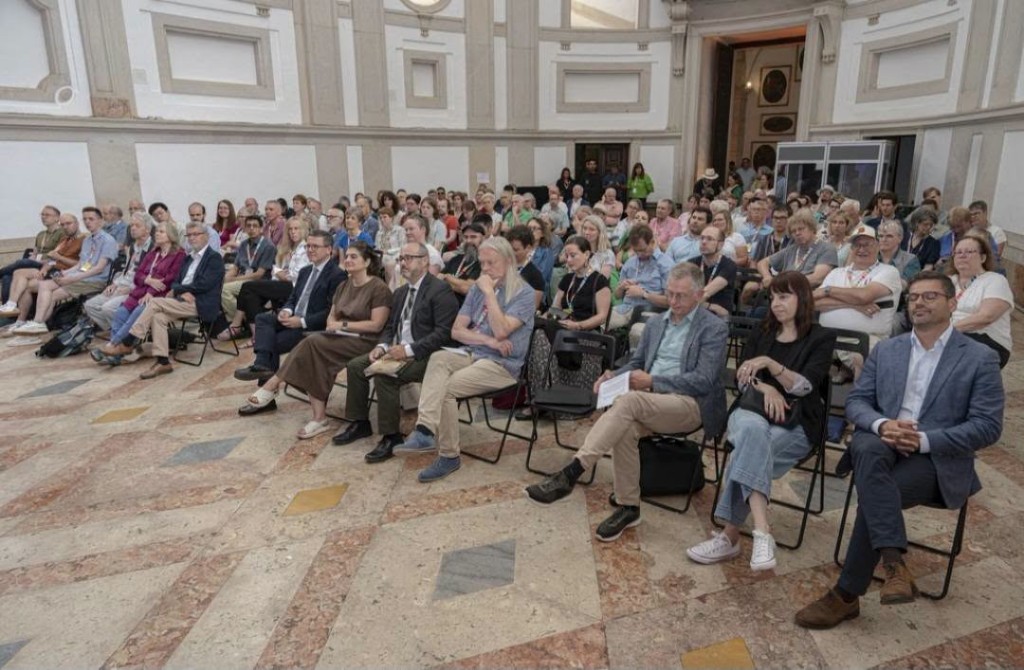
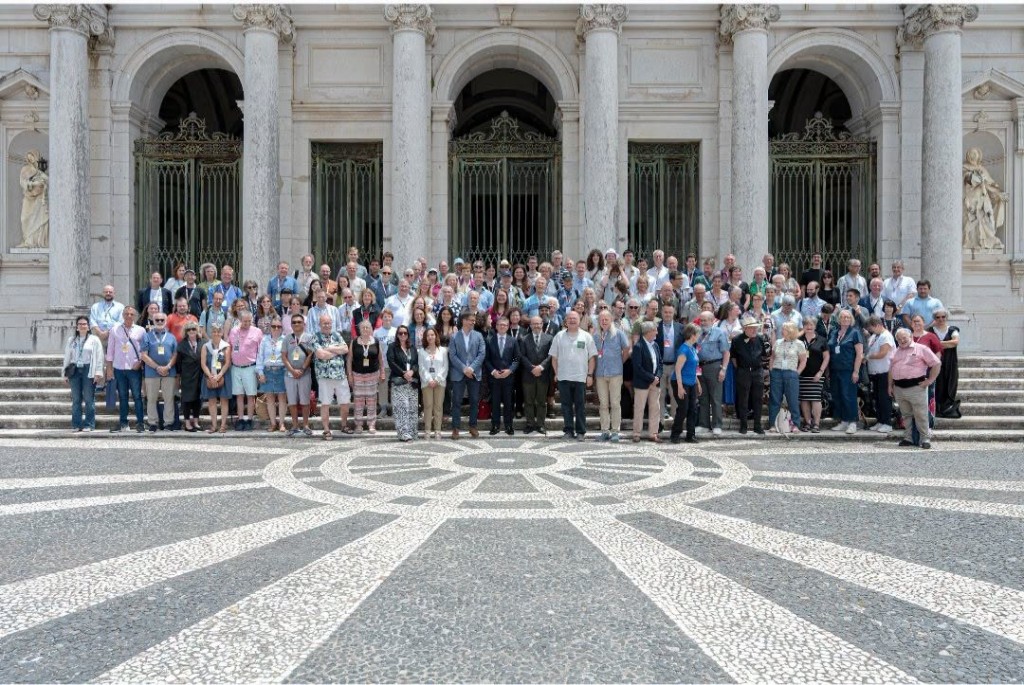
Yes, Mafra, where all those Belgians, Dutch, Americans and many other nationalities were to come and congress with their Portuguese colleagues. Beautiful palace, summer weather, magnificent instrument: what more could you want? A government that believed in it completely and so it happened. City and palace provided the necessary funds – a serious amount – and personnel, logistics, catering, transport and various other practical things and everything that such an organization entails.
Abel Chaves had and has vision and he would push that vision through. So there would not just be the classic congress formula with a series of lectures and performances, Abel wanted a complete package with the classic formula supplemented with presentation stands from music schools, interest associations, companies and the like. Also, a bell, a peace bell no less, would be cast on site in a specially built outdoor smelting furnace and mold. The melting of the bronze and the casting of the bell would be framed with an evocation of music and dance.
Abel's colleague, Ana Elias, also trained in Mechelen, made a special contribution that would make clear that the carillon can be used for more than playing a few tunes weekly and giving a concert now and then. Disco music would blare from speakers, dancers à la K3 would give their show on the stage and the mobile carillon – a neat investment by Elias, a very beautiful sounding modern carillon mounted on a truck – would play together with the disco music.
The closing evening would be festively enhanced by the police band – a professional wind orchestra like for example the Gidsen Music Corps in our country – which would perform together with the mobile carillon and among other things premiere a symphony specially composed by Abel Chaves for this congress in world premiere. Success guaranteed.
To make everything complete, he organized together with the palace a very engaging, meticulously executed and highly educational exhibition about carillons in the palace with all kinds of documentation, old clappers, practice keyboards and more. For this, professional scholars and exhibition builders were called upon. It became a not too large, well-balanced exhibition that informs the visitor 100% and certainly doesn't bore anyone. Quite the opposite.
Carillon Congress Dances Around the Hot Issues
Multiple lectures were given on subjects that are related to the carillon, but that don't always provide more insight or contribute to the further development of everything about and around this instrument. Informative well worthwhile, but not always the stuff for a congress, let alone a world congress where important pain points were not discussed. For instance, the future of the instrument was not discussed. How to convince young people to learn to play the instrument? How does it stand worldwide with training in institutes, master classes and the like? What about remuneration? Why is it that some have 10 or more carillons in their portfolio and others barely or never get opportunities? How to collaborate with governments and organizations? How to attract media attention? How with this and how with that? No demand packages for honest, responsible remuneration were discussed. None of these things where you would naturally come into contact with in any professional congress. No working groups, only at the last moment a hastily arranged discussion round where 13 pain points were briefly addressed. May this be an opening to absolutely work further on this in the future because it is necessary.
There is sufficient networking, contacts are made and reaffirmed, concert invitations follow. That is part of a congress, but it shouldn't be the core. It belongs there, especially during meals, the free hours.
From Strong Through Unusual to Painful Concerts
And then, the concerts… A professional association must (!) demand and enforce the highest musical quality standards. Now it's a hodgepodge that the association programs because it assumes that each chapter must get a turn. But what if a (usually smaller) chapter has no decent musicians, but only poorly trained dilettantes or amateurs? Surely it's not acceptable to bungle an instrument, and then during a world congress where many eyes are on it, by carillonneurs who do more harm than good, whose playing is absolute anti-promotion? Mistakes, stumbles and a lack of general musical insight apparently is just the normal for some. This is not serious, it's unethical and a curse against music in general and the carillon in particular. Dear BWF, there's work to be done! There are plenty of very good carillonneurs, of whom only a few (too few) had time to perform at this congress. Alongside the bungling of some, better attention must also be paid to what music is being played. The man in the street is not served with complicated intellectual compositions, it can be friendlier, more inviting. There is so much quality music from early baroque to now to not precisely play music that hardly anyone understands.
Overall it was a very well-organized congress with excellent supporting activities that will ultimately be remembered most. If the association tackles the much-needed points of attention, there is real future. If not, major question marks arise…