25 Years of Laus Polyphoniae. Who would have thought that the Antwerp Days of Early Music, once held in the Rubens House, would grow into the world's largest polyphony festival, hosting every conceivable major name. Musicians and ensembles that had already made their mark, but also young talent that would later break through on the international scene: Laus Polyphoniae always knew how to find them. And that continues.
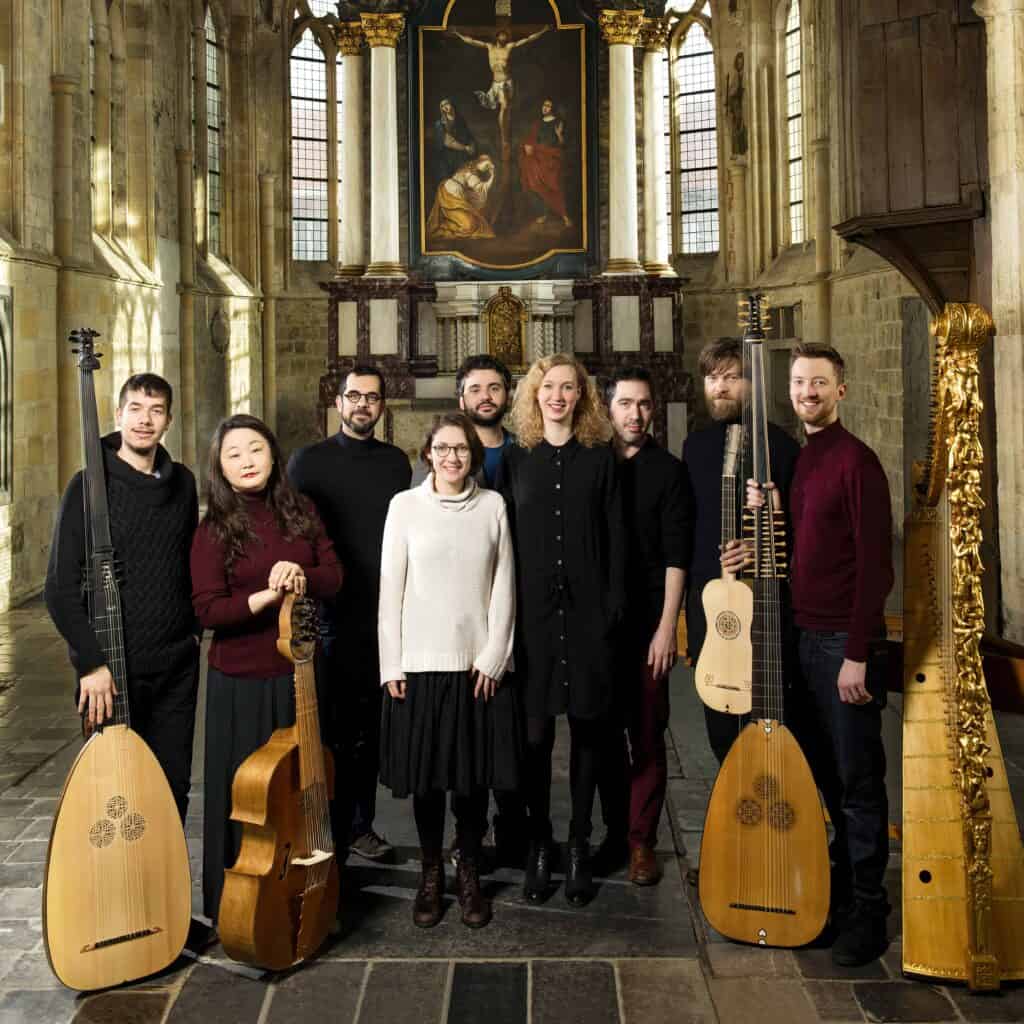
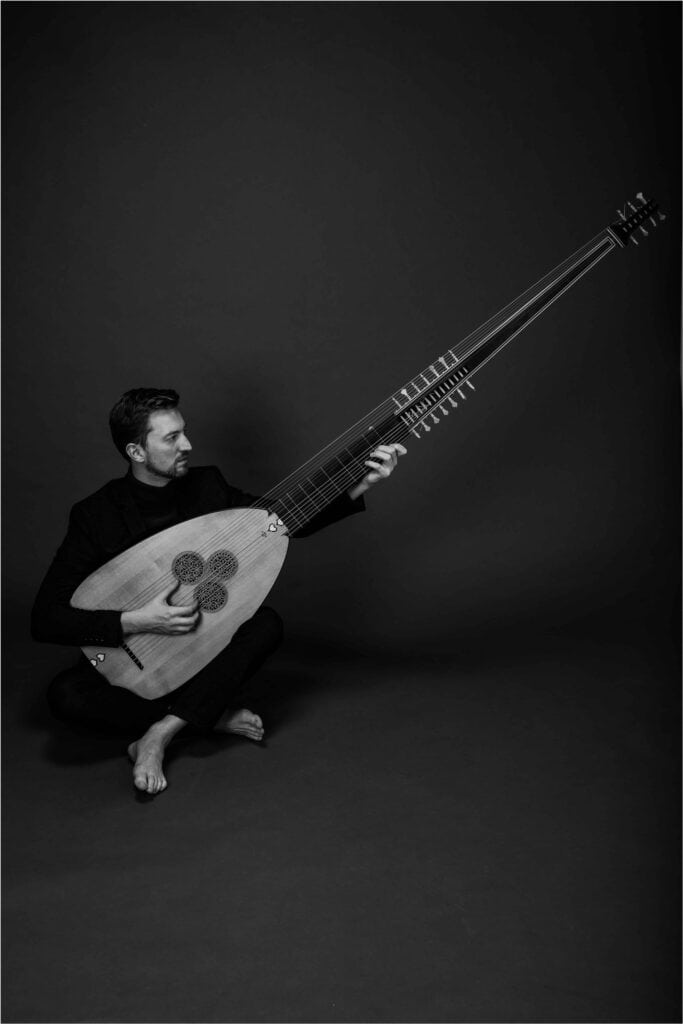
One of those younger ensembles is Scherzi Musicali, led by Nicolas Achten. Festival director Prof. Dr. Bart Demuyt wanted to give him the opening concert of the jubilee festival. During an exploratory conversation, well over 2.5 years ago, Nicolas Achten mentioned that he had long wanted to program La Pellegrina, partly because he had discovered that the well-known version was one with many layers of varnish. There was mention of an instrument that has since disappeared, which also led the basso continuo. This sounded, literally and figuratively, like music to Bart Demuyt's ears, and the decision was made quickly. Achten would perform with his ensemble Scherzi Musicali the purified version—in other words, the most original possible version with that as-yet-unknown instrument still to be built. Opening 25 years of Laus Polyphoniae, the Antwerp leg of the Festival of Flanders, with this would be an exceptional event that everyone would talk about. And that's exactly how it turned out.
Klassiek Centraal had the privilege of attending the preview on Ascension Day, Mother's Day in Antwerp and surroundings, and at the Rubens Market in the city celebrating the splendor of the Baroque for a full year. At this opening, Antwerp's alderman of culture, Mrs. Caroline Bastiaens, and the chairman of the Festival of Flanders Antwerp, Mr. Philip Heylen, spoke in praise of the festival, the founders—with Lieve Schaubroeck at the helm back then, what would we have done without her?—and her successor Bart Demuyt. During this festive session, Michaël Scheck was honored for his commitment and achievements, having been a long-time motivator, inspiration, and musical jack-of-all-trades in the Flemish musical world. He was and remains a pivotal figure in the Festival of Flanders Antwerp and Laus Polyphoniae.
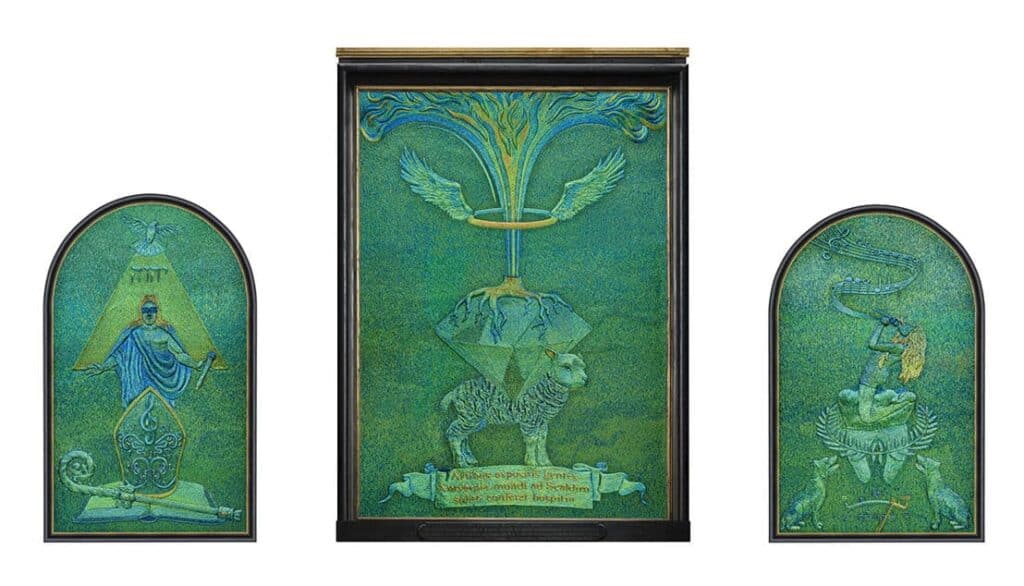
In the magnificent setting of the 400-year-old Sint-Augustinuskerk, nowadays home to AMUZ, where striking new altarpieces by Jan Fabre are displayed—in these works he references Baroque symmetry, symbolism, ornamentation, and the golden ratio—a La Pellegrina resounded that was overwhelming. The grandeur and splendor in this music really comes into its own, and you hear new colors, not only through the 'new' instrument that is at least 400 years 'old,' the baschitarone. The wealth of vocal exchanges, instrumental variation with three organs, different types of lutes and chitarinos, strings, traverso, support from impressive brass and cornet, and melodies that immerse you in a celebration that truly radiates perfect harmony and the most beautiful that could be offered at the time, completes the whole. The wedding between Ferdinando I de Medici and Christine of Lorraine in 1589 still resonates today, at least musically in 2018.
Nicolas Achten and his musicians have positioned themselves squarely in the middle of today's younger generation of specialists well-versed in historically informed performance practice. It is not an overstatement to speak of absolute mastery, and the succession is thus assured by those we can call the pioneers of 'early music practice.' This young generation moreover has the advantage that the pioneers have conducted tremendous foundational research that can now be built upon further. Things we listened to with open-mouthed wonder 40 years ago are now being refined even further and presented with even greater insight and finesse. What a gift to musical experience that such advanced work is being delivered. The concept of 'early music' itself may not survive—and that's really not a problem—but historically informed and musically faithful-to-the-score performance is thriving. May it continue for a long time to come. Organizations like Laus Polyphoniae and people like Nicolas Achten, Bart Demuyt, and so many others vouch for it. Thanks to all that dedication and all that infinite beauty!
More information about the nearly sold-out festival Praise of Polyphony can be found on the website and in the double program booklet. A program divided into two: the period before 1618 and the period after. Why that year? Because in that year the Augustinians opened the doors of their new cloister church for the first time, and also because that year falls in the period between the musical transition from polyphony and Renaissance to Baroque.
- WHATLaus Polyphoniae, Festive Opening of the 25-Year Festival with La Pellegrina
- WHOConductor Nicolas Achten and Ensemble Scherzi Musicali
- WHERE & WHENAMUZ – Sint-Augustinuskerk Antwerp, August 15, 2018
- PHOTOS© Noah Shaye and © Jesse Willem