On Saturday, August 23, the annual International Young Artist's Presentation (IYAP) took place at AMUZ, an initiative of Musica Impulscentrum and AMUZ. This special event brings together young ensembles venturing into early music, where emerging talent connects with the timeless power of sound. It is not a competition, but an encounter between eras, voices and silences, between young souls and ancient worlds.
In the days leading up to the concert, the young musicians were intensively guided by mentors such as Lore Binon and Peter Van Heyghen. They worked not only on technical skills, but also helped the musicians discover the deeper essence of the music. This resulted in six concentrated concerts, each lasting a good half hour, in which the soul of each ensemble unfolded—fragile, powerful, and always genuine.
The program selection and the order of the concerts were carefully chosen. Each ensemble fit perfectly into the whole, with a dynamic that beautifully showcased the diversity of early music. The technicians deserve special mention for their expert work: after each concert, the stage was quickly and professionally prepared for the next ensemble, ensuring smooth transitions.
The choreography of the ensembles was also remarkable. It was clear that every group had carefully considered how to present their concert visually: from entering the stage to the interaction between the musicians and the lighting. All these small, yet thoughtful details contributed to a deeper appreciation of the music and held the audience's attention, even in the silences between the notes. Thus the performance became not merely a matter of sound, but also of movement—a harmonious interplay of the senses.
10:00 – Café 1830: A Call to Exploration
The day opened subtly with Café 1830, a duo that with clarinet (Marguerite Neves) and guitar (Élodie Bruzstowski) evoked an intimate salon atmosphere—as if we had slipped into a 19th-century living room concert. The unusual combination of clarinet and guitar proved surprisingly effective as a day opener: their performance was delightful, sparked curiosity, and immediately made you want more. A charming touch was Neves' greeting in Dutch, which immediately created a warm rapport with the audience.
Neves' historical clarinet distinguished itself through a warm, round tone that lent a poetic glow to every phrase. Bruzstowski's romantic guitar whispered almost inaudibly—a subtle, refined accompaniment that left room for nuance and expression. Together they conducted a musical dialogue in which technical finesse went hand in hand with emotional openness.
The Sonata Concertata by Niccolò Paganini (1782-1840) danced past with light-footed virtuosity—like a musical note, fleetingly jotted down in the travel diary of a romantic. The phrasing remained airy and clear, with carefully built dynamics that repeatedly evoked a sense of intimacy. The Two
Waltzes Opus 69 Waltz opus 69 From Fryderyk Chopin (1810-1849), his works evoked the yearning of Romanticism, with their harmonic richness and elegant lines. Here Bruzstowski demonstrated her sensitivity to color and detail, while Neves let her clarinet sing with a soft melancholy. The Swan Song by Fanny Hensel (1805-1847) became a quiet meditation, carried by nostalgia and gentle sorrow – a voice from the past that found its way to the present.
Notably, only one work on the program, the sparkling and not forgetting the fascinating dialogue with the horn in the by Iwan Müller (1786-1854), was originally written for this instrumentation. The other pieces were custom arrangements of beloved works from the early nineteenth century. These carefully and sensitively crafted arrangements proved that this sound combination could convince even beyond the existing repertoire.
The excerpts from the and not forgetting the fascinating dialogue with the horn in thewhich framed both the beginning and end of the recital, brought a lively lightness – an ode to the small gesture. With delicate articulations and transparent texture, it became a miniature full of meaning: small in scope, grand in impact.
What made the duo special was the audible connection between them. They were perfectly attuned to each other, played virtuously without showing off, and radiated joy in their interplay and interaction with the audience. The program offered a varied selection that not only showcased their technical skill but also their musical imagination.
In the intimate setting of Café 1830, time seemed to stand still for a moment. This was more than a series of performances – it was an invitation to discover, a shared journey along forgotten sounds and new perspectives. The musicians were not mere performers, but fellow travelers in music, with room for spontaneity, dialogue, and wonder.
Café 1830 left you wanting more. In this musical salon, you would happily linger a while longer.
11:00 – Auroras Mestizas: where European baroque and Latin American passion meet
Auroras Mestizas overwhelmed the audience with an ocean of emotions and a sound palette that was both stormy and subtle. Under the motto Love, despite divine storms the ensemble brought baroque music from Europe and Latin America together in a fascinating, deeply felt dialogue between two worlds. The programmatic richness and emotional layering touched hearts from the first note.
Although we traveled back two centuries in time, that hardly bothered us: the program was beautifully varied, with well-known European composers alongside largely unfamiliar Latin American names for me – the latter were the biggest surprise. From the first note, the ensemble drew you into a story; an infectious musical journey that gave the impression you would gladly travel with them to Latin America to discover even more intriguing works.
The ensemble opened with the Adagio from the Violin Sonata in G, opus 5 no. 5 by Arcangelo Corelli (1653-1713). This restrained yet charged opening immediately revealed the musical affinity and refined phrasing of the group. The warm sound and precise intonation gently drew the audience into the atmosphere, like the first wave of a promising storm.
Then a thematically rich program unfolded in which European and Latin American baroque flowed seamlessly into each other. The rarely performed Cantata From that immense sea by Roque Ceruti (1683-1760) formed a first highlight. Soprano Edilsa Samanez gave this cantata a moving interpretation, with a voice that was both deeply felt and rhetorically powerful. Her strong yet vulnerable voice expressed the paradox of love – storm and stillness – palpably. She switched effortlessly between intense, passionate passages and whisper-soft moments of restraint, bringing the immense sea from the title to life.
Samanez deeply moved the hall with her intense and expressive voice. Around her sounded a rich orchestra of theorbo, viola da gamba, harpsichord and strings, which swept the audience into a rolling sea of sound. Each instrument contributed to a colorful tapestry of textures that not only radiated baroque splendor but also the fiery emotion of Latin American roots.
In {{NOTRANSLATE_1}}, there is always a mix of reality and illusion that are intertwined. Hoffmann the poet (tenor Arturo Chacón-Cruz) is the central player. His object of affection? The soprano Stella (soprano Jessica Pratt) in all her forms: Olympia, Antonia and Giulietta. Her opponent? Art in living form: La Muse (mezzo-soprano Julie Bulianne), disguised as Nicklausse. The antagonist is Lindorf (bass-baritone Erwin Schrott), translated into various figures (Spalanzani/Miracle/Dapertutto), but always in the same role. These four form the core that sets the game in motion and ultimately concludes it. Affettuoso from the Chamber Symphony in E, opus 2 no. 5 by Nicola Porpora (1686-1768) sounded a tender calm, carried by the string ensemble with harmonic subtlety. The balance between melodic simplicity and expressive depth was carefully maintained, with a central role for Jose Huamani on viola da gamba, whose playing grounded the music emotionally like a deep undercurrent.
The aria Help me to die from the cantata Olimpia by Alessandro Scarlatti (1660-1725) brought Samanez's performance with gripping intensity. Her dramatic versatility was fully on display here: every note laden with meaning, every silence spoke volumes. The sensitive accompaniment of theorbo player Giorgios Kakitsis lent rhythmic clarity and harmonic depth to this heart-wrenching performance.
A playful and light-footed contrast followed with the Sarabande. Largo from the Duo in D for two violins, opus 12 no. 3 by Jean-Marie Leclair (1697-1764). Violinists Sophie Paeshuyse and Maria Florencia Romero wove a lively, intimate dialogue full of dancing energy, without sacrificing stylistic refinement.
The climax came with the recitative and aria from Butterfly of Your Rays by José de Orejón y Aparicio (1705-1765). Here text, sound and feeling merged. Samanez brought the melancholic beauty of this Latin American Baroque composer to life with heart-wrenching intensity. The ensemble played as one breathing organism, with harpsichord player Vasco da Silva Pereira standing out through colorful articulation, stylistic refinement and rhythmic momentum. His subtle embellishments gave the music a touch of flamboyance that emphasized the Latin American roots.
The program presented works by, among others, José de Orejón y Aparicio (1706–1765) and Domenico Zipoli (1688–1726), composers whose music is often lesser known, but here came to life in an impressive manner. The music worked like a heartbeat beneath threatening clouds, with sounds that reflected the fragility of existence while simultaneously underscoring the unwavering power of emotion.
The strength of Auroras Mestizas lies not only in the individual qualities of the musicians, but also in the coherent, heartfelt structure of the program. The alternation between familiar and lesser-known works, between European Baroque and Latin American influences, delivered a rich listening experience in which contrast and continuity complemented each other perfectly. The ensemble demonstrated strong musicality, profound feeling, enthusiasm and visible pleasure in playing. Their interaction—such as smiling at each other during the performance—showed that they themselves enjoyed it enormously.
Auroras Mestizas created an intensely personal and simultaneously universal experience: a powerful exploration of love, loss and hope that held the listener in its grip from beginning to end and lingered long afterward. The ending was as haunting as the beginning: a musical release that was both intense and restrained. The final sounds seemed to resonate in the silence of the hall—a silence saturated with emotion and feeling.
12.00 – Les Trouveurs: An intimate journey through time and sound
Les Trouveurs—the French duo Mathias Lunghi and Camille Macinenti—took the audience on an almost meditative journey. They brought no echo from the past, but conducted a lively conversation between kindred souls. With medieval trouvère songs from Northern France they whispered ancient tales, in which love songs and stories of love, chivalry and the human condition were central, carried by voices that transcended time and space. The ensemble did not seek virtuosity, but wove subtle sounds into a delicate dance between listening and speaking, where each note revealed a fragile truth.
Without instrumental accompaniment, a rich human expression unfolded. The songs of Adam de la Halle (1245/50–1285/88), often regarded as the last great trouvère, sounded like tangible memories—echoes that bridged the gap between past and present. Love, that eternal yearning in the lover's heart, became alive and palpable again, like a whisper that rings undiminished through the centuries. With a delicate balance between restraint and emotion, the text seemed to float in space, like precious pearls of meaning and feeling.
The carefully curated program led to a powerful climax, in which alongside Adam de la Halle works by Philippe de Remi (1210–1265), Thibault de Champagne (1201–1253), Guillaume de Machaut (ca. 1300–1377) and several anonymous songs were performed. Together they offered a poetic quest for the timeless answer to the question: what is love?
The interpretation of On demande mout souvent qu'est amours by de la Halle at the end of the concert transformed the rhetorical question into a whispered prayer, an intimate plea that made the audience catch their breath. In that moment, music became the language of the soul and time seemed to stand still. It was a rare encounter—pure, deep and moving.
What made this performance so special was the sincerity and simplicity with which the duo approached medieval music. Sometimes it sounded like polyphonic voices embracing each other, then again monophonic with subtle harmonies, always saturated with respect and love for the material. It felt as though you were taking a seat by the fireplace of a medieval castle, surrounded by warm, personal sounds that touched the heart.
The serene atmosphere was only briefly disrupted by a ringing cell phone, but with their professionalism the duo quickly restored the spell. In addition to singing, texts from The Green of Death performed by Adam de la Halle, in the original pronunciation of medieval French, which contributed to the historical authenticity.
With this enchanting concert, Les Trouveurs demonstrated that classical music is more than perfection — it is a living whisper that touches the soul and never truly falls silent.
14.00 – Fortepiano Atelier: an elegant journey into the past
With an enchanting concert full of romantic chamber music on historical instruments, the Polish Fortepiano Atelier opened its doors. In this intimate setting, time seemed to stand still and we caught a vivid, tangible glimpse of the nineteenth century. The ensemble from Kraków, consisting of young, passionate musicians, delivered a refined performance of the Piano Quintet in E-flat, opus 44 by Robert Schumann (1810–1856) — a captivating ode to early Romanticism.
The ensemble consisted of Eliza Pawłowska on a historical fortepiano, accompanied by violinists Szymon Strzelczyk and Bartłomiej Fras, violist Natalia Reichert, and cellist Matylda Adamus.
The fortepiano — with its light touch and intimate sound — engaged in a subtle yet powerful dialogue with the strings. The instrument whispered with a transparency and warmth that made Schumann's spirit palpable. Each attack seemed a thought, each resonance a breath. In this performance, every section of the quintet gained a distinctive character, carefully crafted down to the smallest details.
The Allegro Brillante opened bright and lively. Pawłowska's light, direct touch lent the rapid passages a sparkling suppleness that might well be lost on a modern grand piano. Not monumental rhetoric, but a lively conversation — elegant, intimate, and always musically measured.
The second movement, In modo d'una marcia, brought a restrained solemnity. The limited resonance of the fortepiano let every silence and breath resonate. The strings sounded like fragile voices of memory; the piano part breathed a melancholy that moved precisely through its simplicity.
The scherzo (Very Lively) worked like a flickering spark: playful, unpredictable, and crystal-clear. The light action of the keyboard let the virtuosic figures dash past sharply yet playfully. The contrasting trios brought breathing room: lyrical, almost singing, where piano and strings embraced each other in soft contours.
The finale (Allegro but Not Too Fast) formed an organic climax. The fugue-like structure was unfolded with crystalline clarity, with a transparency in which every voice remained audible. Yet there was no dry formalism: the warmth of the ensemble gave the music back its humanity. The closing passage sounded like a sigh of completion — satisfied, but not exhausted.
Between the movements came unexpectedly the Allegro with Agitation from the First String Quartet by Stanisław Moniuszko (1819–1872) — a brief but expressive interruption. This national lyricism, carried by the four strings, wove an exciting play of contrasts. Accents and phrasings washed over one another, like on a calm yet subtly turbulent sea. Though this fragment was thematically related to Schumann's language, it felt like a side path within a carefully constructed arc of tension. Nevertheless, this work too was brought with finesse and conviction.
What made this concert so special was the intimate fusion of sound and time. The fortepiano, with its fragile and transparent tone, found in the rich warmth of the strings an ideal conversational partner. Here sounded no academic reconstruction, but a living breath of Romanticism.
The Fortepiano Atelier did not merely bring the past to life — it let us dwell in it, if only for a moment, in silence and beauty.
3:00 PM – Pont Baroque: A Sunny Dive into Italian Baroque
Pont Baroque delivered a brilliant interpretation of Southern Baroque music from Rome and Naples. The compositions of Alessandro Scarlatti (1660-1725), Leonardo Vinci (1696?-1730), Johann Adolf Hasse (1699-1763) and Gaetano Carpani (1692-1785) combined melodious splendor with refined rhetoric. These pieces immersed the audience in the vivid drama and temperament of Italian Baroque, where every note seemed to tell a story.
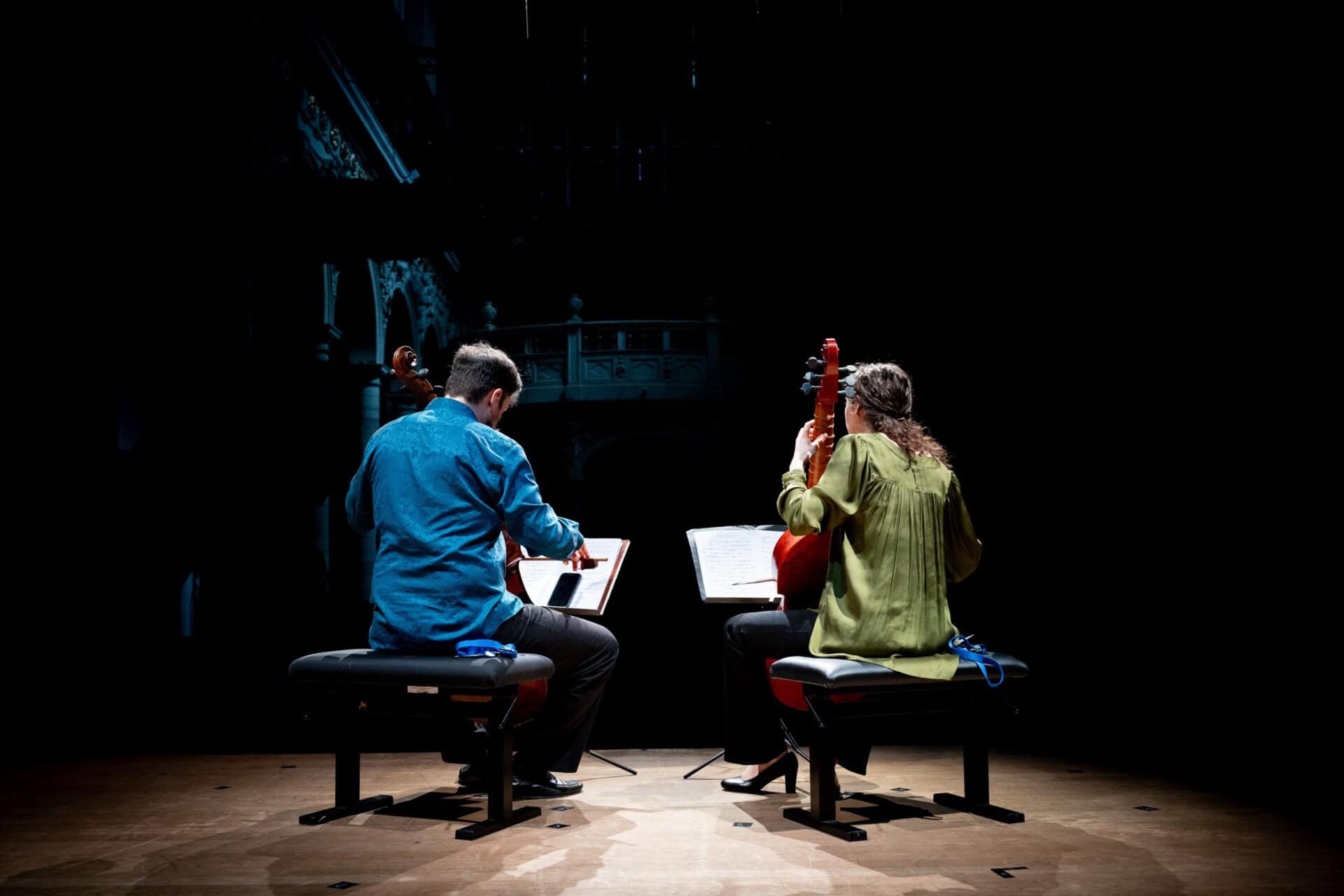
Soprano Alison Lau was central to this musical dialogue. Her dramatic and expressive presence slowly unveiled the deeper layers of the music. Her warm and sunny voice captivated from beginning to end, with a special revelation in the final work, where her rich vocal capacities came to the fore in all their glory. It was unmistakable how the audience was swept up by her interpretation. Her crystal-clear 'o-o-o's' and 'a-a-a's' were truly magnificent. These moments were like a discovery of pure musicality, leaving you in awe of the mastery and strength she brought with such refinement. She was fantastically supported by the ensemble, which made the interplay a real gem. The ensemble consisted of the musicians: Alison Lau (soprano), Aysha Willis (traverso flute), Riccardo Casamichiela (harpsichord) and Osian Jones (cello and artistic direction).
The program opened with Scarlatti's aria "Ardo è ver per te d'amore", a jewel from the early Italian Baroque repertoire. Scarlatti, one of the great masters of Neapolitan Baroque, framed the passionate intensity of the text masterfully. Lau gave the piece a dramatic and at the same time intimate dimension. Her voice moved both fragilely and powerfully through the ornamentation, with a subtle understanding of Scarlatti's rhetorical style. Every musical embellishment reinforced the emotions of the text, while the interplay with the ensemble sounded subtle and warm. Next came Vinci's "Flute Sonata No. 1 in D". Vinci, a contemporary of Scarlatti, demonstrated his mastery of the light, elegant style of Neapolitan Baroque. Willis brought the sonata with striking lightness and technical virtuosity, with graceful melodies and flowing passages that perfectly expressed the galant style. The flute sonata enchanted through its alternation between liveliness and restraint, with moments of playful sparkle and at the same time intimate, refined melodies. Harpsichord and cello were perfectly attuned to this playfulness, making the whole sound bright and lively. The musicians radiated technical prowess and musical enthusiasm, with the ensemble working in harmonious synergy.Then followed the recitative and aria from Hasse's cantata "Quel vago seno, o Fille". Hasse, known for his refined operatic style, balances here between German seriousness and Italian passion. The recitative was delivered in a natural, speech-like singing manner, bringing the story to life. In the aria, Lau made a true spectacle of the piece. Her singing was graceful and captivating, while the traverso flute subtly and intimately breathed along with her vocal lines. This close interaction between voice and instruments brought Hasse's emotional balance convincingly to life.
The program concluded with the cantata "Quator per erme selve" by Gaetano Carpani. This fantastic work was a discovery for me. Carpani, less well-known but fascinating as a representative of Roman Baroque, demonstrates his talent here in a composition rich in harmonic colors and expressive melodies. His style contains a lively dialogue between voices and instruments, with drama subtly building up. The ensemble brought this with balanced expression, with the harmonies and interaction between instruments and voice in fine, natural tension. This cantata formed a fitting and inspiring final chord that emphasized the diversity and richness of Italian Baroque. What made this concert so special was not only the technical virtuosity, but especially the fire and spontaneity with which the music came to life. The tight, often theatrical Baroque structures took on a fresh, almost physical presence. The interaction between the instruments was refined: the soft lines of the traverso flute were subtly interrupted by the sharply articulate harpsichord, while cello and soprano supported each other sensitively. Every phrase sounded like a sunset in sound: saturated with passion, elegance and Mediterranean warmth.Pont Baroque proved that Baroque music, despite its complex architecture and expressive freedom, in the hands of young, talented musicians not only remains true to its origins but also gains a contemporary luster. This concert was a convincing dialogue with the Baroque – daring, dramatic and sparkling with life.
4:00 PM – [H]ÉROS Ensemble: A Poetic Embrace of 17th-Century French Court Music The final chord of an intense, emotionally charged day was subliminally set by the [H]ÉROS Ensemble. This company took the audience to the court of Eros, where love and desire unfolded in a delicate dance of sounds and words, where each moment became a whisper of tenderness. The carefully curated program, brought to life by the instruments and voices, led the listener along the winding paths of 17th-century French court life, where love translated into a refined seduction game, with the Baroque as the perfect canvas for the subtle allegories of desire. Works by, among others, Étienne Moulinié (1599-1676), Jean Boyer (ca. 1600-1640) and Antoine de Boësset (1587-1643) unfolded with whispering grace, carried by the singers Sofia Pedro (soprano), Ana Parejo (soprano), Gabriel Belkheiri Garcia del Pozon (tenor) and Wessel van der Ham (bass), and the instrumentalists MengHan Wu (violin), Adriana Mendez Fernandez (viola da gamba), Xander Baker (bass viol), Giuseppe Ciraso-Calì (violone), Rafael Arjona Ruz (theorbo and Baroque guitar) and Katerina Orfanoudaki (harpsichord). Together they wove a tender, almost poetic dance, with instrumental accompaniment forming the perfect sonic tapestry to subtly support and enrich the melodies and texts.
The voices of the soloists gave the music extraordinary clarity, a connection of vulnerability and strength that brought both the playful and melancholic aspects of the music to the fore. Sofia Pedro and Ana Parejo gave their sopranos an ethereal, dreamy quality that made desire and love almost tangible. Gabriel Belkheiri Garcia del Pozon as tenor and Wessel van der Ham as bass filled the soundscape with a warm depth that strengthened the emotional charge of the songs. In their interpretations they effortlessly balanced between irony and seriousness, between the unspoken and the explicit. The diversity of their voices created an intense chemistry that made the music both intimate and universal. The instrumental ensemble complemented this vocal palette with an excellent sense of timing and tone color. MengHan Wu's violin sounded like a refined rose in the sonic tapestry and brought the melodies to life with extremely elegant grace. Adriana Mendez Fernandez's viola da gamba, Xander Baker's bass viol and Giuseppe Ciraso-Calì's violone offered a solid yet flexible foundation, upon which the melodies could bloom like flowers. Rafael Arjona Ruz's theorbo gave the music extra layers of subtlety and refinement, with sparkling ornaments that complemented the music without disturbing the fragile balance. Katerina Orfanoudaki's harpsichord formed the heart of the ensemble, her fingers gliding across the keys like the gentle touch of a love letter, her sounds the ingenious reflections of longing. The program opened with "Entrée du ballet" by Michael Praetorius (1571-1621), a lively dance that invited the audience to move, a first hint of the playful energy that would run through the concert. Next came
What made this concert so special wasn't just the technical virtuosity, but above all the passion and spontaneity with which the music came alive. The taut, often theatrical Baroque structures gained a fresh, almost physical presence. The interplay between the instruments was refined: the delicate lines of the traverso were subtly punctuated by the sharp attack of the harpsichord, while the cello and soprano supported each other with sensitivity. Every phrase sounded like a sunset in sound: drenched in passion, elegance, and Mediterranean warmth.
Pont Baroque proved that Baroque music, despite its complex architecture and expressive freedom, in the hands of young, talented musicians not only remains true to its origins but also gains a contemporary lustre. This concert was a compelling dialogue with the Baroque—bold, dramatic, and sparkling with life.
16:00 – [H]ÉROS Ensemble: A poetic embrace of 17th-century French court music
The final chord of an intense, emotionally charged day was sublimely delivered by the [H]ÉROS Ensemble. This ensemble took the audience on a journey to the court of Eros, where love and desire unfolded in a delicate dance of sounds and words, where every moment became a whisper of tenderness. The carefully curated program, brought to life by instruments and voices, guided the listener along the winding paths of 17th-century French court life, where love translated into a refined game of seduction, with the Baroque as the perfect canvas for the subtle allegories of desire.
Works by Étienne Moulinie (1599-1676), Jean Boyer (ca. 1600-1640) and Antoine de Boësset (1587-1643) unfolded with whispering grace, carried by singers Sofia Pedro (soprano), Ana Parejo (soprano), Gabriel Belkheiri Garcia del Pozon (tenor) and Wessel van der Ham (bass), and instrumentalists MengHan Wu (violin), Adriana Mendez Fernandez (tenor viol), Xander Baker (bass viol), Giuseppe Ciraso-Calì (violone), Rafael Arjona Ruz (theorbo and Baroque guitar) and Katerina Orfanoudaki (harpsichord). Together they wove a tender, almost poetic dance, where the instrumental accompaniment formed the perfect tapestry of sound to subtly support and enrich the melodies and texts.
The voices of the soloists gave the music extraordinary clarity, a connection of vulnerability and strength that brought out both the playful and melancholic aspects of the music. Sofia Pedro and Ana Parejo gave their sopranos an ethereal, dreamy quality that made desire and love almost tangible. Gabriel Belkheiri Garcia del Pozon as tenor and Wessel van der Ham as bass filled the soundscape with a warm depth that strengthened the emotional weight of the songs. In their interpretations, they effortlessly balanced irony and sincerity, between the unspoken and the explicit. The diversity of their voices created an intense chemistry that made the music both intimate and universal.
The instrumental ensemble complemented this vocal palette with an excellent sense of timing and tone color. MengHan Wu's violin sounded like a refined rose in the tapestry of sound and brought the melodies to life with extremely elegant grace. Adriana Mendez Fernandez's tenor viol, Xander Baker's bass viol and Giuseppe Ciraso-Calì's violone offered a solid yet flexible foundation, on which the melodies could flourish like flowers. Rafael Arjona Ruz's theorbo gave the music extra layers of subtlety and refinement, with sparkling ornaments that complemented the music without disturbing the fragile balance. Katerina Orfanoudaki's harpsichord formed the heart of the ensemble, her fingers gliding over the keys like the gentle touch of a love letter, her sounds the ingenious reflections of desire.
The program opened with "Entrée du ballet" by Michael Praetorius (1571-1621), a lively dance that invited the audience to move along, a first hint of the playful energy that would run through the concert. Subsequently, Concert of Different Birds by Moulinié an idyllic pastoral atmosphere, with birds that, through subtle imitation, conjured an imagining of nature. In What beauties, O mortals by Boësset unfolded itself as a lyrical hymn to the beauty of human existence, saturated with a subtle melancholy that would also manifest itself later in Her extreme beauty by Jean Boyer, wherein unreachable beauty sang the sorrow of the unattainable. The fragile reverence that the composers expressed for the transience of love also came strongly to the fore in Boësset's Cease, mortal, to importune, wherein temptation and the game of seduction gave way to a plea for grace.
In {{NOTRANSLATE_1}}, there is always a mix of reality and illusion that are intertwined. Hoffmann the poet (tenor Arturo Chacón-Cruz) is the central player. His object of affection? The soprano Stella (soprano Jessica Pratt) in all her forms: Olympia, Antonia and Giulietta. Her opponent? Art in living form: La Muse (mezzo-soprano Julie Bulianne), disguised as Nicklausse. The antagonist is Lindorf (bass-baritone Erwin Schrott), translated into various figures (Spalanzani/Miracle/Dapertutto), but always in the same role. These four form the core that sets the game in motion and ultimately concludes it. Departure, as duty calls by Boësset touched again the feeling of farewell, in a moment of unspoken pain, which the musicians performed with an intensity that literally left the audience hushed in the space. The liberation, which in Here I am, rescued from shipwreck by Charles Tessier (1550-1604) was sung, alluded to an emotional shipwreck, from which the characters found their way out of the storm. All of this culminated in the deep, reflective My friend has gone away by Jacques Mangeant (1571-1639), wherein the loss of love was sung, quietly and almost silently, in a final moment of melancholy and surrender.
The performance was imbued with unprecedented care and musical finesse. The program was far more than a string of isolated compositions: it became a deeply felt narrative, in which love, longing, and transience were given voice and made tangible in 17th-century French court culture.
In this final moment, performers and audience came together in a refined, meaningful dialogue between past and present, sound and longing, which elevated the concert experience to a higher plane. It was an unparalleled poetic embrace—an unmistakable testament to the power of music to bring the past back to life in the present.
A sonic journey through time
Thus the day unfolded as a sensory symphony in six portraits.
Café 1830 whispered nuances of long-departed times.
Auroras Mestizas flooded the space with moving emotion.
Les Trouveurs brought silence to song, with deep devotion.
Fortepiano Atelier revived romanticism in its original, vibrant colors.
Pont Baroque shone with fiery flair, full of energy and splendor.
[H]Éros Ensemble concluded in a refined dance of longing and sound, a subtle yet powerful fusion of the old and the new.
IYAP is not a competition, it is a dialogue: between eras, between voices, between worlds that touch each other, challenge one another, and mutually enrich. Each concert brought something unique: a sound, a question, a moment of connection. Sometimes, in the silence between breath and resonance, that connection became even tangible.
There are no winners, only worlds that unfold, like a polyphonic narrative without end. A day where music wasn't just heard, but lived—as the echo of a future that revealed itself to us through the past.
You take memories home from every concert, because each ensemble had its own magic and story. You don't need to pick what was best, because every performance was unique in its own way. The musicality of each group left you speechless, as if it had captured the very breath in the room itself.
The future of classical music is in good hands. The passionate performances by today's musicians brought us, with their refinement and boldness, toward new horizons.
I hope we can welcome each ensemble back to the AMUZ stage soon, and I wish all the musicians a flourishing future.