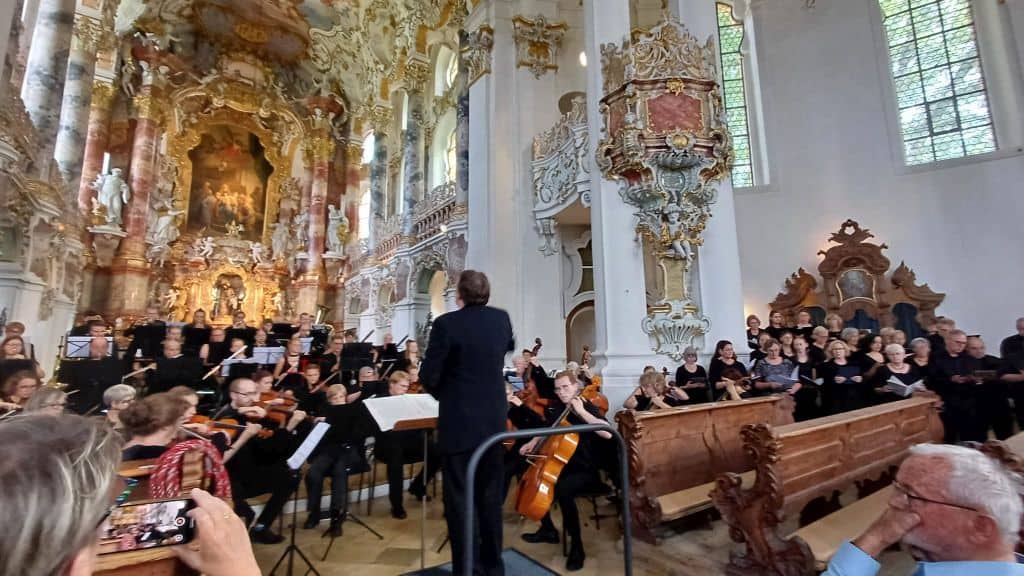
It's always a special bonus when a vacation abroad is spiced up with a concert visit. When that concert takes place in the Wieskirche – one of the world's most refined baroque churches – the experience becomes truly magical. In this evocative pilgrimage church, where music and contemplation meet, Musical Cooperative presents its annual summer concerts. These are intense musical encounters that captivate not only through their choice of repertoire, but especially through their unique performance practice.
An Inclusive Approach With Generations Coming Together
On Monday afternoon, July 21 the new concert series opened with a program where romanticism and devotion went hand in hand. A special aspect of this concert – and of the entire project – is the inclusive approach of the Musical Cooperative. For a week, amateur musicians of all ages rehearse under the guidance of experienced conductors and educators on a rich program. Beyond the major works, smaller and surprising pieces are also studied. Fascinating is how generations come together in a shared musical process. The so-called "Nachwuchsorchester" stood out, in which young musicians played with great passion and were clearly being groomed to eventually progress to the main orchestra. Also striking was how young percussionists – sometimes barely teenagers – effortlessly took their place in the major works of Tchaikovsky and Finzi under the guidance of their teachers. It was a pleasure to watch them work!
Passionate Tchaikovsky in a Heavenly Space
The opening came with a passionate performance of Tchaikovsky's Romeo and Juliet, a fantasy overture that has already inspired countless orchestras to grand expression. In the acoustic richness of the Wieskirche, the work took on a moving glow. The performance may not have been flawless in every detail – which in this context need not be a problem – but the intensity and dedication of the musicians made a profound impression. What was particularly moving was the involvement of the entire ensemble the moved us. Every musician seemed to be part of something greater, one breath, one heartbeat. These are the moments when music reveals its true power: unifying, genuine, and deeply human.
Chamber music as a journey of discovery
The smaller ensembles also made their mark. The string ensemble surprised with an elegant dialogue between Elgar's lyricism and Piazzolla's sultry melancholy. An unexpected gem came from the wind ensemble: the Intrada by Leland Albert Cassard – a work that seems to have completely disappeared from concert halls. In this arrangement with harp and winds, it proved to be a true discovery: layered, subtle, yet playful. The choir impressed with the Templar hymn "Non nobis, domine" in the arrangement of (presumably) William Byrd and the by Patrick Doyle (from the film score of Henry V).
Rhythmic energy and youthful spirit
Completely different, yet equally captivating, was Talk Show by Eckhard Kopetzki, performed by the Body Percussion Ensemble. Young people recited and clapped their way through a rhythmic dialogue delivered with freshness and precision – the joy of performing was palpable. The wind ensemble concluded with a majestic version of Alexandre Guilmant's Grand Choir in D. The arrangement made optimal use of the space and the natural sonority of the ensemble.
A spiritual highlight with Finzi
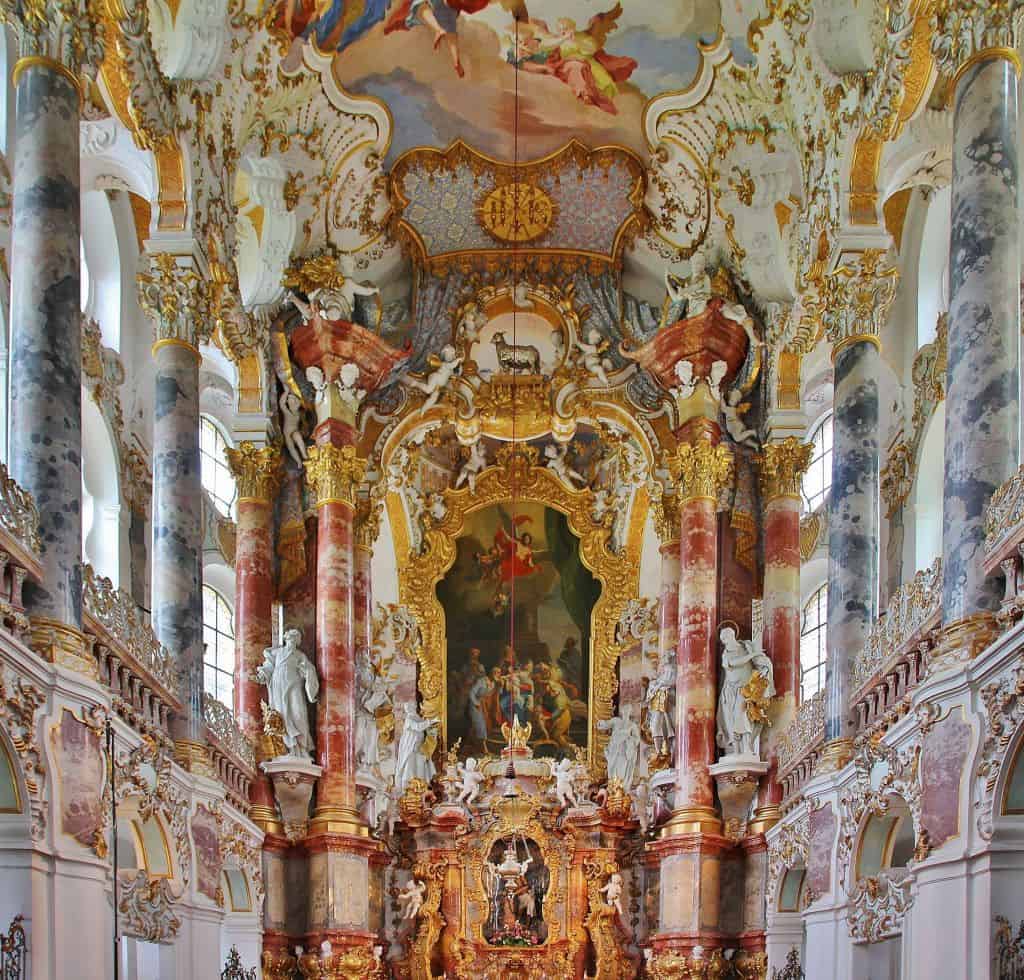
The absolute pinnacle of the evening came in the form of a rare performance of For Saint Cecilia by Gerald Finzi – a moving ode to the patroness of music. This work, rarely heard on Belgian or German stages, found an almost perfect setting in the serene acoustics of the Wieskirche. The space seemed, as it were, built to carry this poetic and spiritual musical piece.
More than a hundred performers stood on stage – choir, orchestra, and soloists – and brought the work to life with an impressive combination of refinement, dedication, and inner conviction. The solo parts were not entrusted to external guest singers, but were sung by members of the choir itself. A sober, yet particularly meaningful choice that powerfully underscored the sense of community and the inclusive philosophy of the project.
Finzi's score – elegant and lyrical, yet infused with subtle drama – unfolded in this performance with great care and inspiration. From the grandiose, solemn overture to the closing hymn of praise, a strong inner logic resonated, supported by clear orchestration and warm, convincing text setting. The English poet Edmund Blunden provided a text full of reverence and poetic power, which Finzi elevated into a meditative universe of sound.
For many in the audience, this performance felt like a revelation: music that doesn't merely sound, but says something essential – as a hymn of praise, as a prayer, as a shared moment of connection. It became a collective experience in which the beauty of the music grew into a tribute to the power of sound – and to the meaningful silence that lies between the notes.
More than music: a ritual of connection
As always, the Musical Cooperative five weeks as a guest at the Wies Folk High School. What grows in intensive rehearsals behind closed doors ultimately flourishes in the various concerts in the Wieskirche. Not everything needs to be perfect – it's precisely the audible joy of making music, the genuine dedication, and the special atmosphere that make these concerts so remarkable.
It's an inspired tradition that weaves together music, community, craftsmanship, and spirituality. Anyone fortunate enough to attend these concerts experiences more than a performance: it's a shared ritual, a listening experience that touches something essential. In a world full of noise and haste, this initiative reminds us of the power of harmony and silence, of depth and joy – sustained by people, nourished by music.