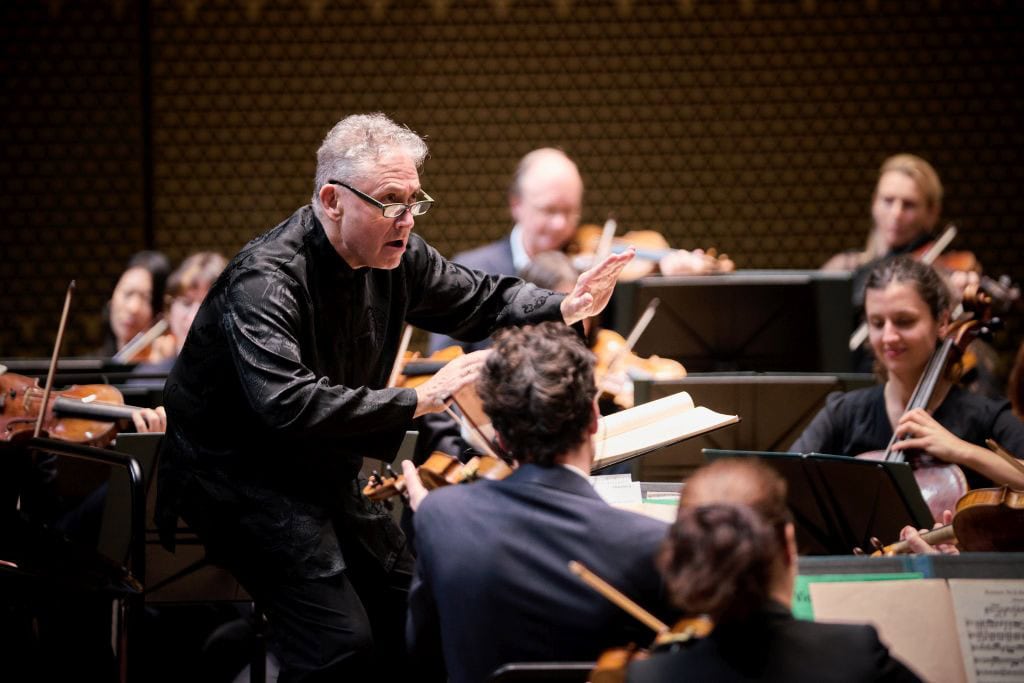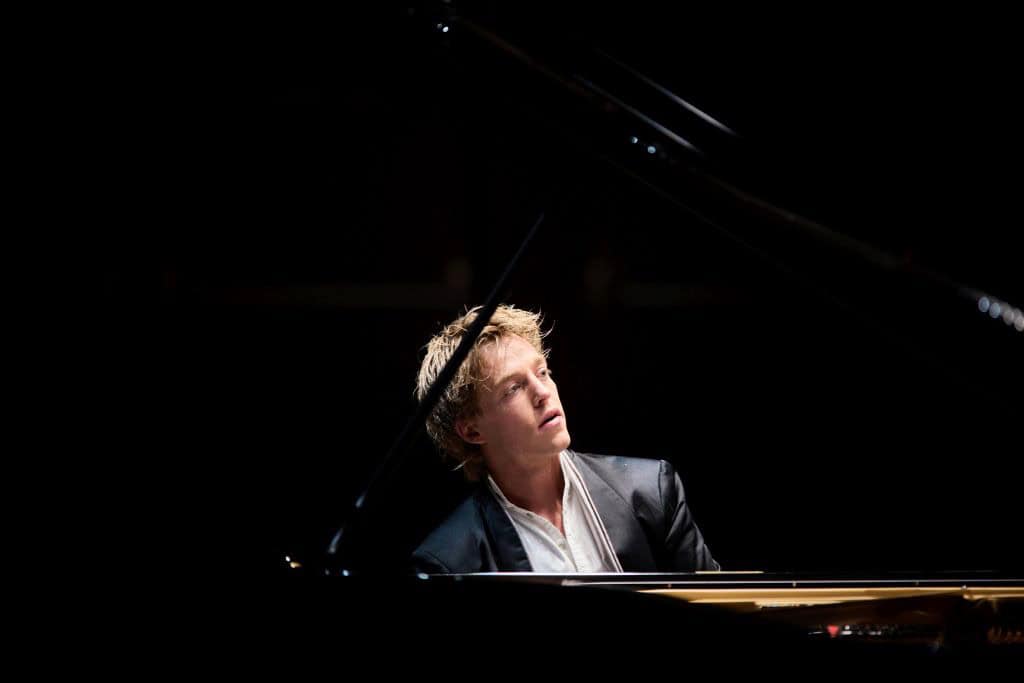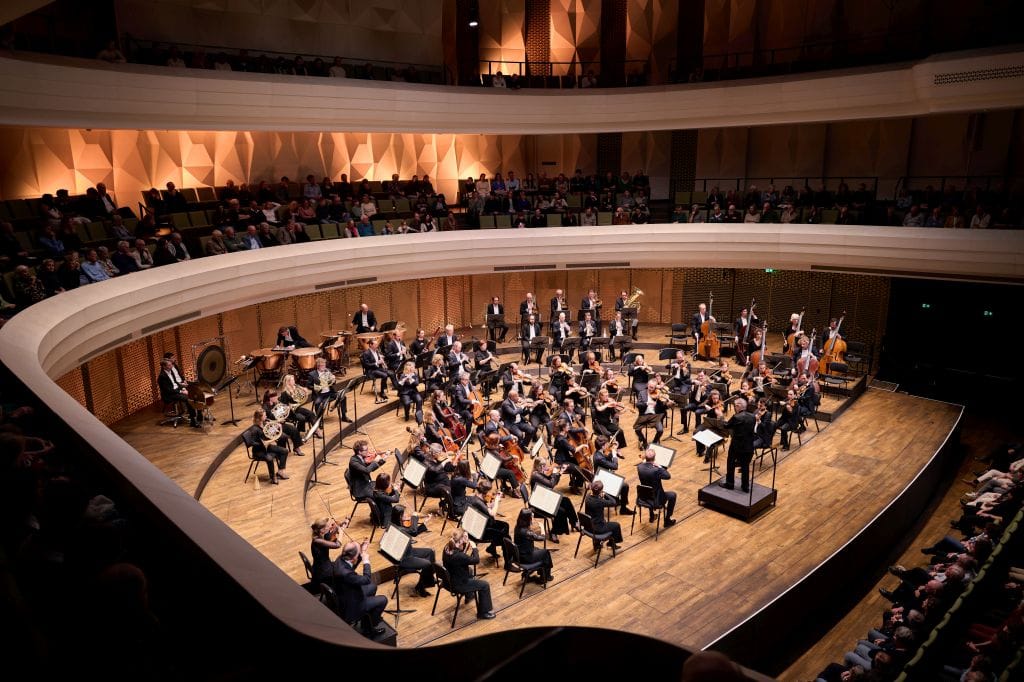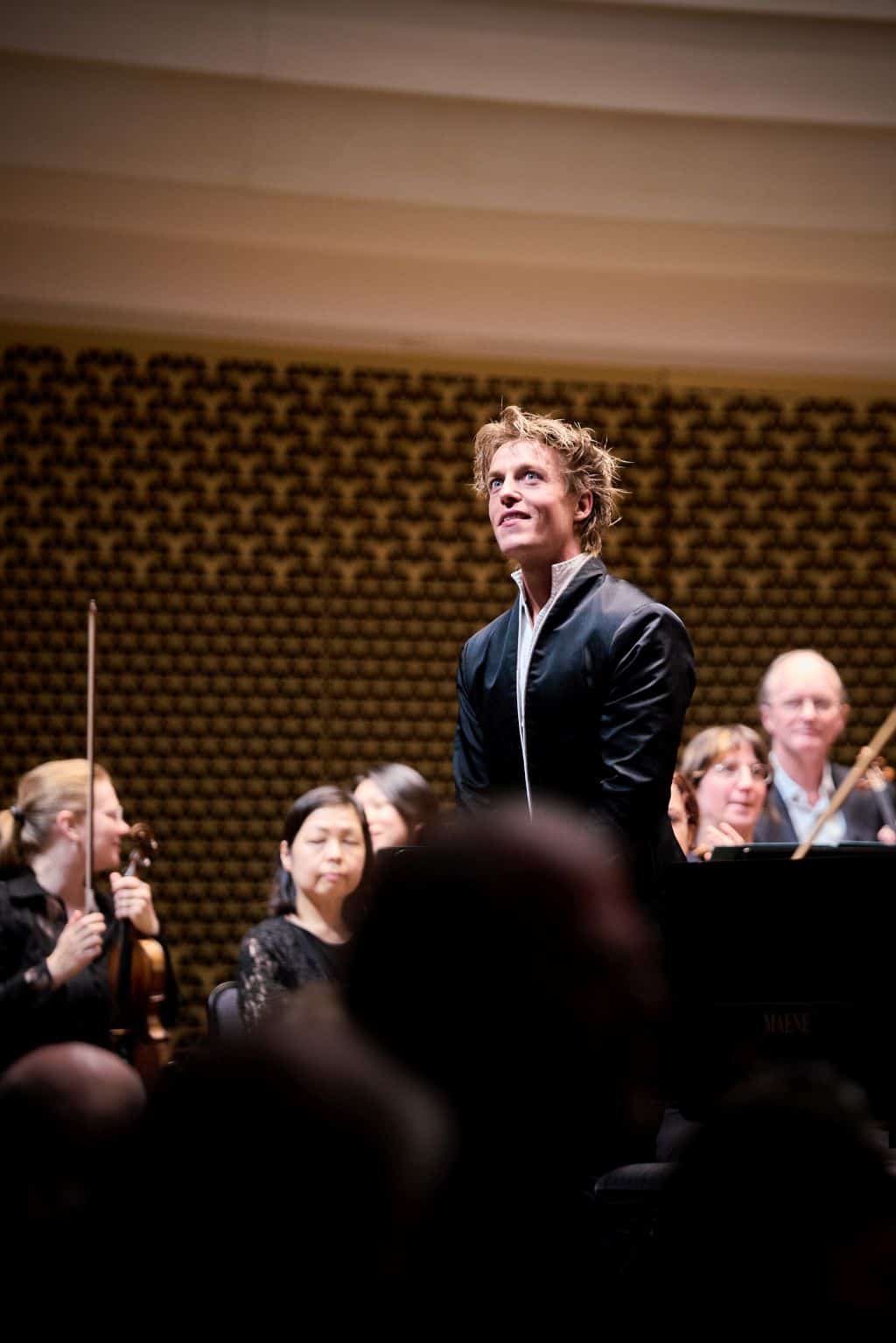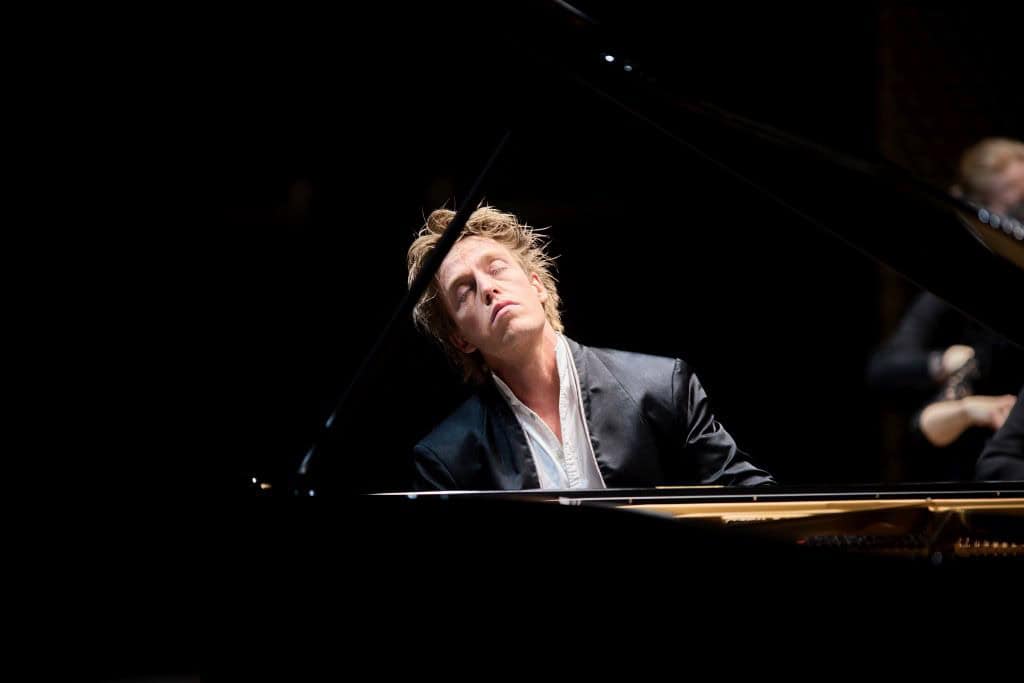
Friday evening November 14 Amare, The Hague, breathed an atmosphere of monumental grandeur. The Residentie Orkest under the direction of principal guest conductor Richard Egarr took the audience on a journey in which the Fifth Piano Concerto, the Emperor Concerto, by Ludwig van Beethoven (1770-1827) and the First Symphony by William Walton (1902-1983) met each other in heroism, lyricism and emotional intensity.
What made this evening special was not only the programmatic arc of tension, but especially the fact that Walton's symphony had not been heard live in The Hague for more than seventy years. The program offered a contrast of historical and modern mastery, an interplay of two periods that was rarely presented so convincingly.
Energetic Beethoven
The Emperor Concerto opened like a ceremony: a series of powerful orchestral chords filled the hall, as if it were a call for attention, to which soloist Lucas Jussen responded with a confident, lyrical approach. This concerto, composed in 1809 during the Napoleonic Wars, radiates heroism and grandeur that were both politically and personally charged. Beethoven wrote it in Vienna while the city was besieged by French troops – a context that remains palpable to this day in the combination of strength and lyricism. The symphonic approach to the piano concerto, in which soloist and orchestra form not a hierarchy but a dialogue, was clearly audible on Friday evening.
Lucas Jussen, internationally recognized for his virtuosity and musicality, brought this combination of strength and refinement convincingly, although sometimes at a tempo that put the transparency of the piano line under some pressure, but thanks to that energetic flair the concerto came across less ceremonial and all the more lively. Piano and orchestra were not rivals but partners in a continuous conversation of nuance and subtlety.
The interaction between Jussen and Egarr was one of the great strengths of this performance. At every transition, Jussen seemed to pick up subtle cues from the conductor, as if they were following each other with an invisible language of gestures. Egarr not only accompanied the soloist, but stimulated his impulses, which made the dialogue between piano and orchestra sound exceptionally organic.
The first movement unfolded as a heroic march. The wind instruments gave their accents with striking clarity, while the strings formed a warm undercurrent that carried Jussen's articulation beautifully. The audience followed breathlessly. In the second movement, time slowed down. The orchestral sound became transparent, almost chamber-like. Jussen's phrasing was exemplary and spaciously breathing here. The third movement concluded the journey festively. Sparkling and virtuoso, the piano danced through the orchestra, with dialogues and playful passages. Beethoven's Emperor Concerto felt not like a monument at a distance, but as a living organism in which soloist and orchestra became one, an almost perfect symbiosis of technique and drama.
The finale not only revealed the grandeur of the composition, but also the humanity behind it. Also noteworthy was the moment when the timpani engaged in a subtle dialogue with the piano. Similar delicate moments occurred in the other parts as well with the cello or with the horn, a nice accent that stayed with me particularly after this performance. These small, almost incidental conversations with and within the orchestra emphasized how tightly and attentively the ensemble played – a quality that would carry the entire concert. Although not all details in the piano always came through equally clearly and the singing line could have had somewhat more presence, Jussen's cheerful charm and expressive playing won over virtually all hearts.
As an encore, Lucas Jussen played the Liebestraum by Franz Liszt (1811-1886), a moment of intimate lyricism. This choice worked ideally as breathing space for what would follow.
A storm of emotion
Egarr introduced Walton's First Symphony humorously. His light-hearted introduction formed a striking contrast with the raw intensity that would follow. It had been 71 years since this symphony had last been heard in The Hague. No one in the hall had ever heard the work live before, and no one in the orchestra had ever played it before. Egarr's personal connection with the work – he has cherished it for four decades – gave the performance a palpable emotional charge. With the playful call "Fasten seat belts" he showed his enthusiasm.
For me too it was a dream come true; I have known the recordings by Haitink and by Walton himself for twenty-three years, and for so long I have been waiting to finally experience this work live. That personal expectation surprisingly echoed in the performance: rarely do you hear an orchestra throw itself so completely at a symphony that is new to everyone. Exceptionally, there was even applause between the movements. Those spontaneous ovations underscored both the rarity of the work and the direct impact of it.
Walton began this symphony in 1932 and only completed it in 1935 after personal turmoil and creative blockages. His style – sharply rhythmic, emotionally unfiltered, and richly orchestrated – demands a conductor who brings both clarity and commitment. Egarr deliberately chose commitment. The symphony opened with a first movement that immediately drew the listener into a storm of sound: timpani pulsed like a heartbeat, the strings moved in waves, brass and woodwinds cut through the hall. Walton introduced themes that developed through surprising harmonic modulations, with threat and unrest continuously present. Friday evening felt as if the hall itself became part of the tension, the music moved, scraped, breathed and wailed simultaneously. Egarr led this with a sharp eye for dynamics. The way he extended the arcs of tension without losing impulsivity gave this movement a rare coherence. The double basses were remarkably homogeneous in this movement, with a depth that beautifully supported Walton's dark undercurrents.
The orchestra seemed completely attuned to the conductor's intentions: breathing, rhythmic precision and dramatic phrasing were inextricably linked, a partnership that brought Walton's complex emotional world fully to life. The precision with which the sections alternated – especially brass and low strings – gave the first part an almost cinematic intensity. In his introduction, Egarr had also deliberately referred to the fact that Walton had written film music and that John Williams really must have looked to Walton…
The scherzo followed as a playfully malicious intermezzo. Rhythmic shifts, sharp accents and short motifs created constant tension, as if the orchestra both teased and threatened. The audience was kept on the edge of their seats, and the orchestra played at its sharpest, a dance on the boundary between chaos and control. The rhythmic sharpness came impressively synchronous, proof of Egarr's meticulous preparation. The biting articulations and razor-sharp precision made this scherzo one of the most exciting moments of the evening.
The Andante con malinconia offered a moment of introspection. Solo flute and soft strings wove a melancholic tapestry, the movement breathed and invited reflection. Egarr let the tension live on here in subtle ways; underneath the emotional energy remained palpable. Friday evening this section was performed with breathing phrasing and careful dynamics, making the inner tension all the more powerful. Egarr kept the tempo spacious and dignified, so that the melancholy did not get bogged down in sentimentality but flowed as a silent undercurrent. The solo flute (beautifully handled that evening) gave the movement an almost vocal melancholy.
The finale (Maestoso – Allegro brioso ed ardentemente) exploded in a grandiose triumph of orchestral colors. Fanfares of brass, rhythmically sharp woodwind playing, gleaming strings and the dramatic entry of percussion culminated in an overwhelming sense of glory. Friday evening made clear that every phrasing, every rhythmic shift, every dramatic breath of the orchestra and conductor was in perfect accord: Egarr conducted with gestures that radiated passion, the orchestra responded as a living organism, and together they created a finale that felt like a breathtaking symphonic embrace. It seemed as if the brass players made the walls of Amare vibrate, while the strings rolled through the hall like waves.
Friday evening made clear that Walton's symphony was not only technically but also emotionally charged: every movement was an emotional experience, a journey through anger, playfulness, melancholy and ultimately triumph. Under Egarr the orchestra played with an intensity that laid bare both the dramatic and poetic layers. The result was a performance that convinced through its rawness and its refinement, and which did full justice to the rare character of this work.
A musical dialogue of heroism and passion
The Beethoven and Walton programme offered a masterly dialogue: first the soloist in majestic brilliance, then the orchestra as protagonist in a storm of emotion and color. Lucas Jussen brought the Emperor Concerto to life with virtuosity and lyrical subtlety, while the Residentie Orkest transformed Walton into a compelling, intense and emotionally charged spectacle. The contrast between the transparency of Beethoven and the raw energy of Walton proved to be not a break, but a dramatically clever arc. The audience left the hall with elation and wonder, as if it had gone on not one but two journeys: from imperial nobility to unleashed modernist power. The combination of Jussen's transparent fire and Egarr's visionary leadership gave the evening a coherence that is rarely achieved so convincingly.
It was a concert that not only impressed technically, but also resonated emotionally – an evening in which tradition and innovation found each other in a rare, almost tangible intensity. Beethoven and Walton, two worlds of heroism and passion, came together Friday evening in Amare in an unforgettable musical dialogue, in which virtuosity and emotion went hand in hand.