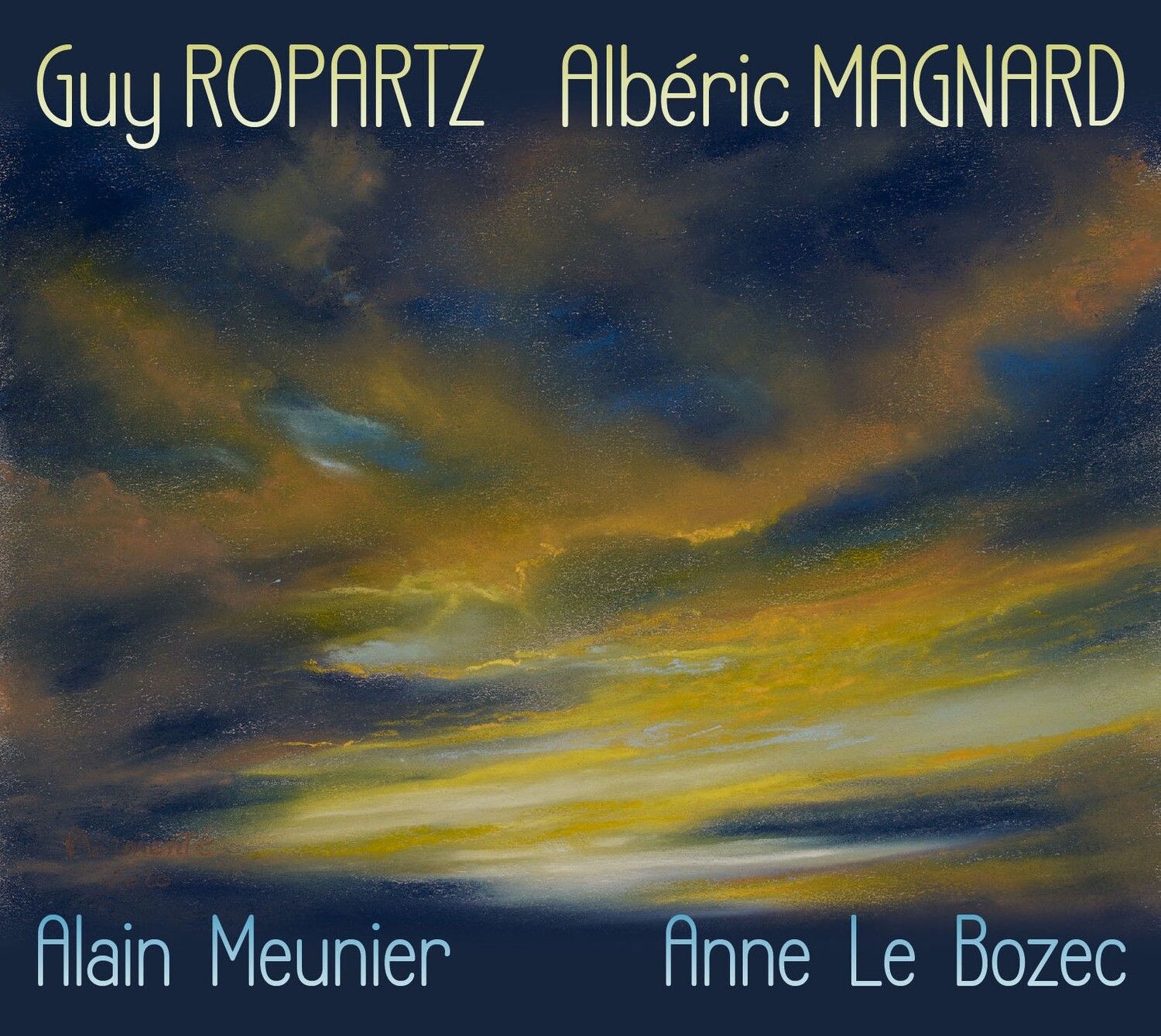
Around 1900, French composers such as Debussy, Ravel and Fauré wrote music that still regularly appears on concert programmes today. Less familiar are the names of Guy Ropartz (1864–1955) and Albéric Magnard (1865–1914). The two composers were friends and shared a preference for a serious, personal musical language. Their cello sonatas show at the same time how differently they gave shape to that language. Cellist Alain Meunier and pianist Anne Le Bozec perform both works together on this CD.
A discovery that keeps growing
For me, Ropartz’s Second Cello Sonata was a discovery. I have since listened to the recording several times and appreciate the work more each time. The music does not reveal its secrets immediately, but with every listening I discover new aspects.
Ropartz composed the sonata in 1919, shortly after the end of the First World War. The work consists of three movements: Lent – Ardent, Lent et calme and Très lent – Assez animé. In the first movement, Meunier immediately sets a dark tone with his cello. His playing is sure and intense, with long melodic lines that flow naturally. The clear sound of Le Bozec’s piano brings out the details of her independent part well. She not only responds to the cello but also keeps the tension building. The interplay makes the opening immediately gripping.
The second movement forms a resting point. Beneath the calm a melancholy undercurrent remains audible, but the music occasionally brightens without fully letting go of its wistfulness. Meunier gives the cello a vulnerable, free expression, while Le Bozec supports the progression with a clear, transparent sound. This alternation between introspection and moments of brightening makes the middle movement fascinating.
In the final movement, after a slow introduction, the music sets in motion again. The cello keeps its lyrical character, while the piano adds a playful accent with a light touch and a sharp rhythm. The dance-like character gives the music new momentum. Towards the end the rhythmic energy increases further, so that both instruments seem to move ever more strongly towards each other. The sonata thus ends with a liveliness that stands in sharp contrast to the calm of the middle movement.
A sonata full of contrasts
With Magnard, who completed his Cello Sonata op. 20 in 1911, the emphasis lies elsewhere. The four-movement sonata is more restless and builds on sharp contrasts. In the opening movement, Sans lenteur – Alla zingarese, Meunier and Le Bozec give the music a distinctly rhythmic momentum. Against the turbulence of the accompaniment, Meunier lets the cello sing a melancholy melody. This alternation between rhythmic sharpness and a more inward-turning lyricism makes the movement interesting.
No moment of rest follows: the scherzo drives the tempo even further. The high piano notes and the cello part engage in a lively interplay. Meunier does not simply follow Le Bozec but introduces a musical idea of his own, so that the two parts seem to challenge each other. This mutual tension gives the movement its nervous energy.
The third movement, Funèbre, forms the emotional centre of the sonata. After the restlessness of the first two movements, the music takes on a solemn, subdued atmosphere. Meunier lets the cello sing a sorrowful, sustained phrase without overstating the expression. Even in the spaces between the phrases the tension remains palpable. Le Bozec offers a counterweight to this restraint with a piano part that shapes the underlying unrest. As a result, this movement becomes not only a moment of stillness but also the most moving moment of the CD.
In the closing finale, Meunier and Le Bozec return to a more agitated soundscape. The sharp rhythms keep the music constantly in motion, while cello and piano alertly complement and challenge each other. The finale thus counterbalances the seriousness of the Funèbre, without the melancholy of that third movement disappearing entirely into the background.
Two characters, one dialogue
The combination of both sonatas makes this CD interesting for anyone who wishes to explore the French chamber music repertoire of this period further. Ropartz appeals to me through his alternation of lyricism, dark accents and moments of rest. With Magnard, it is mainly the moving Funèbre that lingers, set against the restlessness of the other movements.
Meunier and Le Bozec give both works a distinct profile of their own. The good balance between cello and piano makes the interplay between the two instruments clearly audible. I have come to know two sonatas that each moved me in their own way. This CD certainly leaves one hungry for more of both composers.