

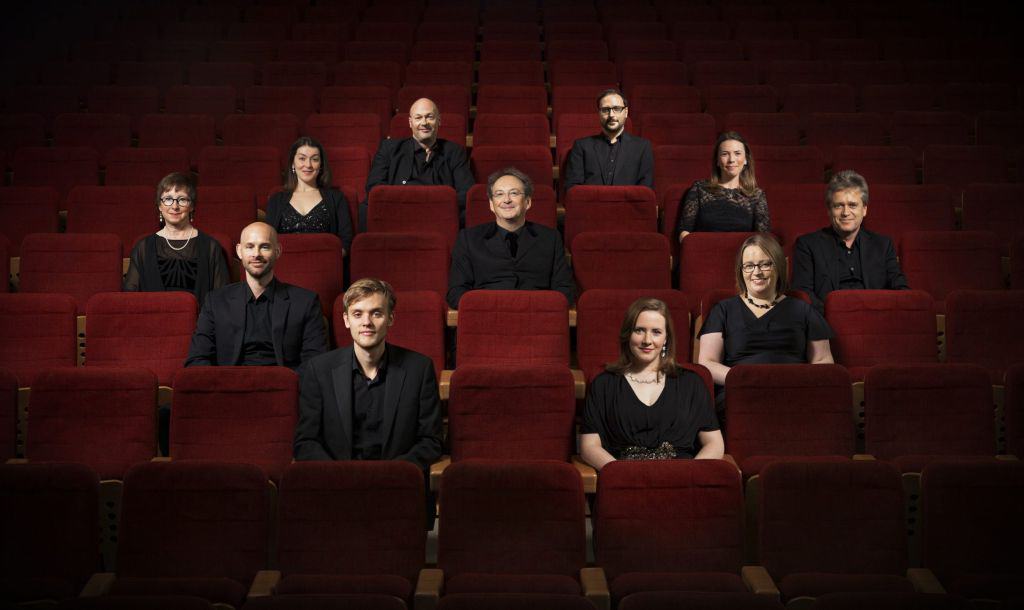
With the release of this album, The Tallis Scholars under the direction of Peter Phillips mark a significant shift in their repertoire choices. By trading their familiar territory of Palestrina and Josquin for the contemporary idiom of Nico Muhly, they deliver a performance that feels both spiritual and profoundly human.
Muhly, whose compositional style is rooted in his own experience as a choir singer, employs a ten-part structure that exploits the individual qualities of the eleven singers. Most of the compositions on this album have been written specifically for this ensemble. A fascinating interplay emerges: whereas the Scholars normally strive for an almost anonymous unity, Muhly here lets the individual voices breathe. A slight fluctuation or an audible entry becomes not an imperfection, but an expressive means that makes the abstract music more human and tangible. Moreover, Muhly plays with density: voices expand in "concentric circles" and then retreat into homophonic, chorale-like unity. In works such as A Glorious Creature, a mathematical approach to sound becomes visible, where a central unison note serves as the foundation for the harmonic radiation of the entire register.
In other works on the album, Muhly also employs a compositional style of "musical storytelling" that varies from cinematic, almost fairy-tale textures in Captain Scott's diary fragments (Rough Notes) to the complex, layered rhythms in the birthday gift Prosperitie. In Rough Notes, the vocal technique of the Scholars is deliberately deployed to sonify natural phenomena such as the aurora borealis through changing, glowing harmonies.
The intellectual and emotional heart of the album is, as the album's title already reveals: No Resting Place. Here Muhly integrates the traditional Lamentations of Jeremiah with the raw testimonies of the Windrush generation. This creates a compelling contrast by introducing a double layer: a Latin, harmonically abstract framework that creates distance as a background, against which a first-person drama in the foreground compels the listener to direct emotional engagement. It is in these passages, where Biblical abstraction collides with our recent history, that the Scholars reveal their deepest power of expression.
The collaboration between Muhly and Phillips results in an album that explores the boundaries of traditional choral execution without breaking with the past. The strength of this release lies in the way the architectural principles of Renaissance polyphony have been translated into a modern, linear idiom. It is a technically demanding catalogue that demonstrates that the vocal precision and flexibility of The Tallis Scholars also stand up outside their familiar framework. An essential listening experience for both lovers of polyphony and of contemporary music.