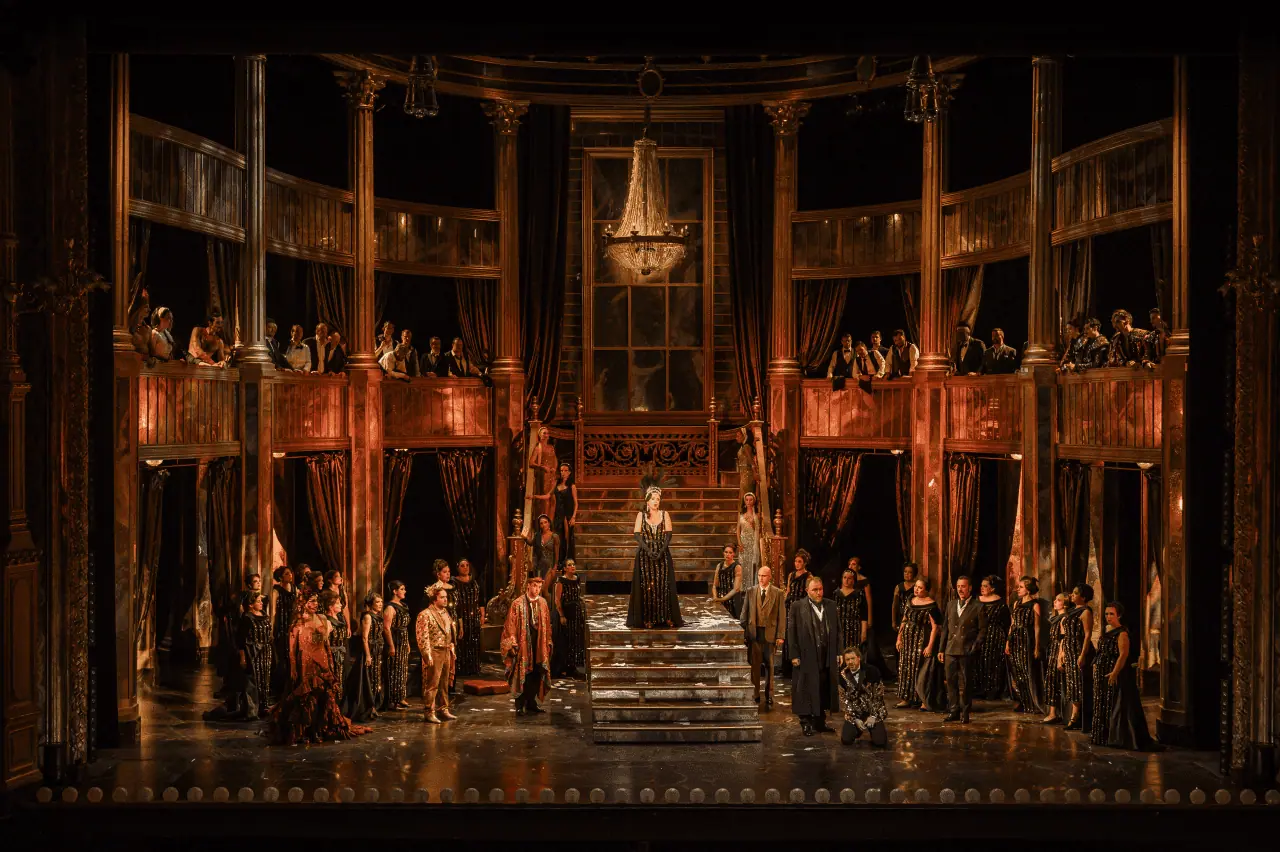
The Opéra Royal de Wallonie opens the season with a gem from the opera repertoire, La Traviata by Giuseppe Verdi. The director, Thaddeus Strassberger, chooses a setting embedded in the 19th-century opera and salon world. He creates a highly theatrical staging of this rather intimate opera, which is so strong that it can withstand some criticism.
Verdi and his Violetta
Verdi was not afraid to occasionally take risks with the subjects of his operas. In La Traviata he dared to choose a wealthy prostitute as the main character of an opera, although in 19th-century aristocratic circles in Paris this was referred to more elegantly as a "courtesan".
The story is based on "La dame aux Camélias", the novel by Alexandre Dumas, which recounts the romanticized affair of Alexandre Dumas fils with Marie Duplessis. The young woman came to Paris at age 15 and became a much-sought-after courtesan in high society.
Verdi immortalizes the character in his opera: perhaps he felt such a strong connection to her through his own life circumstances. He lived unmarried with soprano Giuseppina Strepponi, something that was not so obvious in the middle of the 19th century and Giuseppina was sometimes referred to in her circles as 'the fallen woman".
Direction opts for theatrical approach
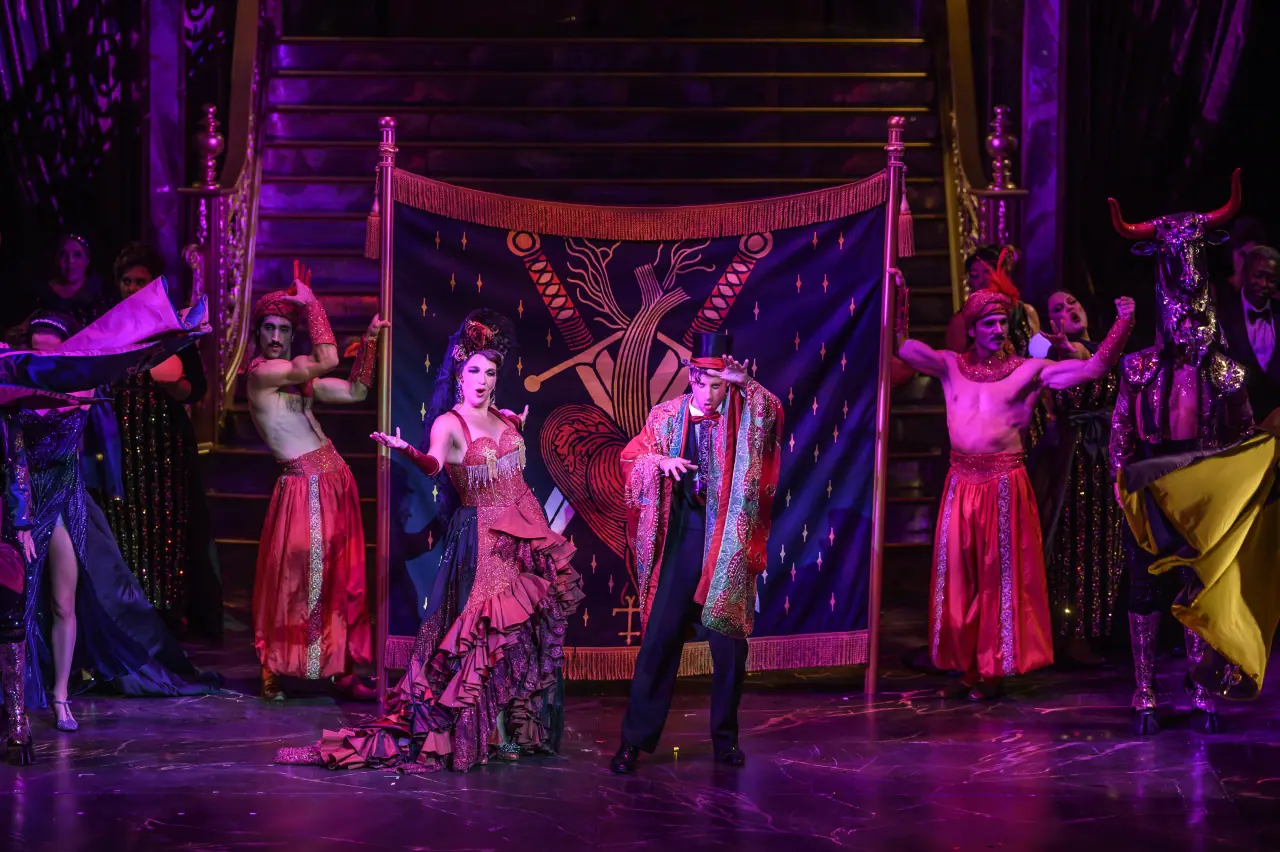
A production of La Traviata can highlight the social context of the story or primarily focus on the intimate world of the main character. Thaddeus Strassberger, who takes charge of direction, set design and lighting, decidedly chooses the exuberant world of bourgeois salons. He also stages a kind of prologue, for which he gives the reason that he wants to align with the tradition of nineteenth-century opera, which besides the actual opera also entertained the audience with prologues, interludes and epilogues. So before the actual opera begins, we are entertained with a spectacular scene featuring acrobats, dancers, matadors and so on, performed to piano music from the side box. Regrettable really, because the powerful effect of Verdi's opera prelude, which evokes the tragic ending and immediately creates the right atmosphere, is negated. The beautiful adagio returns as the expressive music from the third act when Violetta dies.
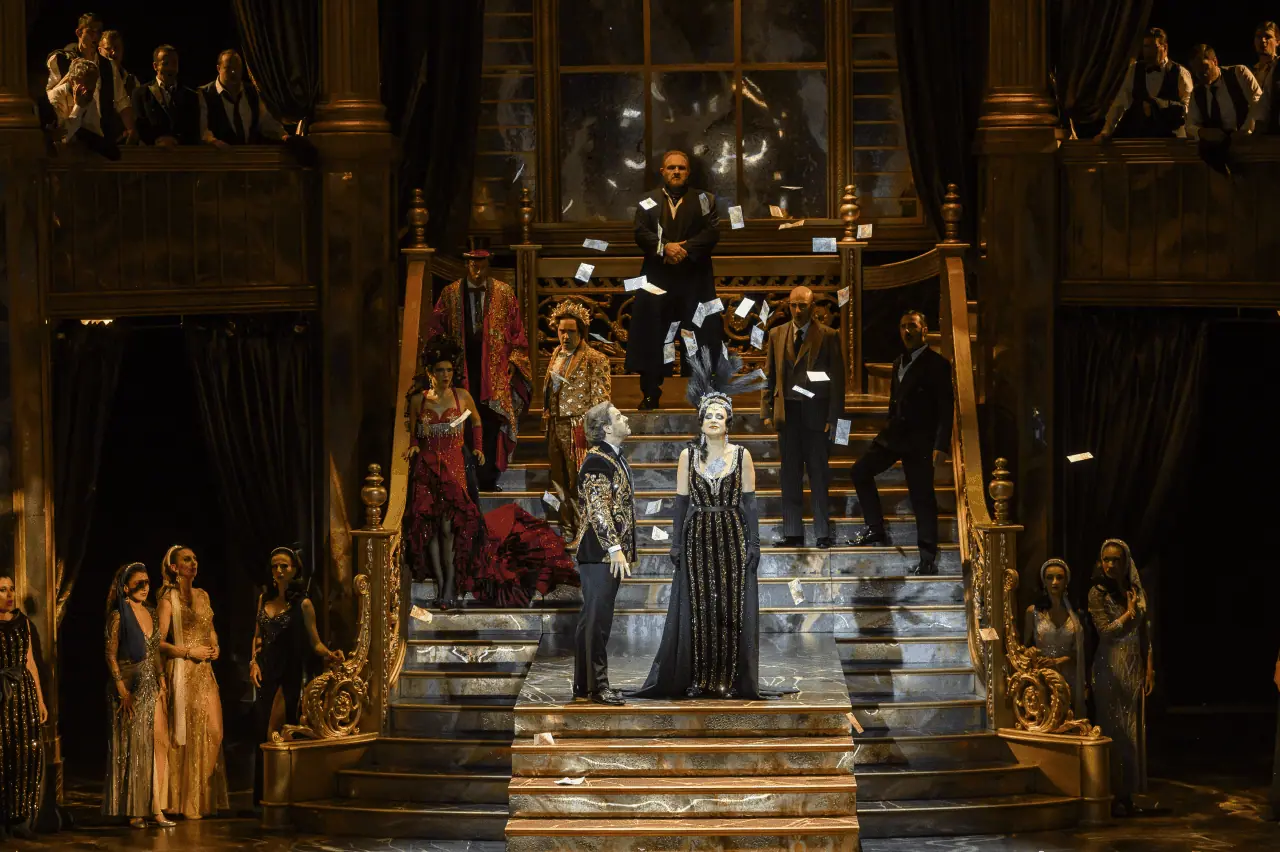
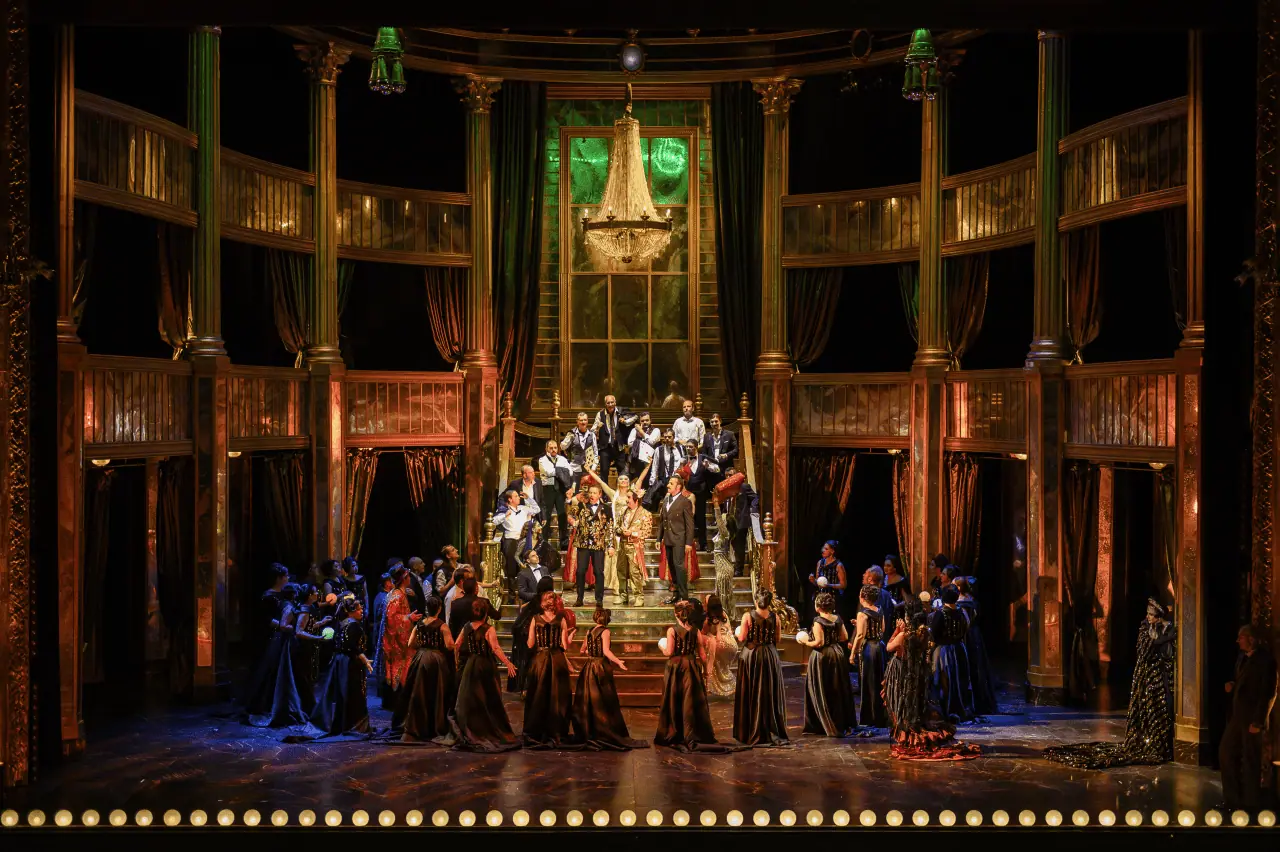
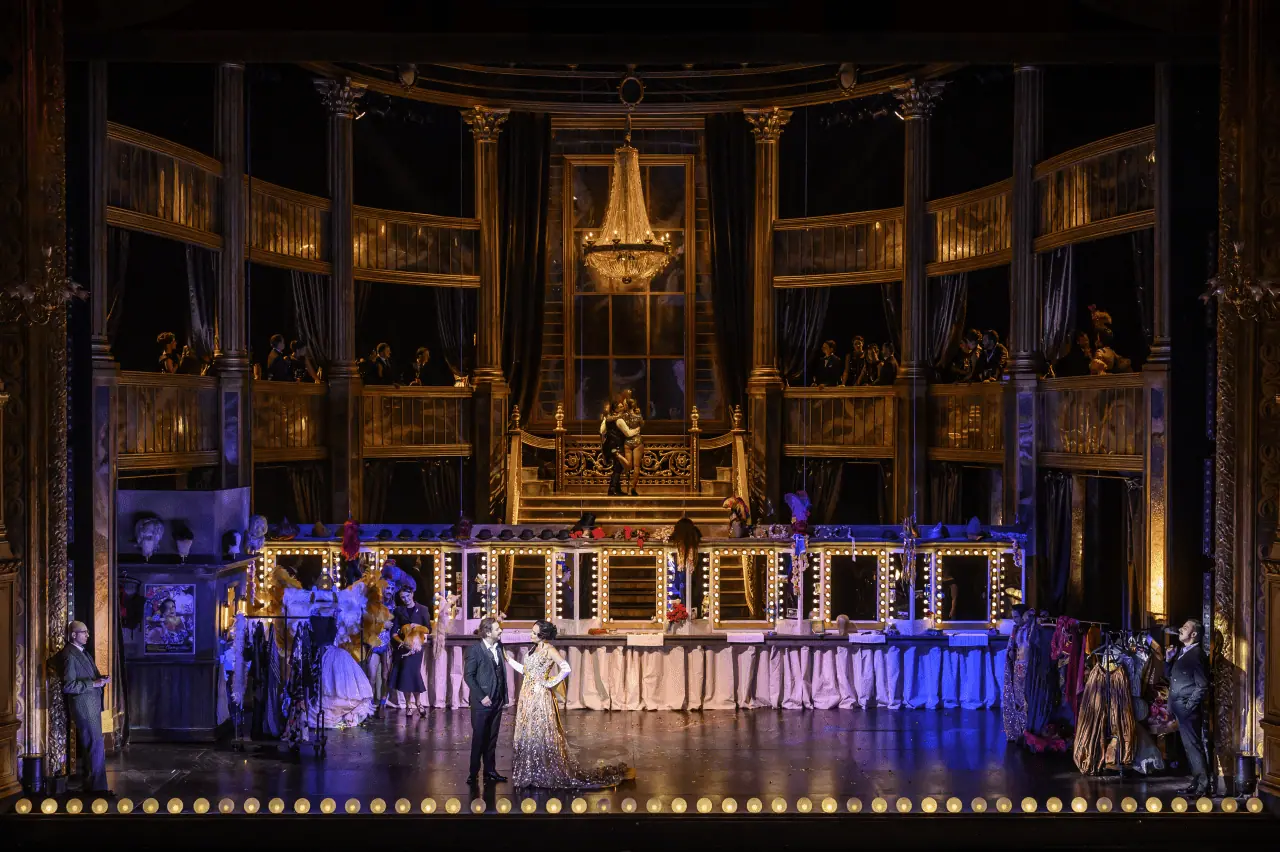
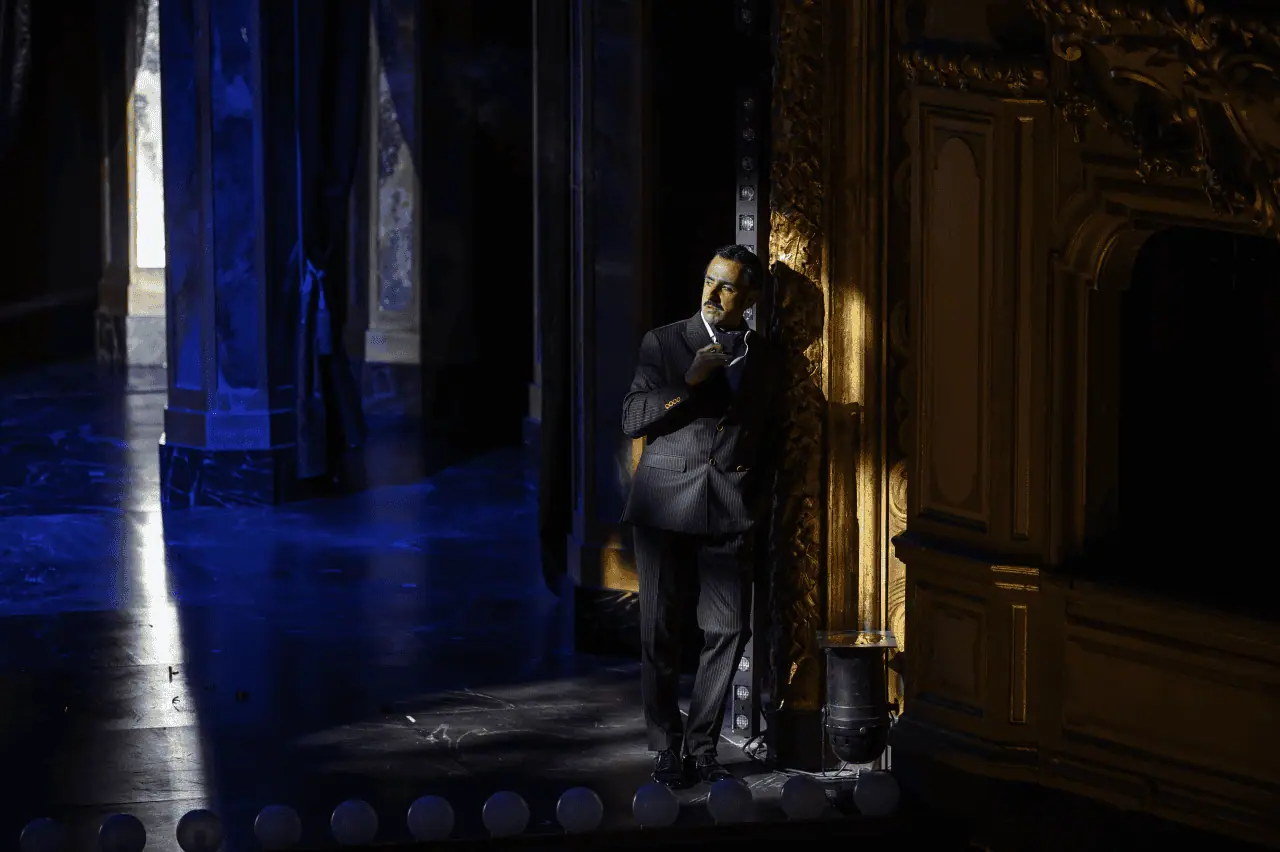
When the curtain rises, we are in a theater hall, lined with stage lights, two stories, a grand staircase, chandeliers and lots of glitter and in front a dressing room, where the characters choose and examine clothing and accessories and appraise each other.
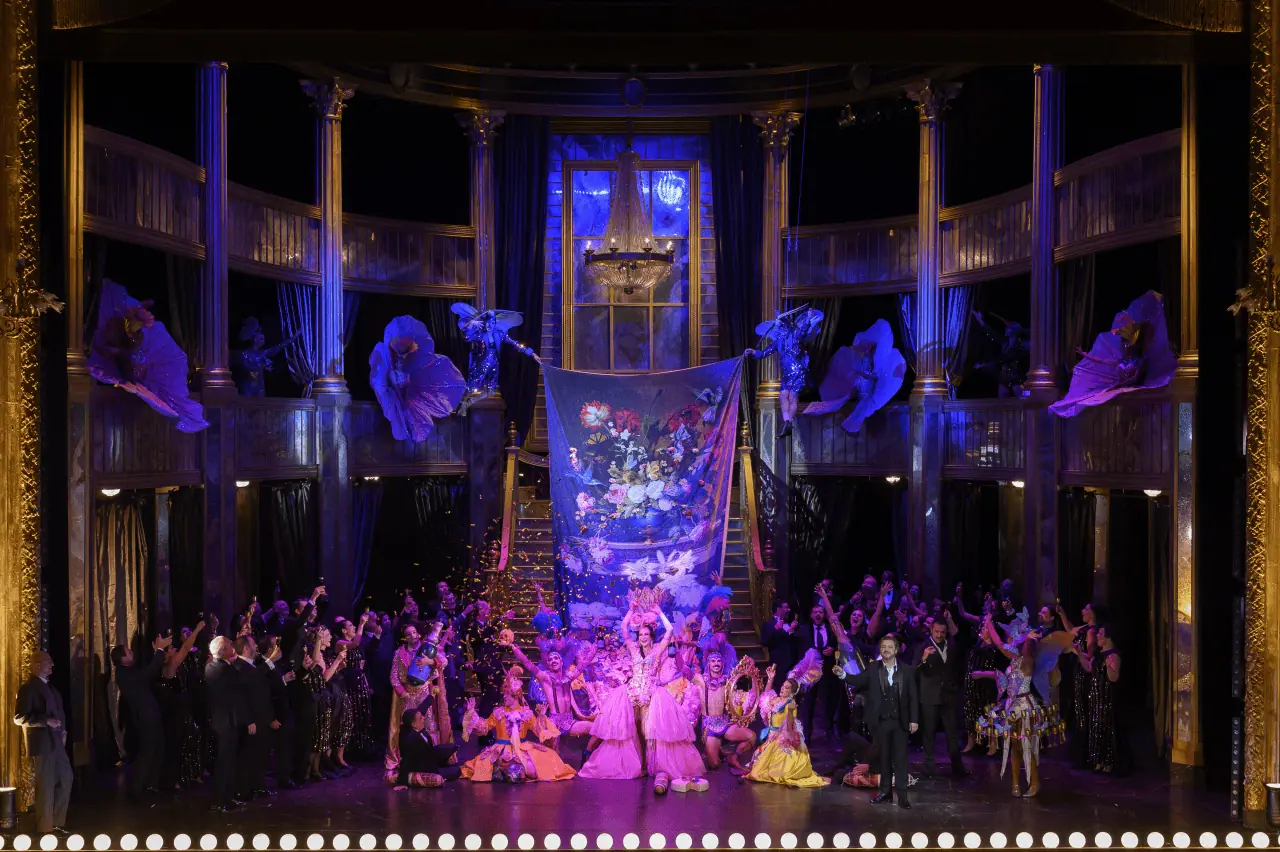
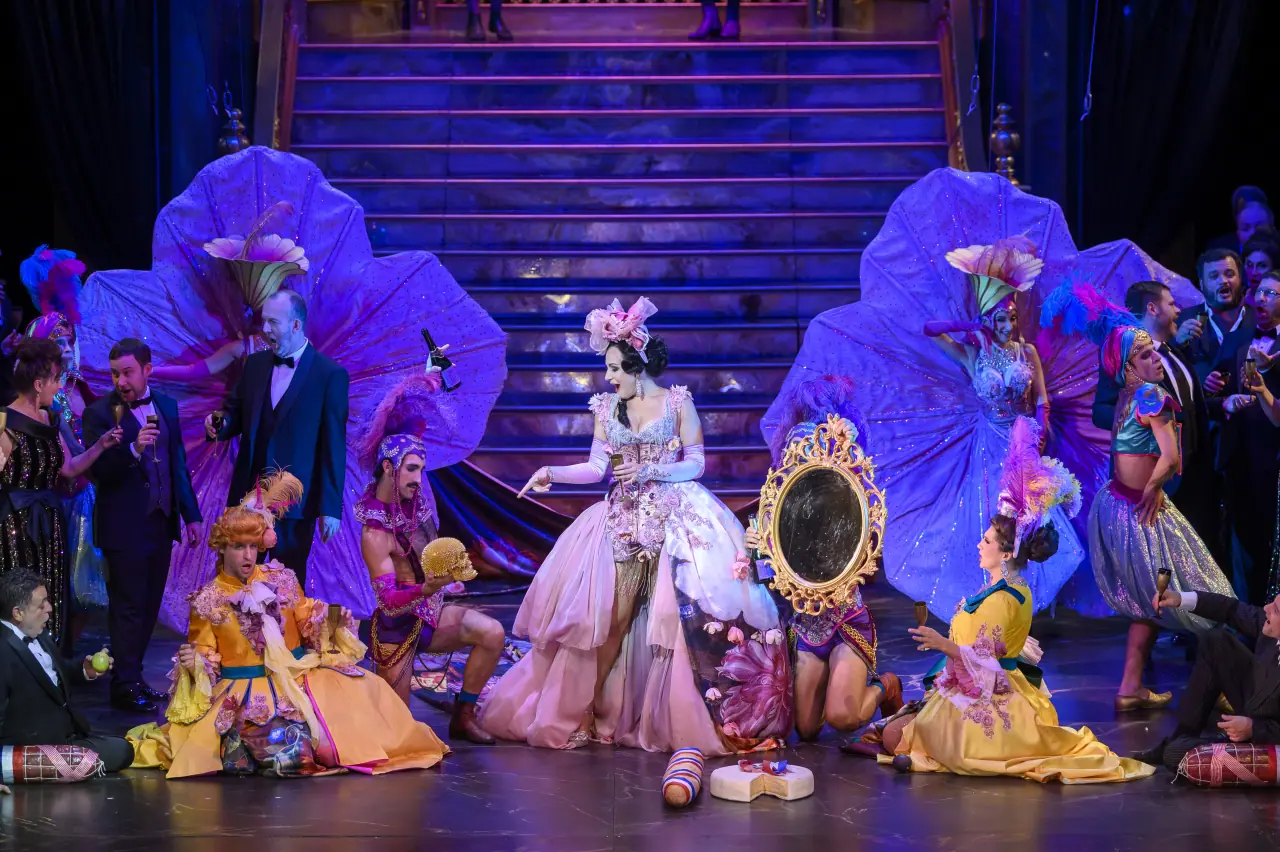
The setting of the first act is of course further developed in the second scene of the second act at Flora's party with the exuberantly dressed gypsy and bullfighter choruses. So exaggerated and on the verge of kitsch that you almost hope the director is mocking it.
In the first scene of the second act the atmosphere shifts in period and style: we find ourselves in a petit-bourgeois neighborhood, away from glamour and glitter. Alfredo and Violetta have moved into a house in the country, depicted as a vintage kitchen and living room from the nineteen-fifties, twentieth century. Giorgio Germont, Alfredo's father, comes to convince Violetta that because of her bad reputation she is overshadowing the wedding of his daughter and therefore must say goodbye to Alfredo. The daughter may accompany father Germont and reads – as an extra sentimental touch - in the armchair a magazine "Nous deux"!
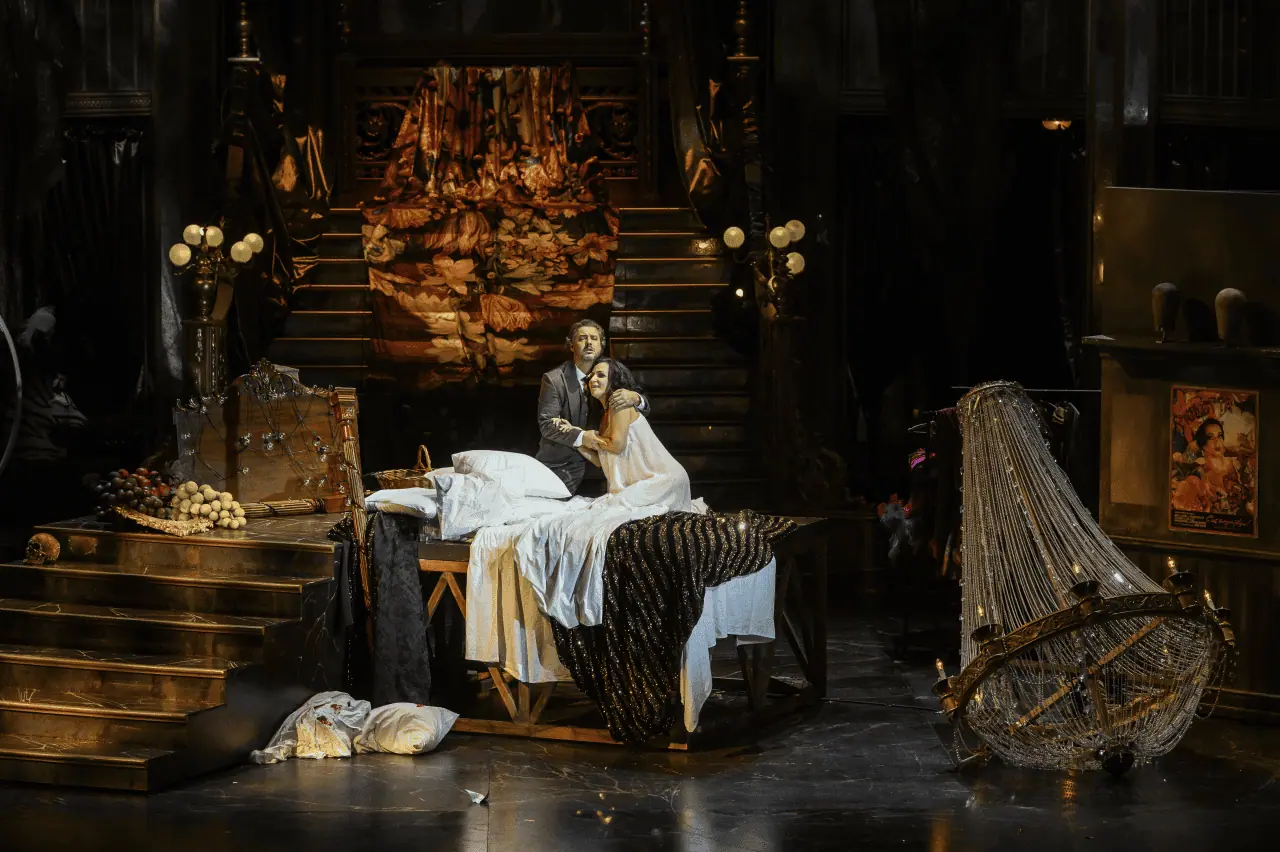
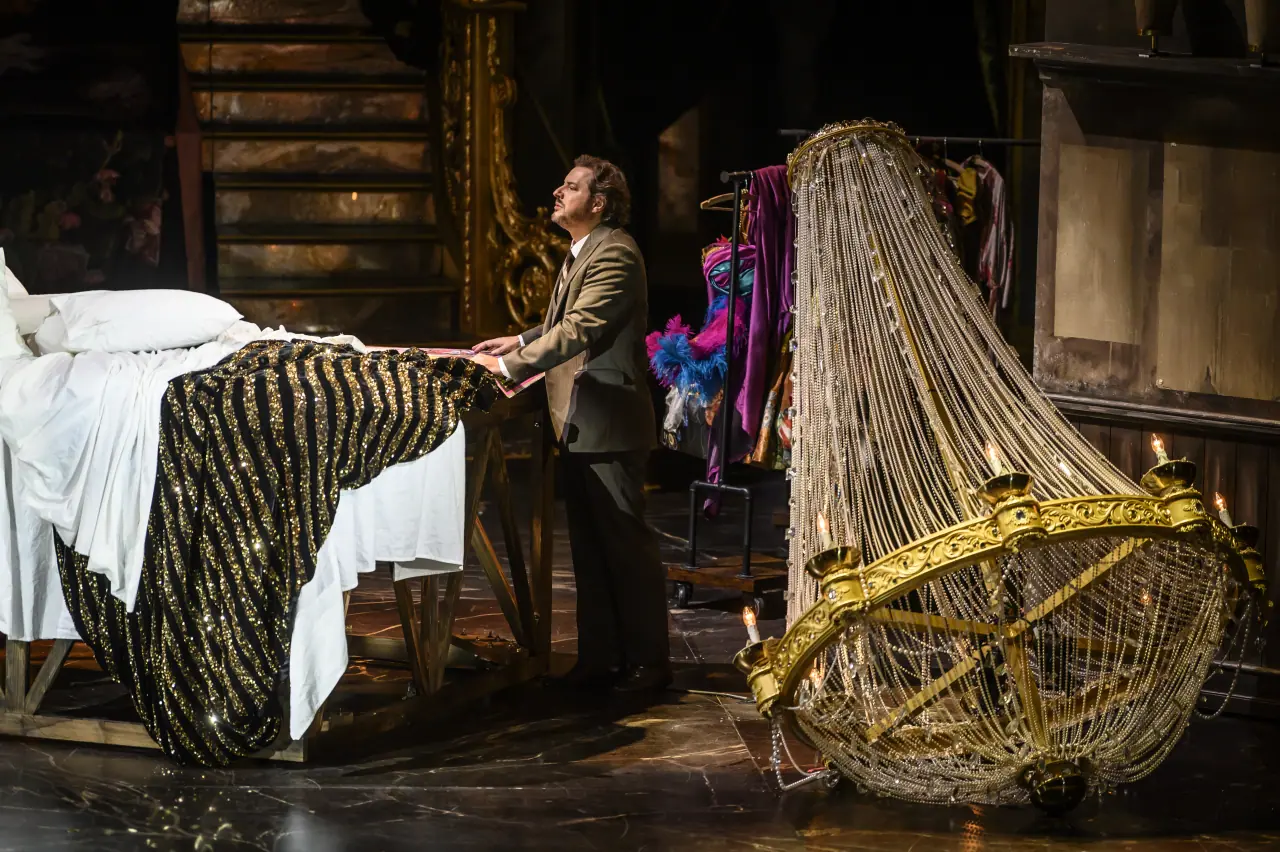
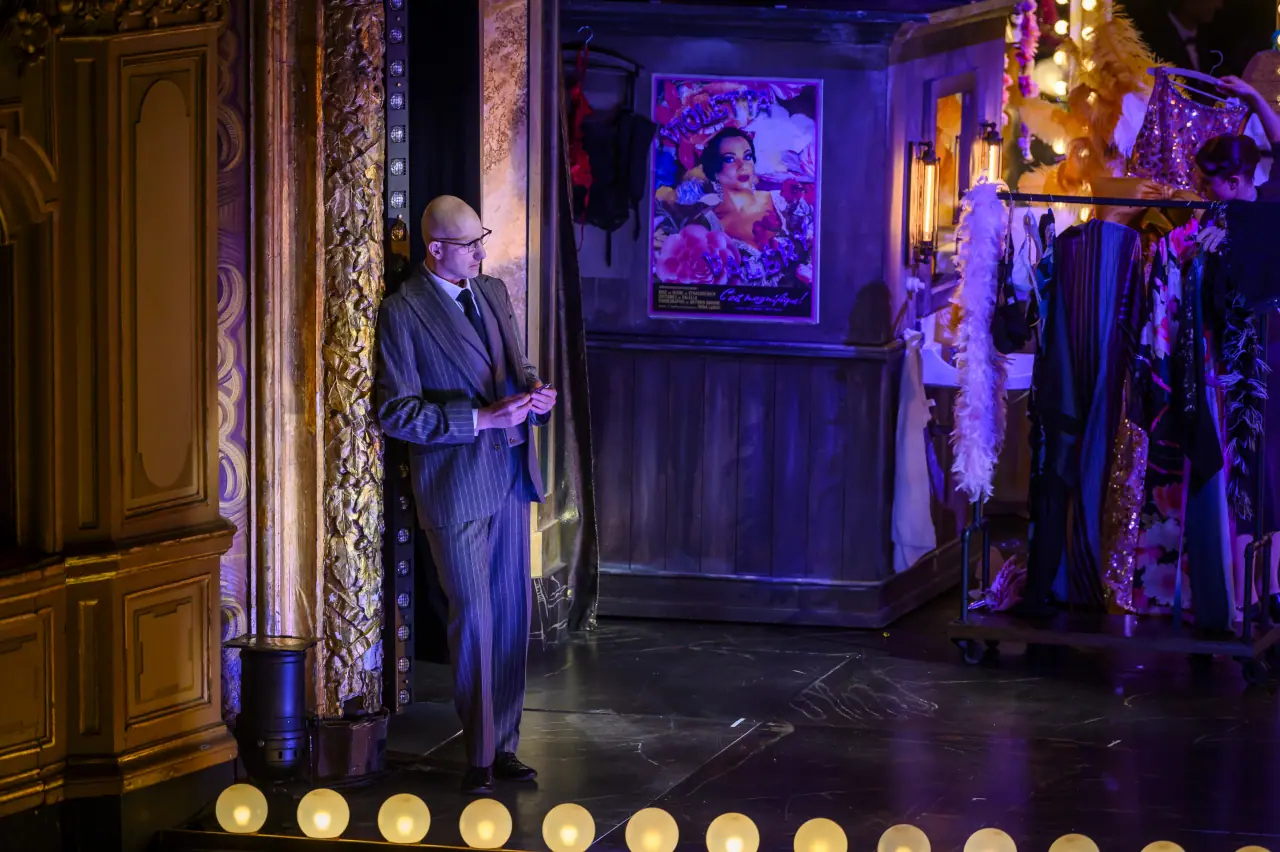
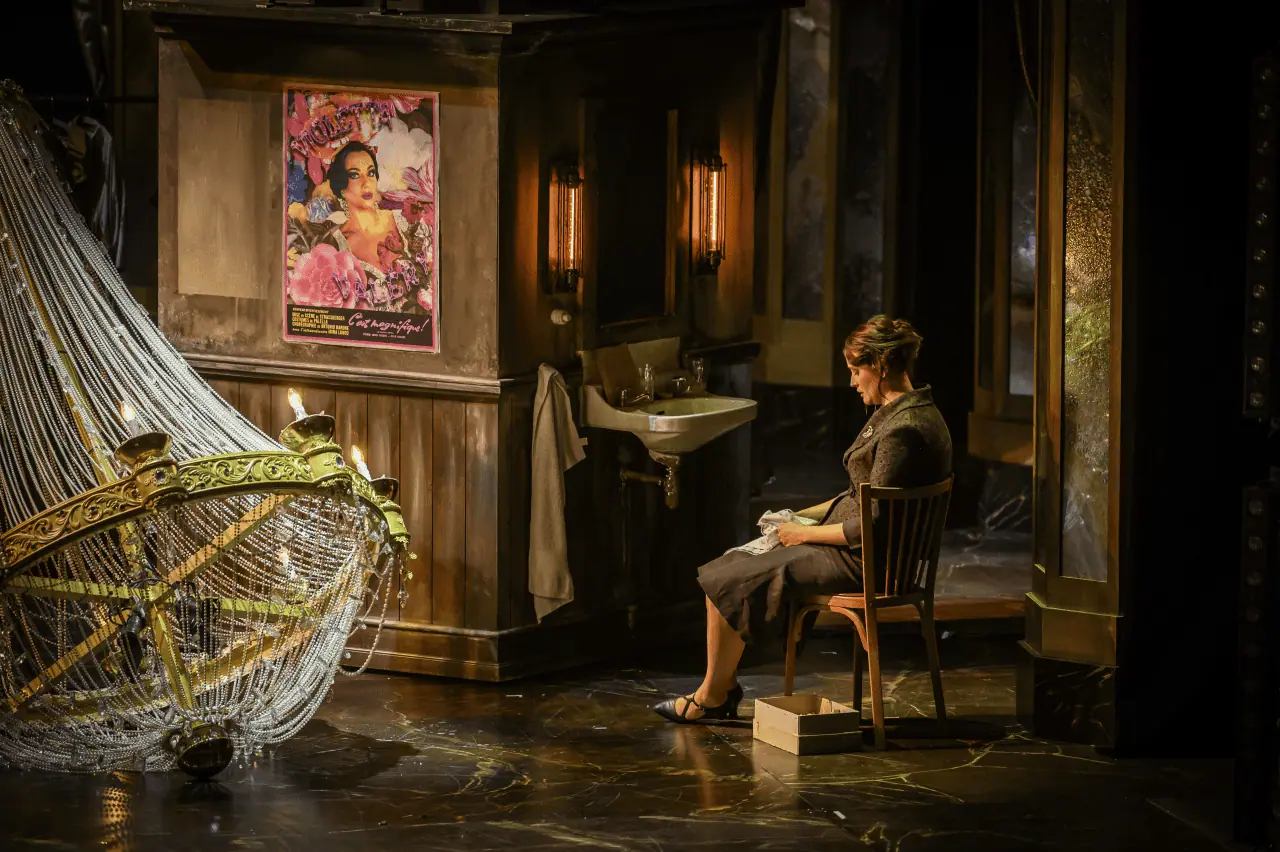
The third act shows Violetta's room as the collapsed courtesan world. The scene shows here some meaningful details, such as the fallen chandelier, the monumental staircase which this time is draped as a still life with a striking vanitas skull, the black-silver-striped costume of Violetta from the first act lying at the back on the bed. On the wall of the washbasin cabinet hangs a poster from better times: "Violetta" as title with description underneath: "c'est magnifique". It is a pity that here too the director cannot resist unleashing his baroque demons of devils and bulls on stage, instead of letting them only serve as the background sounds from outside doing their hallucinatory work for the dying Violetta (as it is actually written in the opera).
Exterior display at the expense of inner concentration
This description makes clear that the production mainly focuses on spectacle. It is unfortunate that the essential drama frequently suffers from this. At the Brindisi in the first act, Alfredo seems somewhat lost among the other guests, his tête à tête with Violetta comes across with little feeling in the dressing room and her great aria È strano as finale of the first act, Irina Lungu sings more as a theater diva than as a woman prey to love's confusion.
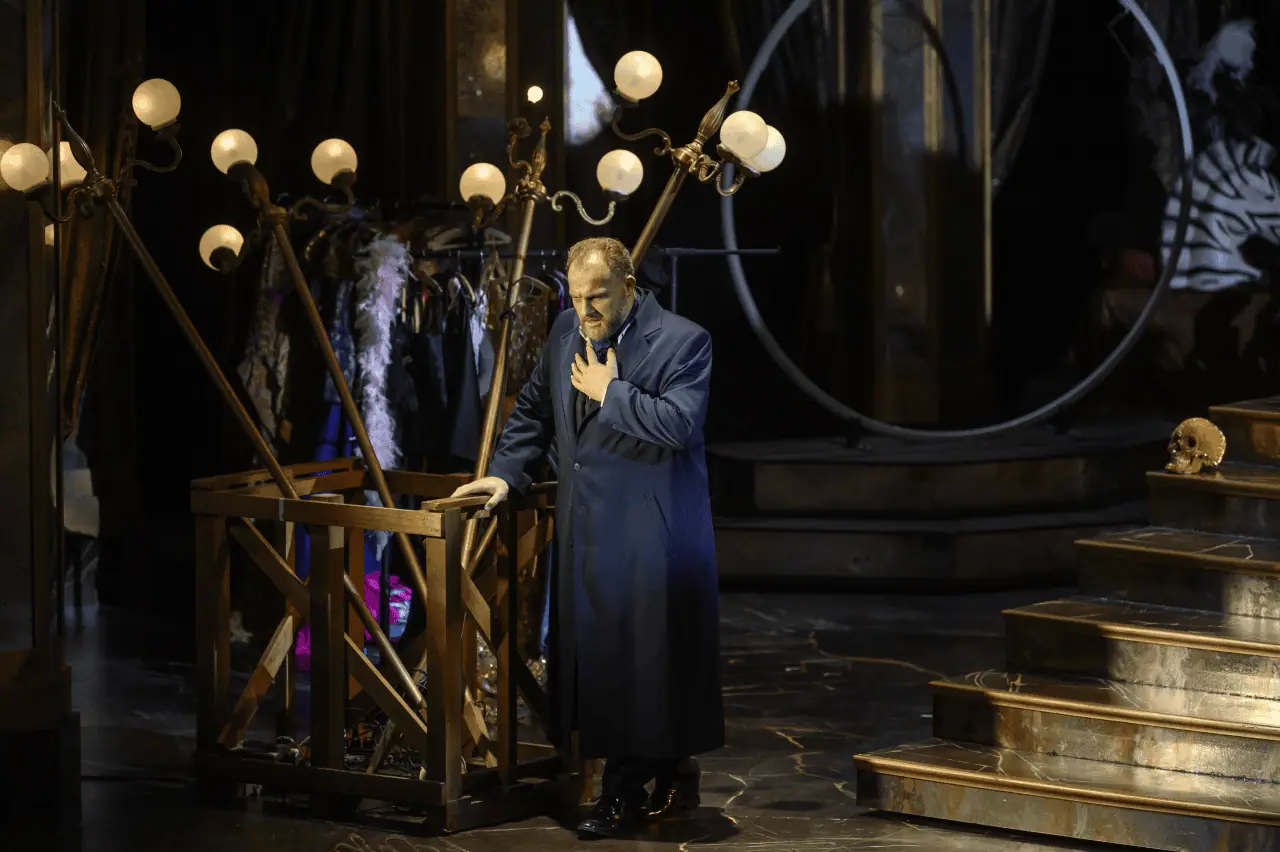
As the intensity is missing in the meeting between Alfredo and Violetta, in the second act the confrontation with Father Germont as the stern and at the same time charismatic father does not really come across. Father Germont does convince when Alfredo publicly pays for her love at Flora's party and he sternly reprimands his son for this humiliation.
The third act pleads for the talent of Irina Lungu in that she makes the final scene, despite the unnecessary details, into a moving death scene.
Indestructible music
Giampaolo Bisanti is one who has not been tempted by spectacle. I regard this production as his masterpiece with the orchestra so far. He allows the festive music to sparkle in the ballet passages, lets the question marks of the lovestruck Violetta resound in the intro to È strano, the suppressed cry of fear from Violetta as she realizes she will die without seeing her beloved again. The orchestra follows the text to the letter and thus perfectly supports the vocal parts, with some beautiful solo passages from the oboe. With the orchestral outburst of the octave strikes at the end, Bisanti and his orchestra send the audience out of the hall full of emotion.
The singers immerse themselves in their characters. Irina Lungu admittedly has a somewhat harsh timbre, which was particularly noticeable in the first act, where her closing aria Ah fors'è lui reveals too little doubting emotion. But as the performance progresses, she reveals herself as a moving character who also vocally masters the nuances of emotion, especially at the end, with the beautiful andante. She sounds brilliant and effortlessly masters the coloraturas. Especially in the final scene, she is a Violetta who embodies despair and ultimately mortal fear. Despite the reservation I mentioned about Father Germont, Simone Piazzola has a flexible baritone voice that sings the part with conviction, although he lacks somewhat the vocal warmth that makes the charismatic quality of Verdi's fathers so moving. Dmitry Korchak sings his part of the lovestruck Alfredo with a beautiful and steady tenor voice and with the right empathy for the various scenes.
A production that, despite some reservations, has nevertheless moved us and once again proves the indestructible dramatic power of Verdi!