

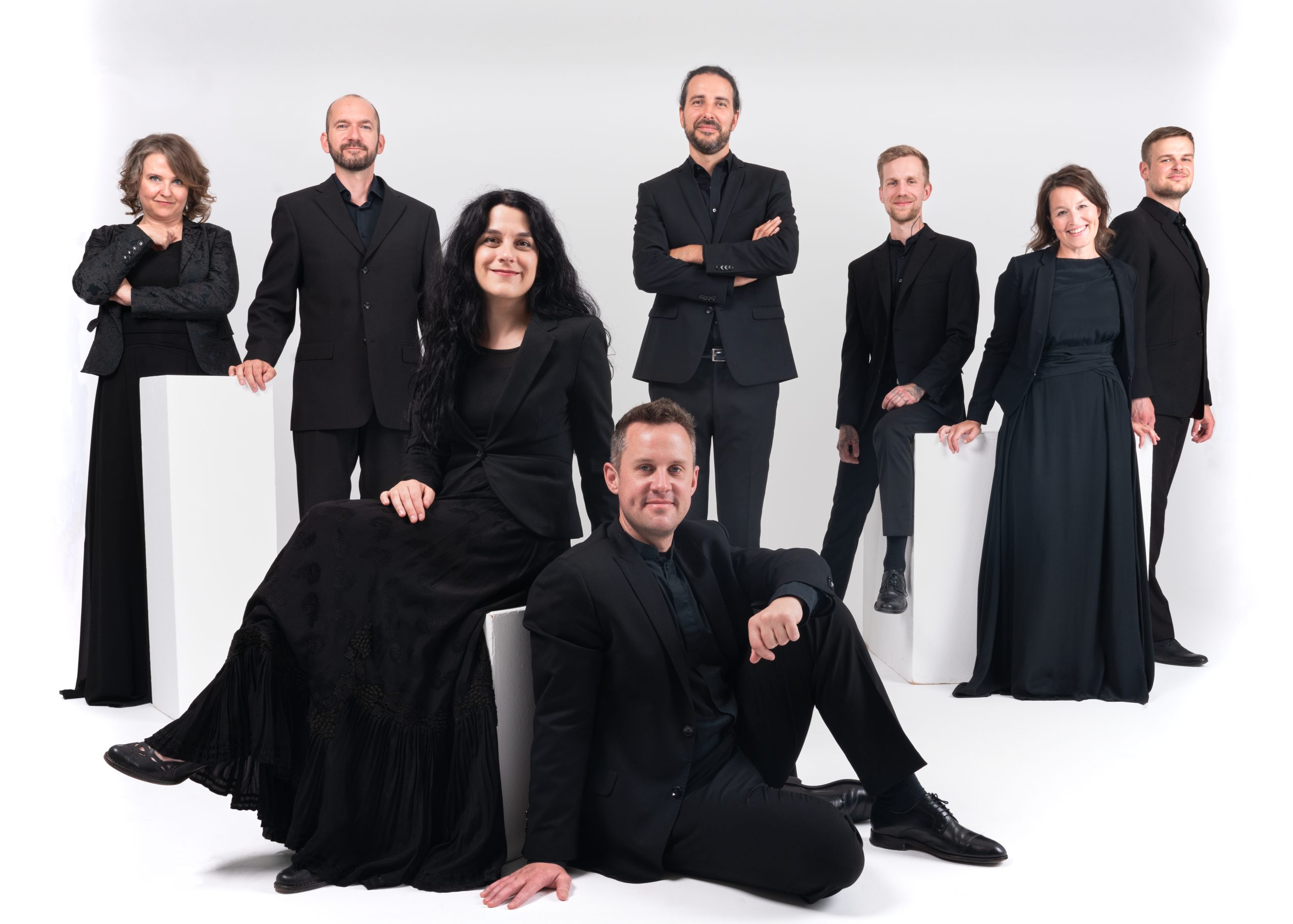
Thursday evening Laus Polyphoniae offered a special double bill for the pure polyphony lover. At AMUZ, Cappella Mariana brought music from Prague around 1600 with Praga Magna. Later in the evening, Utopia moved to the Sint-Joriskerk for the Lamentations by Orlandus Lassus. Two concerts that on paper had quite a bit in common: small ensembles, soloistic voices, great attention to text and above all a great clarity in the polyphonic lines. And yet they sounded remarkably different.
Cappella Mariana placed the listener in the midst of the cultural life of late sixteenth and early seventeenth-century Prague. A central figure was Kryštof Harant, one of those remarkable figures from the Bohemian renaissance who cannot be confined to a single profession: composer, diplomat, traveler and military man. His life ultimately ended on the scaffold. After the Bohemian Uprising, he was executed in 1621, together with other insurgents, on the Old Town Square of Prague. It is striking that his mass was still performed in Prague a year before his execution. I must ask Sofie Taes about that sometime, who provided an excellent online introduction.
 The Prague in which Harant lived had grown into an important cultural meeting place under Emperor Rudolf II. Artists, scientists and musicians came together there from all over Europe. The Flemish composer Philippus de Monte also worked there for years as kapellmeister. His presence is important to understanding Harant's music. It does not stand alone, but is part of the international polyphonic tradition in which music from the Low Countries played such a large role.
Cappella Mariana brought this music with six singers, one per part. That worked particularly well. The sound remained open and transparent and the different lines could be continuously followed.
What struck me most was the difference between the works themselves. Harant's mass, based on Marenzio's madrigal Dolorosi martir, has something decidedly madrigalesque. The material of the madrigal remains palpable throughout the mass. Harant does not process it as a simple starting point or inspiration, but takes the expression of the madrigal far beyond. Sometimes I almost felt that the boundaries of what one would expect within a liturgical mass were being tested. I asked myself more than once how this music would have been received in the much more strictly controlled musical climate of Rome. The answer would be: not at all! Yet it remains a very clever, festive mass, well worth discovering. If only for the open ending at the Hosanna!
Other works from the program revealed a very different side of Bohemian music. The anonymous composition especially stood out for its greater emphasis on homophony and text placement. That made me think again of the Flemish polyphonists, for whom text and music are also so closely connected.
Qui confidunt impressed with its clear architecture. And with De Monte's O bone Jesu came a particularly beautiful ending. The long motet once again showed how intense the musical contacts between the Netherlands and Bohemia were.
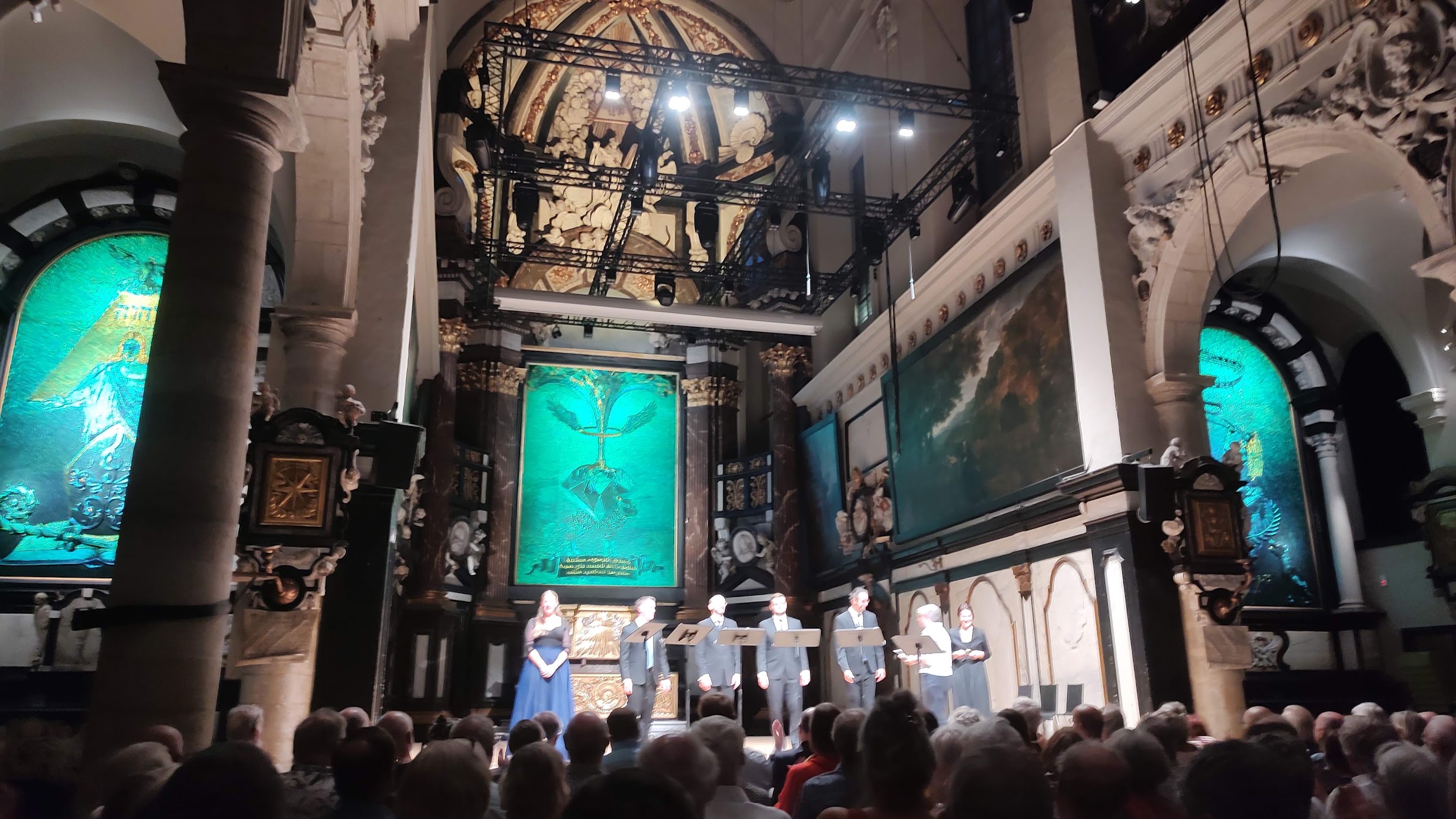
After the vibrant world of Cappella Mariana, the transition to Utopia was almost the opposite. Here no broad panorama of a city and its musical environment, but a very concentrated program around Lassus and his Lamentations, supplemented with works by among others Giaches de Wert, Palestrina, Pierre de Bouzignac and Jacobus Handl.
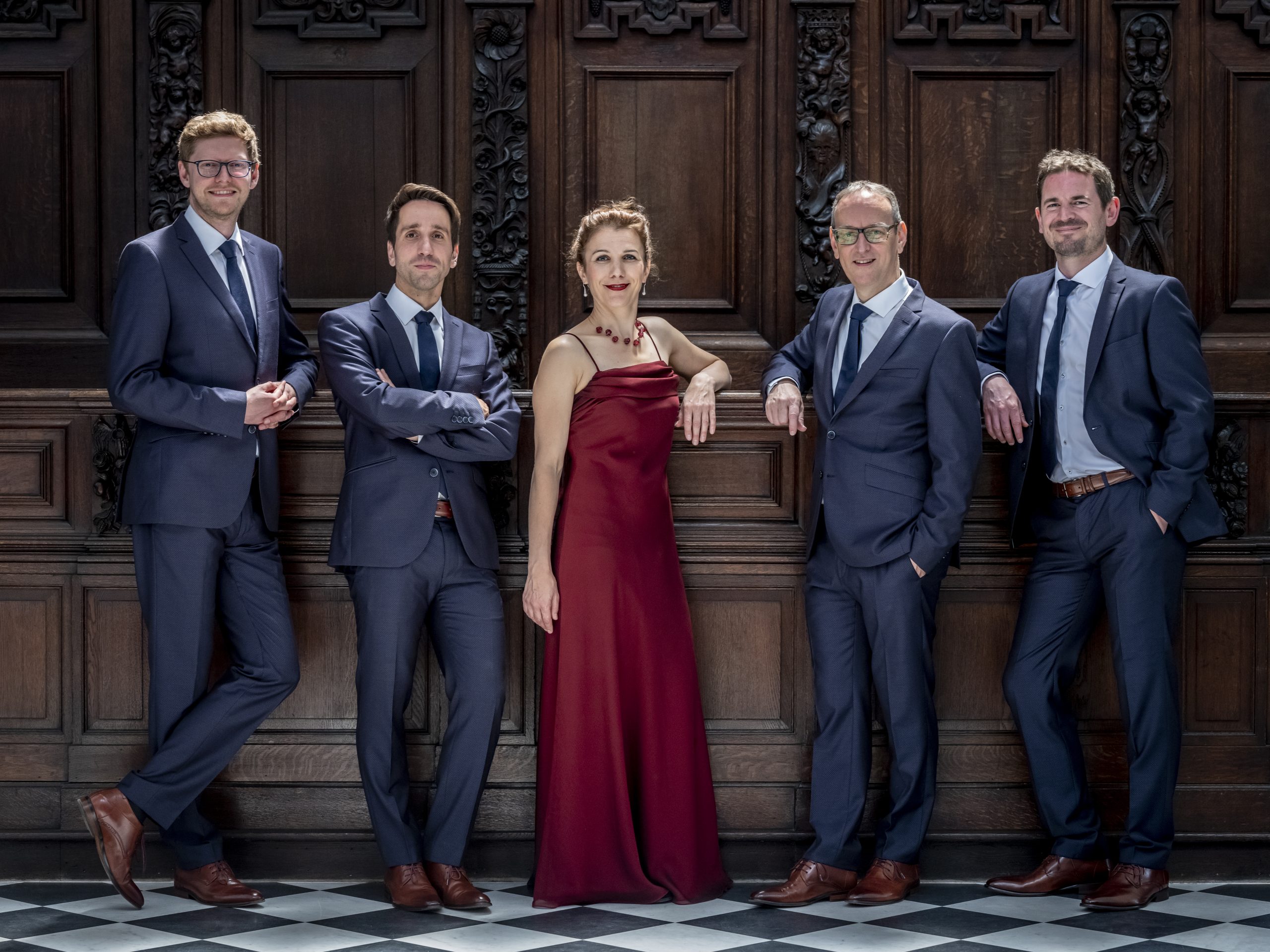 Utopia also works with one singer per voice, but here something remarkable happens: you continually expect to hear five individual voices and yet the ensemble seems to speak as one voice. That is for me their greatest characteristic. The voices do not lose their personality, but are also never pulled out of the whole by it.
This is all the more remarkable because the five singers each have a very distinctive color. Countertenor Bart Uvyn has a very recognizable countertenor voice color, but it blends completely with the ensemble. Lieven Termont proved again how expressively he can handle words. With a word like sordes you hear not only what is being sung, but also what the word means. Guillaume Olry provided the sonorous foundation with his bass. His Gregorian tractus formed a beautiful, almost oriental medieval moment. Michaela Riener sang with a clear soprano that effortlessly blended into the collective sound. Adriaan De Koster has a powerful, immediately recognizable timbre, but he too remained completely within the ensemble sound.
It is precisely that combination that strikes me again and again with Utopia: five voices that you can recognize individually, but that never come to stand opposite each other. Together they become one sound body.
And thus we come back to that proverbial triangle that is so important to me in polyphony: word, sound and composition (or structure). With some ensembles, the emphasis is clearly on one of those three. Sometimes the beauty of the sound takes precedence, sometimes the text expression and sometimes the architecture of the composition. With Utopia it seems to happen all at once. The voices are beautiful, but the beauty does not stand alone anywhere. The text is expressive without being overdone and the complex music always remains clear.
Particularly in the Lamentations of Lassus, that yielded moments of great intensity. Not through fortes and exaggerations, but precisely through restraint and razor-sharp singing as in Ghimel: unearthly, heavenly.
Two ensembles, two completely different sound worlds, but ultimately the same fascination for polyphony. A nice combination then. And reason enough to make one enthusiastic review of it.
As far as Utopia is concerned, put 27 September 2026 in your calendar now. Then they will launch their new CD. With a bit of luck, you will soon read more about it on Klassiek-Centraal.
WHEN? WHERE? WHAT?
Thursday 27 August 2026 / Laus Polyphoniae 2026
8 PM AMUZ / Cappella Mariana
Pavla Radostová, Barbora Kabátková, soprano | Tomáš Lajtkep, Ondrej Holub, tenor | Jaromír Nosek, bass | Vojtech Semerád, tenor & artistic direction
10 PM Sint-Joris / Utopia Ensemble
Michaela Riener, mezzo-soprano | Bart Uvyn, countertenor | Adriaan De Koster, tenor | Lieven Termont, baritone | Guillaume Olry, bass
photos: AMUZ / editorial staff