

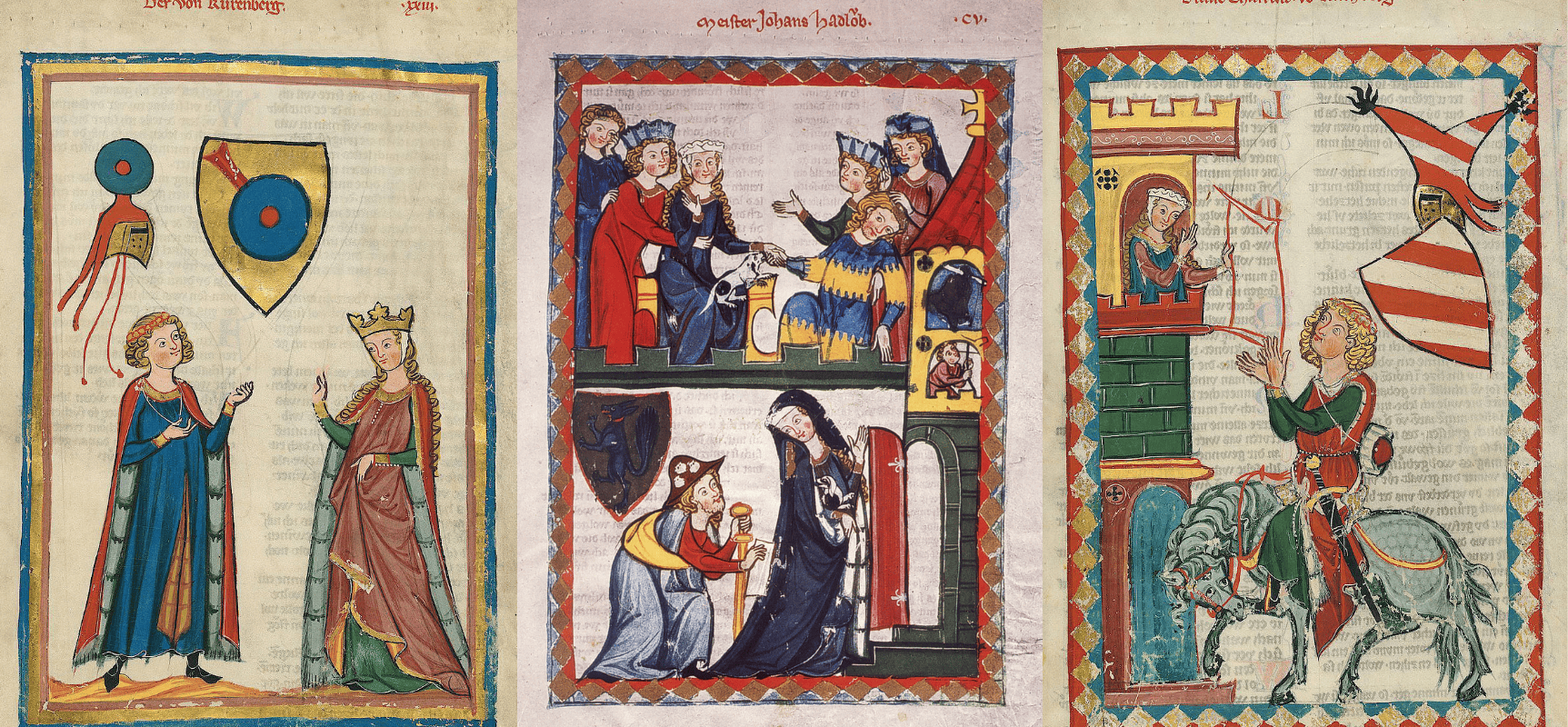
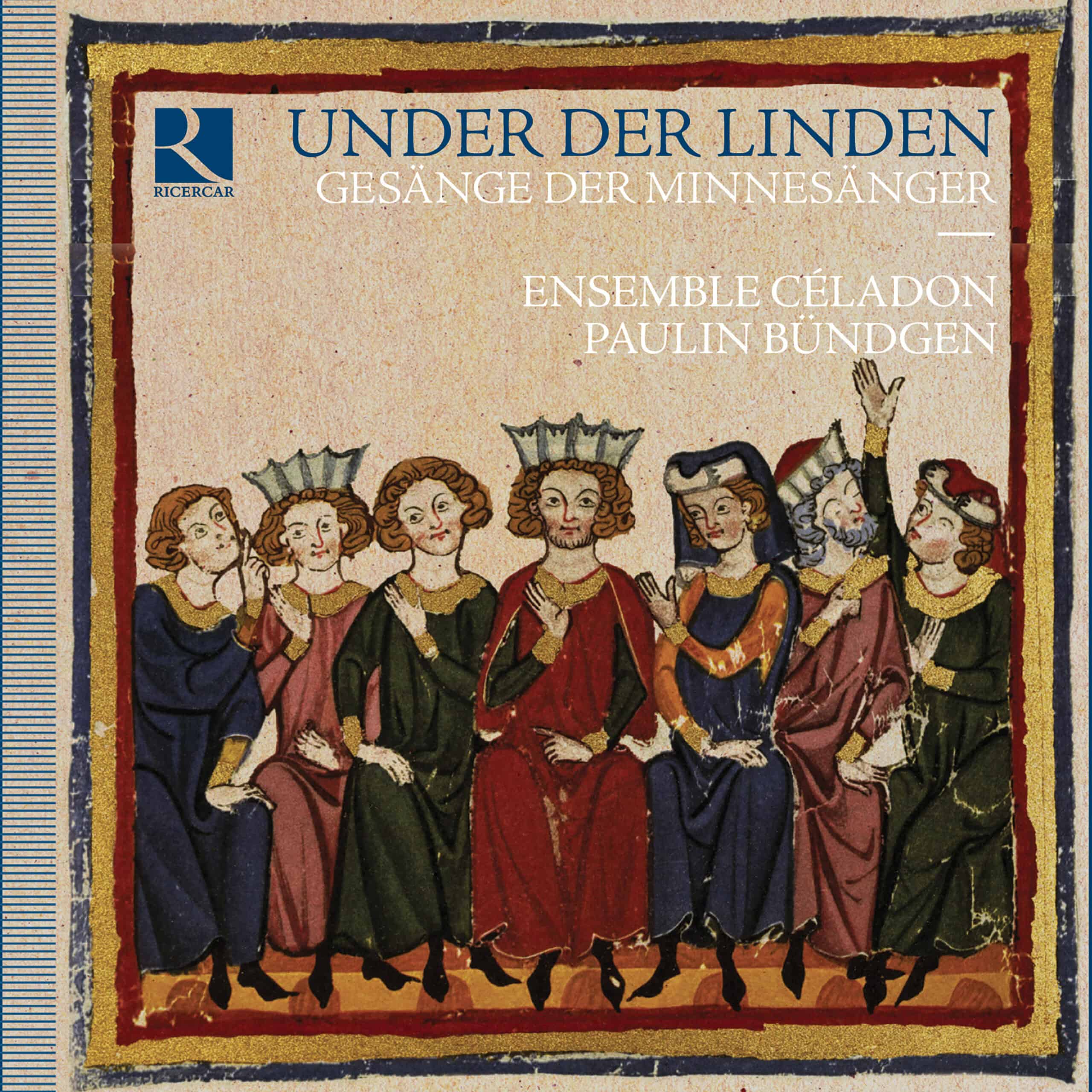
Occitan troubadours, Northern French trouvères and Minnesängers from the German-speaking regions, they all sang of courtly love. As singers of love, they performed the heartache of impossible love. Ensemble Céladon under the direction of Paulin Bündgen dedicated their latest cd Under der Linden to this German tradition.
The tradition of the Minnesänger arose from the French examples of troubadours and trouvères. Just as with the French predecessors, it was often a knight who sang of his love for a noble lady. Beloved themes were loyalty (triuwe) and restrained propriety (mâze). The French tradition was characterized by strict rules. The first German poetic genres were originally derived from these French examples but over the course of the 13th century the German singers gradually emancipated themselves from the French genres and differentiated themselves further. Minnesängers developed their own styles and forms. It is precisely this lofty and late minnesang that is offered on the cd Under der Linden.
[caption id="attachment_42176" align="alignleft" width="197"]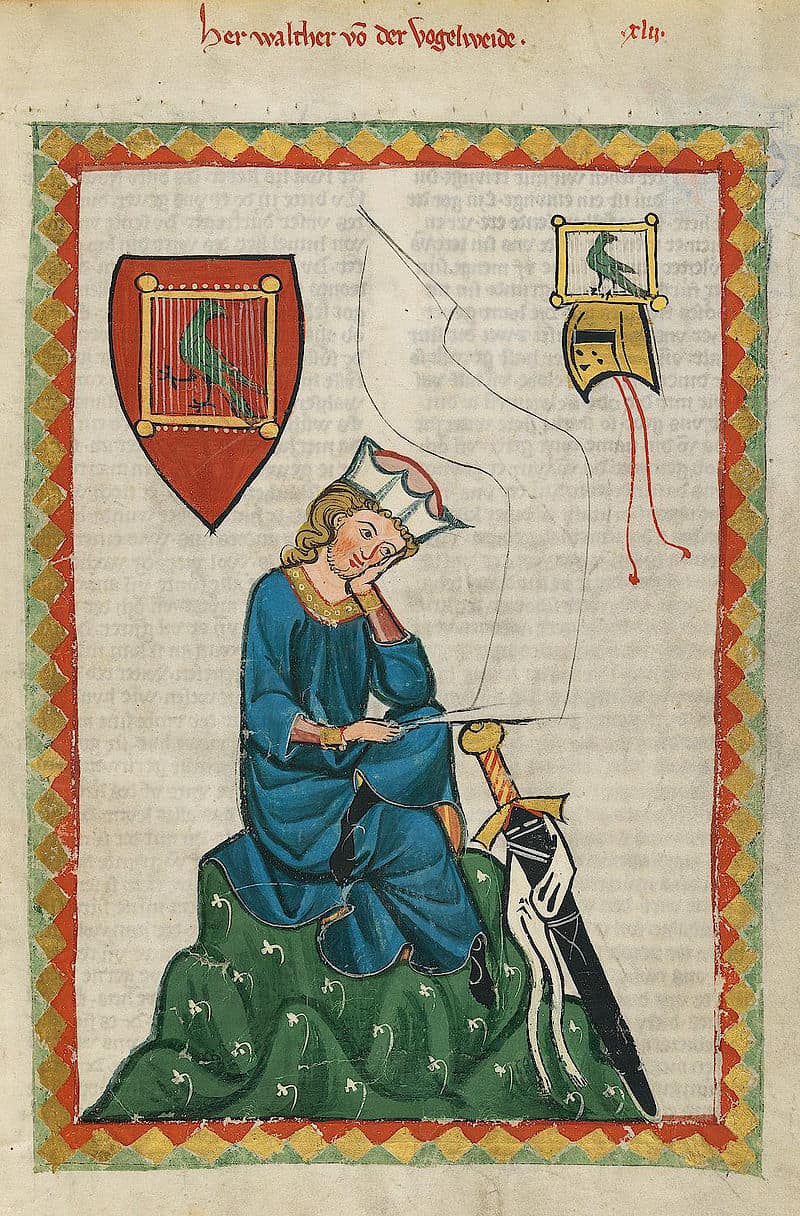 Walther von der Vogelweide (Codex Manesse)[/caption]
The album bears the title of the final song. Notably, this is an early example from the defined period. The song is by Walther von der Vogelweide (1170-1230), one of the most famous singers (the so-called "twelve old masters") from the German-speaking regions. He was not only known during his lifetime but also during the rediscovery of medieval music, his name was mentioned multiple times in association with the tradition of the minnesingers. Thus, Richard Wagner (1813-1883) also refers by name to Walther von der Vogelweide in "Am stillen Herd" from the opera Die Meistersinger von Nürnberg (1867).
The chosen song Under der Linden [track 11] is sung on this album by Clara Coutouly and Paulin Bündgen. The music is strophic and soberly accompanied. All attention can go to the text. With careful articulation and text expression, Coutouly and Bündgen sing the strophes. It is clear that much attention was paid to text intelligibility.
Under der linden an der heide,
dâ unser zweier bette was,
dâ mugt ir vinden
schône beide gebrochen bluomen unde gras.
vor dem walde in einem tal -
tandaradei!
schöne sanc die nachtigal.
Under the linden trees on the heath,
where our two beds stood,
there we had to
find beautiful broken flowers and grass.
in front of the forest in a valley -
tandaradei!
beautifully sang the nightingale.
Clara Coutouly and Paulin Bündgen also open the cd together with one of the great names among the minnesingers. The music of Konrad von Würzburg (1225/30-1287, also an "old master") is an example of late minnesang. The chosen song Do ich mich übt der seiten klang [track 01] is atypical for Würzburg. In this poem he writes in the first person and integrates quite a few autobiographical elements about singing and playing music as a Minnesänger. Appropriately, Ensemble Céladon chose to start this performance with a lute solo. This introduction voices the text before it is sung. Plus the singer then sings about the tradition upon which this cd focuses. A striking artistic choice to open the album with this metalied.
Only from late minnesang onwards did morality sometimes give way to eroticism. Avianuß der frey poet [track 06] by Tannhäuser (fl. 1245-1265) is an example where erotic elements also make their entrance. Presumably because of the text, it was chosen to play an instrumental arrangement of the song.
[caption id="attachment_42192" align="alignleft" width="211"]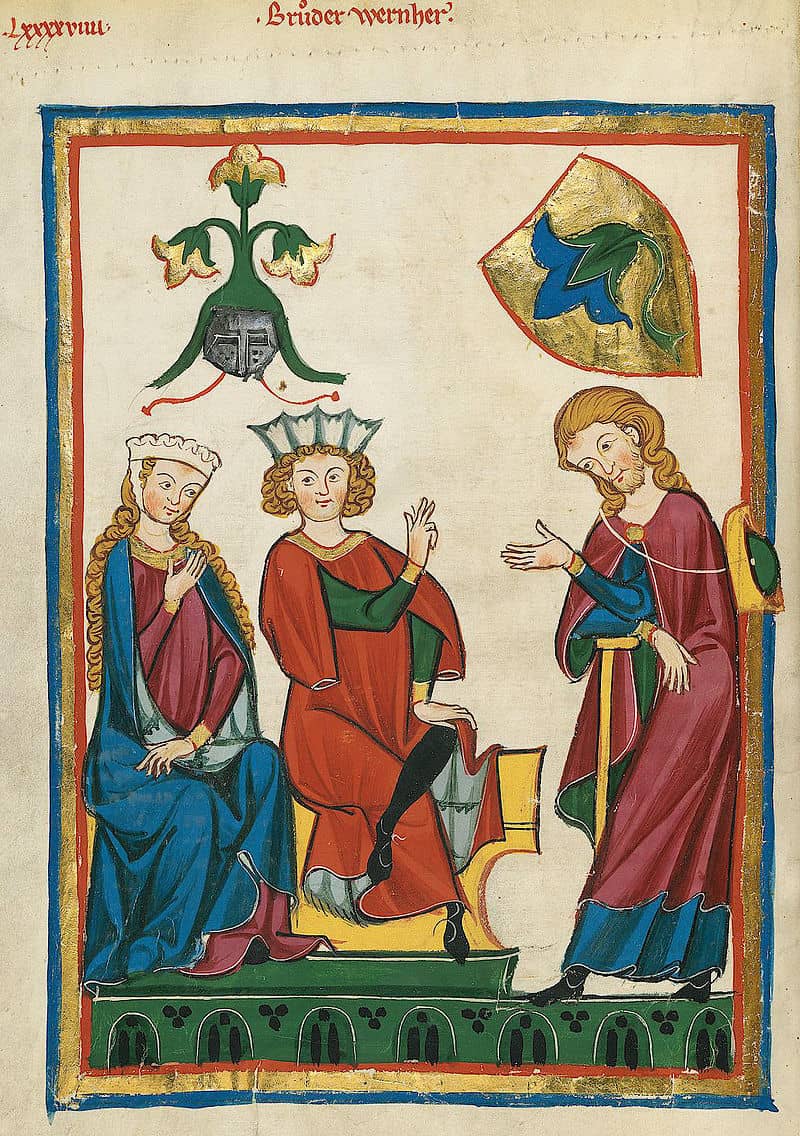 Bruder Wernher (Codex Manesse)[/caption]
In the German-speaking territories, unlike the French troubadours and trouvères, a variant singing tradition also emerged that did not focus on courtly love. Sprüche does not sing of love but gives socio-political commentary. The musical style is similar but the content is in practice often a counterpoint to the Minnesängers. Space has been made on the album for this parallel tradition.
Ich buwe eyn hus [track 04] by Bruder Wernher is an example of the Sprüche that runs musically in line with late minnesang. It is a typical Wernher song and, like all his other songs, has Christian morality and ethics as its subject. It is, however, a remarkably long song. As much as 15 minutes long. There is only one other song on the album that has this length, Ir schauwent an die cleyn ameyß [track 07] by Konrad Marner (1270-?), which is also a Sprüche song. Just as with the minnesingers, text intelligibility is important for a successful performance.
This cd provides an overview of the German-speaking musical tradition of the 13th century. Both the Minnesänger and Sprüche repertoire are presented. Music by the known "twelve old masters" as well as by lesser-known composers is sung. In drawing up the program, clear attention was paid to the overall picture. It is no simple task to cram a century of music into just an hour and a quarter. Yet Ensemble Céladon under the direction of Paulin Bündgen manages with their album Under der Linden to provide a beautiful and comprehensive overview.
4/5
- WHO: Ensemble Céladon cond. Paulin Bündgen
- WHAT: Under der Linden
- LABEL: Ricercar RIC447
- ORDER: JPC