


As the closing concert, the already successful Laus Polyphoniae 2026 chose the renowned Gesualdo Six. De Standaard once called them "a cathedral choir in pocket format". And that's absolutely right: all six gentlemen have roots in the English choral tradition in one way or another. A tradition of training and practical experience that we in Flanders can only be jealous of. Large cathedrals, we don't need to look far, unfortunately do not guarantee an equally rich choral tradition. It is therefore no coincidence that polyphony lives much more strongly in the United Kingdom among young people, as evidenced by the many (professional) ensembles active there.
Tonight they bring an interesting combination of sacred and secular music, often by the same composer. Only Dowland and Bennet form somewhat of an exception. It is fascinating to compare the differences in approach with Scherzi Musicali. The remaining music comes directly from the cathedral repertoire, with well-known works such as Ave verum by Byrd and Nolo mortem by Morley. The two most beautiful pearls only come right at the end, with music by Weelkes.
Moreover, the program is also historically special. England balanced between Catholicism and Protestantism, a tension with which Byrd among others was personally confronted. We know how that religious struggle ultimately ended.
The concert has been sold out for weeks. I cannot verify this this time with my own eyes, as I follow it from my lazy chair, listening to Klara. It is a different experience, but still also a bit like you are there. On the front row even. Thank you, Klara! So I prepare myself for a road trip through English cathedrals and landscapes. More than an hour of pure beauty and refined singing. Yes, I can say that with certainty now.
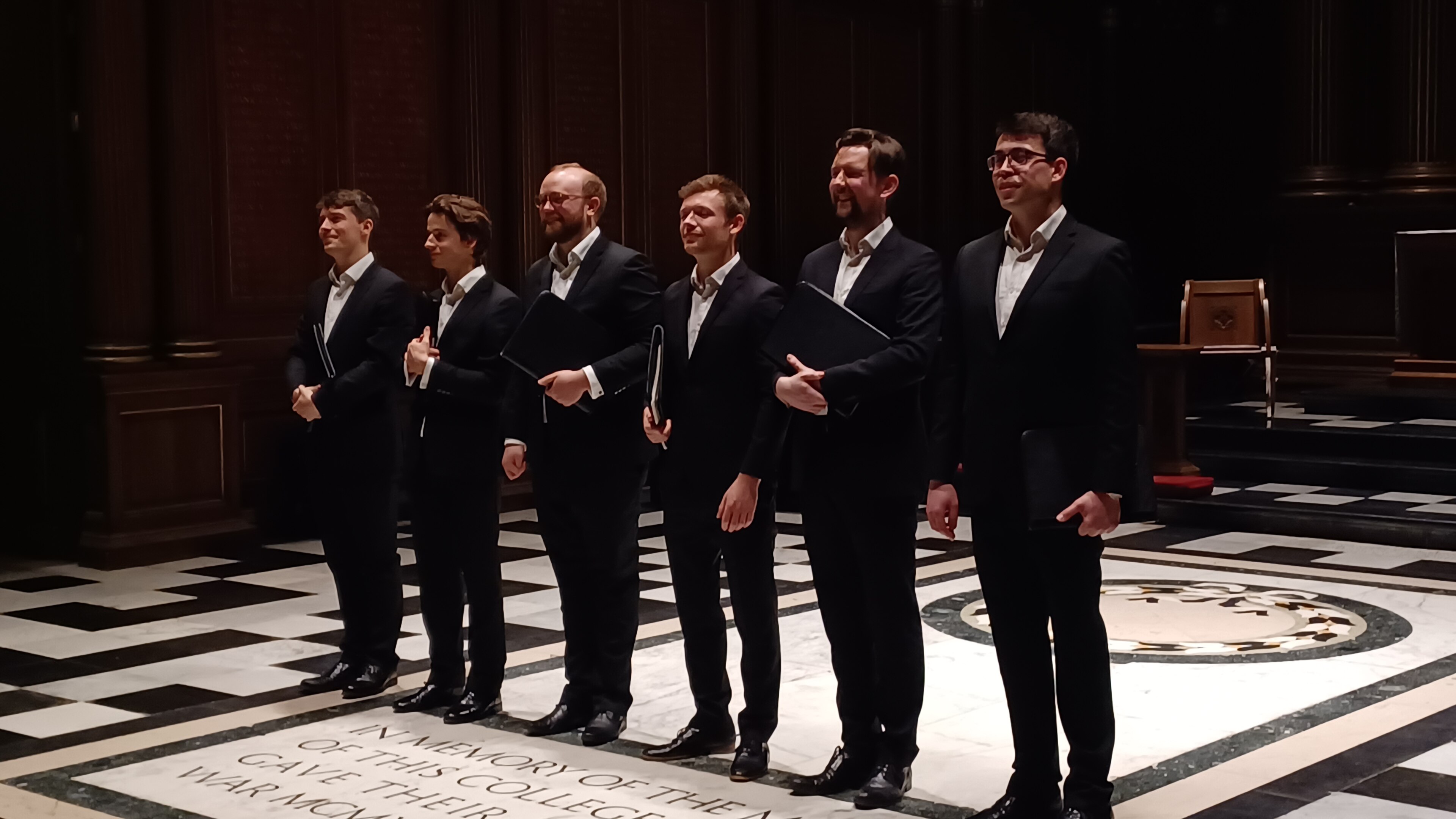 The concert opens with a particularly homogeneous and transparent Ave verum, where the overtones seem to resonate naturally through the vaults of AMUZ. Then follows the prayer for Queen Elizabeth I, performed with the seriousness and weight that such a motet requires.
O Lord, in Thy wrath is the first of three works by Gibbons. The heavy text about rebuke and chastisement, anything but cheerful, finds an almost compelling climax in the question: "How long wilt Thou yet smite me?" Gibbons proves himself here to be a master of musical rhetoric, Gesualdo Six of its interpretation.
We remain in the same atmosphere with Morley's Nolo mortem. Although Morley is somewhat younger than Gibbons, his music sounds remarkably contemporary, with a broader expressive range than the preceding motet. Gesualdo Six sings it with particular spaciousness, leaving full room for dissonances and dynamic nuances throughout the different verses.
Then follows the first madrigal: Leave, alas, this tormenting. Again, as befits that time, a song about love and suffering. Related to Nolo mortem, but here the ensemble gives even more space to textual expression and the wrenching dissonances behind words like "O kill my heart".
Death hath deprived me by Weelkes receives a perfect place in the program. The work is indeed a lamentation on the death of Morley, a good friend of the composer. It is therefore often referred to as A Remembrance of my Friend, M. Thomas Morley.
Here we hear for the first time the full mastery of Thomas Weelkes, who stylistically distinguishes himself somewhat from the other composers on the program. Gesualdo Six interprets it excellently, closely adhering to the rhythm and cadence of the text. The heavy harmonies with which the pain is expressed also come across impressively. A foretaste of the two closing motets.
The melancholic atmosphere is maintained in the madrigals of Bennet, in which Gesualdo Six makes the "ghastly grief" almost tangible with an ethereal sound. The atmosphere of someone who realizes that silence is sometimes wiser than speech is portrayed touchingly. Apparently some human reflexes never change.
Weep, O mine eyes is a non-liturgical classic on many choir programs. Sung by these six gentlemen, the work once again takes on that authentic English color.
The two Dowland numbers, Flow my tears and In darkness let me dwell, continue to circle around the same theme. The first is known for its intense text and unsurpassable melody. The second is less well-known, but touches even deeper thanks to Gesualdo Six's inspired performance.
In Flow my tears, the lead role is given to the beautifully singing countertenor, while the other voices continually move around him in subtle variations. The result is a powerful statement of sorrow and anguish.
In darkness let me dwell was a revelation for me. Once again the countertenor shines, while the other voices move like a soft cloud around the melody, as if trying to soften the sadness of the singer. And then that ending: the ultimate wish of the text emphasized once more. An absolute highlight of the evening.
The two madrigals by Gibbons, How art thou troubled and Farewell all joys, excelled in transparency. The complex polyphonic lines and unexpected harmonies were realized exemplarily, in a way that made both music and text completely credible. In an earlier review of Utopia I used the word "exquisite". Here too it is completely appropriate.
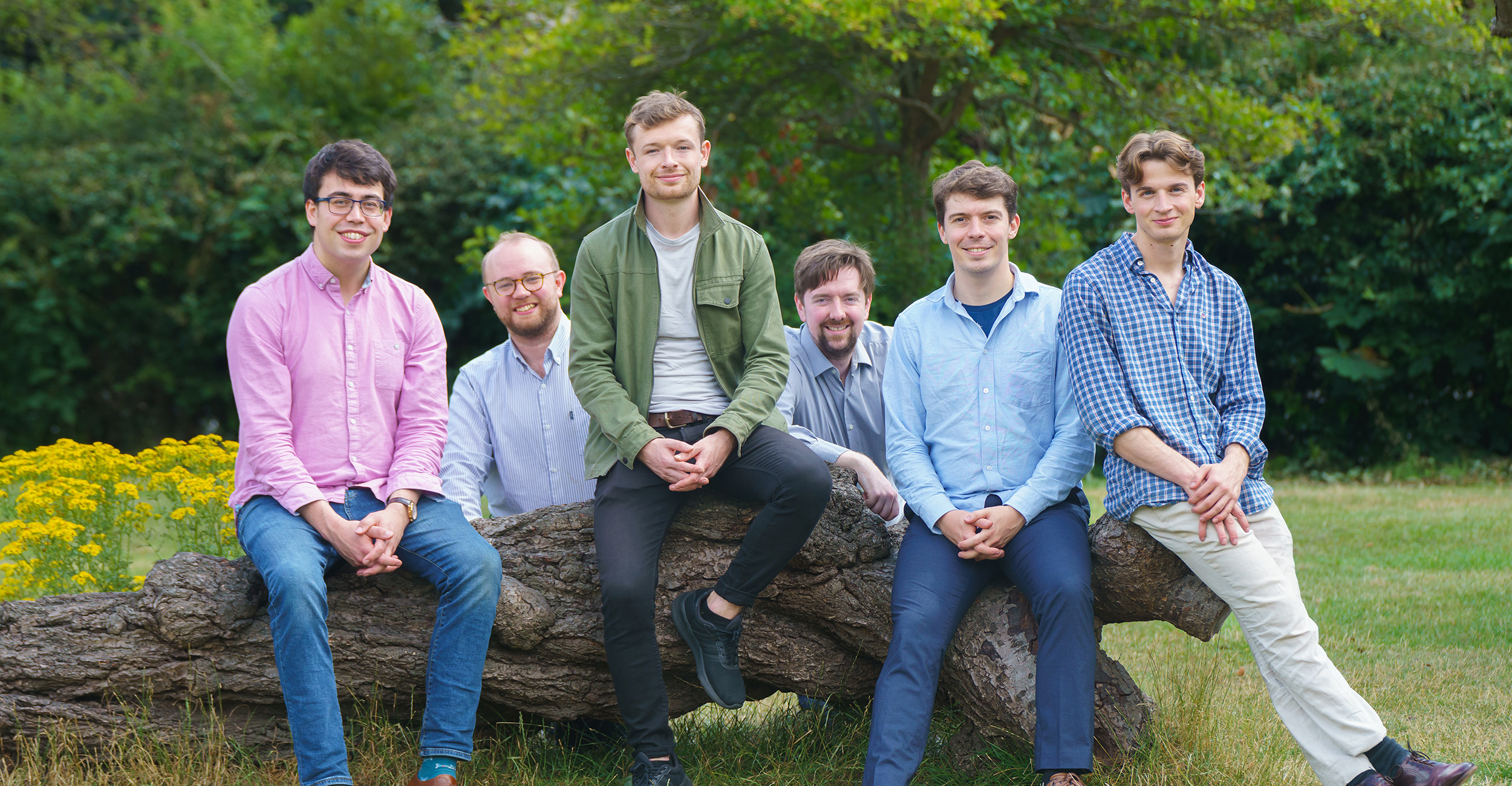 And then come the two motets I'm looking forward to most. Once I sang them myself, and I know how complex the harmonies are and how intensely the dissonances cut when a father mourns his slain son. My son is built from piercing dissonances and obsessively repeated text fragments, performed perfectly and poignantly by Gesualdo Six. And yet in the final chord something of resignation rings through, as if David ultimately accepts his grief.
With Hosanna to the Son of David, Gesualdo Six steps somewhat outside the prevailing atmosphere of the programme. Here the faithful welcome Jesus in Jerusalem on what we today call Palm Sunday. An intrinsically festive work in which the hosannas come towards you from all sides, climbing ever higher towards the "highest heavens": precisely the place where Gesualdo Six leaves us this evening.
And from that place the audience bursts forth in enthusiastic applause and bravos.
As an encore, after an inspiring closing speech by the affable Owain Park, they sing O salutaris hostia by Byrd: a polyphonic masterpiece in which harmony and bold dissonances go hand in hand. Even after that you still can't get enough of this ensemble and this music.
The festival could hardly have wished for a better polyphony concert. The exceptional mastery of Gesualdo Six might have shown even more facets in a programme with somewhat more emotional variety alongside the many pieces about suffering, loss and sorrow. But well, that immediately provides an excellent reason to invite the ensemble back soon.
The long and enthusiastic applause made clear that the audience shares that wish.
We look forward to 2027!
WHEN? WHERE? WHAT?
Saturday 29 August 2026 / Laus Polyphoniae 2026
20:00 AMUZ / Gesualdo Six
Motets by W. Byrd, O. Gibbons, T. Morley, J. Bennett
Guy James, Alasdair Austin, countertenor | Joseph Wicks, Josh Cooter, tenor | Simon Grant, baritone | Owain Park, bass & artistic direction
photos: Andrew Wilkinson, Ash-Mills