

As every year, Klassiek Centraal responds to the ball as quickly as possible and every final evening, when the applause still echoes in the Henry Le Boeuf hall at BOZAR (Brussels), we present our impressions per laureate of the evening. Please note that your servant deliberately did not listen to any preliminaries, nor to commentaries on radio and tv or read about it in the written press. This in order to listen to the twelve finalists unprejudiced and uninfluenced and to discuss them accordingly.
The imposed mandatory work by Fang Man - Four Odes to the Tidings of Flowers
A very subtle entrance, a cautiously avant-garde beginning piece is the first impression of this imposed work specially composed for the competition. Oriental atmospheres are evoked, among other things emphasized by a soft gong. After the elaborate introduction, a full orchestra sounds in rich colors and the cello is given plenty of opportunities on a technical and musical level. Strong interpreters will score here. As with every mandatory work throughout history, much emphasis has been placed on the technical aspect. This is somewhat to the detriment of musicality, but that still gets sufficient chances. The dark groaning solo features less beautiful groaning bow attacks and glissandos that are highlighted. Slowly the orchestra enters, takes over the discourse in pianissimo to swell strongly and suddenly weaken again. So it goes up and down somewhat, with a bundle of requirements that remain too technical for the cello. Tutti passages alternate with sudden pianissimos, vigorous phrases for the cello that only allow singing for those who notice it. This piece has more to offer than appears at first listening. Singing, but then very delicately, very softly, the cello may do in the slow, quiet section that thus runs out to the final notes. This is indeed a composition in which you can recognize the greatest talents.
Fang Man (°1977) - Four Odes to the Tidings of Flowers
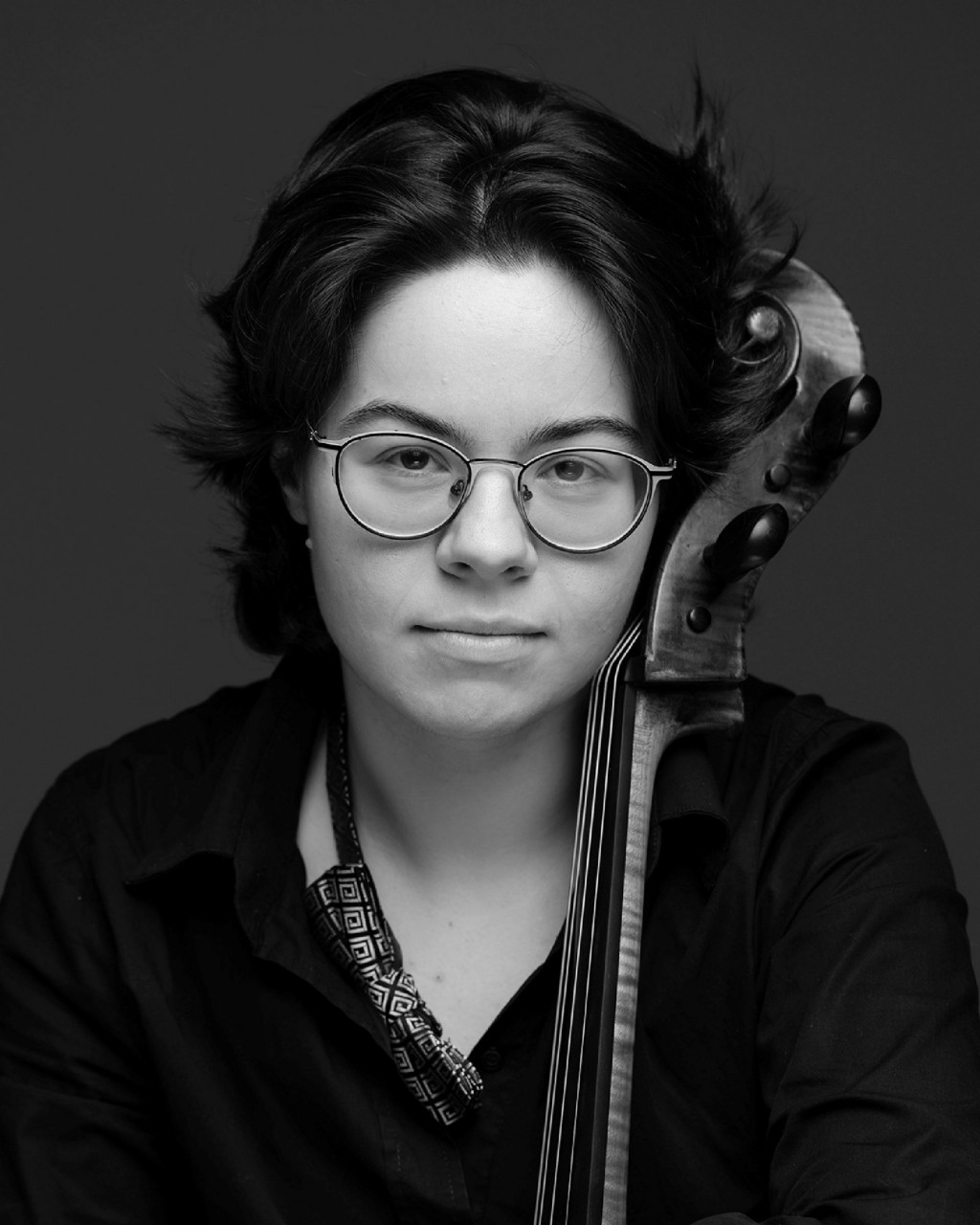
Here and there the cellist sets musical accents in this work which apparently gives it too little space. Technically Zaitseva is completely on point. The cello soon gets a solo part where Maria Zaitseva engages herself properly. The orchestra somewhat suppresses the cellist in the tutti passages and fierce fortissimos. Sometimes sensitivity emerges in a somewhat more singing phrase. Zaitseva does not bring out the aesthetic element in this work. The orchestra overpowers the cello too much in a fairly long-lasting composition. We are not entirely happy with this performance.
Henri Dutilleux (1916-2013) - Tout un monde lointain
Maria Zaitseva begins this rarely performed work with great warmth. For many it is a discovery. The longer solo entry, with limited background orchestral accompaniment, is not always perfectly in tune. That's unfortunate. The cellist does not touch me. Despite her skill and commitment, technique and mastery of the instrument and absolute knowledge of the scores, it seems to lack "it." The musical depth is there and is not there. There are so many opportunities in this work to prove yourself as a great musician, but they do not come sufficiently to the fore.
Fang Man (°1977) - Four Odes to the Tidings of Flowers
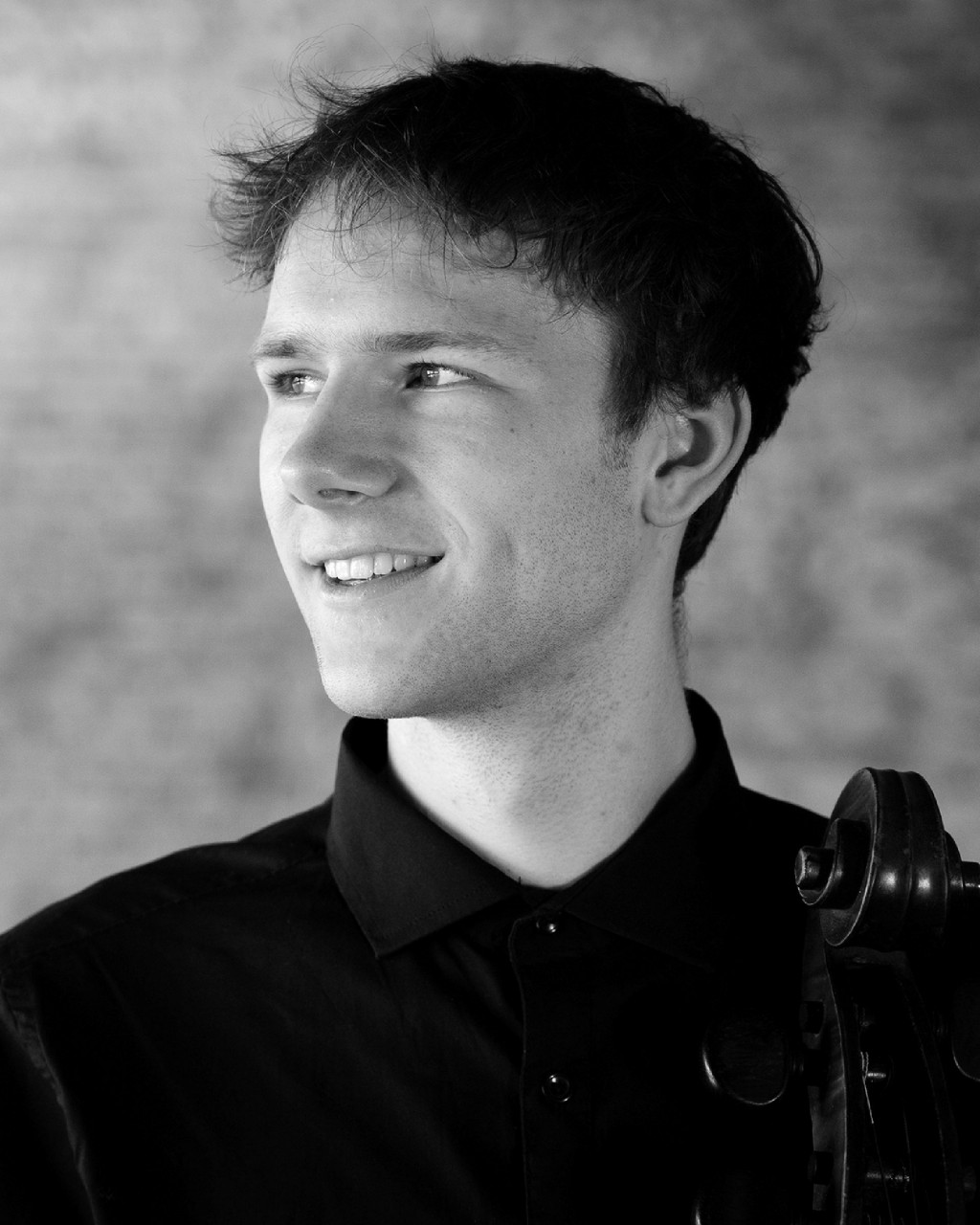
Lionel Martin enters with firm conviction and immediately manages to carry the listener along. He accentuates strongly and we hear a completely different work. The muse speaks. Self-control, technical perfection, perfect intonation throughout the line, breathing, His vision of this mandatory work is challenging. The quality of the entire performance is such that you need no more words to describe it: relistening is the best tip and that can be done via the KEW website.
Antonín Dvořák (1841-1904) - Concerto no. 2 in b op. 104 B 191
A dream, not only because of the romantic character of this rich concerto, but in everything this cellist draws from the instrument, a natural-born musician emerges who stands above many others. The orchestra, which unfortunately started somewhat weakly, lets itself be swept along and plays with a remarkably richer palette of colors. The power of true soloists always has such an effect on orchestras. Martin takes, without fuss, command and completely determines the musical lines, the tempo, the breathing, the phrasing. His bow, very precisely controlled with broad strokes, lets the cello sound not only Martin's own soul, but especially and above all that of Dvořák. You become silent from the emotions he radiates in his entire being. Sometimes when listening to such inspired musicianship you would want, or should?, reach for a handkerchief... This is a concert and not a competition anymore...