Of the French composer Erik Satie, much has gradually become known but little understood. From the themed day Satie s'amuse, which Festival 20.21 devoted to him last Sunday, it became clear that he himself wanted nothing different – it was the core of his marketing strategy. The programmers had chosen his lesser-known works, not coincidentally the compositions that are considered eccentric, religious, humorous, ironic and in any case undefinable.
The staid conservatory of Paris judged Satie (1866 – 1925) as "moderately talented" and "lazy", after which he shifted his work to the frivolous Montmartre. Meanwhile, Satie's Gymnopédies are probably as well known as the hits of Abba. American contemporary composers such as Philip Glass and Terry Riley owe their repetitive arpeggios to Satie. Debussy spoke of Satie admiringly as "my predecessor". Satie collaborated with the poet Jean Cocteau and the painter Pablo Picasso. And John Cage concluded: "He is indispensable".
Pianist Jan Michiels, this year's festival artist, opened the day with the "ballet catholique" Uspud, a religious story about the protagonist's path to martyrdom. The instructions in the score are vintage Satie, thus incomprehensible. There are several measures written for flute, but unplayable due to the low registers. It is announced that it is time for an "alarm of trumpets", but a piano is powerless against that. The commentary on some passages mentions horrific natural phenomena or bottomless suffering, yet the music babbles along unconcerned. Jan Michiels played on Sunday as we know him: bone-dry yet velvet-soft, fortissimo yet without noise, matter-of-fact yet sensitive. Lise Bruyneel provided the videos of the text section, tasteful and effective.
Music not to be listened to
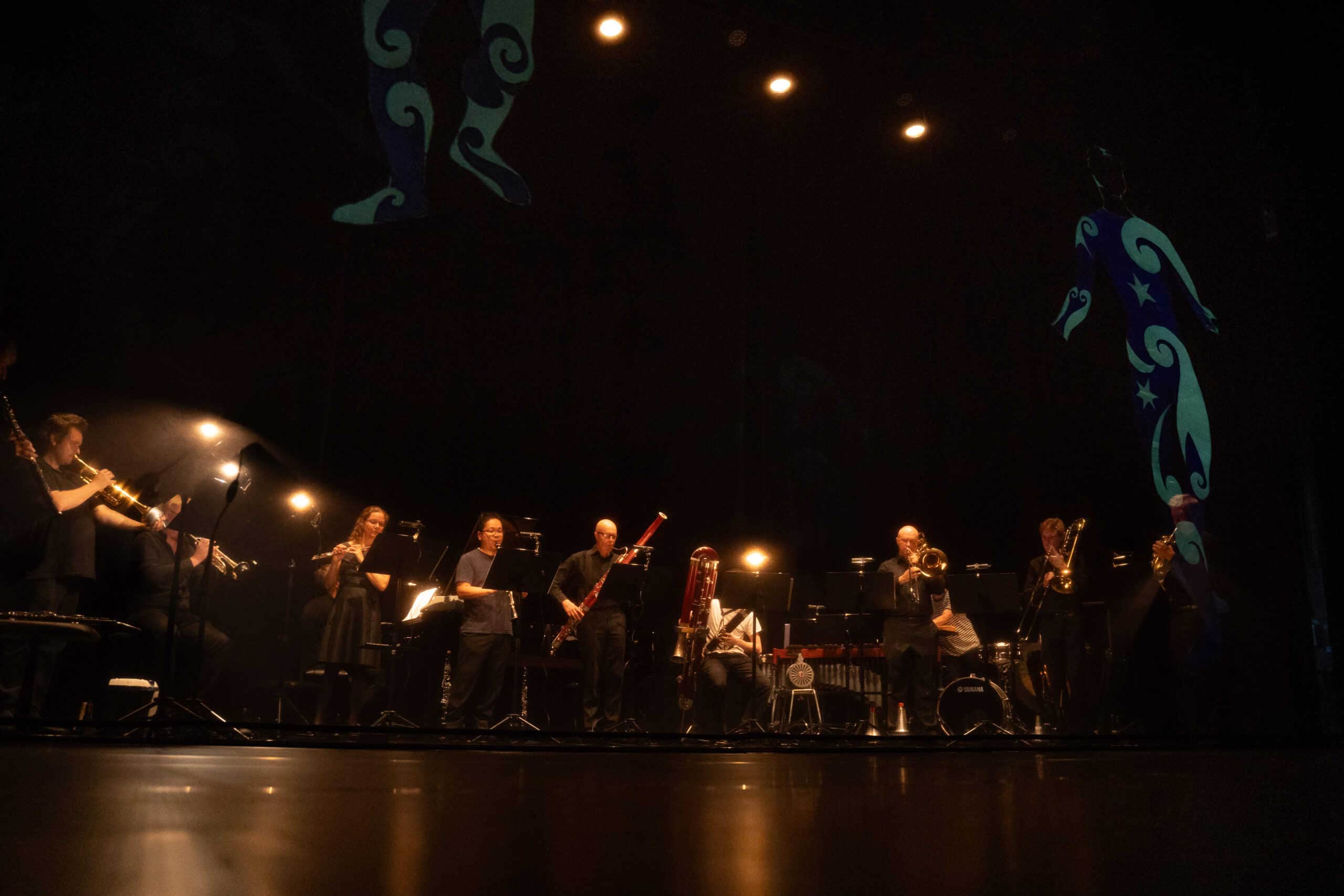
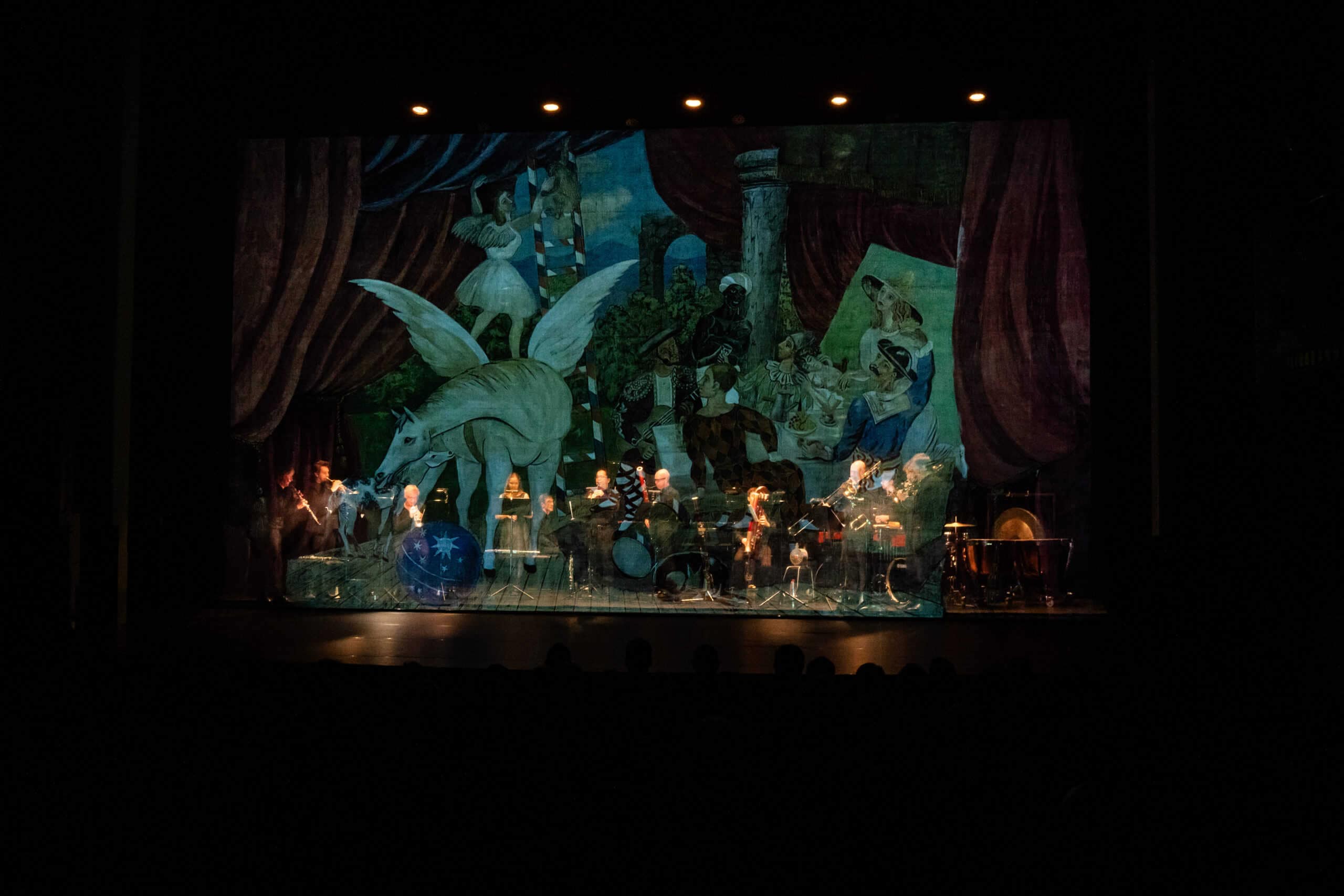
Satie's inimitable irony was highlighted Sunday evening with two installments from Musique d'ameublement (1917-1923), which Satie described as "deliberate vibrations" that serve no purpose other than pleasant background sound. It is thus music that must not be consciously listened to. The ensemble I Solisti, for this occasion exclusively in a wind instrument arrangement, interpreted these pieces as household sounds accompanying other activities such as tidying up, dropping objects, bumping into each other and tinkering a bit with some musical instrument. As an intermezzo unseen and unheard. In Parade, the "ballet réaliste" (1916-1917), Satie collaborated with Picasso (costumes and sets), Cocteau (text) and Léonide Massine, choreographer of the dance ensemble Ballets Russes. The story concerns a parade in front of a theater forecourt, which aimed to usher the public into that evening's performance. Tim Mulleman arranged it for wind instruments. Strings are not included because they were considered too romantic. The first part, in which a Chinese magician introduces himself to passersby, consists of a couple of Asian-sounding motifs. It must rely on some side effects such as a hand-operated siren and the sound of a wet mop being wrung out. In the second part, dedicated to "la Fille Américaine", the mutes of the trombones are unscrewed and a rag-time is allowed to attempt. Ensemble I Solisti clearly enjoyed it. Pianist Jan Michiels here showed that an old-fashioned typewriter enjoys a well-spent second life as a percussion instrument. The première (1917) was not a success. The piece was regarded as "sur-réaliste" and Parisians did not feel it belonged in classical concert halls.
Craving for more
The organizers clearly took into account that it is impossible to do justice in three hours and ten minutes to the complex versatility of Satie. Therefore, they chose his lesser-known works, to demonstrate that Satie is much more than Gymnopédies or Gnossiennes.
That leaves one craving for more. For example, a performance of Vexations for piano, a piece whose score fits on half a page but must be played 840 times. Satie wrote on the score: "…it will be good to prepare oneself beforehand…" In 1963, a group of pianists around John Cage performed it in New York in an off-Broadway theater. The concert began at 18:00 and lasted until lunch the next day. Tickets cost 5 dollars. You could get back 5 cents per 20 minutes of attendance. At the end, there was still one listener left. And he cried: "Encore!"
WHAT: Satie s'amuse, themed day Festival 20.21
WHO: I Solisti, Jan Michiels [piano], Lise Bruyneel
WHERE: 30CC/Schouwburg, Leuven
SEEN: 8 October 2023