

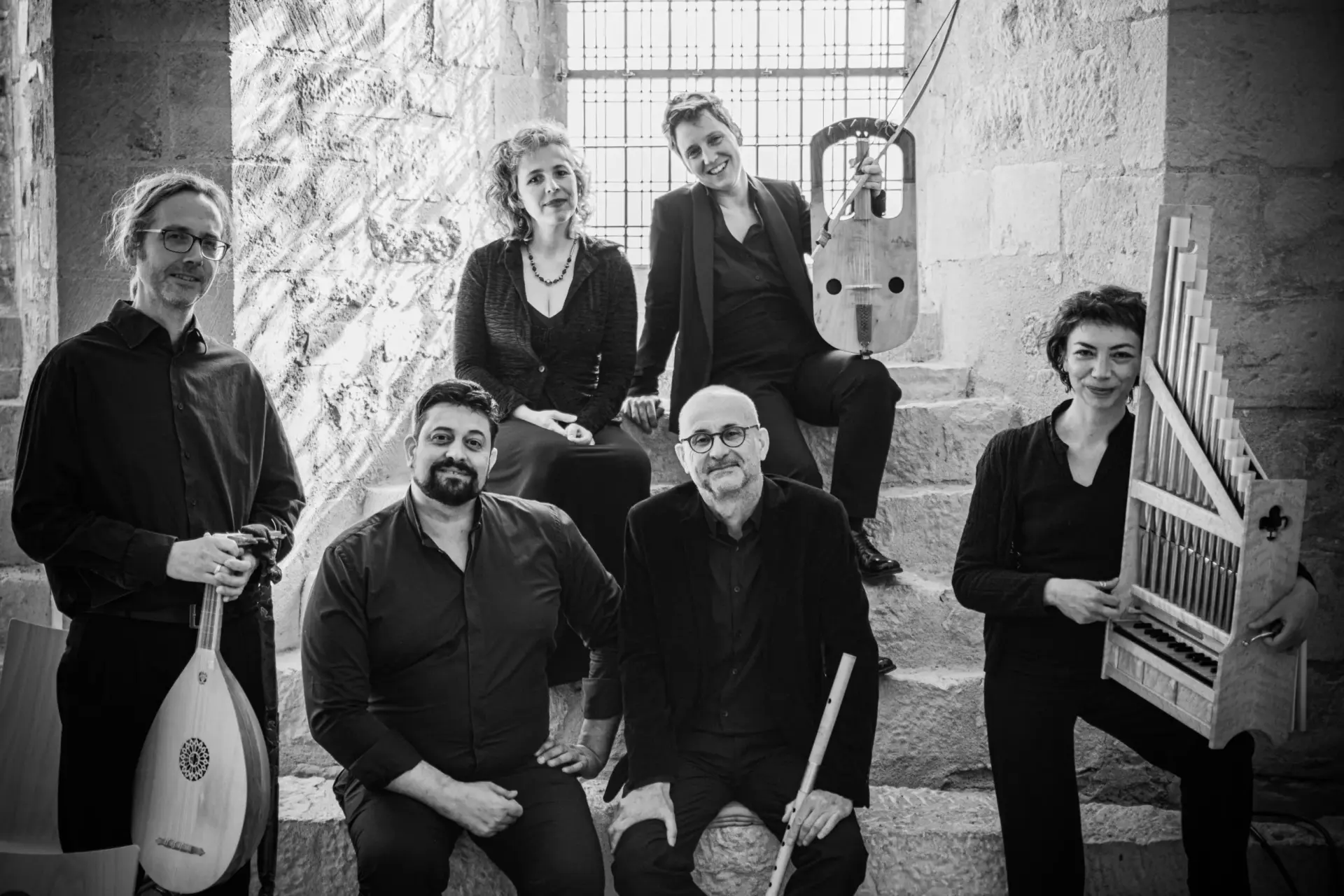
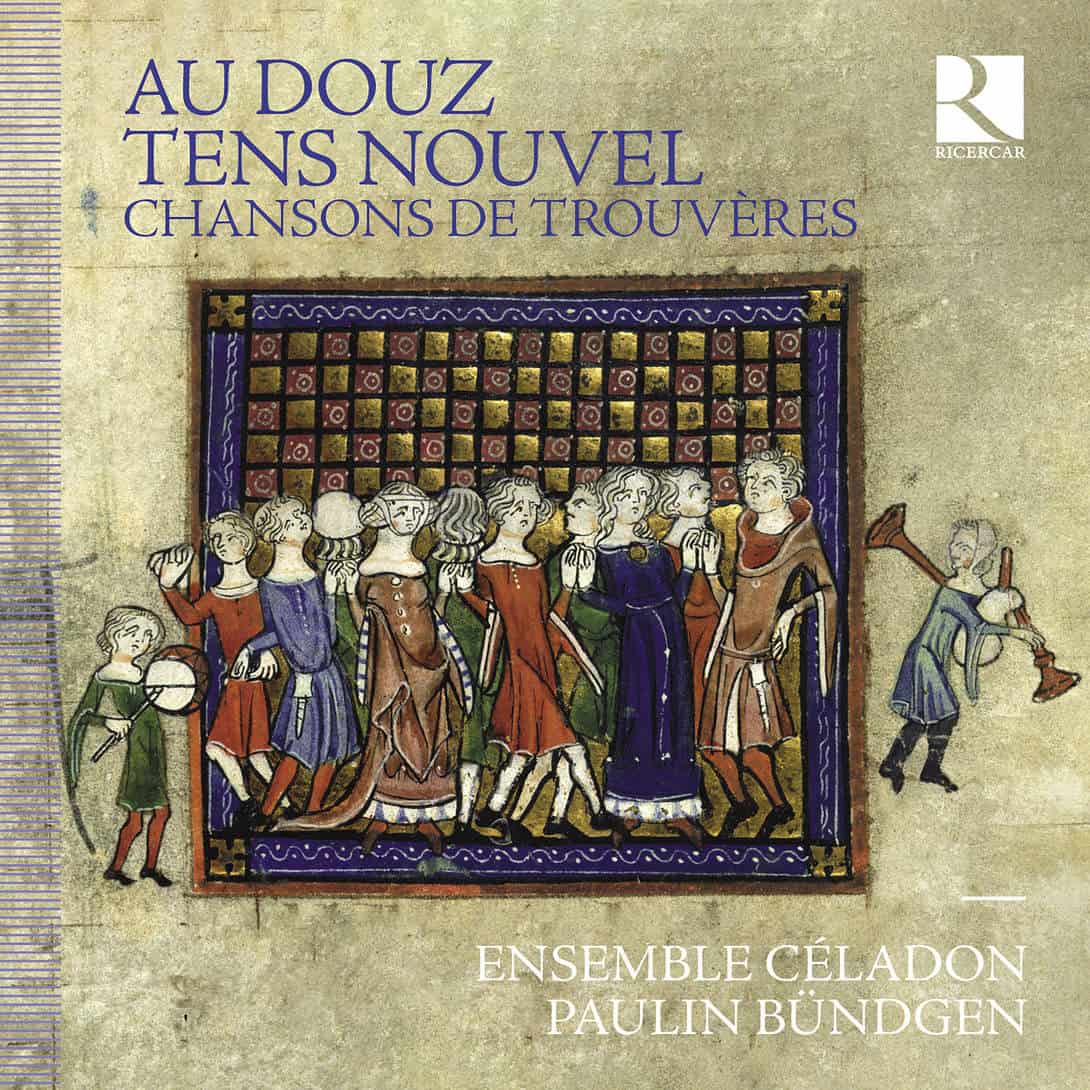
The latest album Au douz tens nouvel - Chansons de trouvères marks an impressive milestone for Paulin Bündgen and his ensemble Céladon. On the occasion of the ensemble's 25th anniversary, this record concludes a trilogy around the themes of courtly love in the Middle Ages. As with earlier releases (a review of Under der Linden can be read here), the ensemble's profound engagement with medieval music and remarkable artistic choices become evident once again.
The album reflects typical trouvère themes of love and humor, with double meanings and erotic undertones. But the typical themes are not the star of the album. What immediately stands out is the careful reconstruction of the chansons. The title track "En mai au douz ten nouvel" has been rebuilt by Bündgen and his team from fragments. With only a melodic line and incomplete texts, they added rhythms and even a second vocal part, sung by Clara Coutouly, to breathe new life into the piece. Their choice to give the reverdie a dance-like energy fits perfectly with the theme of spring's return.
Yet this project raises questions about the artistic choices and their effect on the listening experience. The ensemble has thoroughly immersed itself in iconographic research to create an instrumentation that aligns with the medieval source. The freedom with which they use these instruments, such as the improvisations with rustling sounds and percussion, creates a lively and engaging sound. A new attempt to reach a wider listening audience? But this artistic freedom does not add value in every song. Sometimes it seems more like an attempt to make the whole more attractive rather than a truly necessary addition. Something that was less prominent in Under der Linden (RIC447).
 The interplay between Coutouly and Bündgen for the different characters in L'aultrier quant je chevochoie gives an interesting dynamic, but also raises questions about historical authenticity. The division of the narrative between man and woman seems more like a contemporary choice than a reconstruction of the original performance. While this approach opens up new possibilities — a wider range and more variation in tonal color — it sometimes comes across as artificial.
The singing is undeniably refined, but remains somewhat distant. Clara Coutouly's narrative voice, while technically strong, often lacks the emotional urgency needed to truly move the listener. This problem is further compounded by the absence of translations of the Old French texts. Without this context, the stories and often rich, double meanings remain inaccessible to a large part of the audience. This lack of translation feels like a missed opportunity, especially for an album aimed at a niche audience.
Despite the points of criticism, Au douz tens nouvel remains a charming album. The artistic choices of the ensemble and medieval music specialist Anne Delafosse break with more common interpretations, such as the more austere interpretations of Gothic Voices. In doing so, Céladon sets itself apart from the rest of medieval albums. For lovers of medieval music, this album offers a different listening experience.