

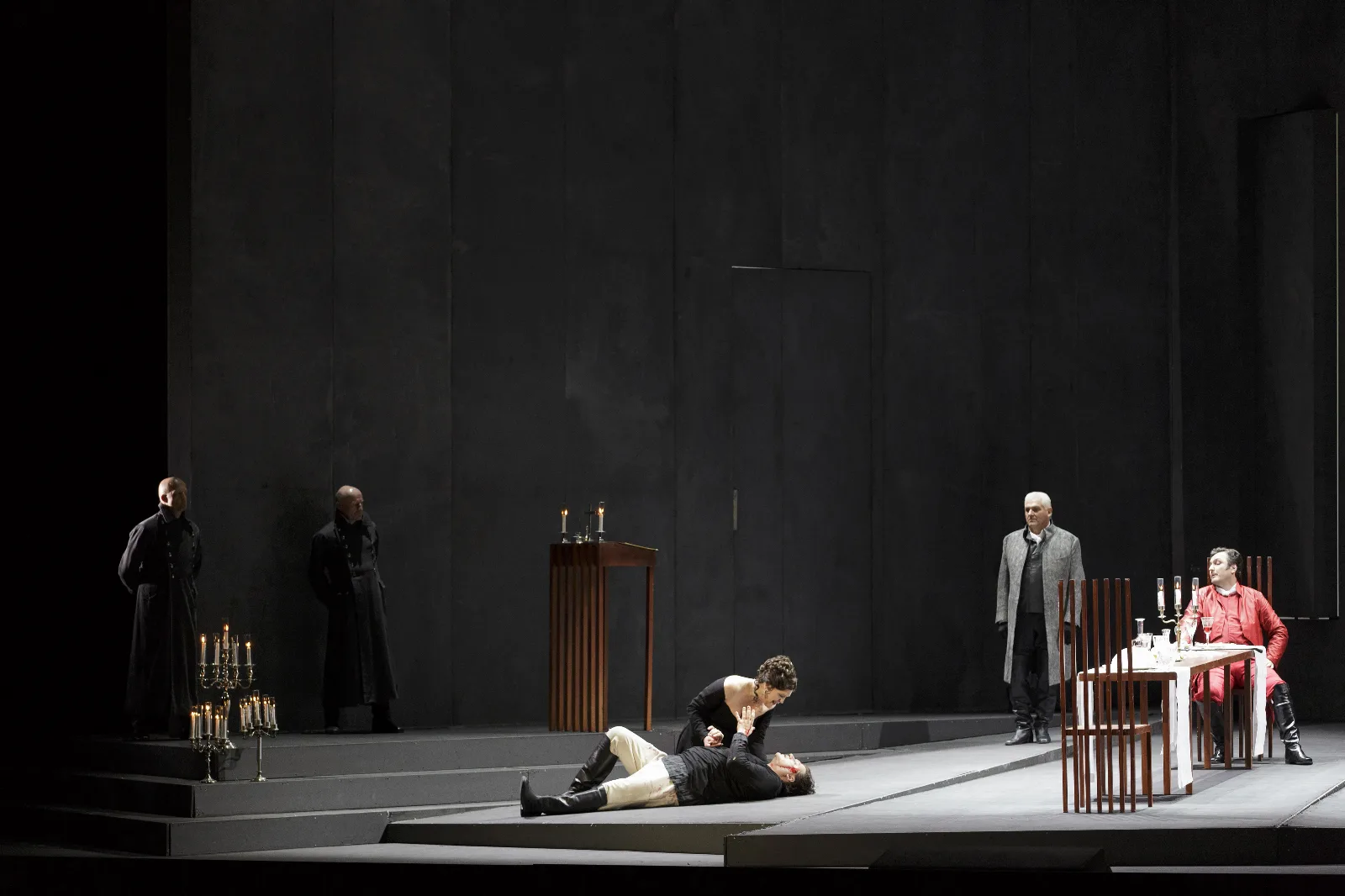
There are opera evenings on which everything falls into place. On which the music, the voices and the drama reinforce one another and you as a spectator are completely swept up in the story. The Tosca I was privileged to experience at the Semperoper was such an evening. With an outstanding John Fiore at the helm of the Sächsische Staatskapelle Dresden, a strong Riccardo Massi as Mario Cavaradossi and a piercing Gevorg Hakobyan as Scarpia, but above all with an exceptional Vanessa Goikoetxea in the title role.
The music first
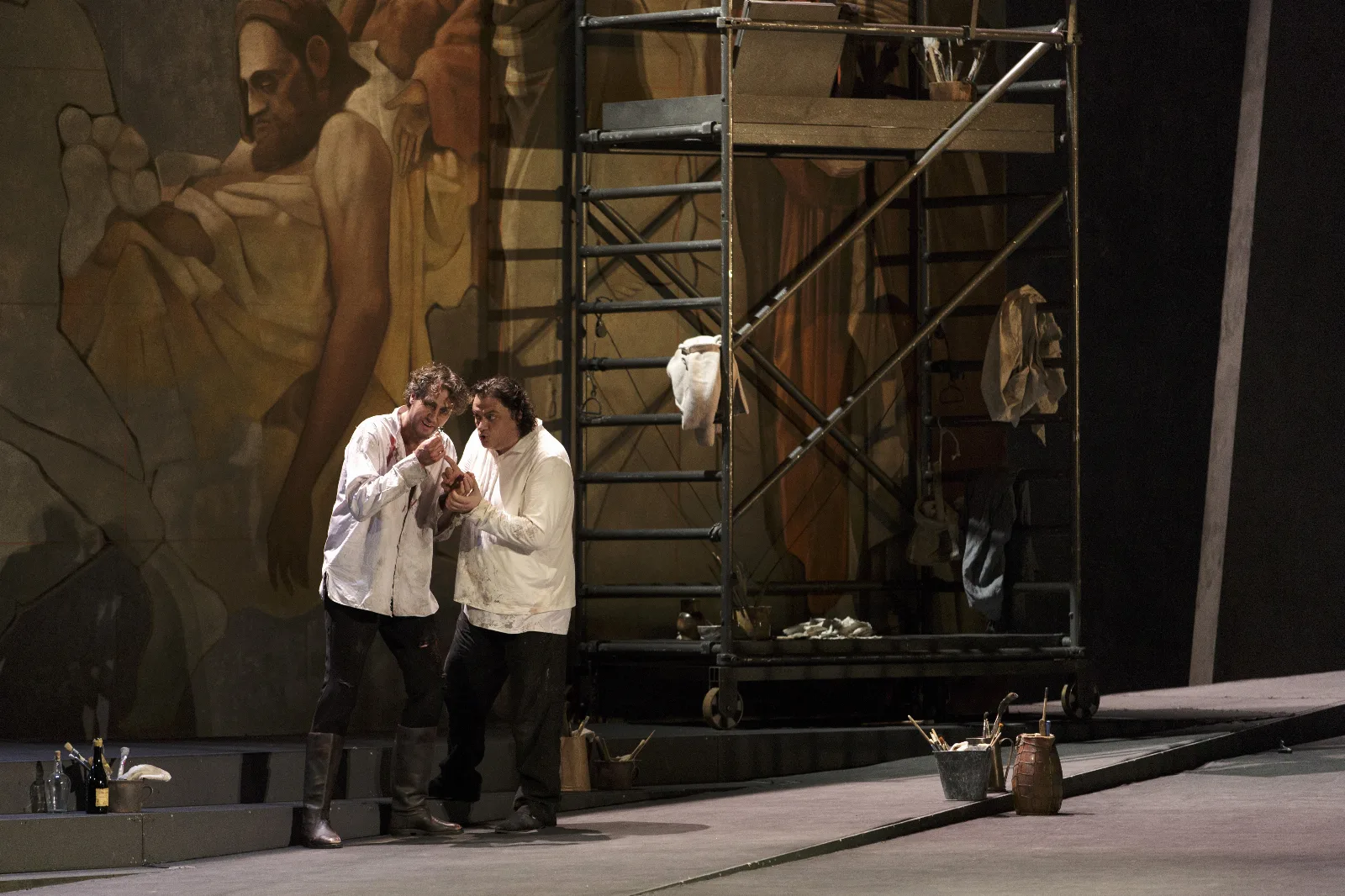
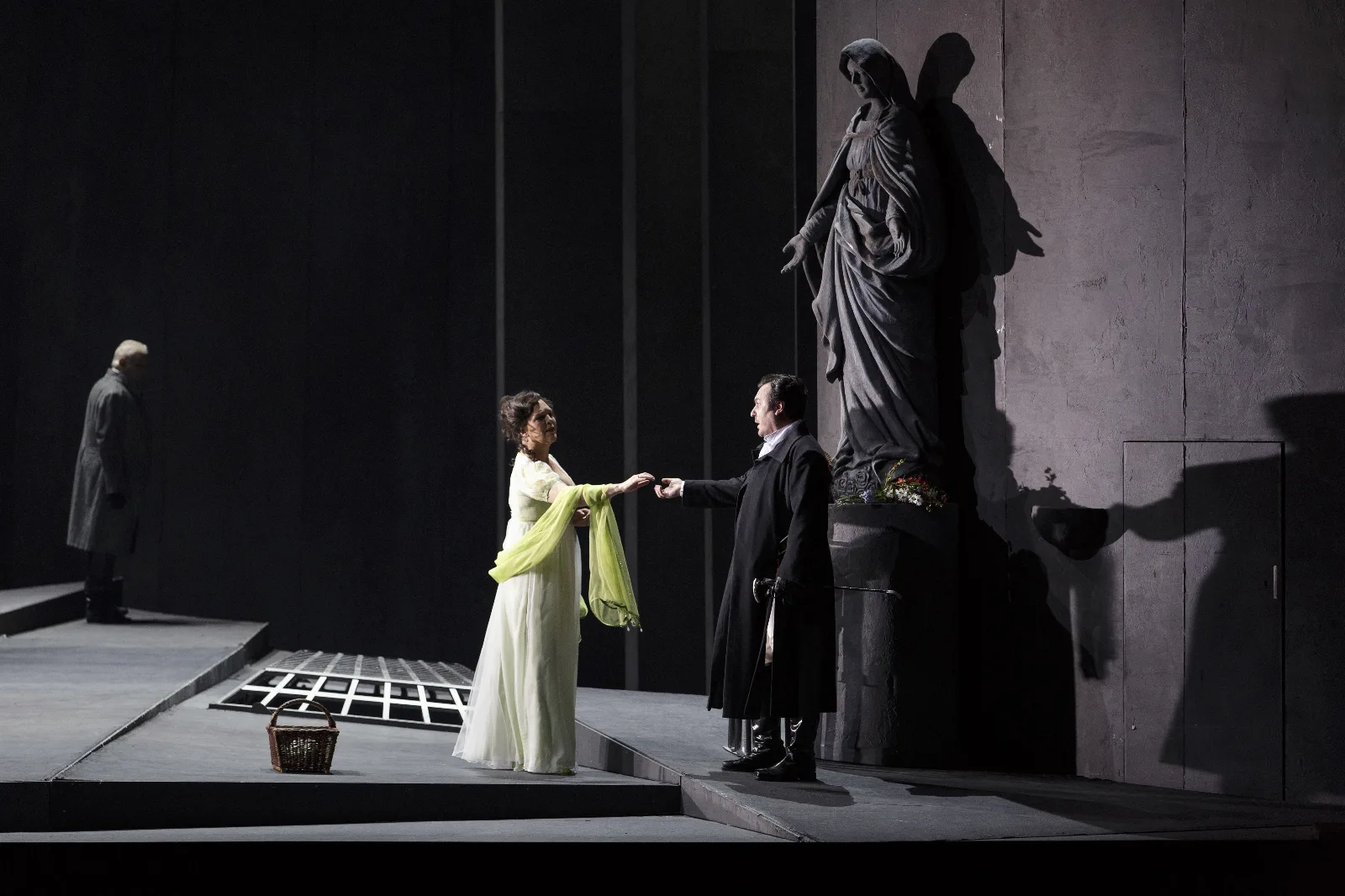
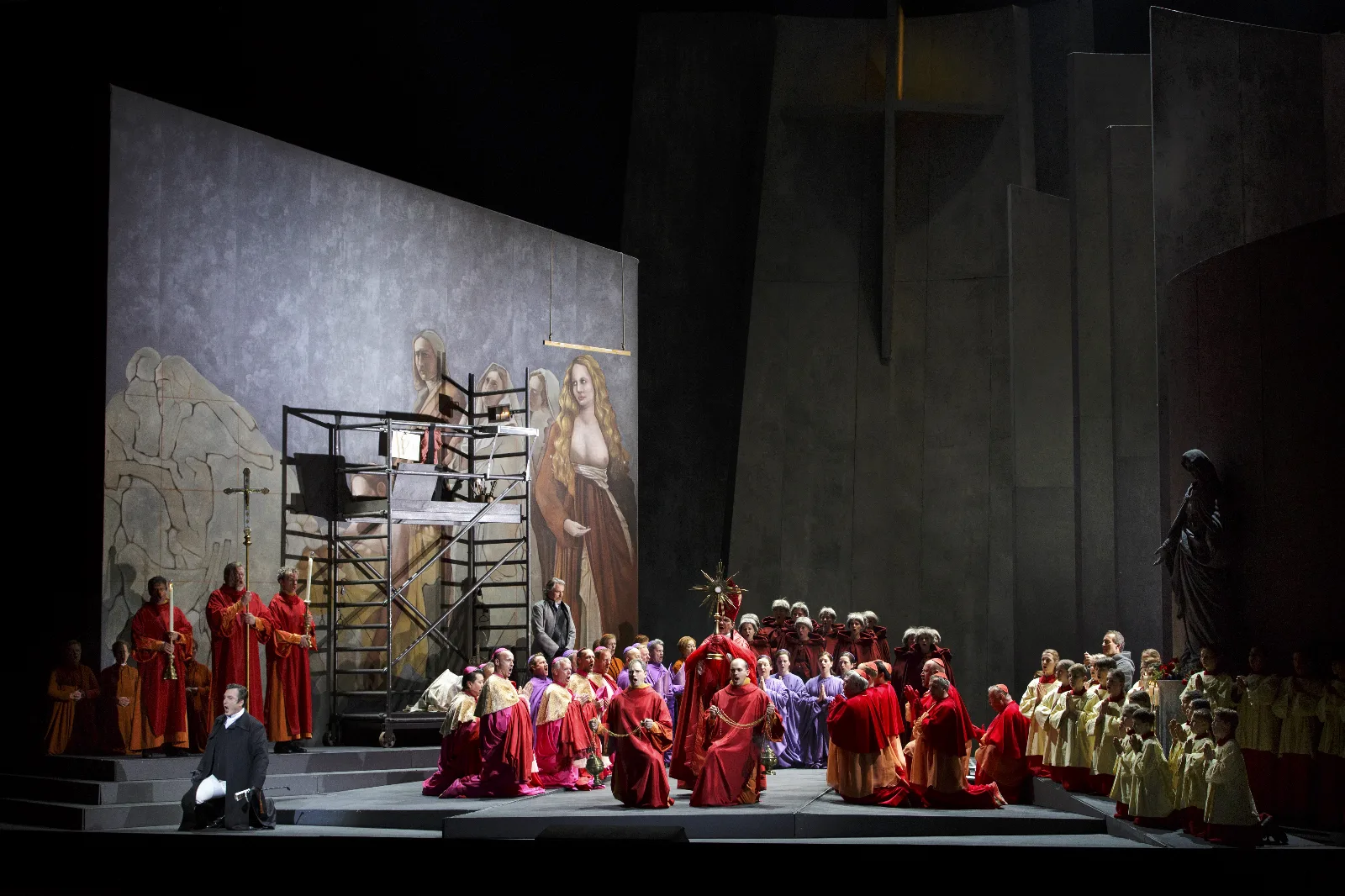
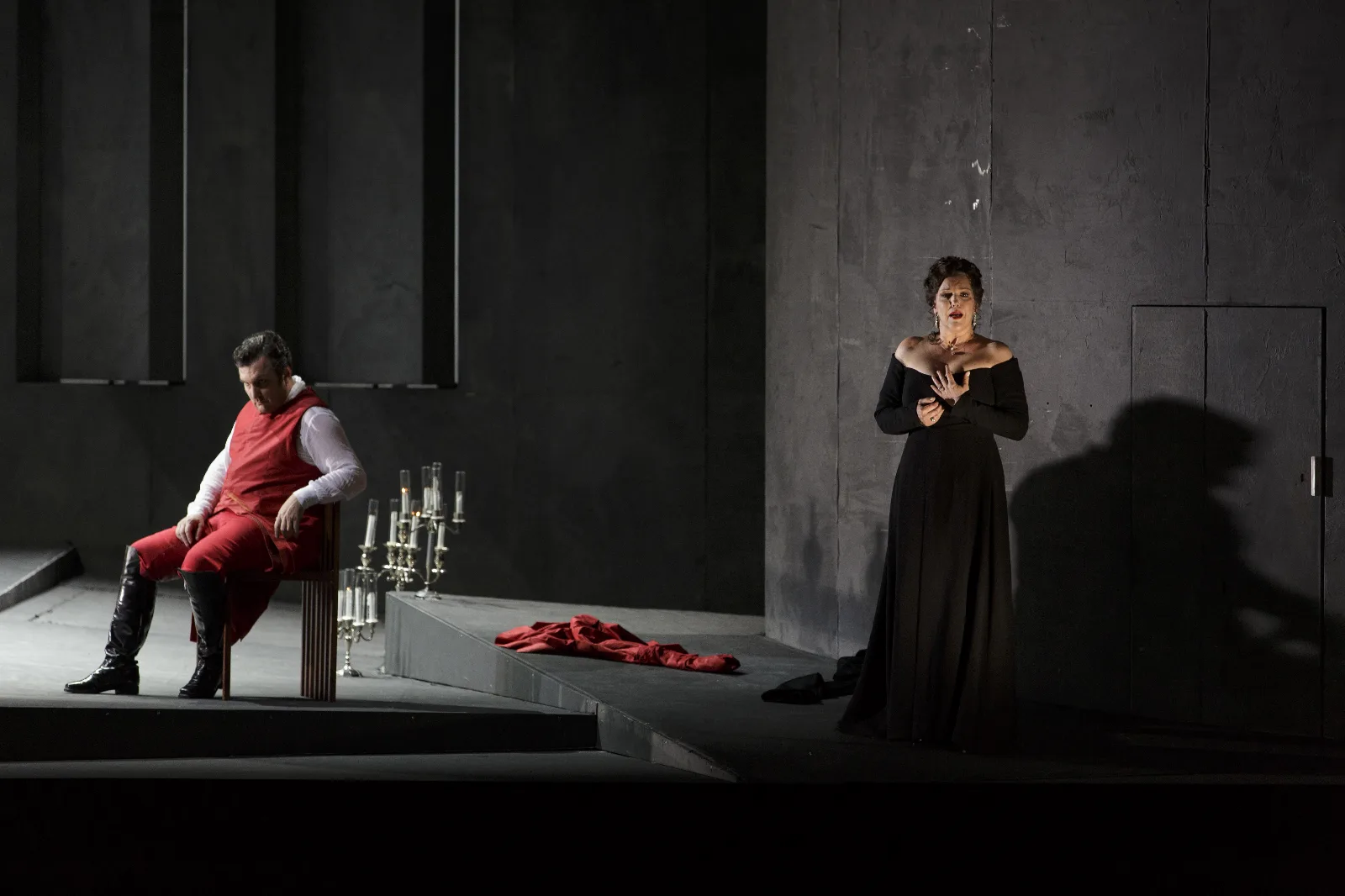
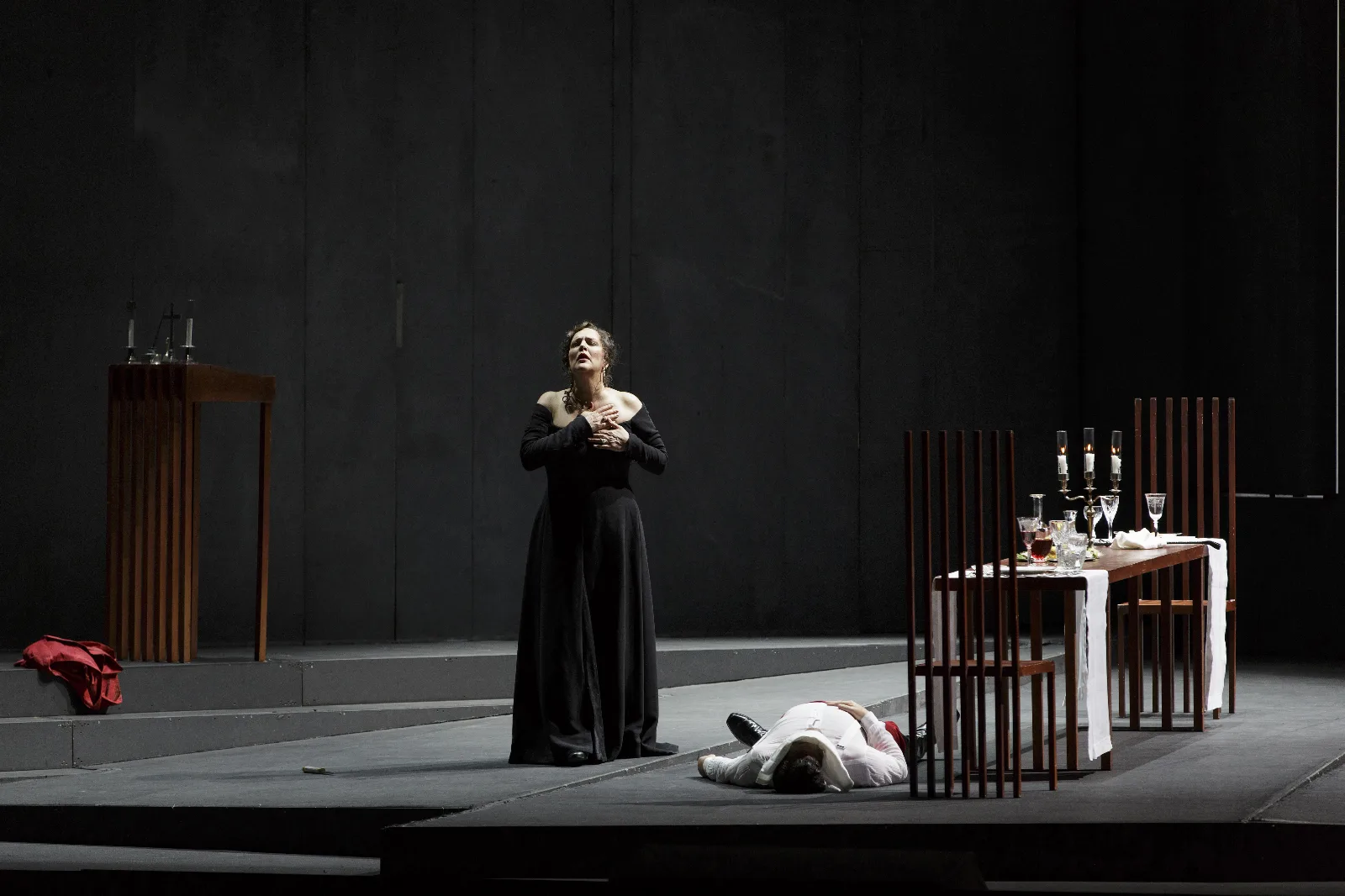
Johannes Schaaf's production, originally created in 2009, is remarkably austere. Christof Cremer's set consists of a modernist-looking concrete church interior, with a scaffold and a fresco as its main elements. Little more is really needed. Only during the Te Deum does the production embrace classical theatrical grandeur, and that is exactly where it belongs. The set in the second and third acts also remains minimalist. A good choice, as it means nothing distracts from what truly matters: the music and the drama.
John Fiore gets truly the best out of the Staatskapelle Dresden. He lets the score shine in all its colours: from the refined orchestral details to the great dramatic outbursts. In the Te Deum especially, it becomes clear how well he commands the different musical layers. The mass scene is given all the grandeur Puccini built into it, while Scarpia's voice retains sufficient room. Fiore keeps the musical dialogue between orchestra and singers constantly in balance. The result is a performance in which the various elements reinforce one another.
Between humanity and menace
Riccardo Massi is an excellent Mario Cavaradossi. His voice has the strength and presence this role demands, but what lingers most is his human approach to the character. That lies sometimes in small details. When he has finally won Tosca over in the first act and she leaves the church, a sigh escapes him. An almost offhand reaction, yet so disarming and recognisable that you cannot help but smile. It makes Mario a man of flesh and blood, not merely the tenor who will soon sing his great arias.
In the second act Massi also has a moment of triumph. When Sciarrone brings the news that Napoleon has been victorious at Marengo, Mario responds with a powerful Vittoria! It sounds like a cry of deliverance, triumphant and at the same time defiant. For a moment political hope seems to outweigh the threat surrounding him. The contrast with his eventual fate makes this moment all the more harrowing.
Gevorg Hakobyan is, as Baron Scarpia, the embodiment of a sensualist of power exactly as you imagine him. His voice, his singing and his body language make him the Scarpia this opera needs. He radiates menace and steadily manages to press Tosca ever further under pressure. Especially in the second act his portrayal becomes chilling. The scene in which he attempts to assault her makes his abuse of power and lack of conscience painfully tangible. The moment he writes the safe-conduct is also strong: even while offering her the appearance of freedom, his entire presence keeps the situation firmly under his control.
A fine detail is the music that sounds through the open windows in the background during this scene. The gavotte and the cantata form an almost unreal contrast with what is unfolding inside. Outside, life goes on as usual, while a human drama is playing out behind the walls.
A pleasant surprise is Vladyslav Buialskyi as Cesare Angelotti. His appearance is brief, but his voice and convincing stage presence stand out immediately. After the first act he is showered with flowers. This is no coincidental tribute: the Ukrainian bass-baritone, a member of the Junges Ensemble, had only a few days earlier won both the first prize and the audience prize at the international Operalia competition in Shanghai. A young singer to keep an eye on!
Markus Marquardt also deserves a mention as the Sacristan. With his beautiful voice and natural acting style, he gives this smaller role a pleasant presence.
From jealousy to despair
The greatest surprise of the evening is undoubtedly Vanessa Goikoetxea. What luck that she took over the title role at the last moment! Her Tosca makes a deep impression. What stands out above all is how she adapts her voice to Tosca's character and state of mind. She does not sound the same throughout, but gives each of the different emotions its own colour. Her high notes ring out clear and free, without ever descending into shouting. Even in the great orchestral passages her voice remains effortlessly audible.
Goikoetxea gives Tosca's jealousy, her reproaches to Mario and her growing uncertainty a wonderfully natural dramatic development. As Scarpia drives her ever further into a corner, you feel fear and despair gradually gaining the upper hand. She keeps resisting him, but the situation she finds herself in becomes ever more hopeless.
And then there is, of course, Vissi d'arte. Goikoetxea begins the aria with remarkable restraint. Precisely because of that controlled beginning, she builds the emotion so carefully that the climax arrives all the more overwhelmingly. The hall seems struck dumb. Even the customary applause stays away a little longer afterwards, as if everyone wishes to cherish this moment for a while longer.
Her performance in the closing scene of the second act is equally impressive. When she takes the safe-conduct from Scarpia's hand, she first lays a cloth over his dead face. Even toward the man who has caused her so much suffering, Tosca remains a human being with her own moral sense.
Goikoetxea made her role debut as Tosca at the Semperoper with this production. She was previously affiliated with the opera house's Junges Ensemble, but what she delivers here suggests we will be hearing a great deal more from her. Her presence, her capacity for empathy and her vocal qualities make her a singer I most certainly want to hear again.
A third act that grips you by the throat
The third act opens with an instrumental introduction that immediately sets the tone. Here the orchestra is not merely the accompanist to what unfolds on stage, but a protagonist in its own right. Fiore and the Staatskapelle create a marvellous sonic tapestry that makes the menace and melancholy of this work palpable. It is one of those moments when, as a listener, you become completely absorbed in the music.
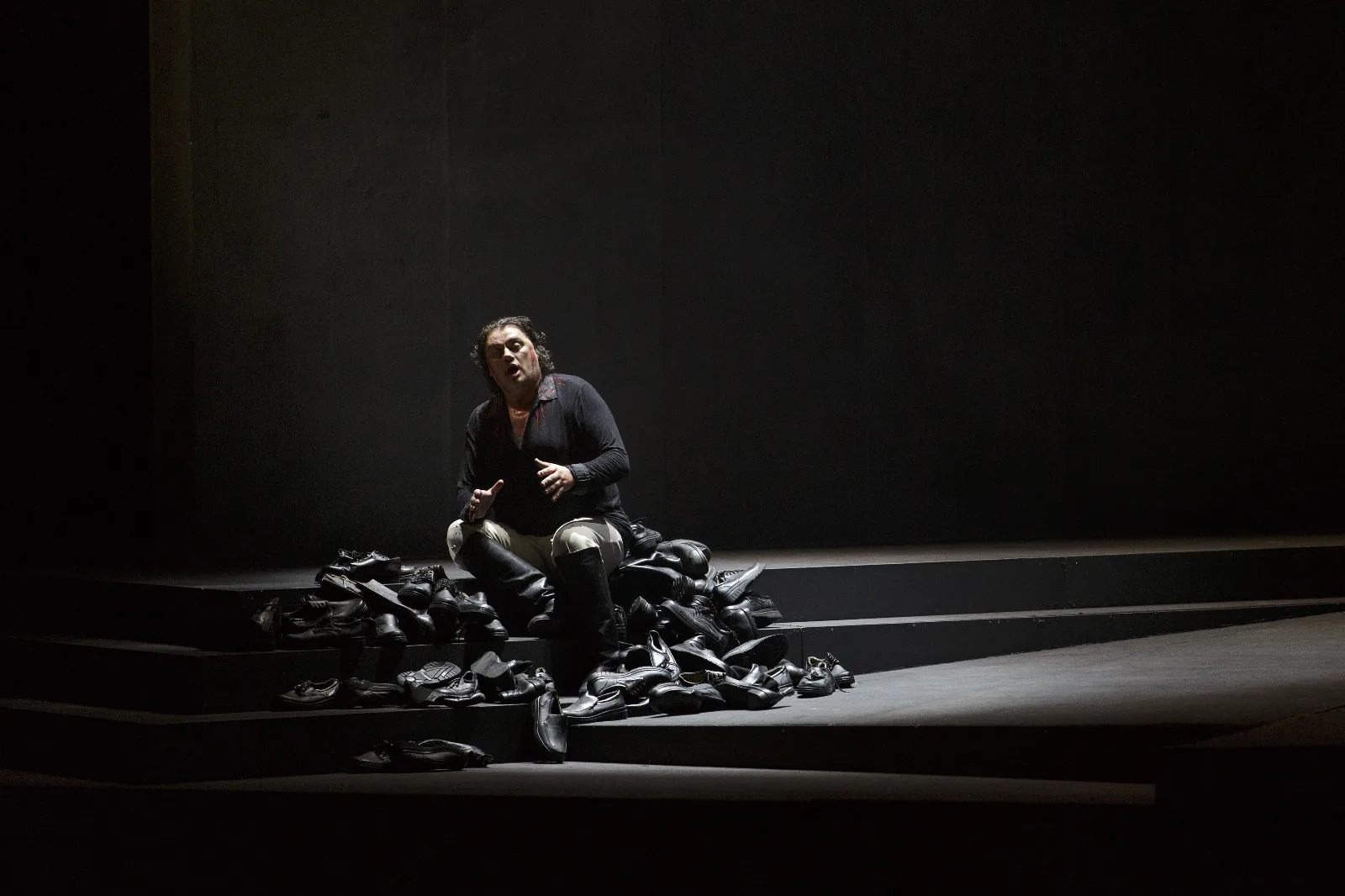
The fine boy's voice of Simon Klein sings the shepherd's song. The boy lies sleeping on a heap of shoes, a peculiar but intriguing image within the austere set design. When Mario later takes off his boots and places them on that same pile, the image gains a lovely coherence.
Then it is Massi's turn again. His E lucevan le stelle gives the melancholy and the awareness of impending doom a human dimension. You hear not only a man looking back on his happiness, but someone who realises he is in danger of losing everything.
When Tosca appears and outlines her plan to him, a small detail in Massi's performance stands out. There is a slight hesitation in his facial expression, and he crumples the safe-conduct. You cannot help wondering whether he suspects that something is amiss and is playing along so as not to worry Tosca. It is an interesting nuance that heightens the tension in this scene.
And then comes the ending. Mario is shot, and happiness proves short-lived. Evil triumphs, as so often in Puccini's world. Tosca's despair and the merciless outcome grip you by the throat. Even those who have experienced this story countless times cannot escape the impact of this final scene. Certainly not here, where, in complete darkness, a large white cloth suddenly descends and a painfully bright light floods the auditorium. That light then slowly fades in time with the music.
An evening to treasure
What do I take away from this production? Johannes Schaaf's restrained direction proves that with a stripped-down set design you can place the drama at the centre. The music and the performers tell the story without the staging getting in their way. John Fiore and the Sächsische Staatskapelle Dresden deliver a musical performance of the highest calibre, while Riccardo Massi and Gevorg Hakobyan portray their characters with great conviction.
But it is Vanessa Goikoetxea who gives this evening a special meaning for me. I was overwhelmed by the way she shapes Tosca's emotions so penetratingly. That she took on this role at the last moment and immediately delivered such a strong interpretation makes it all the more remarkable. Perhaps tonight I heard the Tosca of my life.
Artistic team
- Sächsische Staatskapelle Dresden
- Sächsischer Staatsopernchor Dresden
- Conductor: John Fiore
- Direction: Johannes Schaaf
- Set design: Christof Cremer
- Costumes: Petra Reinhardt
- Lighting: Guido Petzold
- Chorus master: Jonathan Becker
- Children's chorus: Claudia Sebastian-Bertsch
- Dramaturgy: Ilsedore Reinsberg
Cast
- Floria Tosca: Vanessa Goikoetxea
- Mario Cavaradossi: Riccardo Massi
- Baron Scarpia: Gevorg Hakobyan
- Cesare Angelotti: Vladyslav Buialskyi
- The sacristan: Markus Marquardt
- Spoletta: Timothy Oliver
- Sciarrone: Peter Lobert
- A jailer: Metehan Köklü
- A shepherd: Simon Klein (Kapellknabe)