
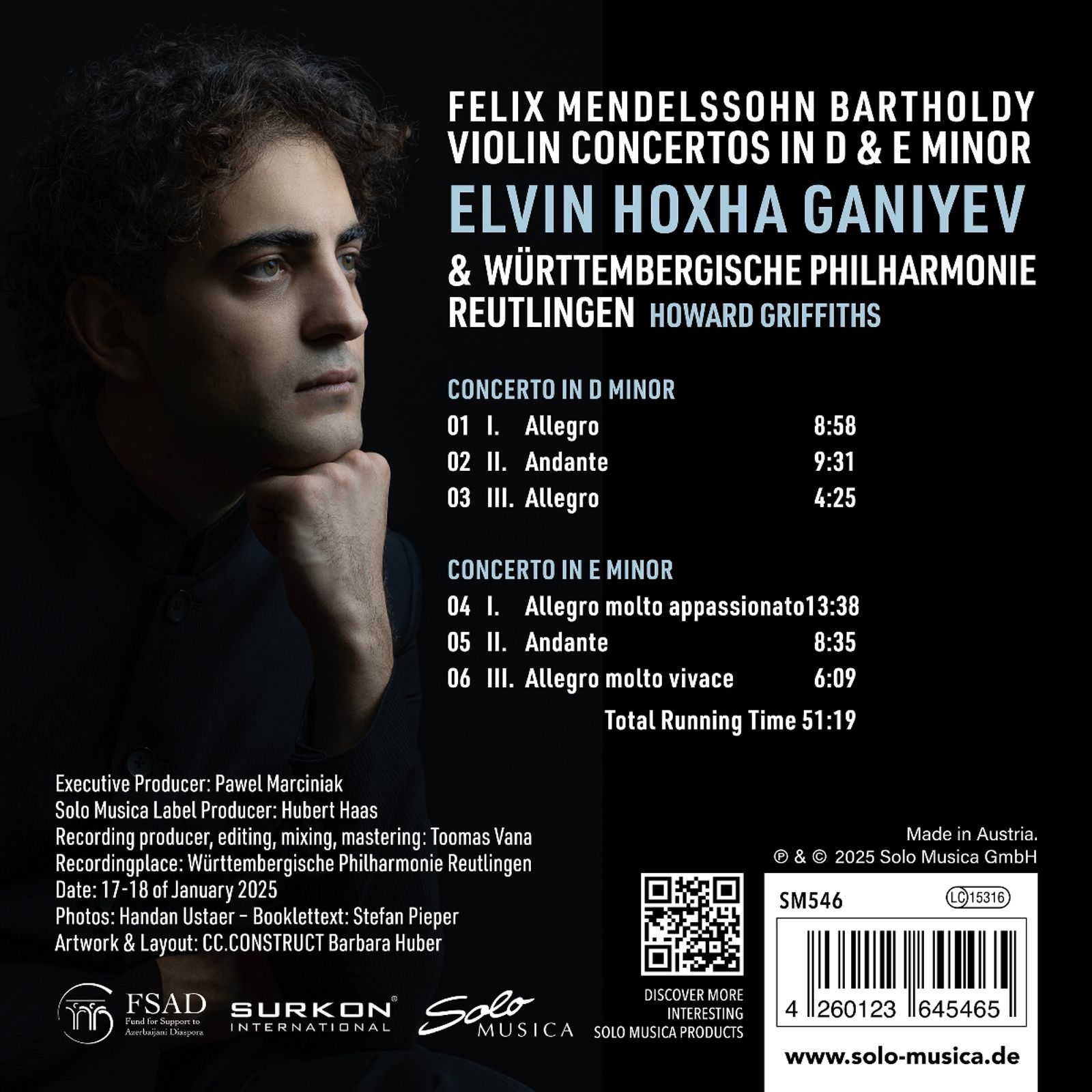
Some pairings are purely practical in nature—two works that happen to fit on a single disc—while others make a dramaturgical argument. This CD unmistakably belongs to the latter category, and the argument is compelling: by confronting Felix Mendelssohn-Bartholdy's ubiquitous E minor violin concerto (1809-1847) with his rarely performed early D minor concerto, Elvin Hoxha Ganiyev presents two works by the same composer at two crucial junctures in his development. The twenty-two years between 1822 and 1844 are no coincidence; during this period, Mendelssohn evolves from a composer with pronounced classical foundations into a mature Romantic voice. This recording captures that evolution with remarkable clarity in just over fifty-one minutes.
The D minor concerto, written when Mendelssohn was thirteen—during the same period in which he also composed his twelve string symphonies, as if composing were second nature to this prodigy—bears clear traces of his intensive engagement with Bach. The motor energy of the opening movement betrays music that wears its Sturm und Drang heritage openly, yet simultaneously, in the lyrical Andante, already hints at an emotional depth that would fully mature two decades later. The fact that this work remained largely absent from the concert repertoire after its composition and only returned to prominence in the twentieth century, partly thanks to Yehudi Menuhin's 1951 performance, remains a curious episode in the reception history of nineteenth-century concerto literature. All the more surprising, then, that this concerto still appears so rarely on music stands today.
The E minor concerto, by contrast, is the product of an entirely different creative process: not youthful spontaneity that pours onto paper in a matter of weeks, but a process of years-long revision and refinement, nourished by close collaboration with Ferdinand David. You hear that different genesis: every measure reveals a composer who has carefully considered every detail. The innovations that make this work a landmark—the solo entry without orchestral exposition, the cadenza that appears mid-development rather than at the end, the seamless transitions between movements—have since become canonical, yet they lose none of their audacity, especially when presented as clearly as here.
Who is the soloist tackling this double challenge? Elvin Hoxha Ganiyev (b. 1997), from a musical family, is now regarded as one of the most striking young violinists of his generation—not least because he made his solo debut at age eight, an early maturity that beautifully echoes the prodigy Mendelssohn was when he wrote the D minor concerto. His training under Zakhar Bron and Krzysztof Węgrzyn, among others, combined with an international concert career, explains the stylistic versatility that characterizes this recording. He plays a rare Guarneri filius Andreae from 1715, with support from the Haydar Aliyev Foundation—an instrument whose warm, rounded tone shines beautifully on this recording.
What distinguishes this performance from countless other recordings of the E minor concerto is precisely the awareness that both works demand different approaches. Ganiyev points out in the CD booklet that the D minor concerto offers far more interpretive freedom than the later work, and these two approaches are indeed audible. In the early concerto, he allows himself ornaments and rubati that give the music an almost improvised élan without ever compromising the Classical clarity; in the later work, he bows disciplined to the text, without the performance ever becoming dry or academic. Revealing is how he describes the challenge of this overfamiliar work: he had to, by his own account, "stop playing on autopilot" and keep asking himself what he actually wanted to do here. This search for a personal yet text-conscious interpretation is precisely what keeps this reading of the E minor concerto from routine.
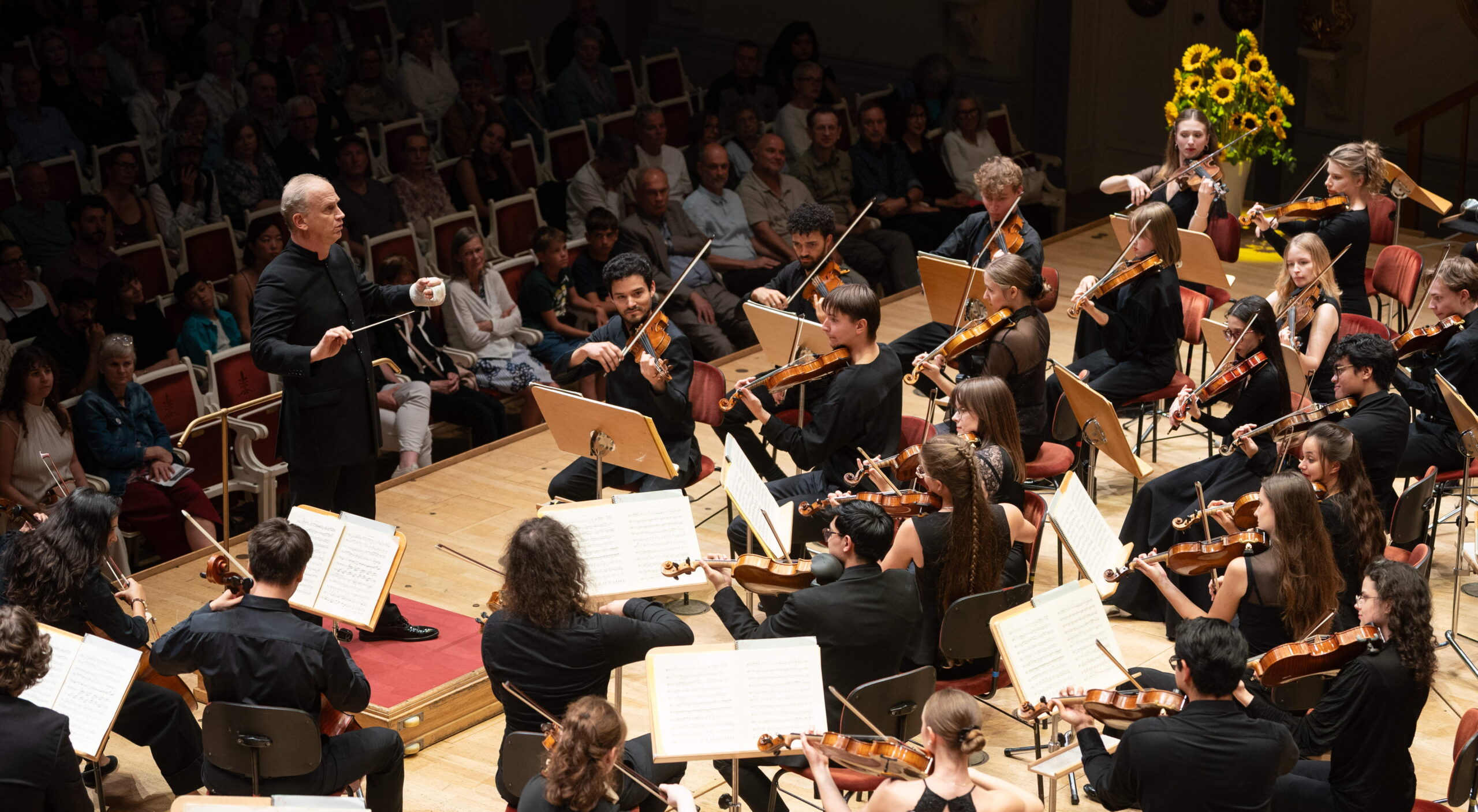
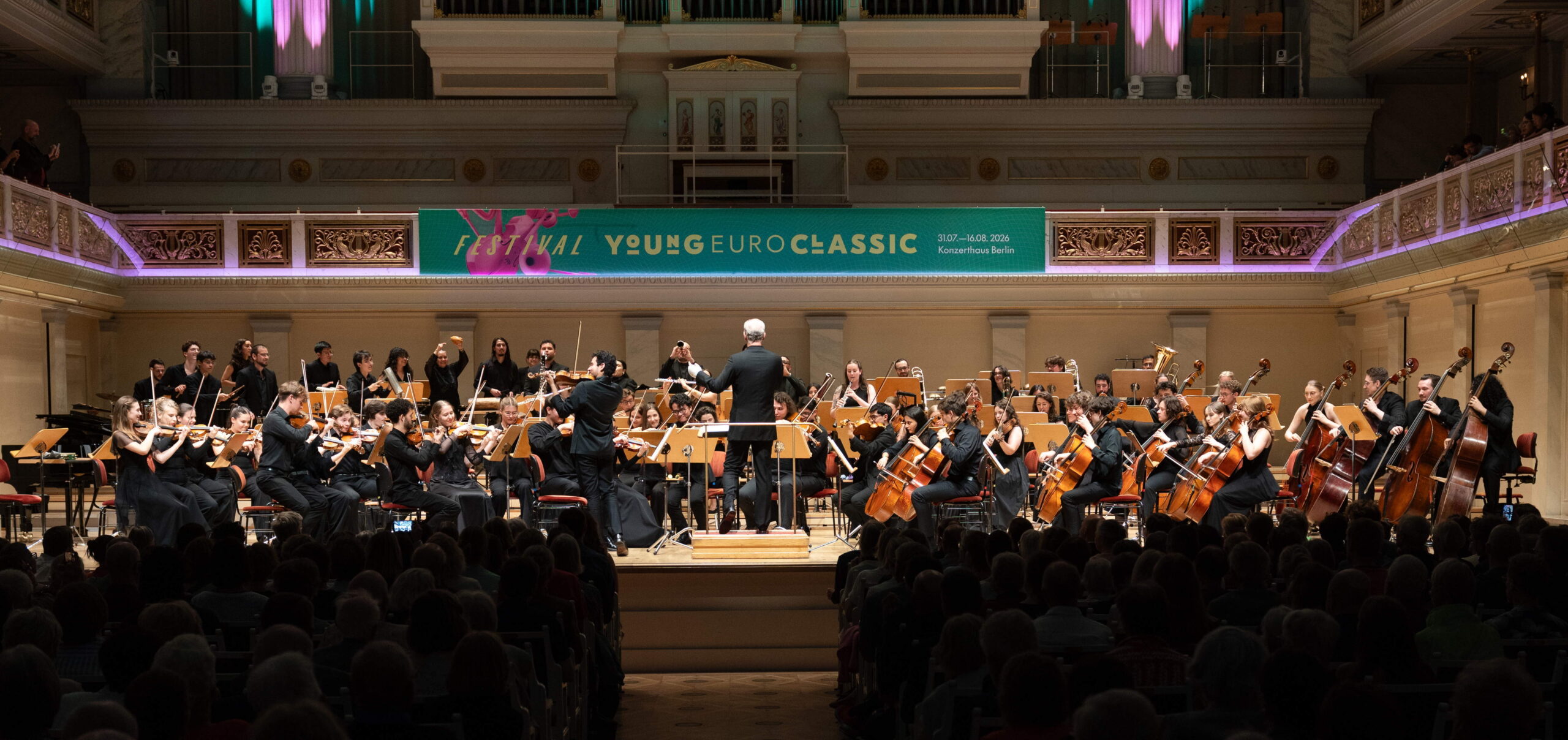
The role of the orchestra changes fundamentally between the two works—from a purely accompanying string apparatus in the D minor concerto to a fully-fledged symphonic orchestra in the later work. The Württemberg Philharmonie Reutlingen and Howard Griffiths prove more than equal to this shift. Griffiths builds a sonic world with his orchestra that seamlessly adapts to what each work demands—chamber-like and flexible in the early concerto, colorful and full of relief in the later one. The orchestra does more than merely accompany; it thinks musically throughout: the balance with the soloist remains exemplary, without the orchestral part losing character. This very combination of service and personality deserves explicit praise.
Ganiyev's tone—sweet-toned, lyrical, with a natural warmth owed as much to his Guarneri as to his own musicality—runs like a thread through both works. It's a sound that adapts as effortlessly to the unaffected innocence of the D minor concerto as to the more mature Romantic rhetoric of the later work, never sounding forced. The folksy-tinged third movement of the early concerto especially acquires a delightful lightness, while the E minor concerto radiates a restrained, deeply felt maturity that never slides into sentimentality.
This CD owes its greatest raison d'être not only to a fresh reading of the well-known E minor concerto, but especially to the courageous—and musically entirely justified—choice to pair it with its unjustly neglected younger sibling. Soloist, conductor, and orchestra pull together here, driven by the same conviction that even celebrated repertoire must—and can—be questioned anew each time. This recording not only sheds new light on the familiar masterwork, but above all makes clear how fascinating it is to hear Mendelssohn grow from prodigy to accomplished master.