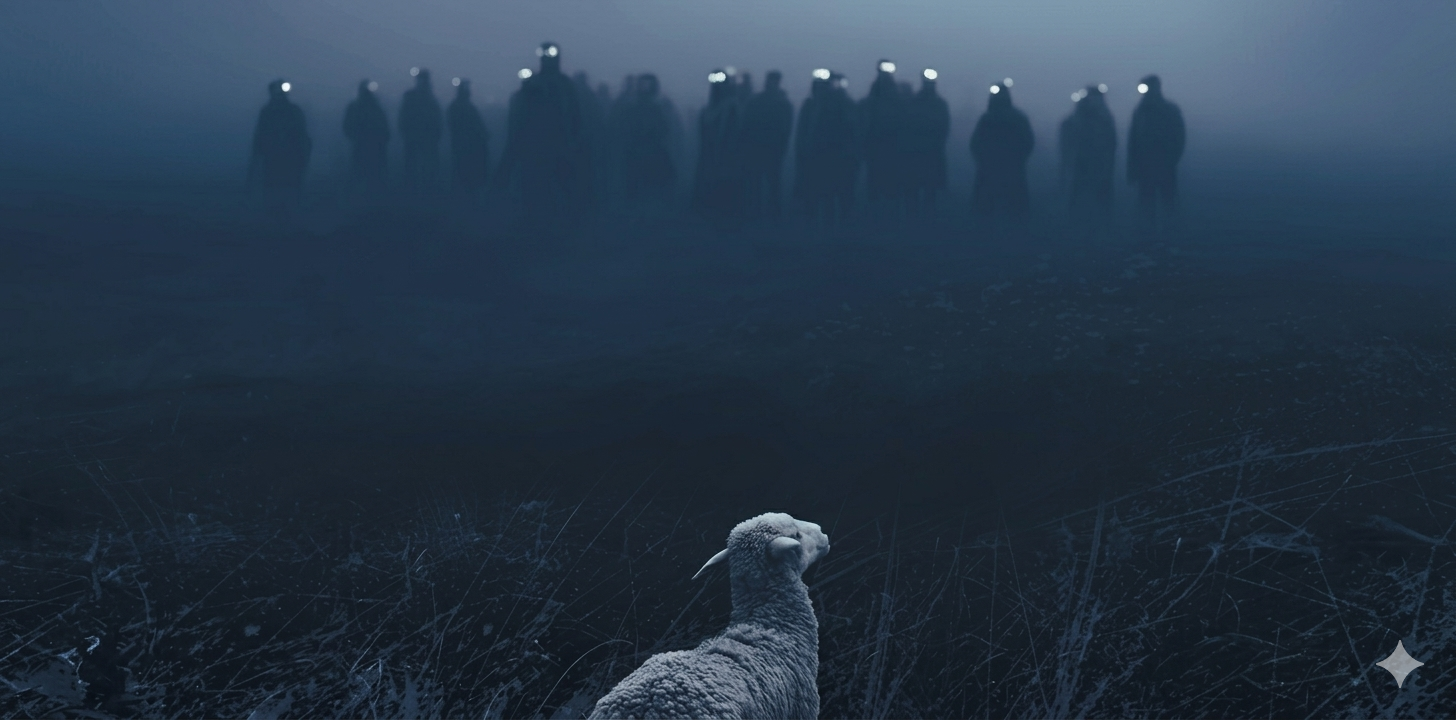
Some festivals read like a story: with a clear arc of tension, recognizable protagonists, and an ending that neatly ties everything together. And then there's Tectonics. Not a story, but a condition. Not a line, but a field where sound, space, and attention continually shift shape.
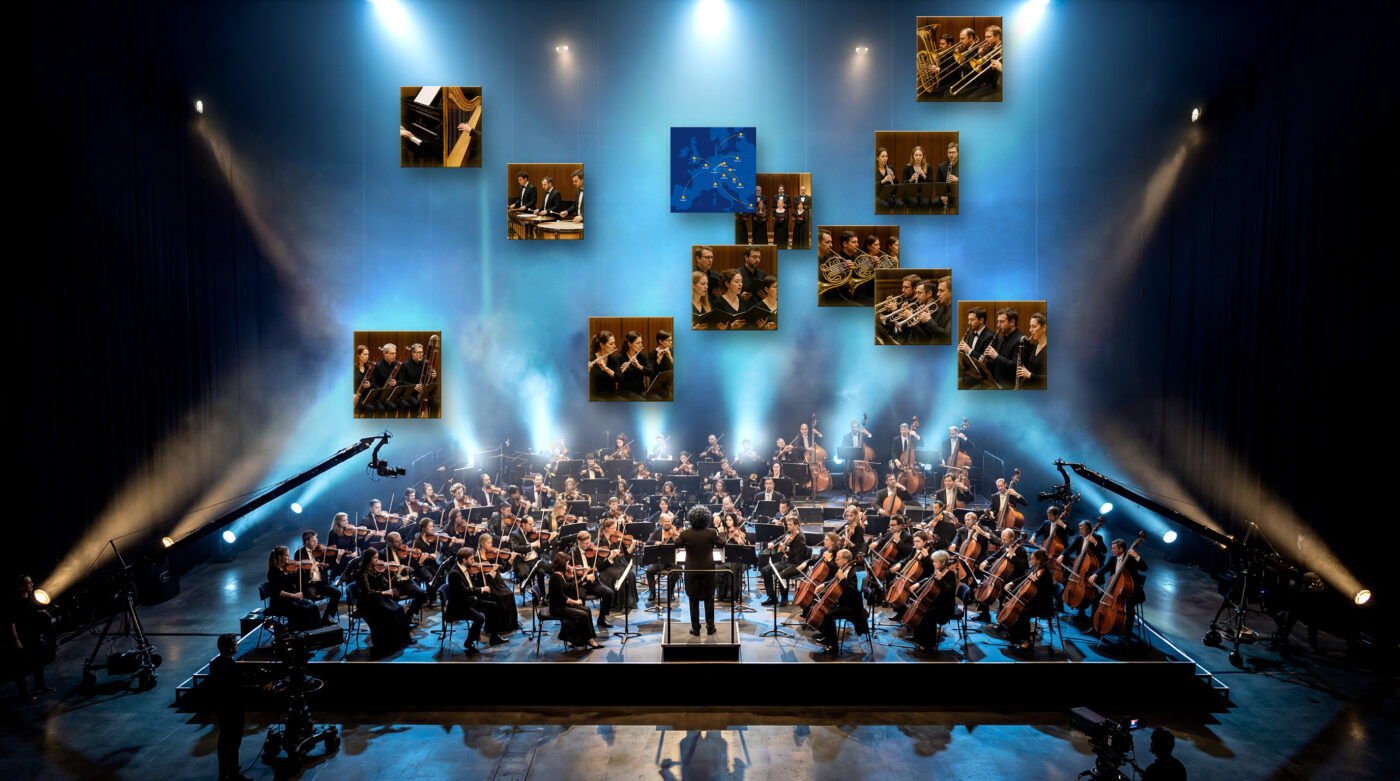
On June 19 and 20, the festival settles into Flagey, with the Brussels Philharmonic and Ictus as its steady motors. What elsewhere would be a thematically constructed festival becomes here not a fixed trajectory, but a situation of constant shift: between concert, installation, performance, and chance. Visitors move freely between the different parts, without a set order.
Listening without a safety net
Under the impulse of Ilan Volkov, Tectonics has grown into an international platform where listening is not a comfortable stance, but an active choice. What is asked here is not recognition, but availability: the willingness to relate to the unknown without an immediate framework.
That makes the festival at once fascinating and demanding. Those who come expecting finished works and clear hierarchies are gently but firmly removed from that position.
Flagey as instrument
One of the strongest lines in the program is the way the venue itself co-writes. The work Symphony for Kunstnernes Hus by Øyvind Torvund is not simply performed in Flagey, but spread across corridors, halls, and in-between spaces. The building becomes a score, the listener becomes a navigator.
That spatial logic returns in multiple ways. Installations by David Dubois and Fabio Machiavelli nestle themselves in the festival's periphery, while the experimental instruments of Baudouin Oosterlynck pose the question of where sound actually begins.
The result is not a route that you follow, but a field that lets itself be reassembled anew each time.
Repertoire as material, not as monument
Within the orchestral and vocal sections, music appears not as heritage, but as material. Works by Iannis Xenakis, Giacinto Scelsi, and Frederic Rzewski are presented not as finished masterworks, but as processes still at work in the present.
In the Xenakis program with the Flemish Radio Choir, that principle becomes particularly concrete. Works such as Nights and Oath treat the human voice not as a carrier of text or expression, but as raw sound mass: breath, scream, friction.
Together with the vocal worlds of Scelsi, a kind of "living sound sculpture" emerges, in which voices behave like shifting sound fields rather than individual lines. The choir functions less as a collective of soloists than as a single breathing instrument, where language dissolves entirely into sound.
New Voices: Memory and Structure
Against this historical material stand new creations that each reconsider the idea of composition in their own way. Maya Verlaak often starts from social and structural questions: what does living together sound like, how does a group become audible without dissolving itself into uniformity?
Cassandra Miller, by contrast, works from a different register: that of memory and distortion. Music that doesn't develop in the classical sense, but seems to re-listen to itself, always slightly shifted.
Together with the Brussels Philharmonic, an orchestral practice emerges that is less about representation than about questioning.
The Edges of the Festival
To understand Tectonics, you must look not only at the center, but especially at the edges. Where improvisation, noise, and performance intersect without fixed identity.
Farida Amadou works there with bass as physical resistance: sound as pressure, as tension rather than line. Jennifer Torrence explores the performative body, where movement becomes as important as sound itself.
The ensemble Ictus functions in the meantime as a hinge: not between old and new, but between different ways of listening.
Two Days Without a Straight Line
The festival is structured as a field of parallel situations. Concerts overlap, installations continue running, choices exclude other possibilities. What you hear is always only a fraction of what happens.
This fragmentation is not a shortcoming but a starting point. Tectonics offers no overview, but an experience of incompleteness. Not everything is heard, and precisely that becomes meaningful.
Practical Information
Tectonics takes place on June 19 and 20 at Flagey. The festival is conceived as a continuous whole with concerts, installations, and performative works that partly run in parallel. Visitors choose their own route and thus become co-architects of their experience. Tickets provide access to the whole, not to individual moments.
Epilogue
Tectonics is not a festival that can be summed up. It offers no closing thought, no coherent line, no reassuring conclusion. What remains is something more subtle: a shift in attention.
And perhaps what lingers is precisely that: not that everything was understood, but that listening has changed course somewhere along the way.