The old center of Leuven was startled Wednesday evening by rhythmic pounding and the use of a heavy grinding disc. It seemed as if the stately Sint-Geertruikerk was falling under the wrecking ball. But in reality, it was the sound of Grand Duet for Cello and Piano by Galina Ustvvolskaya, performed as part of Festival 20.21.
The Russian Ustvvolskaya (1919-2006) owes her fame to a refined version of individualism, seemingly shaped by a self-chosen hermitic existence and uncompromising relationships with others. Her complex character was also shaped by composer Dmitri Shostakovich, with whom she studied composition. He praised her for her absolute honesty and admired her so much that he regularly sent her unfinished compositions for her judgment. Later, he also used material from herClarinet Trioin his own work (among others, in hisFifth String Quartet). In a letter to her, he wrote that she had not been influenced by him, but rather the opposite. He proposed marriage to her at least once—in vain.
Like virtually all her Russian colleagues, Ustvvolskaya initially struggled after World War II under the demands of the Soviet authorities. They had established in a resolution that composers must compose music that radiated heroism and progress—in short, a musical pep talk for the working class. On the surface, it seemed as if she occasionally complied. Her true nature only flourished during the "thaw" of the sixties and seventies. After a period of spiritual purification, she rigorously chose her own path. Her hermitic existence allowed her to banish all outside influences. What remained was a raw, deeply felt purity consisting of sonic explosions, harsh blows, avalanches of chord clusters, but with the precision of razor-sharp laser beams. Fortissimos with dizzying vistas contrasted with extreme pianissimos of hushed intimacy ensure a unique drama, original and immediately recognizable.
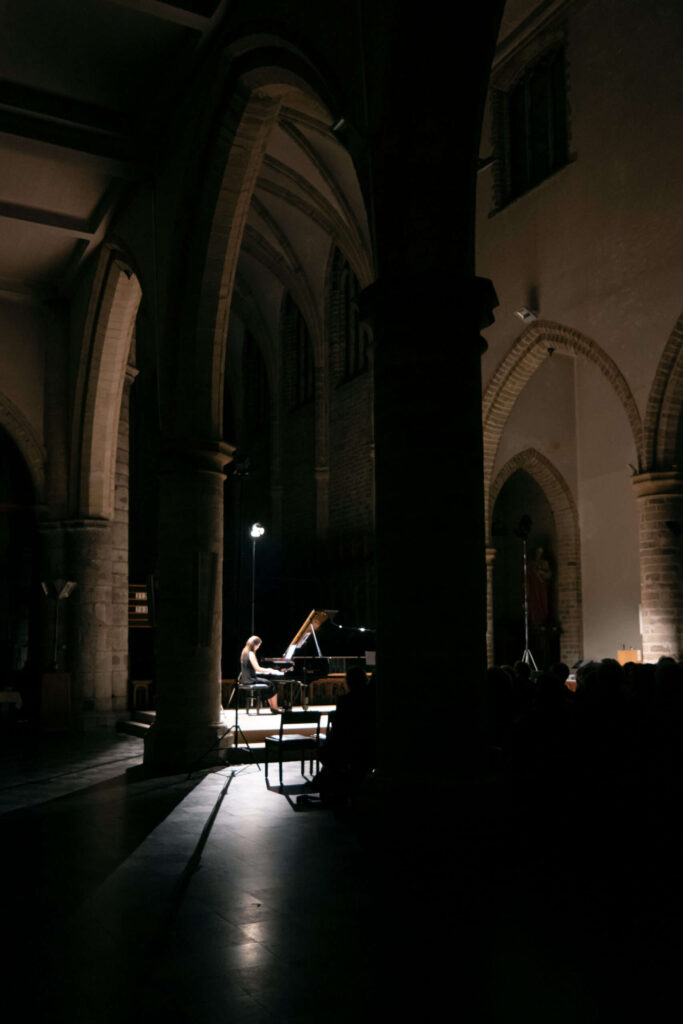
The Flemish Trio Khaldei faced the challenge last night of making it sound the way it must—hard and relentless, but also soft and mysterious. On the composer's explicit instruction, the two musicians had positioned themselves at the "greatest possible" distance from each other on stage. The interpretation by pianist Barbara Baltussen and cellist Francis Mourey aimed to make the duet sound as much like a quarrel as possible. Mourey's outbursts of rage—his feet stamped along—bordered on hysteria. He switched his bow hair by register as if they were weapons. Baltussen deployed inhuman strength from her forearms to claim victory with thundering sound blocks and crashing clusters. It was virtuosity at its finest. Grand Duet for Cello and Piano Another form of virtuosity, this time in team effort, was demonstrated by Trio Khaldei in Ustvvolskaya's
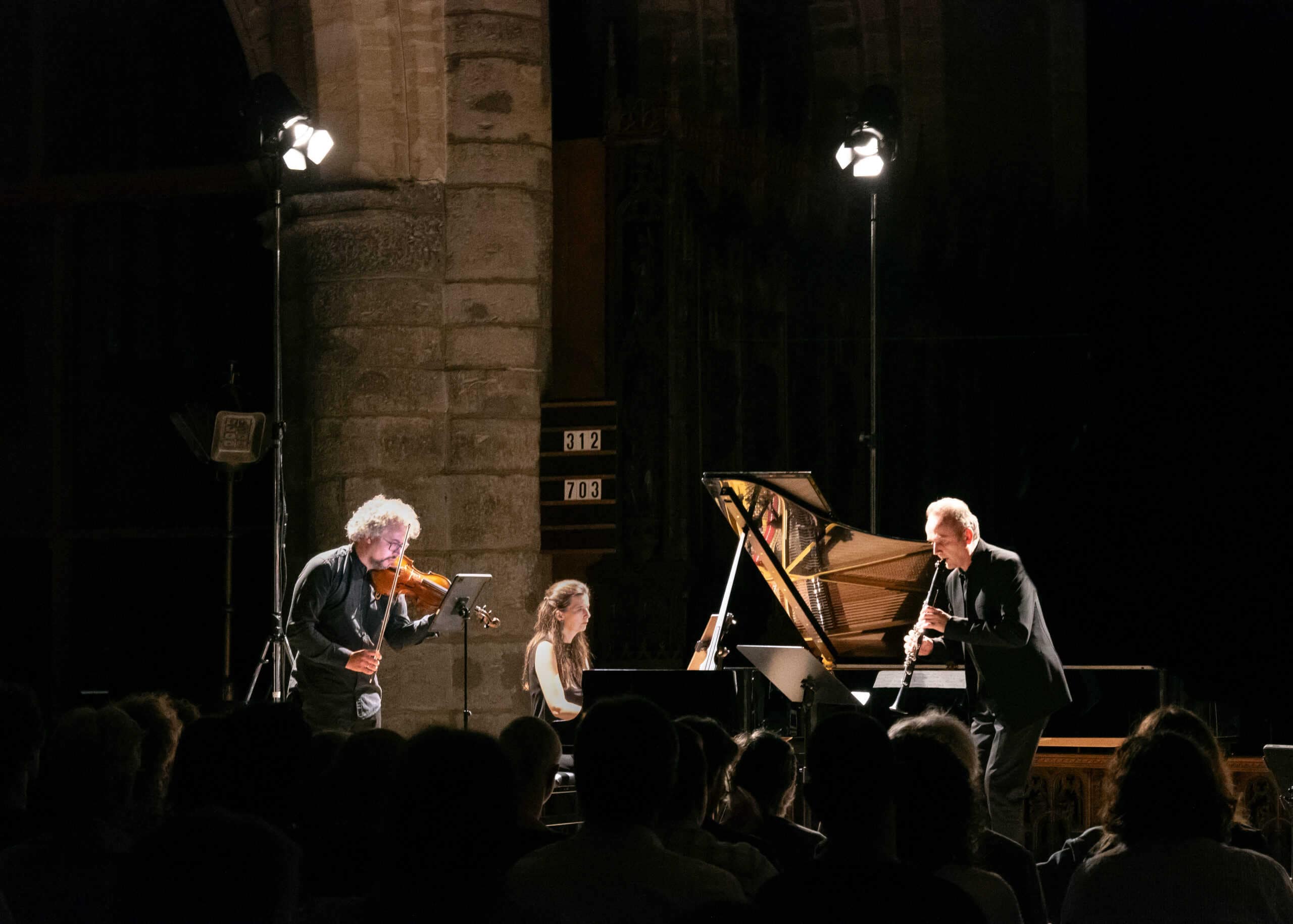
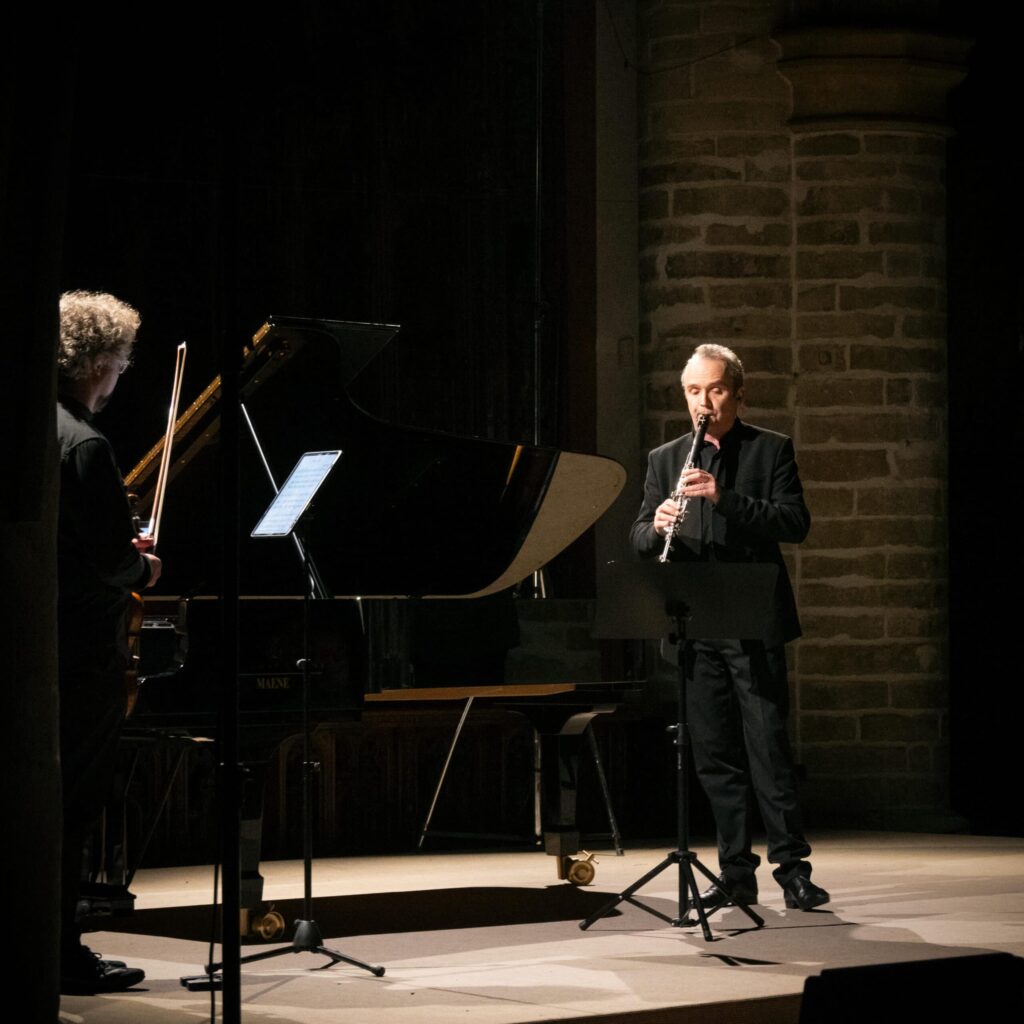
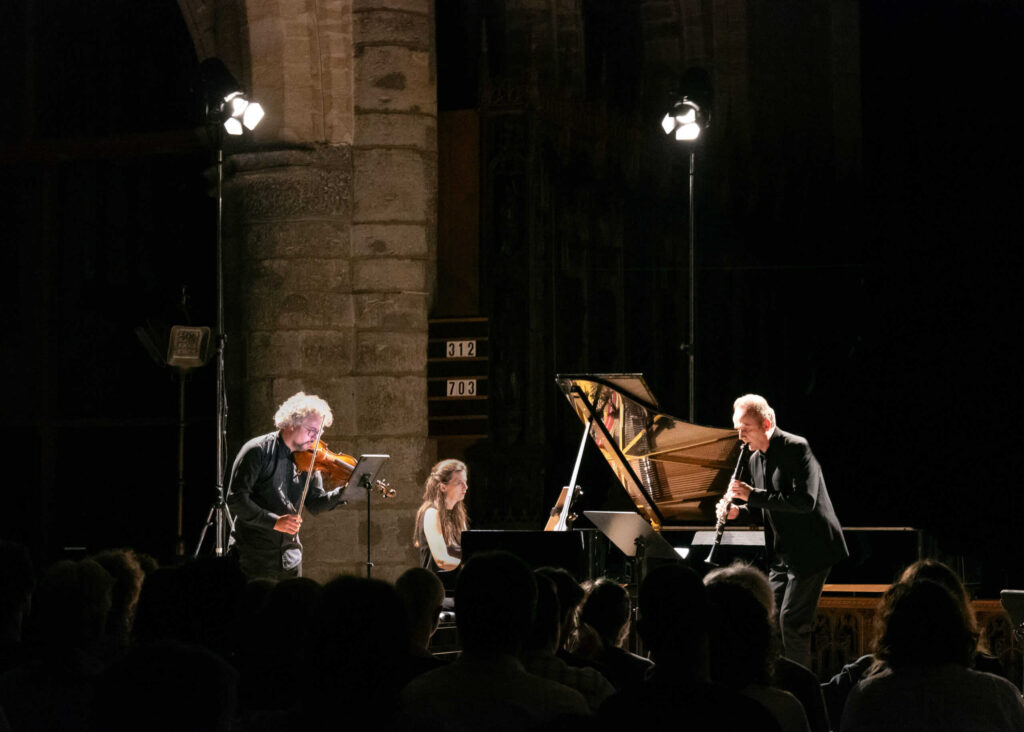
, with Benjamin Dieltjens on clarinet. Clarinet TrioEspressivo The opening section is often interpreted as a political metaphor. A searching melody on solo clarinet is interrupted by an ominous motif in the piano, which in turn triggers increasing dissonance. Violist Pieter Jansen and clarinetist Dieltjens executed clever one-two moves within the polyphony, in which the individual parts imitate, weave around, and comment on each other. Especially in Dolce Sweet Dieltjens performed with pleasant warmth, supported by double stops on the violin and velvety fragments on the piano. Trio Khalei and Benjamin Dieltjens demonstrated that Shostakovich's music can also reach great heights in ensemble playing, something that tends to get overshadowed by the intensity of her other compositions.
The programmers of this concert—bearing the oddly evocative title Merciless—chose to begin with Bartók's Sounds of the Night (from Out of Doors) for piano, a dreamy tale about a summer night in the open air. It was repeated without interruption between Shostakovich's pieces. This altered the listening experience: first as a prelude, then as an intermezzo, and finally as a continuation of the Clarinet Trio. The same piece, but always in a different context. Believe it or not: you hear something different each time.


WHAT: Merciless, Festival 20'21
WHO: Trio Khaldei (Barbara Baltussen [piano], Pieter Jansen [violin], Francis Mourey [cello]), Benjamin Dieltjens [clarinet]
WHERE: Saint Gertrude Church, Leuven
WHEN: Wednesday, September 27, 2023