Opéra Royal de Wallonie presents an intriguing double bill, consisting of the premiere of a new opera by Benoît Mernier (b.1964), Bartleby, combined with the one-act work by Francis Poulenc (1899-1963), The Human Voice.
Bartleby, composed on commission for ORW, is Benoît Mernier's third opera. His two previous operas, Spring Awakening (2007) and The Dispute (2013) were each created at the Muntschouwburg. Mernier also completed Keeping It in the Family, the opera that Philippe Boesmans left unfinished at his death in 2022.
Caricature diminishes tragedy
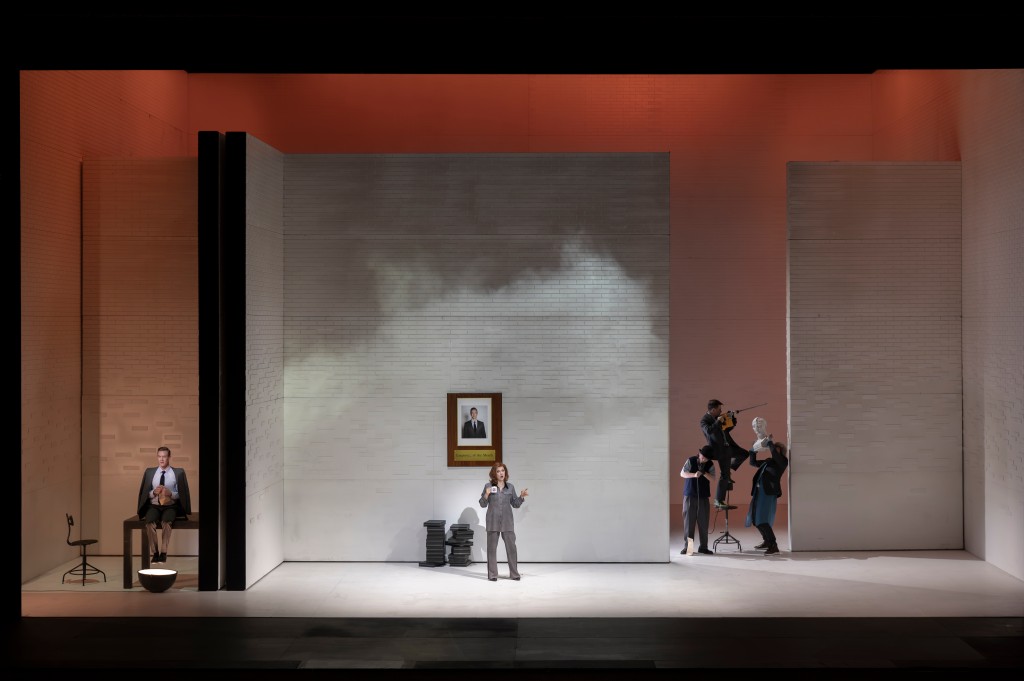
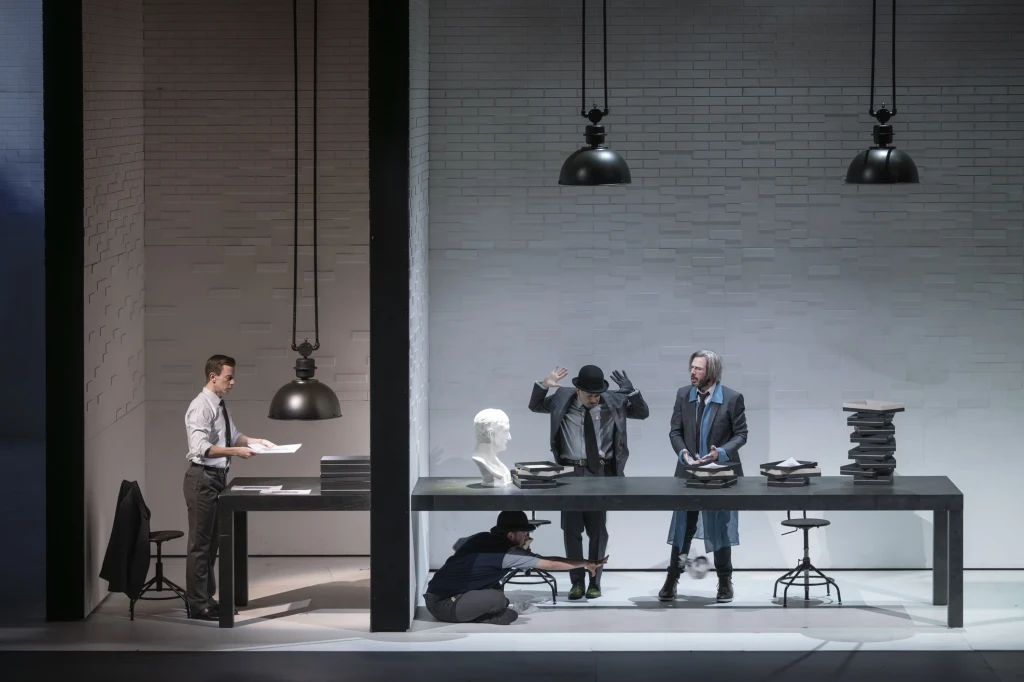
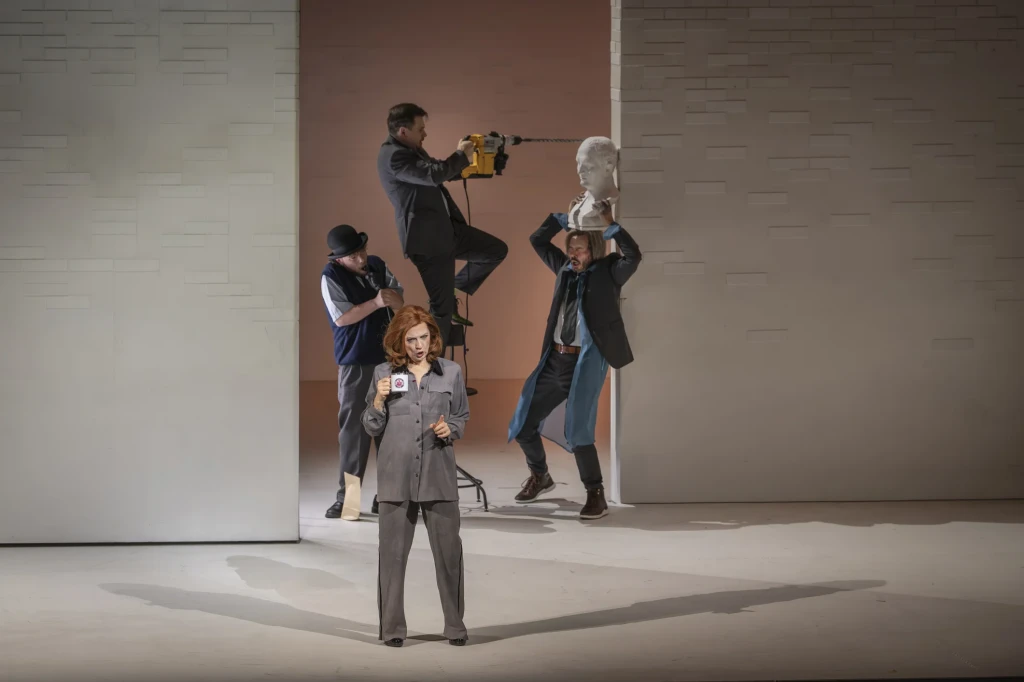
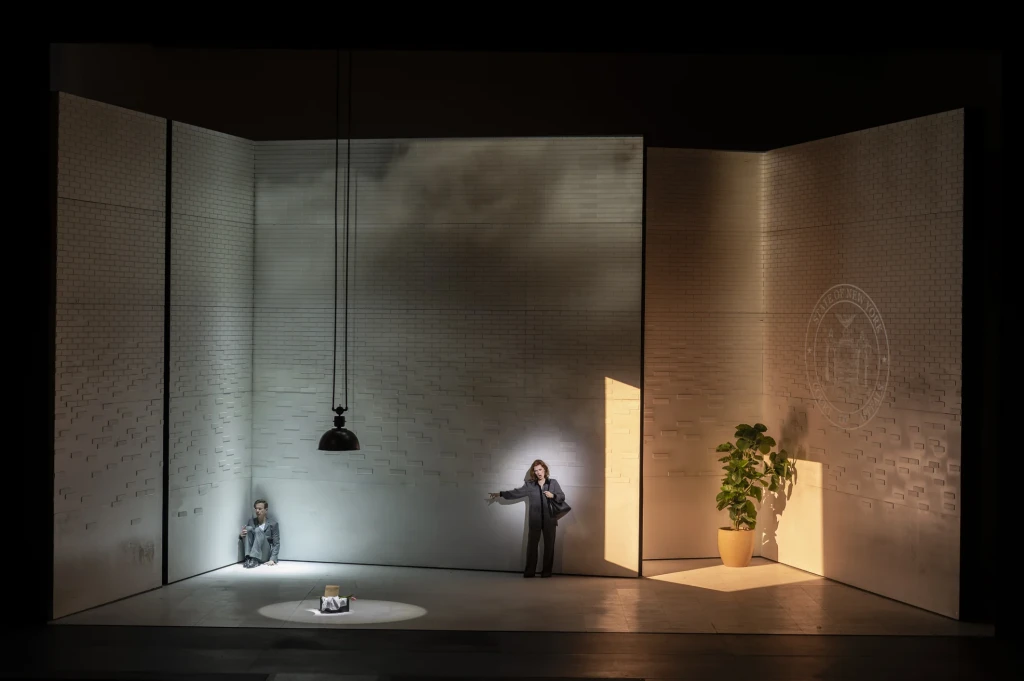
Introducing Bartleby Mernier bases himself on a short story by Herman Melville. The title character is a clerk hired by a law firm because the two office assistants can no longer handle the volume of documents. Librettist Sylvain Fort has the lawyer portrayed by a woman, brilliantly performed by Patricia Ciofi. From the outset, Bartleby proves to be an eccentric who fails to integrate into the office at all, which is perfectly illustrated in the staging by placing him in a side room. Contact with others is ruled out. He makes no effort to fit into the work environment, expressed through his steadfast refusal to participate in any activity, always repeating: "I would prefer not to".
The lawyer also finds no way to reach the man, who ultimately ends up tragically locked away like a madman. It's a pity that the staging allowed itself to be seduced by far too many comic gags for what is otherwise a gripping story. The two office assistants, Turkey and Nippers, are portrayed so caricaturally that the narrative teeters on the edge of farce. The fragmentary nature of the opera in short scenes further emphasizes these foolish antics, thereby minimizing Bartleby's inscrutability. A missed opportunity, because ultimately that is the essence and, moreover, the aspect that seamlessly connects with the second part of the production.
Emotional intensity
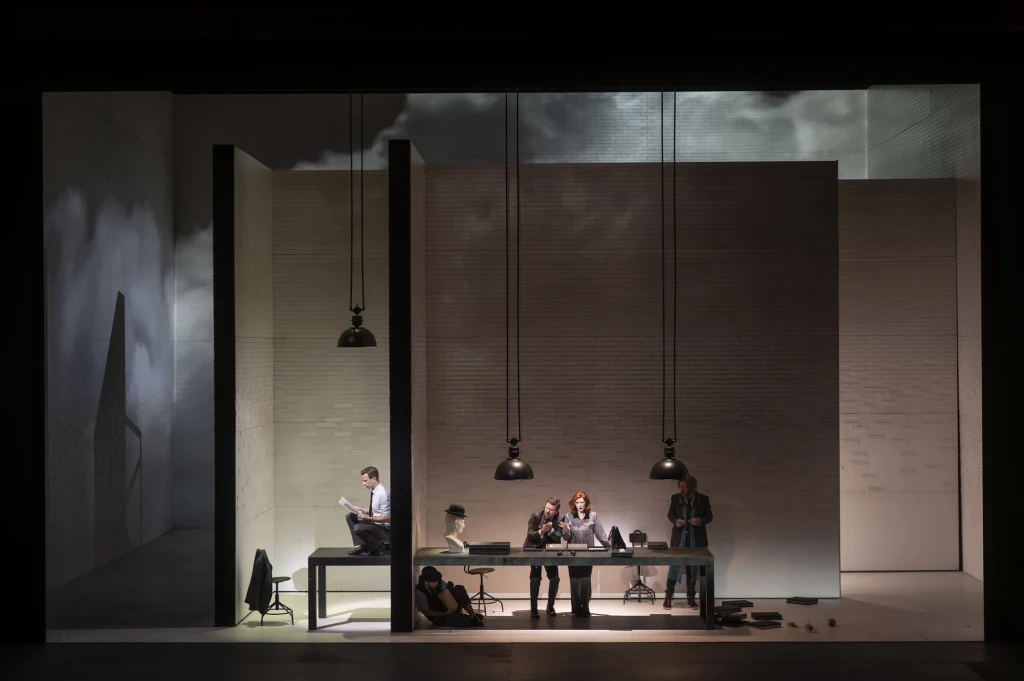
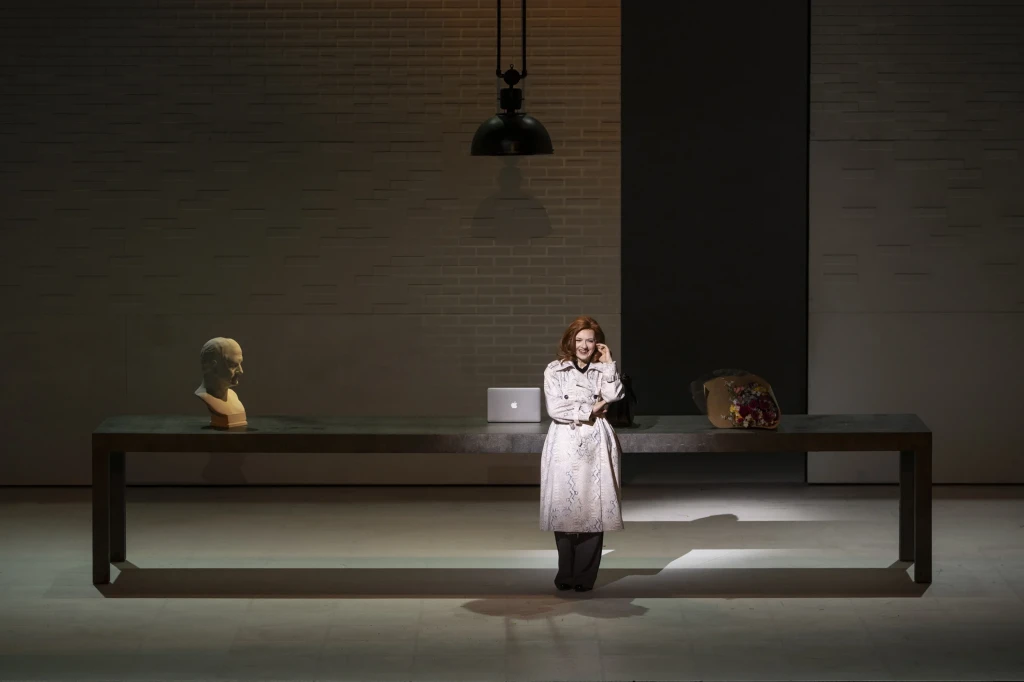
In The Human Voice by Francis Poulenc, we are confronted with an absolute lack of communication, this time in the form of a private conversation. A woman calls her ex-partner and recalls memories of their past relationship. The line isn't great, but there's also considerable static in the conversation's content, and the growing realization of the other's unreachability becomes increasingly apparent. The urban evening atmosphere of the set emphasizes the loneliness. Anna Caterina Antonacci embodies herself as a true tragedienne in the despair and lostness of the woman. She commands the long solo part vocally and brings the opera evening emotionally to a whole of loss and abandonment.
Austere Staging
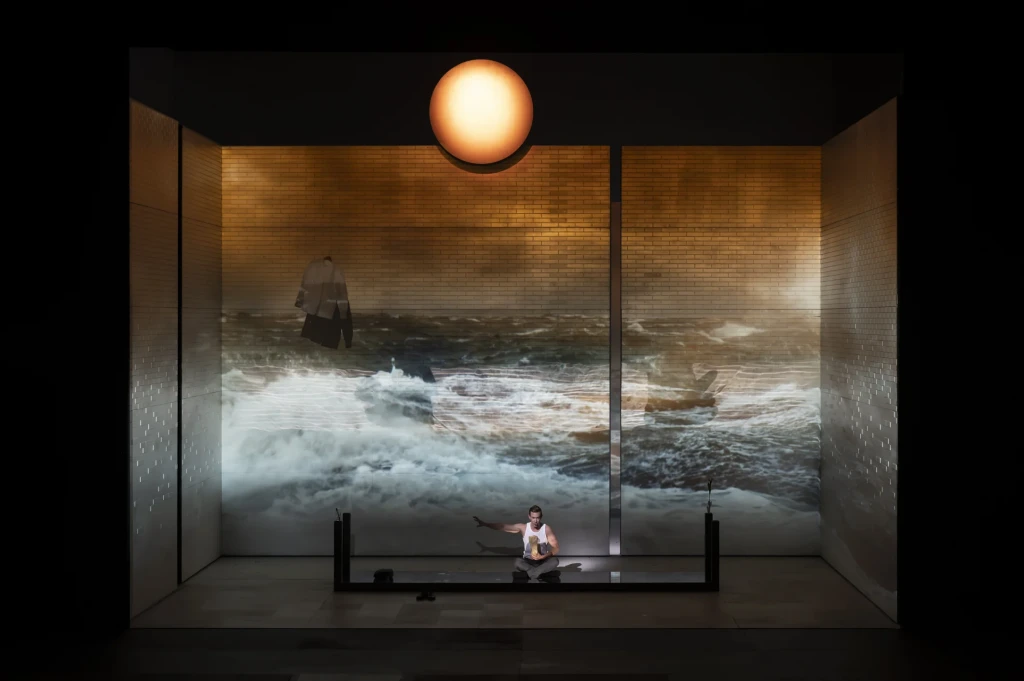
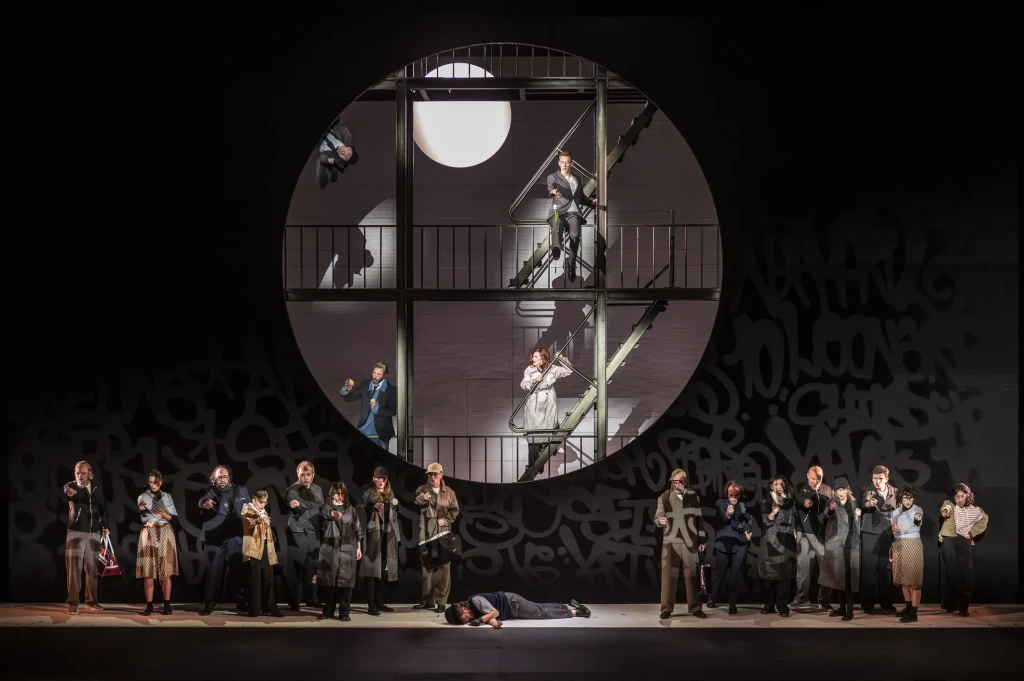
Vincent Boussard opts for absolute austerity, both in the set design (Vincent Lemaire) and in his direction of the actors. A sober and modern interior can serve both parts with adapted details. Damien Pass and Santiago Bürgi play the roles of Turkey and Nippers comically but in this production – as mentioned earlier – with cheap slapstick humor. Patrizia Ciofi and Anna Caterina Antonacci perform with remarkable authenticity, and Edward Nelson delivers an admirable performance as the unworldly and withdrawn Bartleby.
Vocally, all roles are excellently cast, and in Mernier's contemporary composition, the voices achieve perfect expressiveness. The beautiful passage in which Bartleby sings about roses and the grave recalls the lyricism of Benjamin Britten, and the final scene echoes the bittersweet ending of Stravinsky's Rake's Progress. Mernier has composed some truly lovely – particularly lyrical – passages for the choir, which incidentally repeatedly sounds like a kind of background chorus in Bartleby's "I would prefer not to" refrain. The orchestral language reinforces the emotional intensity with frequent emphasis on particular instruments in the brass and percussion sections, masterfully executed by conductor Karen Kamensek with the right nuances and emotional power. An opera evening of unusually strong intensity.