In Milan in 1889, Giacomo Puccini sees the play Tosca by Victorien Sardou performed by the leading actress of the moment, Sarah Bernhardt. The sensational effects of Victorien Sardou's grand guignol theater about the Roman diva and her beloved artist who, in Rome around 1800, fall victim to the authoritarian regime of police commissioner Scarpia, fascinate the composer. He sees the piece again in Florence and decides in November 1895 to compose an opera based on it. The Roman setting and atmosphere seem to him to offer a wealth of musical possibilities.
The brutal murder of Pasolini and the murky role of young Giuseppe Pelosi form an important subplot in Rafael R. Villalobos's staging of Tosca. It is less far-fetched than it may initially appear, at least when it is developed as consistently and with such logical daring as this director does. He anchors his production in motifs that appear in the opera: Rome, sadomasochism, resistance to a dominant regime, artistic freedom. The artist Pier Paolo Pasolini, as an openly visible representative of the gay scene, became a victim of homophobic hatred in 1975 on the beach of Ostia. In the director's view, this is as horrifying a crime of sadistic abuse of power as the cruelty inflicted on Cavaradossi and Tosca in historical Rome.
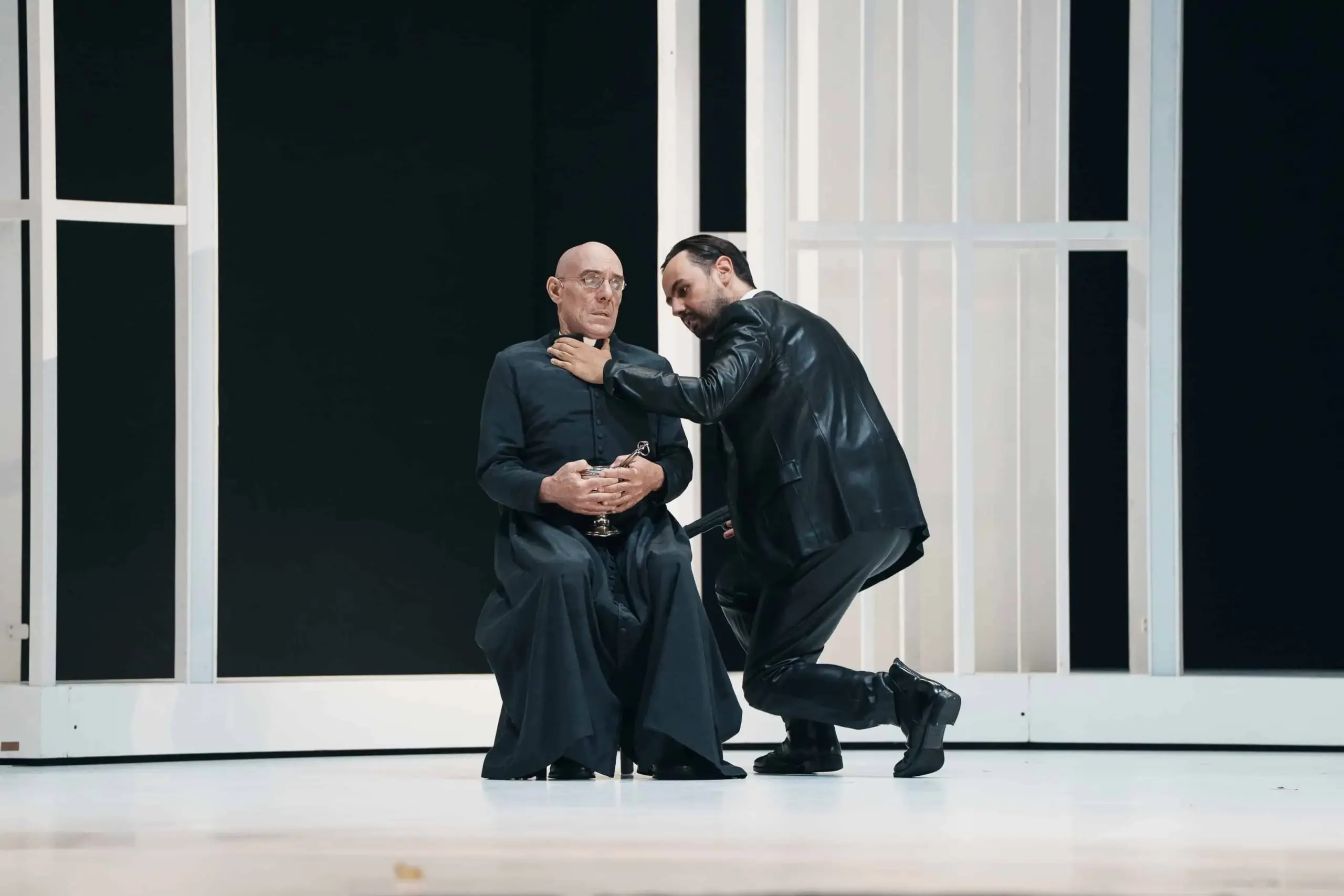
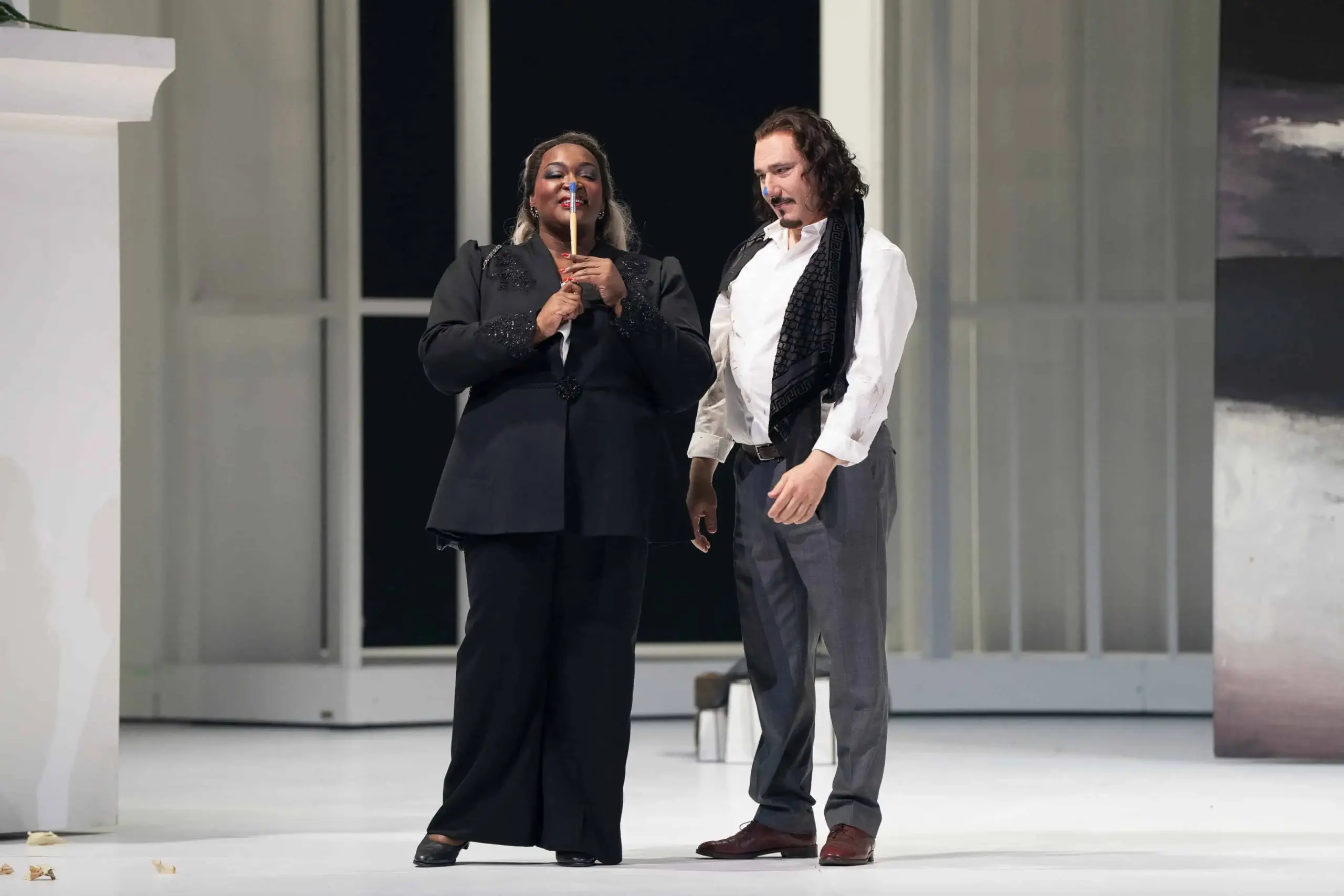
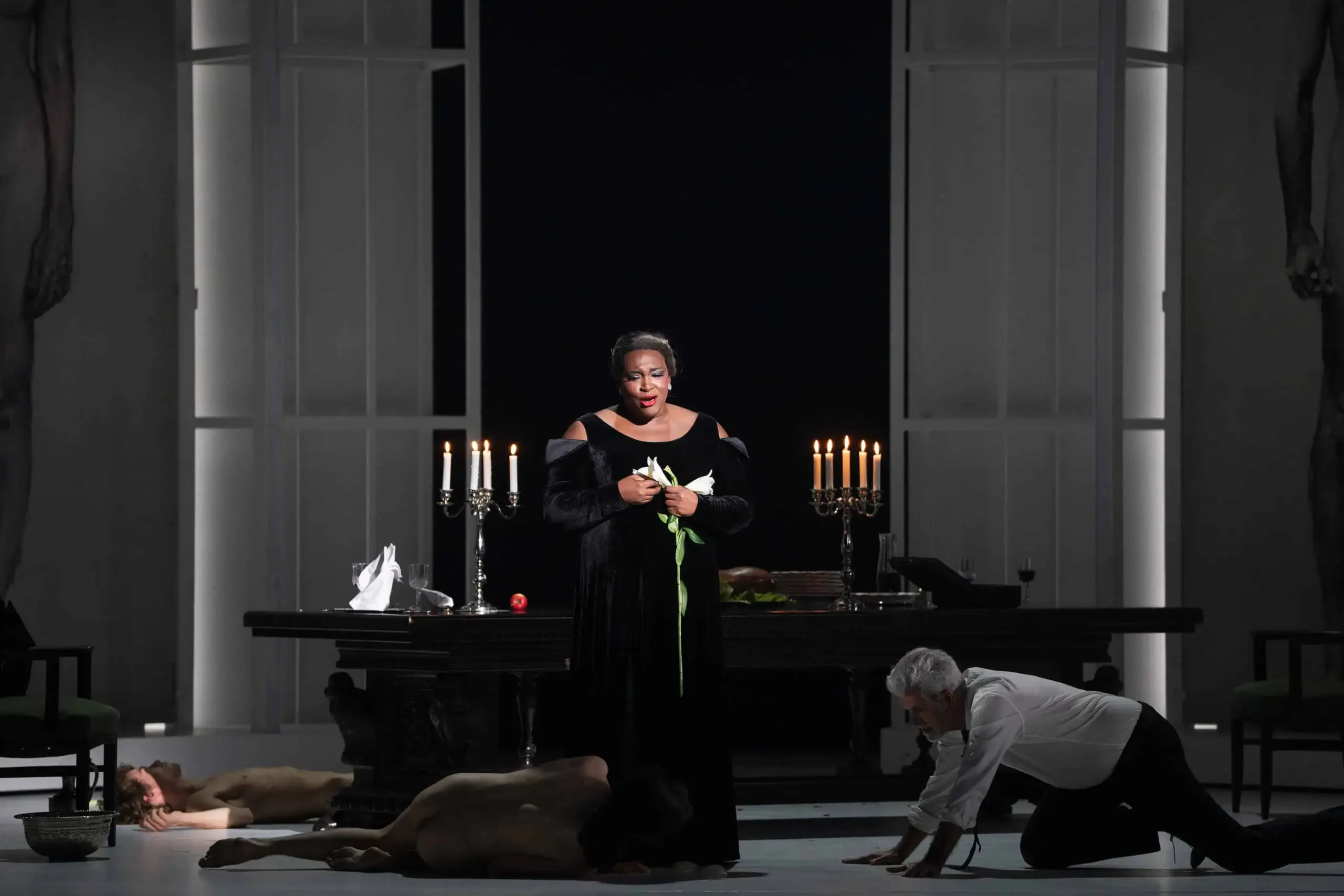
In each act, the references to the gay world are unmistakably present. Yet they rarely prevent us from grasping the essence of Puccini's Tosca, a veristic and passionate drama. In the first act, in the church of Sant'Andrea della Valle, where Cavaradossi paints the portrait of Mary Magdalene and the Te Deum is sung, you cannot escape the altar boys and immediately the "boundary-crossing" tendencies of the sacristan. Before the second act begins, director Rafael R. Villalobos adds an extra scene in a box with a lengthy dialogue between Pasolini and his friend, which can be interpreted as a kind of manifesto of his life philosophy as an artist and gentle man—a stark contrast to the brutal and frightening second act. Thanks to the acting of those playing Scarpia and Tosca, the tension is raised to a spine-chilling pitch, especially from "Vissi d'arte, vissi d'amore" onwards, the moment when Tosca has decided that Scarpia's kiss will be his death kiss. In this act the gay scene is sometimes portrayed with excessive eagerness and too explicitly, but it remains in tune with the chosen vision. The final image of Tosca's "death" in the third act is such a poetic image that it can barely leave one unmoved. In this respect too, it remains true to Pasolini, especially with the quote: "I am an unbeliever, but an unbeliever who is homesick for faith." This quote and, moreover, other historical facts are often—purposefully again—projected as a kind of "intertext" between scenes.
A Successful Total Spectacle
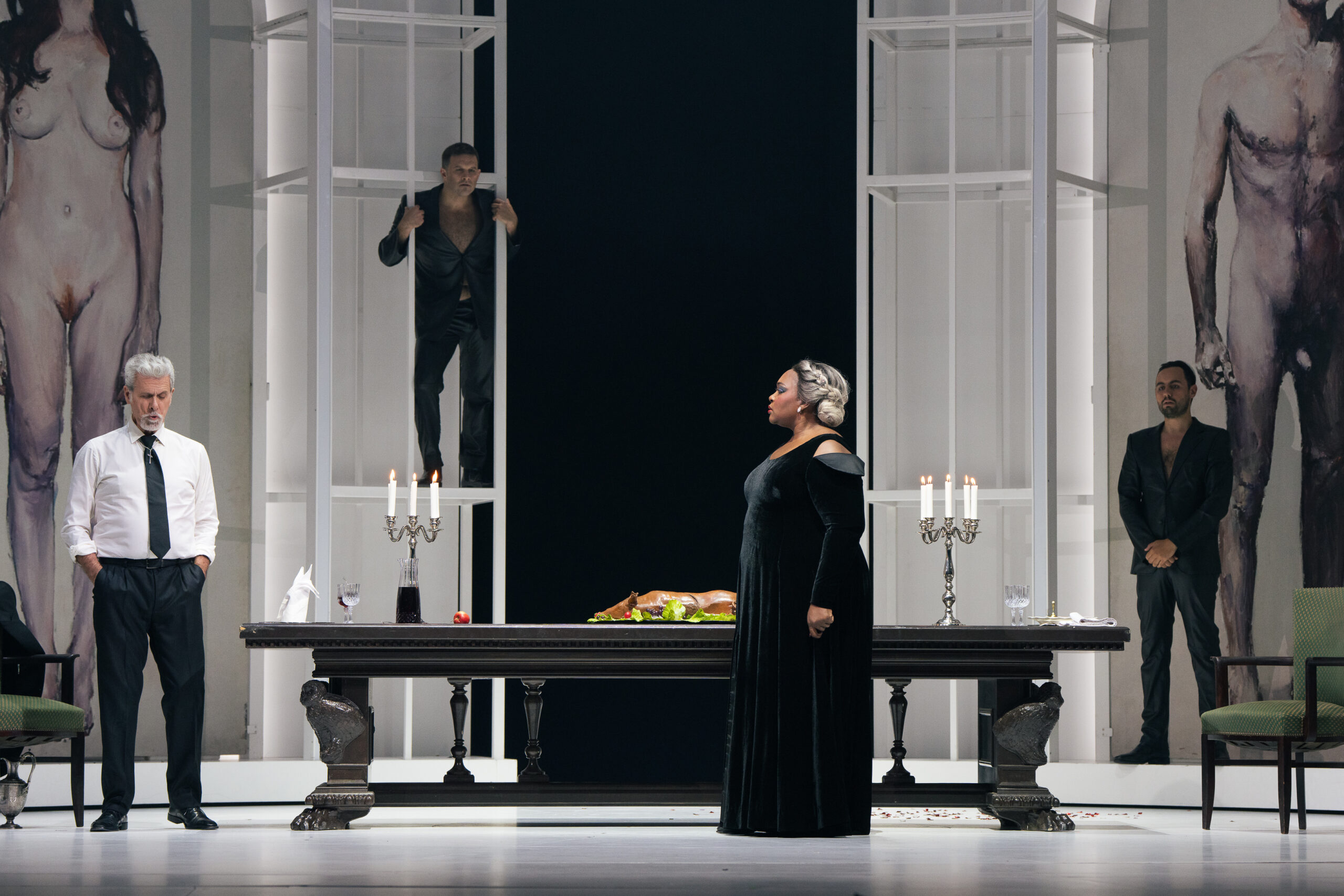
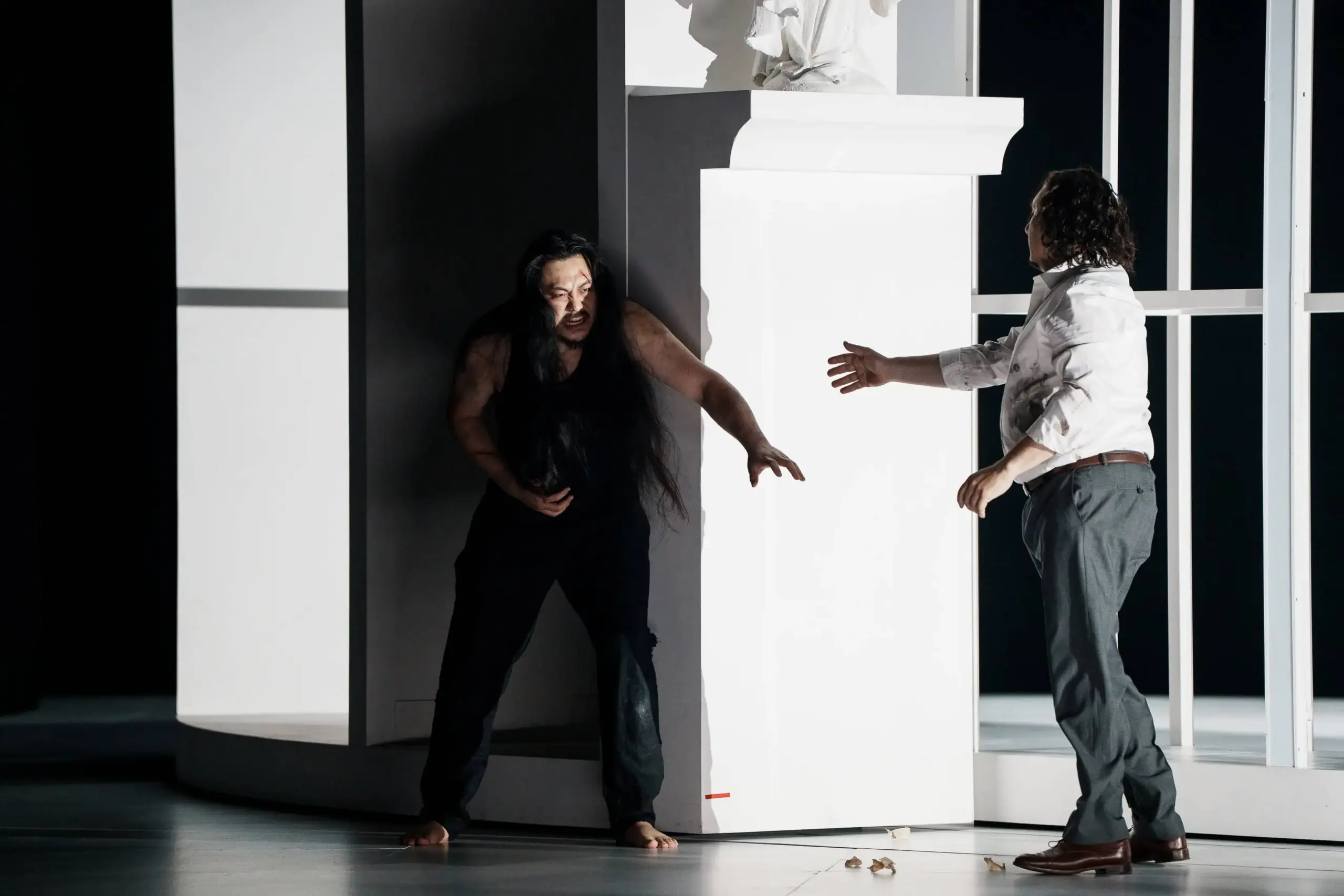
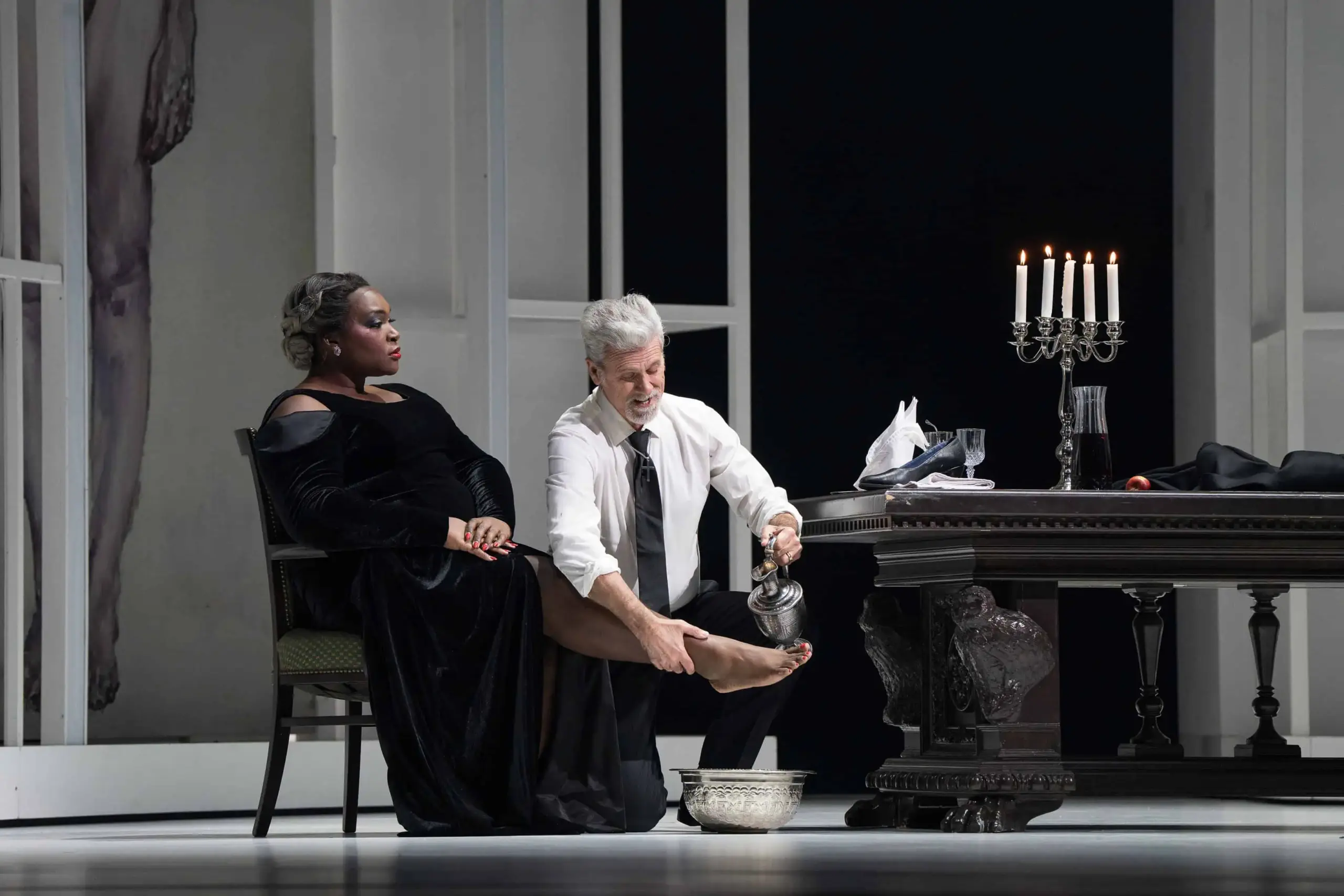
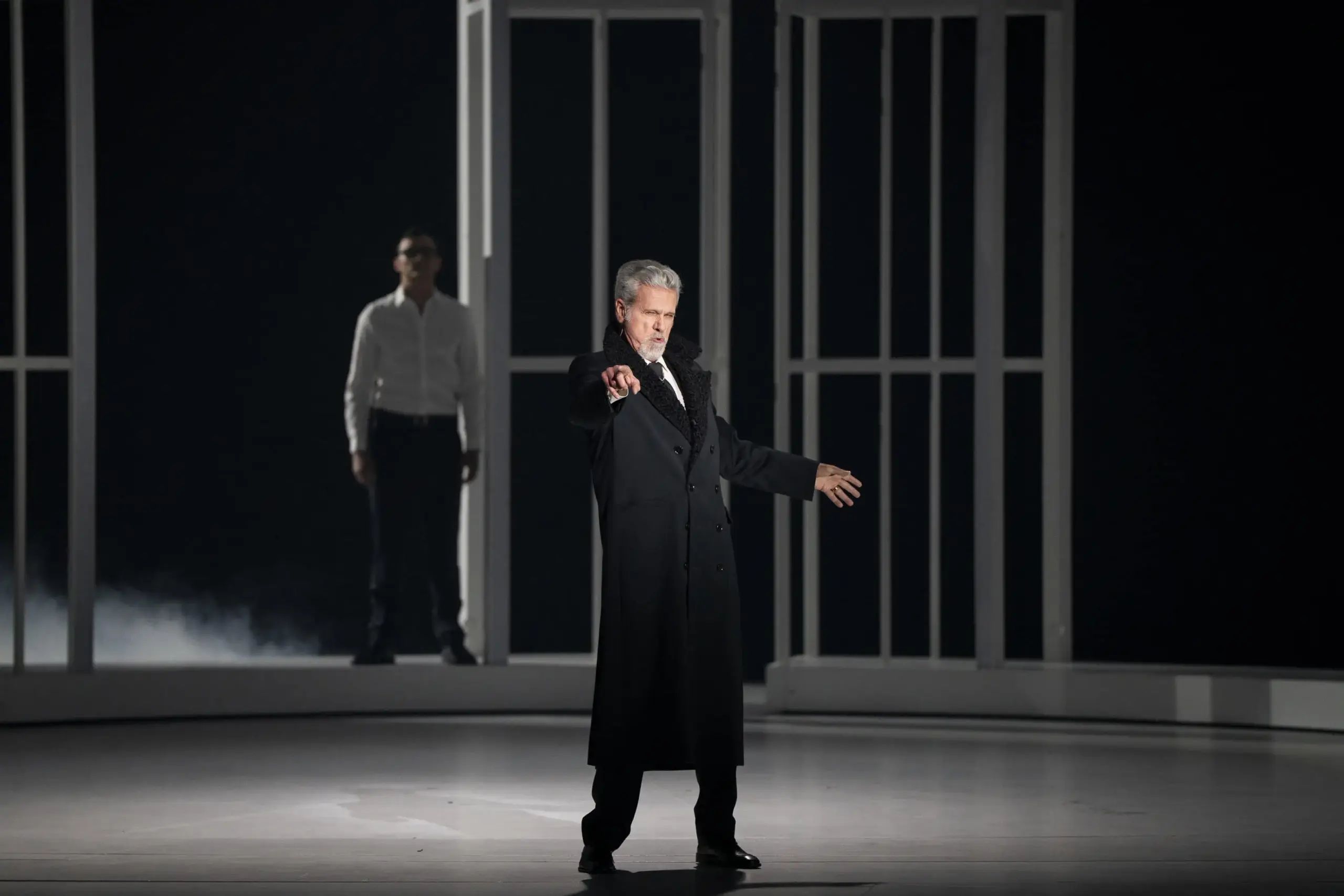
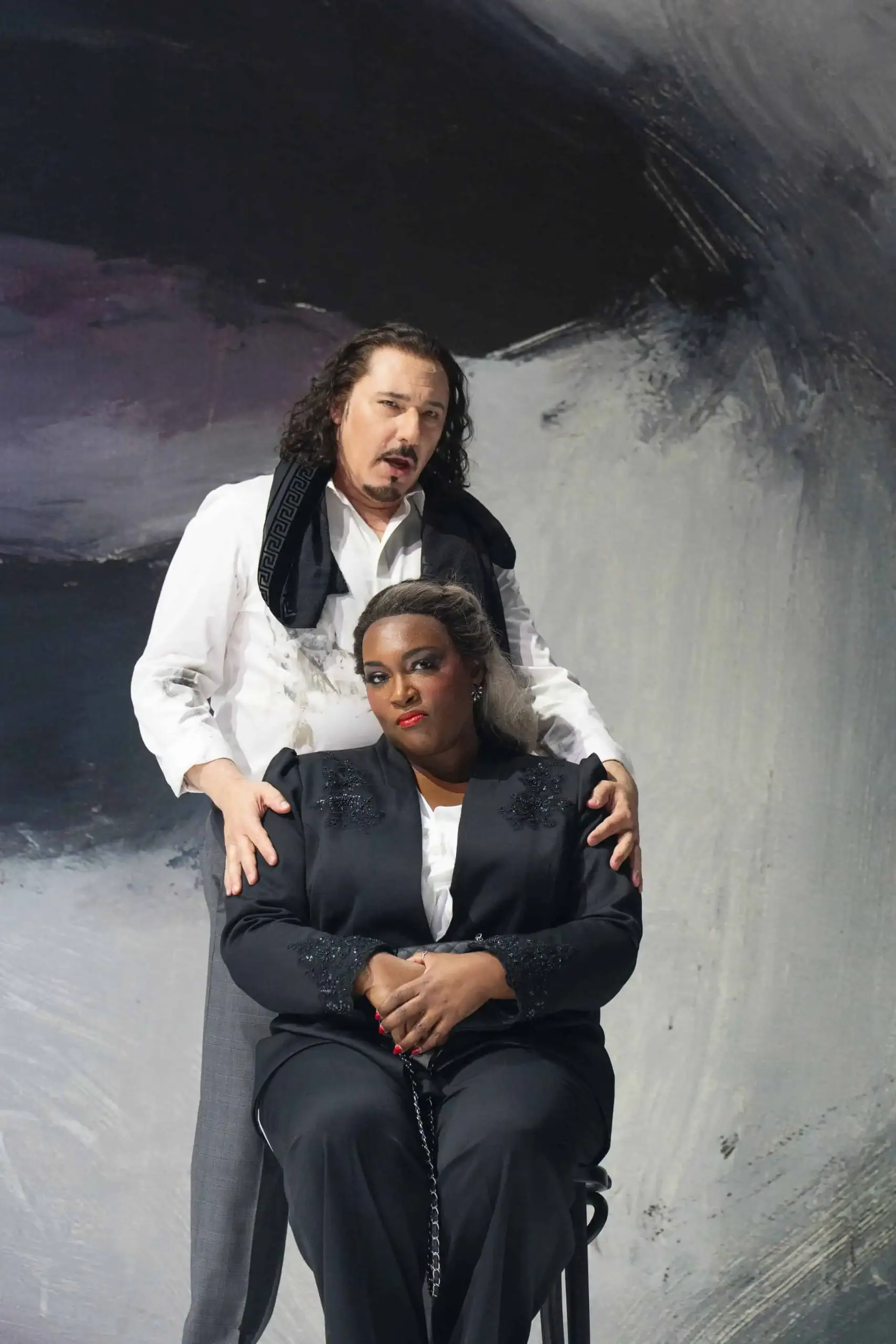
The rather abstract set with an evocation of church arches depicts the interior of the church in the first act. The painting Cavaradossi is working on is lowered into it, and the image of the Madonna is by no means absent. In Scarpia's palace hall, the arches are filled with nude portraits. In the third act, especially the lighting makes the ominous emptiness even more threatening. Leah Hawkins plays on her diva image nicely from her appearance in the church. Her acting performance is particularly convincing, her vocal performance somewhat less so. At too high a volume, the voice is occasionally marred by an ugly throat sound or vibrato, and the famous Vissi d'arte could have had more nuance. But as a dramatic soprano, she delivers a gripping performance right through to the spine-chilling finale. The same goes for Lucio Gallo. As Scarpia, cruelty suits him to a T, but the vocal power shows signs of wear here and there. Stefano La Colla, with his radiant tenor voice, is a convincing Cavaradossi, who takes a moving leave of life and love in And the stars shone brightlyConductor Jordan de Souza drives the orchestra toward finesse and detail to realize Puccini's exceptionally richly colored orchestration, making the performance an absolutely impressive total spectacle.