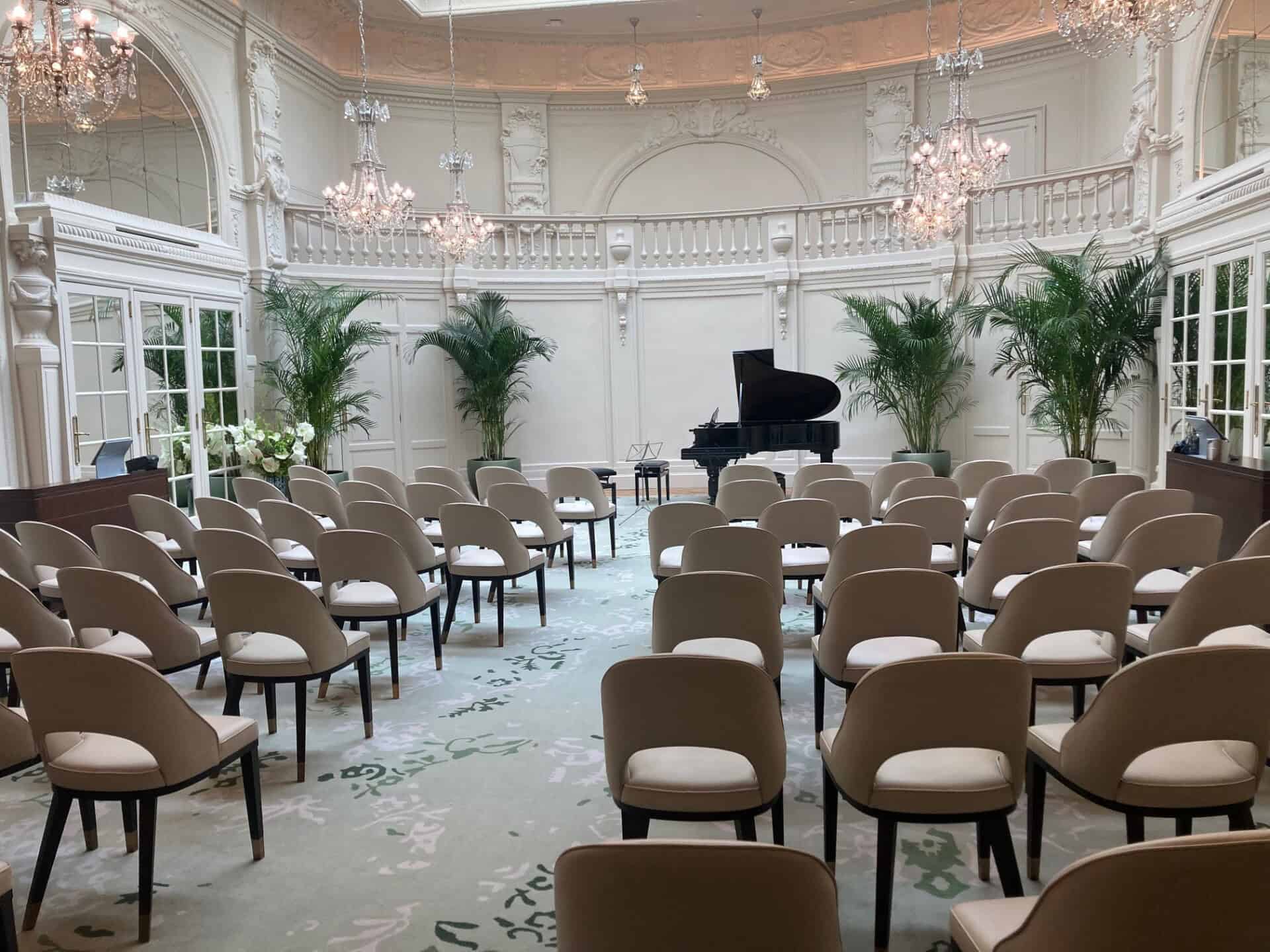
FP 138 is Poulenc's Trio Suite 'L'invitation au château'. Replace 'château' with 'Salle Élisabeth' at the prestigious Corinthia hotel on Brussels' Rue Royale, and you find yourself witnessing the continuation of the 'Concerts Astoria', which hosted Trio Kaliko on the first Sunday of June.
'Kaliko' is the name for a calico cat. Its three colors—black, white, and red—symbolize three instrumental families, three nationalities, and three musical worlds. And that is precisely what Trio Kaliko is: violin, clarinet, and piano—a violinist from Brussels, a Spanish clarinetist, and a pianist with Italian roots, born in Mantua, with the evocative name Mantovani.
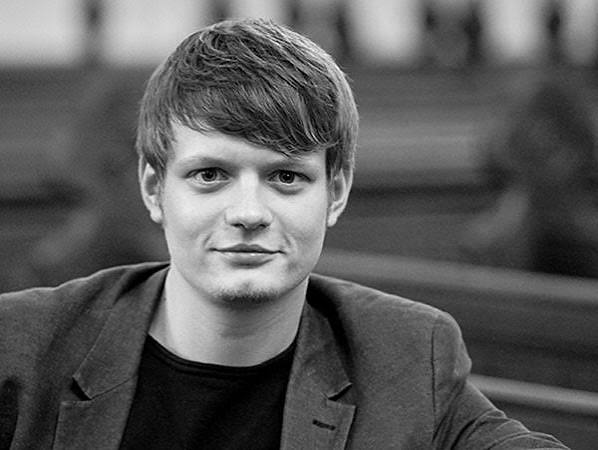
Only one name appeared on the program, Francis Poulenc (1899-1963), yet the many facets of his musical language far exceed the number three. We heard a broad palette of humor, irony, exuberance, seriousness, sadness, and melancholy. Nicolas Dupont sees it clearly: like Mozart, Poulenc can swing from the highest highs to the deepest lows. No instrument can laugh, tease, jest, and lament like the clarinet, as Alba Mayonga Rodrigo demonstrated masterfully. We had heard her before at the MIM, but with this acoustics we had no idea of the power she draws from her instrument. It's no wonder she's a permanent member of the Royal Music Chapel of The Guides.
Clarinet and piano, piano solo, their own version for violin and clarinet of the original Sonata for two clarinets, violin and piano, and as finale all three together—so many combinations, so many sound worlds. A feast for the ear and a feast for the eye in this décor that is a symbiosis of écru and olive green. Even the musicians' outfits were coordinated with the wall and carpet colors, with only the grand piano, mirrored doors, and crystal chandeliers standing apart. For each piece, Nicolas Dupont provided expert, detailed commentary. Yet he drew much more from his dark, matte Pedrazzini from 1920, a copy of a Pressenda on loan, than from his voice and his English.
Light and Dark
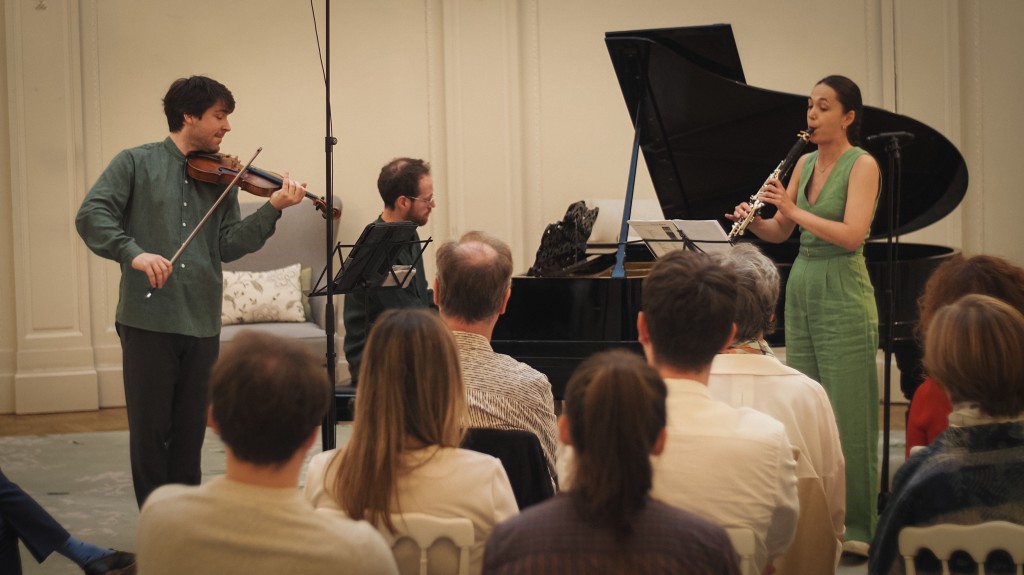 The pinnacle of deeply felt tragedy was the celebrated Violin Sonata FP 119 from the war years 1942/43. It is dedicated to Federico García Lorca, who had been murdered shortly before during the Spanish Civil War. The historical context is evident in the naming of the movements as 'Allegro con fuoco' or 'Presto tragico', in the score markings and, especially, in the music itself. Fierce rhythms, dramatic outbursts like gunfire or cannon salvos, sudden pauses find their counterpart in the guitar-imitating pizzicati of the Intermezzo, for 'the guitar makes dreams weep'. The foundation for all this beauty was the piano of Marco Mantovani. His full and sonorous touch allowed every melodic line to shine.
After the drama of the Violin Sonata, 'L'invitation au château' led back to the lighter, more playful Poulenc, who felt at home in the world of theater. For the stage music of the play of the same name by Jean Anouilh, he composed a series of short scenes and character pieces that follow each other at high speed. And even this colorful mosaic of waltzes, a march, a tango, a polka, a tarantella, and other lightness cannot hide a hint of seriousness and nostalgia.