
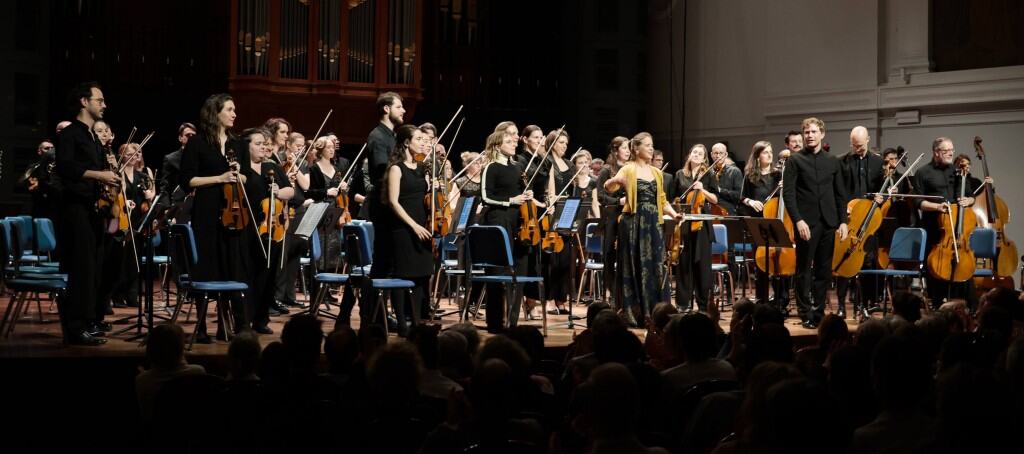
Symphony Orchestra Continuo is the alumni and staff orchestra of Ghent University. It operates alongside the Ghent University Symphony Orchestra (GUSO), which consists mainly of students.
With over ten thousand employees, UGent is not only the city's largest employer, but also maintains various ensembles, along with a choir and a brass band. Symphony Orchestra Continuo rehearses weekly and performs two programs per year, with two concerts in January and two in June.
Opus 47
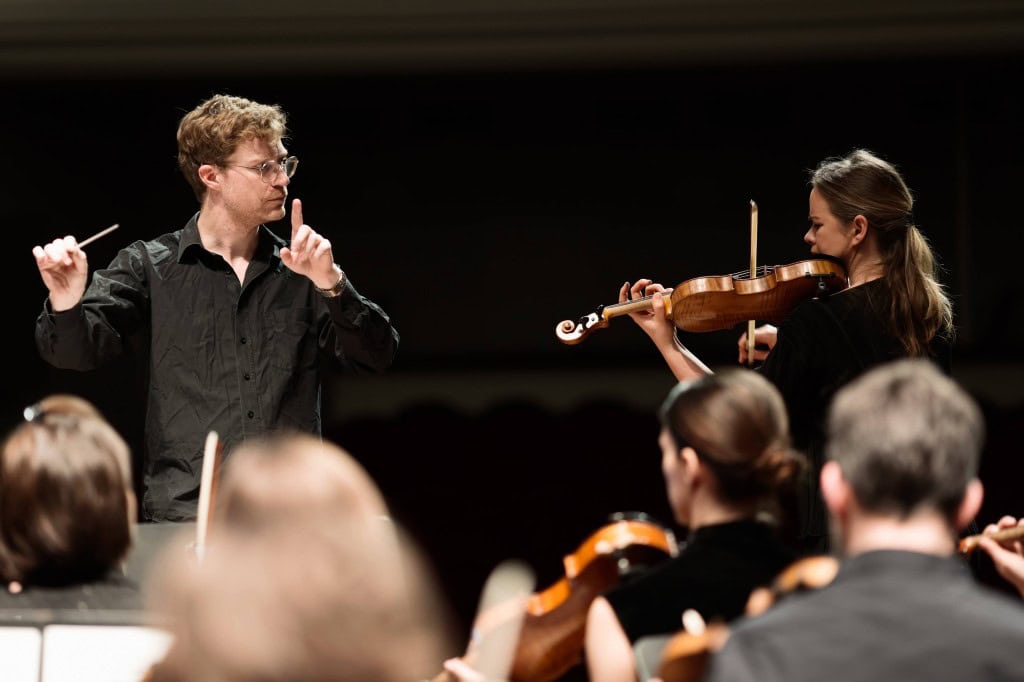
Continuo is celebrating ten years this year. Since 2022, I've already attended three concerts and an opera. It all started ten years ago with a brainstorming session, with Klara Continuo in the background... Conductor Kevin Hendrickx has been there from the beginning. He's a chemist, lecturer at UGent, but also a professional conductor.
A Continuo concert is more than just listening pleasure. There's always a concept, a title, and an extensive program booklet with beautiful layout. You don't see that often these days, even at concert halls like De Bijloke you get a bare-bones program and have to make do with a QR code. The concept of these winter concerts is "opus 47." Both Sibelius's violin concerto and Shostakovich's Fifth have opus number 47. A clever detail that links very different compositions together. The presenter who introduces the program in a small room beforehand is none other than composer Daan Janssens, who also plays as a violist in the orchestra.
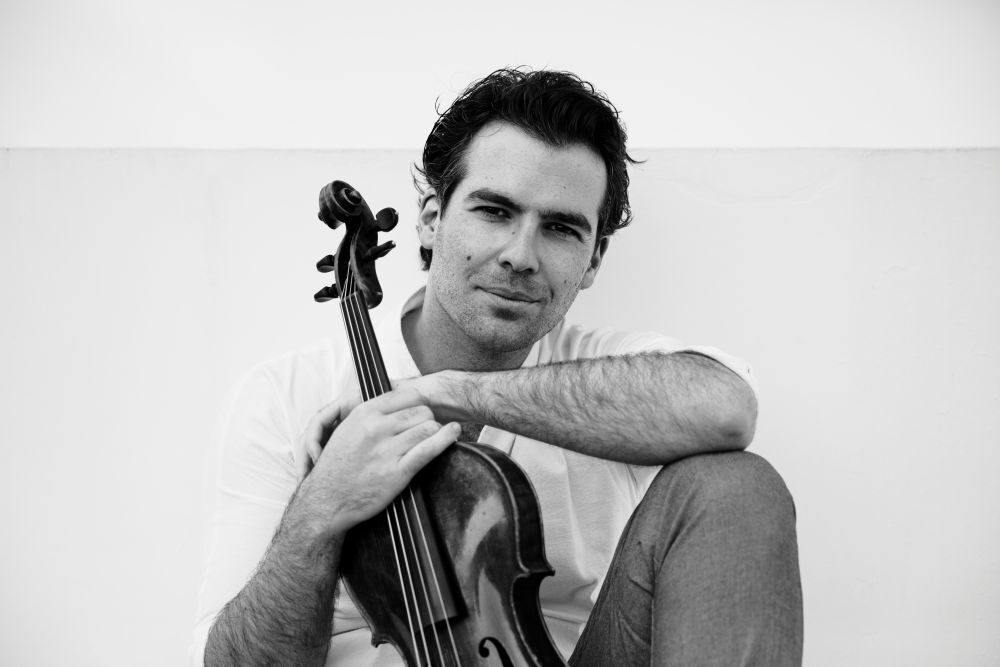
Lisa Jacobs
Dutch violinist Lisa Jacobs, born in 1985, performed as a soloist with the Concertgebouw Orchestra under conductor Riccardo Chailly at the age of seventeen. She has won prizes in international competitions, worked with great conductors, received many glowing reviews, and teaches at the conservatories of The Hague and Ghent. It's remarkable that a big name like Lisa Jacobs makes time for two concerts with a non-professional orchestra. Jean Sibelius's violin concerto is extraordinarily difficult, especially the final movement. But Jacobs plays masterfully, and without virtuosic display, she lays bare the northern soul of Sibelius.
She begins the icy melody of the first movement with a slight vibrato, as do almost all soloists in this piece. One violinist did it differently once, and I'll never forget it. Raw and without vibrato, listen to Anne-Sophie Mutter's recording with the Staatskapelle Dresden from 1995 on Deutsche Grammophon. The finest rendition of the Sibelius concerto I've ever heard. After that, Jacobs plays an encore, the Adagio from Bach's first solo sonata for violin. It seems as if she's presenting her calling card with it. Not easy to play such a slow and polyphonic piece so controlled and serene as an encore.
Second clarinet
You shouldn't judge Symphony Orchestra Continuo with the ears of a professional critic. It sometimes sounds a bit messy, entries and intonation aren't always perfect. The slow section of Sibelius's violin concerto begins with a melody for two clarinets. Here the second overpowered the first. Now that's something different, I thought.
In any case, these are largely true music lovers. In the five concerts I've attended since 2022, you can feel the enthusiasm, the dedication, and certainly the professional direction of conductor Kevin Hendrickx every time. I wonder why Kevin Hendrickx never became a full-time conductor. Would he be even better as a chemist than as a conductor?
Authoritarian and repressive
Dmitri Shostakovich's Fifth Symphony is a sonic embodiment of the authoritarian Soviet regime. You hear the bleak reality of the 1930s in it, the repressive system and the constant fear. At the same time, you occasionally hear the hope that often rings out at the end in a major chord. At the premiere on November 21, 1937, the audience grasped the underlying message in the music. In the summer of 1937, the Great Terror had begun in the Soviet Union. Stalin's Great Purge led to the execution of hundreds of thousands of civilians.
Today, Continuo still has the audience in its grip; everyone was moved. Let this symphony by Shostakovich resound as a tribute, was the mission of opus 47. A tribute to all those who today still live under the violence of repression and terror.
Opus 47 was quite an experience and makes the listener aware of the atrocities of certain regimes. Even today, state terror exists, as in Iran. Hopefully, the protesters in Tehran also have a glimmer of hope like in the symphony. Hope for a regime change, after—yes—47 years.