In the nick of time, De Munt celebrates Jacques Offenbach's 200th birthday (1819-1880) with a performance of his only opera Les Contes d'Hoffmann.
Offenbach is primarily known as the inventor of operetta. He wrote about a hundred of them, many of which have stood the test of time. This brought him great fame in Paris and the rest of Europe. But was his desire to go down in history not only as an operetta composer but also as the composer of at least one serious opera the reason he undertook his magnum opus Les Contes d'Hoffmann near the end of his life?
Offenbach would not live to see the premiere in February 1881. He departed this mortal coil four months earlier, before he could finish the score. This caused considerable confusion even after his death. Without an authorized score, everyone did as they pleased—entire acts were sometimes cut or added. In recent years, however, musicologists have begun to gain more control over the material, and we can now speak of a reasonably definitive version.
Despite this chaotic transmission, Hoffmann has maintained itself effortlessly in the repertoire, thanks to a good story, refined orchestration, and a few immortal melodies that everyone can easily sing along to.
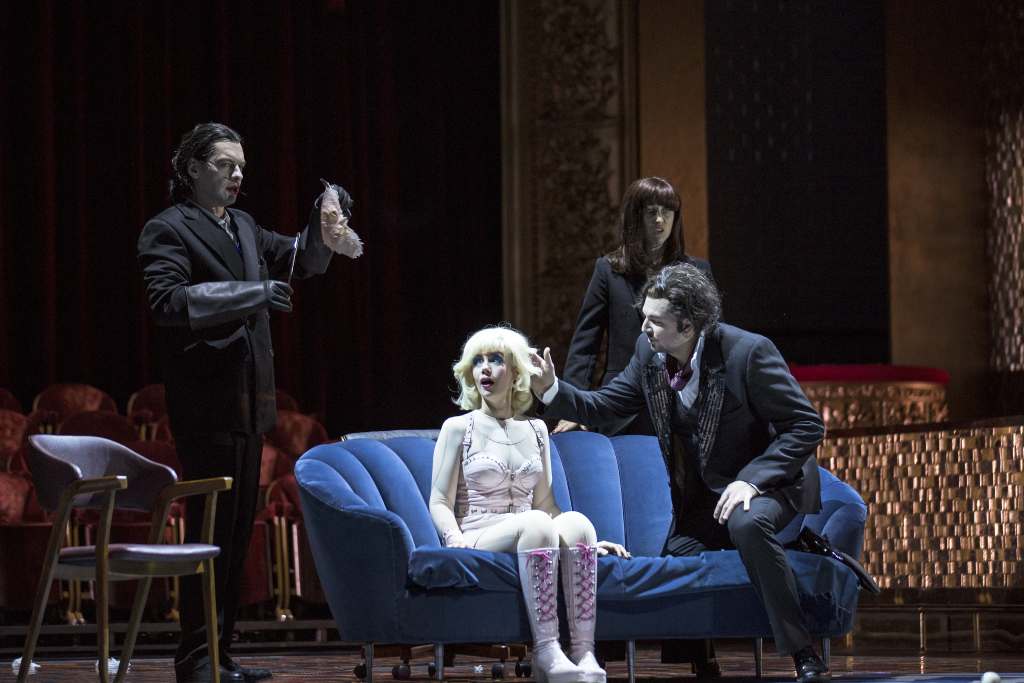
De Munt treats us to a production by the highly acclaimed director Krzysztof Warlikowski and his team, in which set and costume designer Małgorzata Szczesniak has been a fixture for years.
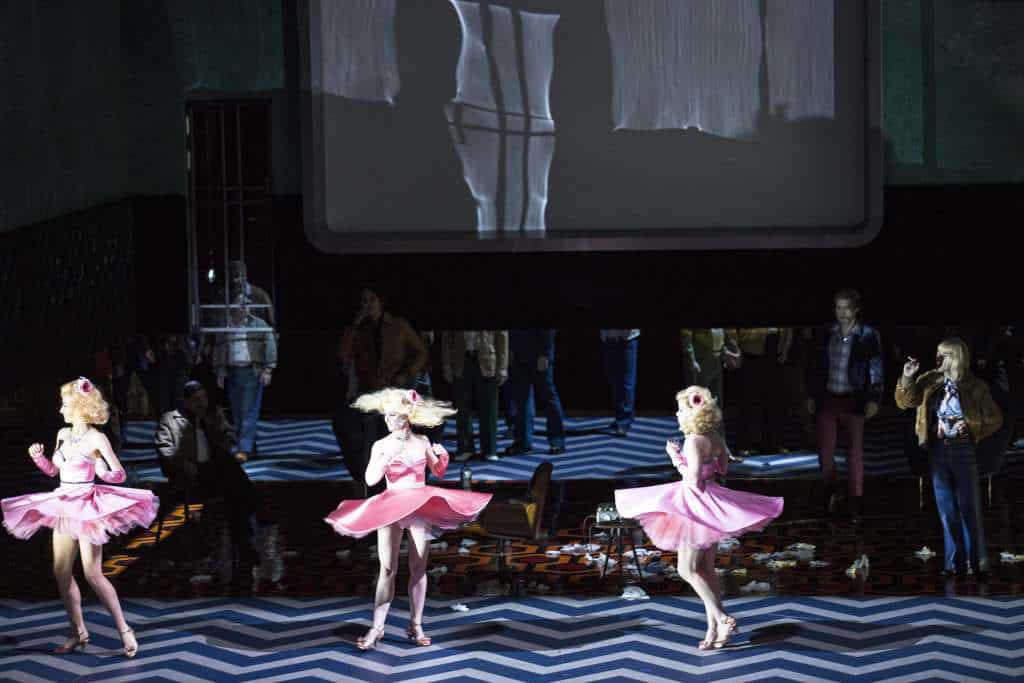
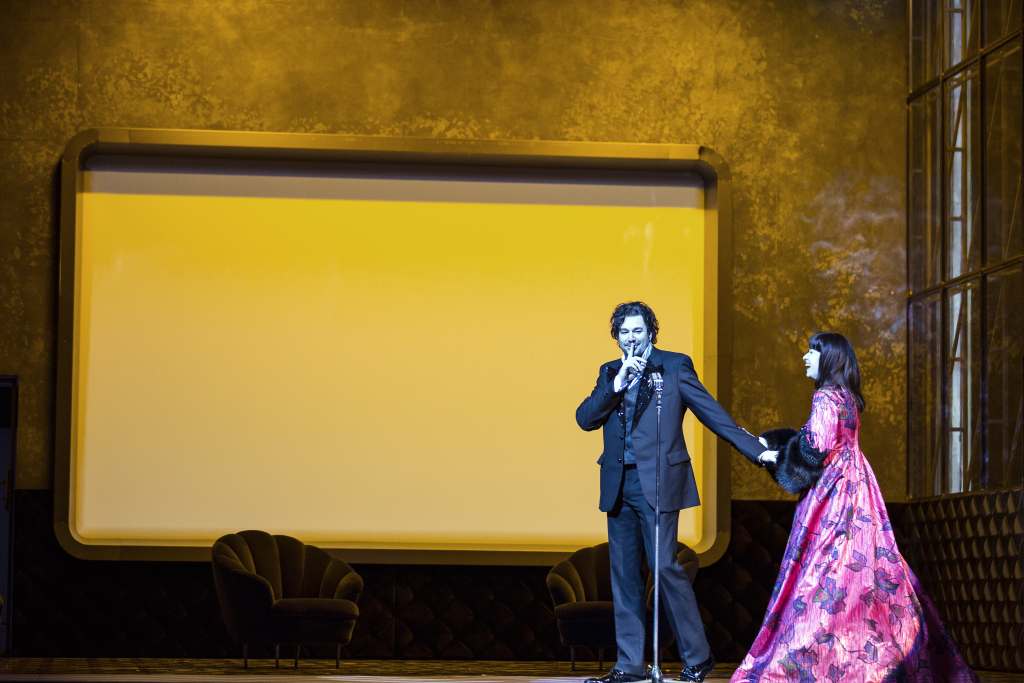
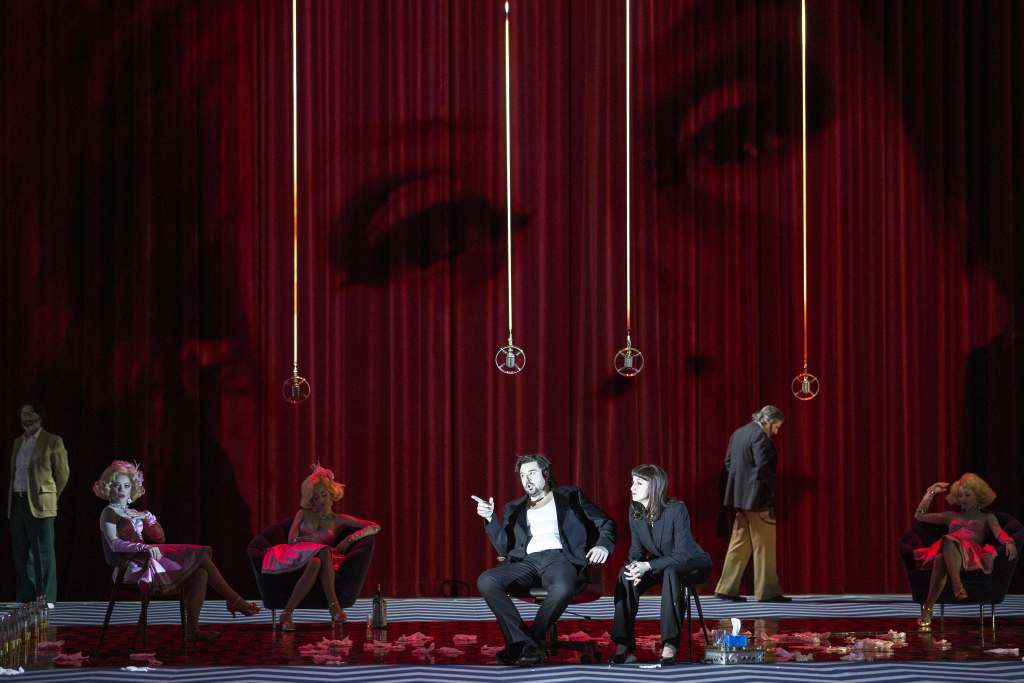
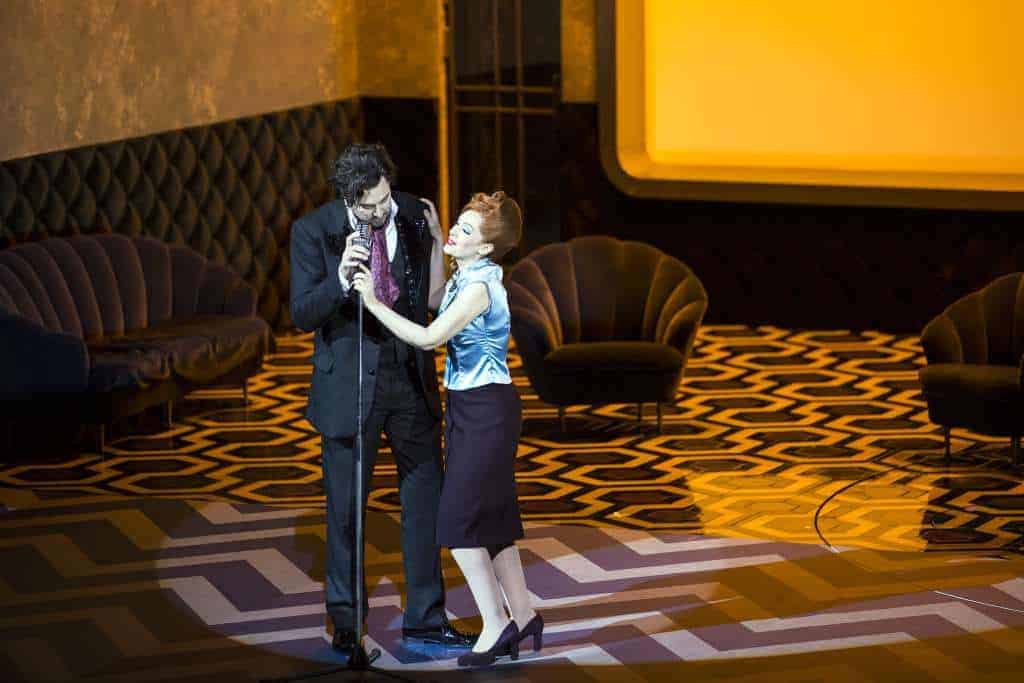
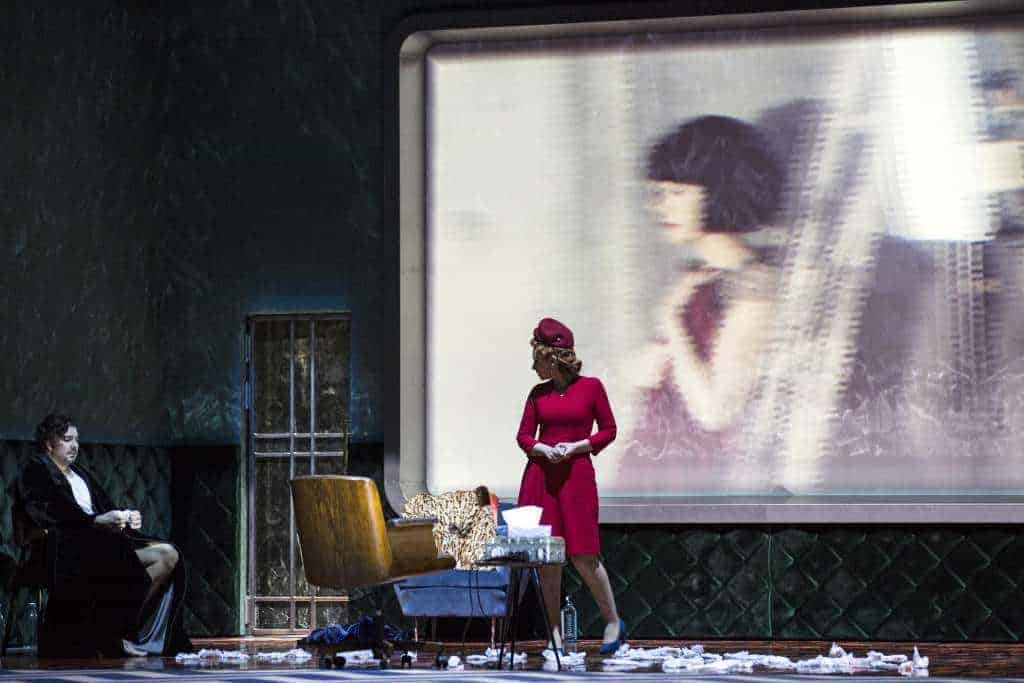
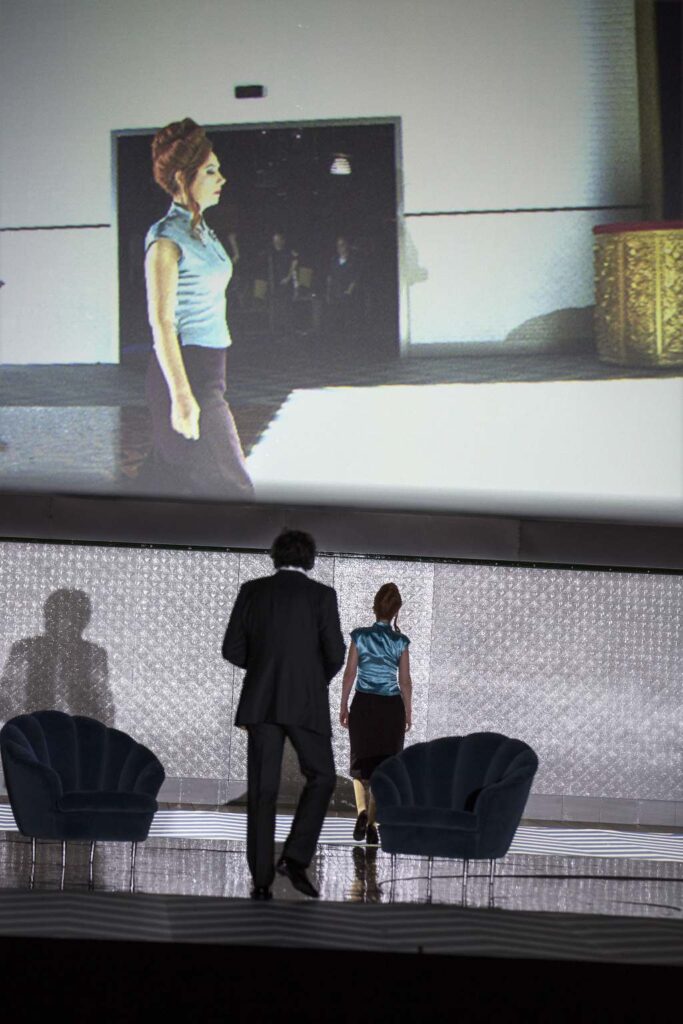
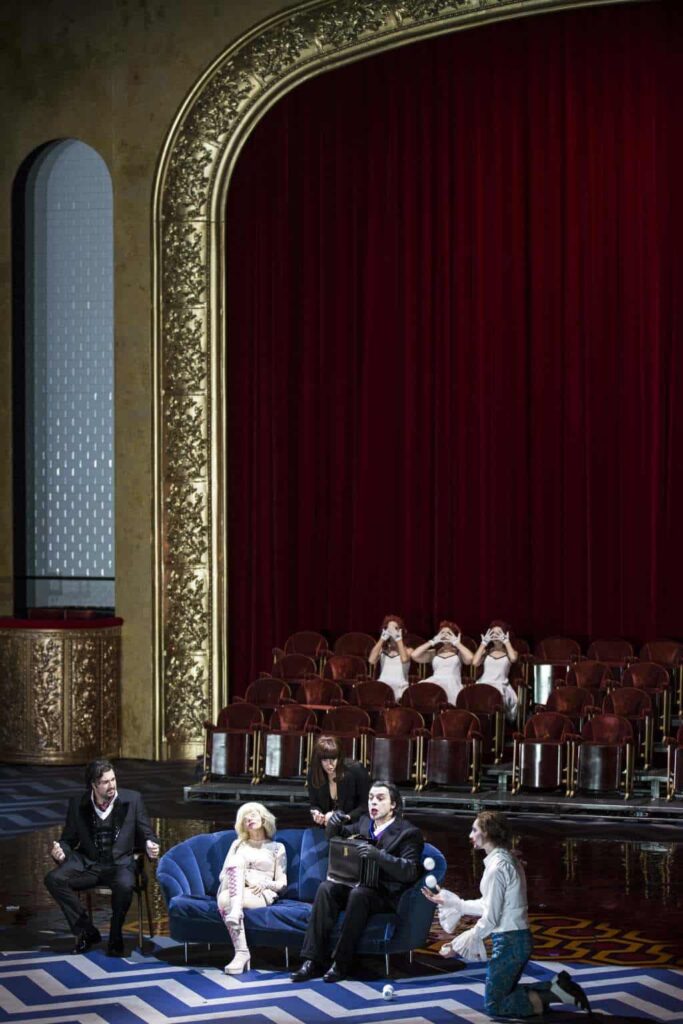
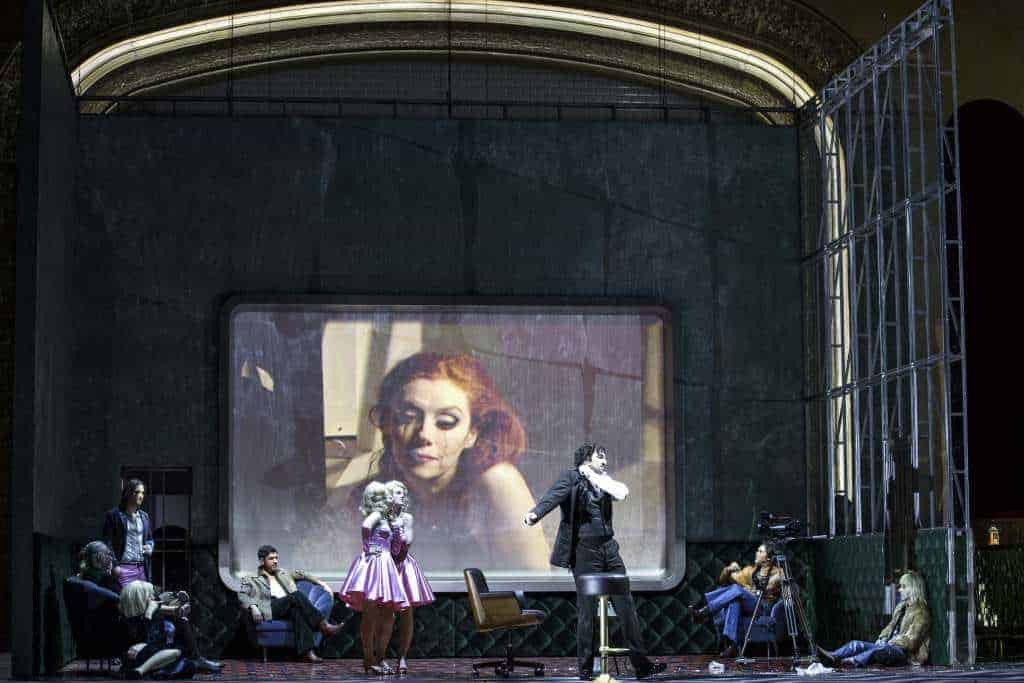
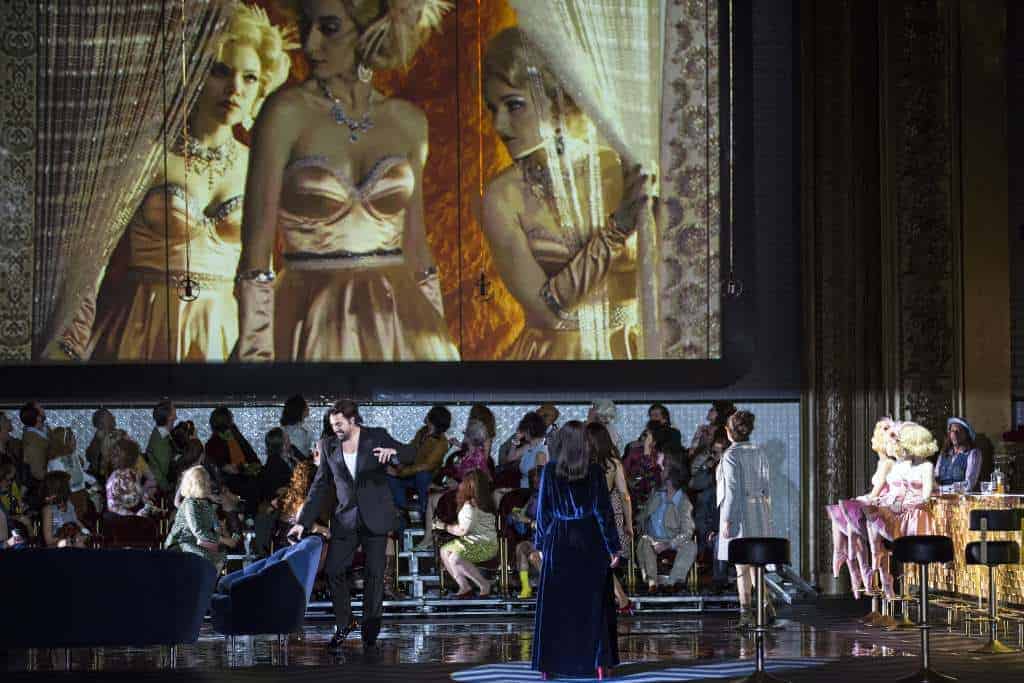
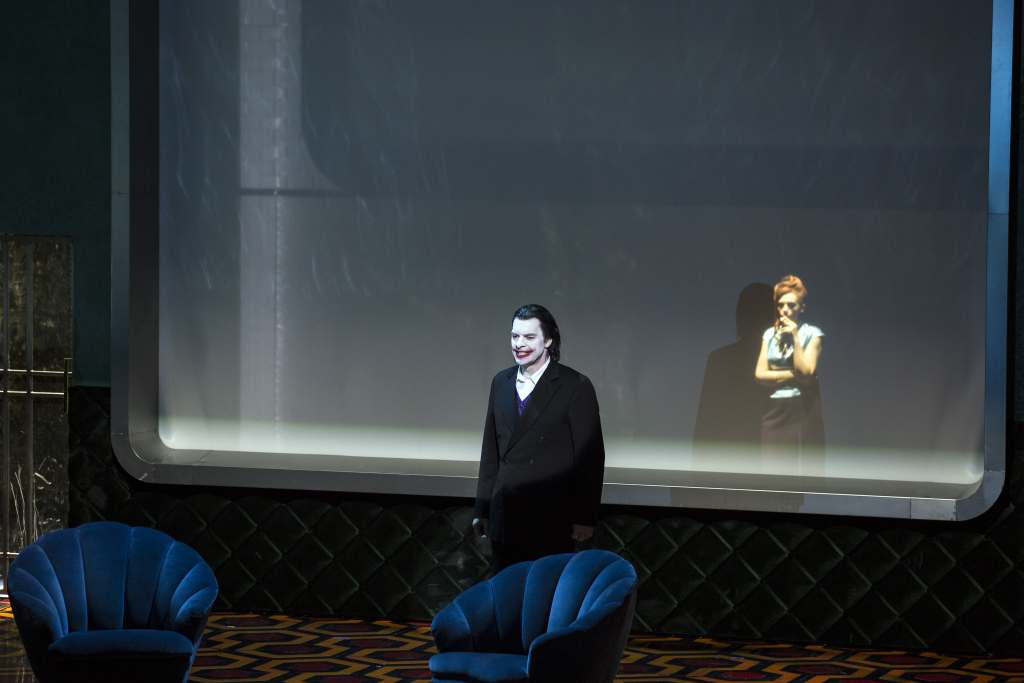
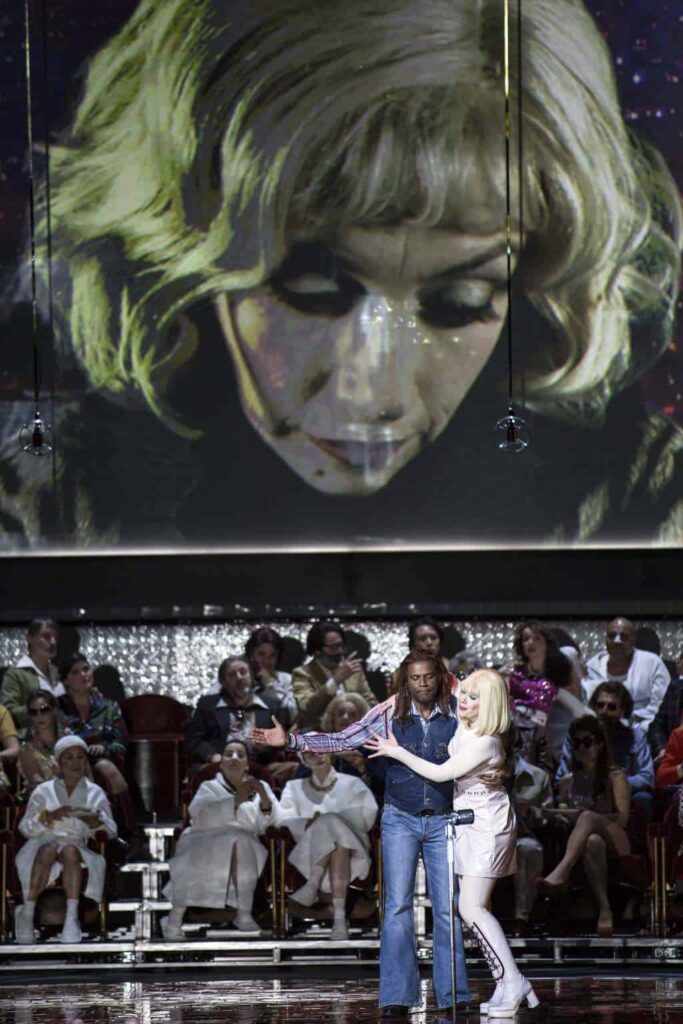
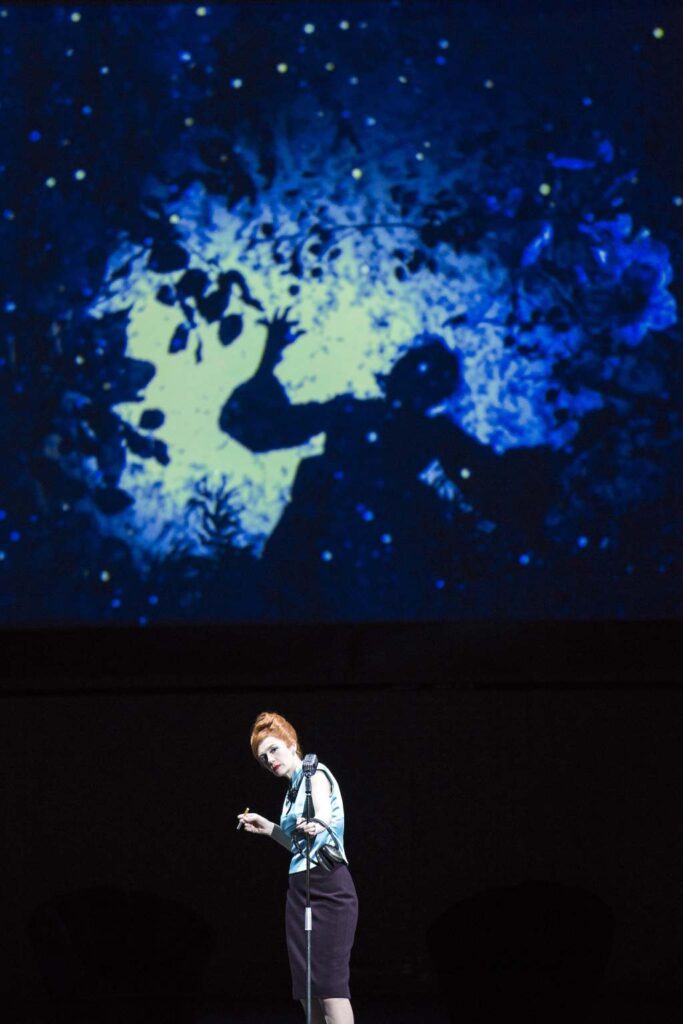
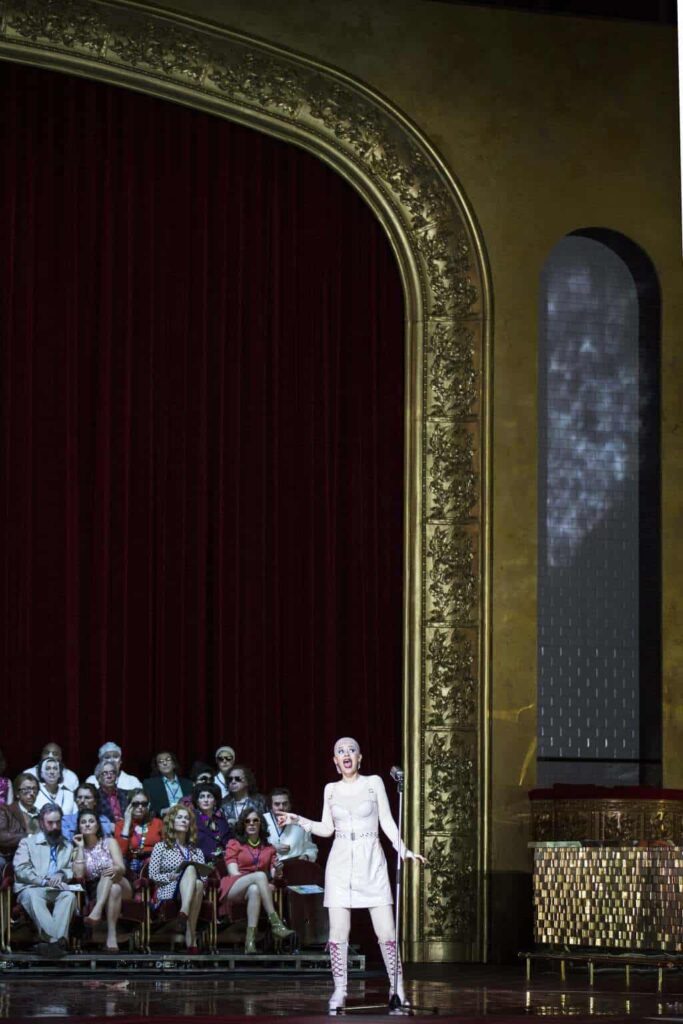
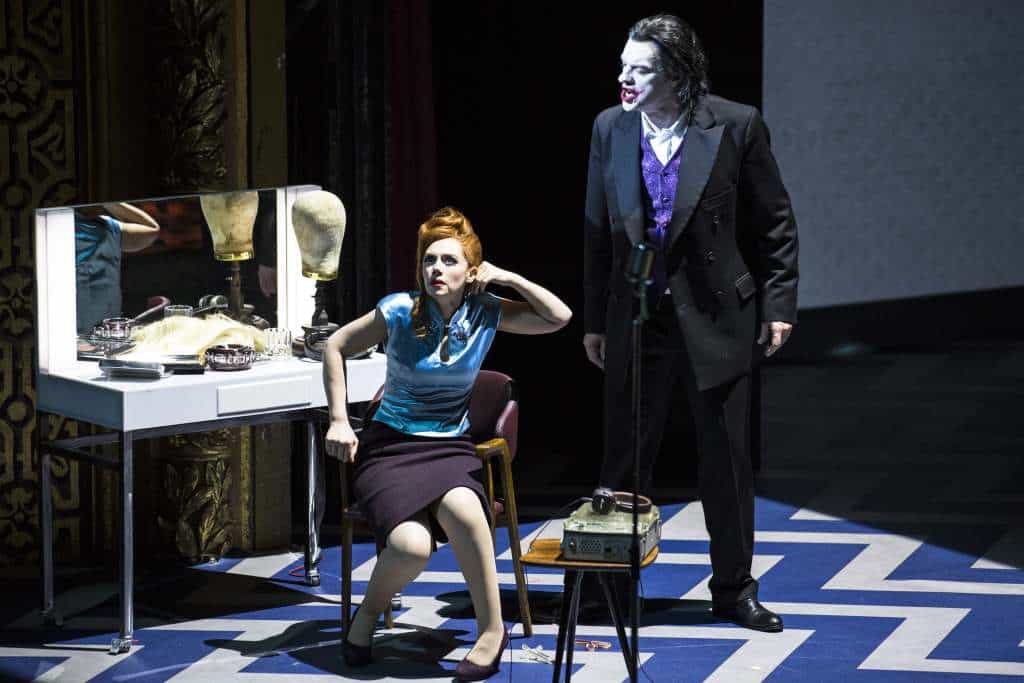
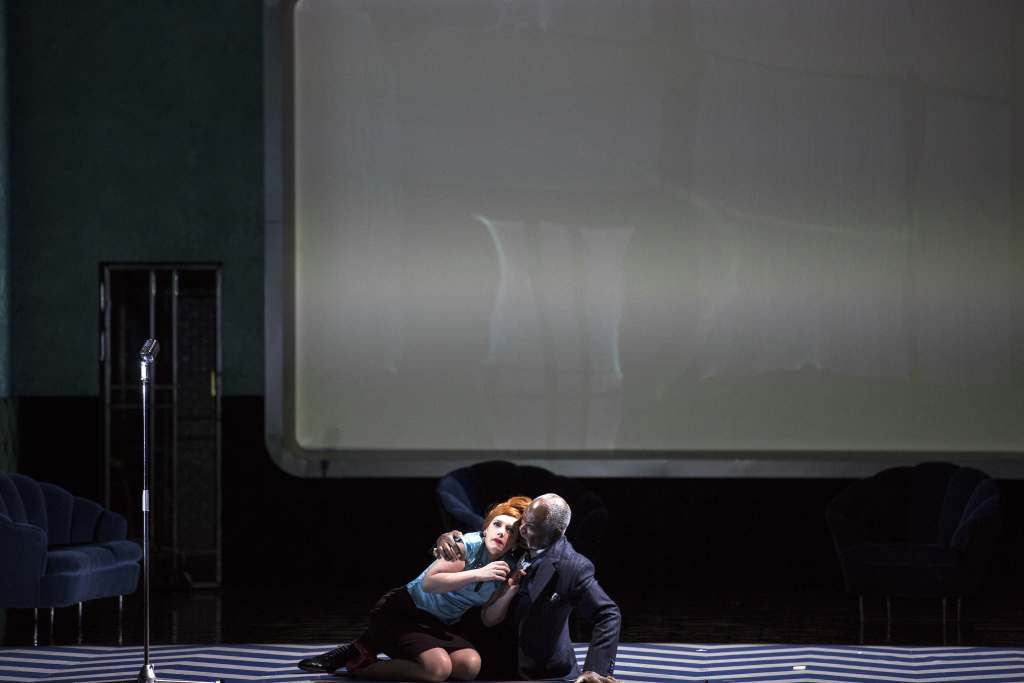
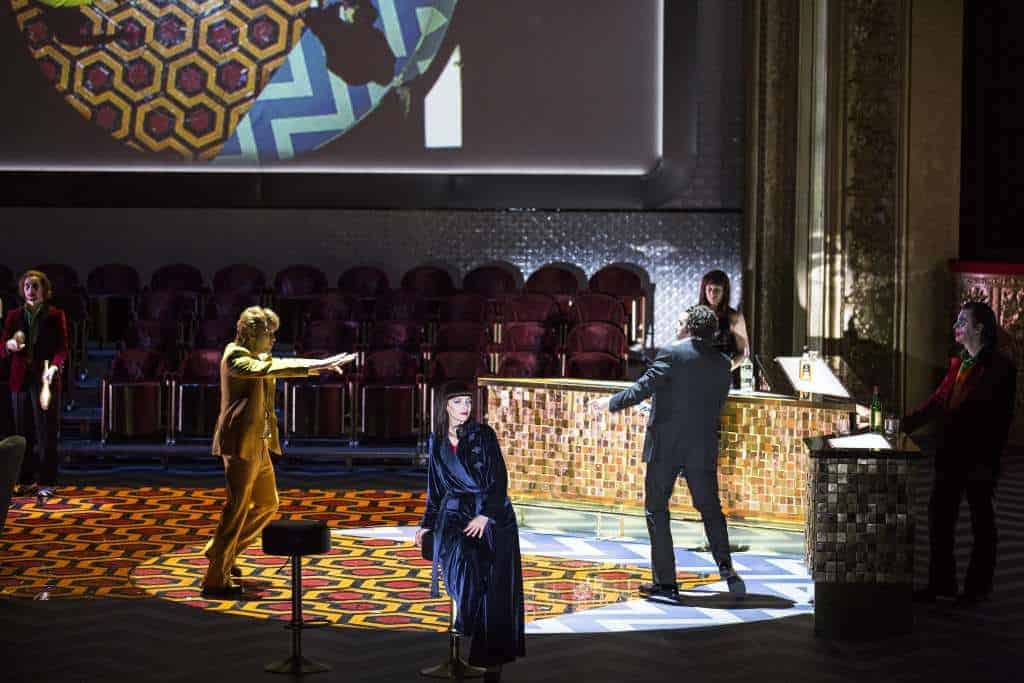
Warlikowski is fascinated by film, especially from Hollywood's golden age. It is therefore no surprise that he relocates the story to a film set, where Hoffmann not only acts as the lead and narrator recounting his own three love stories, but also directs the story of his life as a filmmaker. The Droste effect, like nested images on a cocoa tin. Warlikowski leaves no visual means untried to alienate the audience. All current image technology is deployed, but by also intervening in the action, he tries to keep the audience on their toes. For example, by closing the curtain during the final intermission and staging an Oscar ceremony.
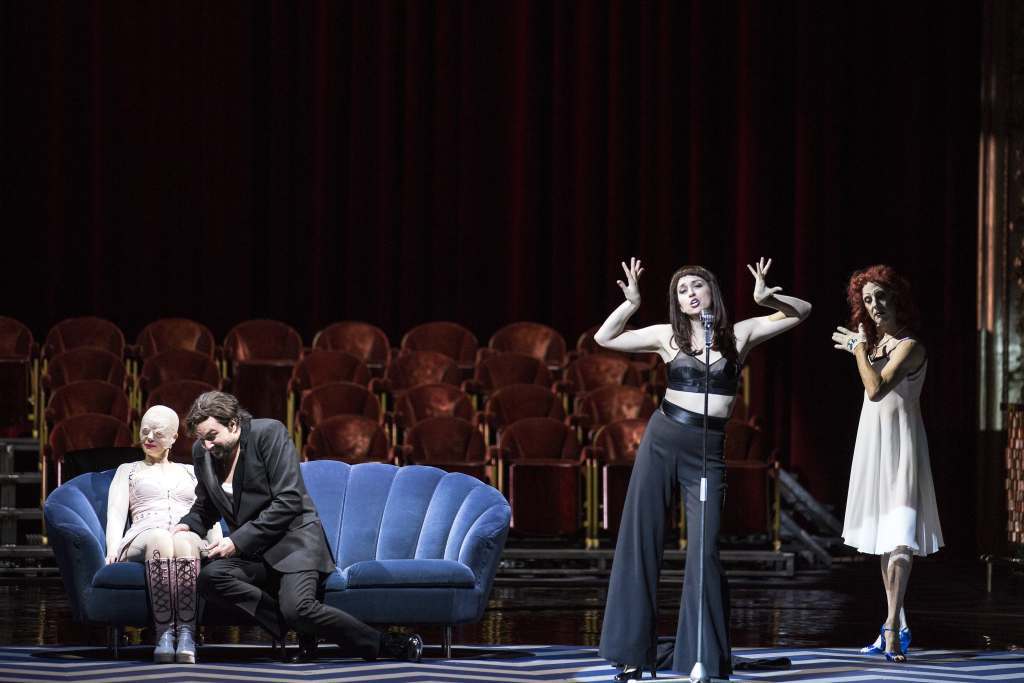
It all begins overwhelmingly: a busy film set with soloists, numerous extras, and a choir positioned behind a massive video screen. Microphones and cameras everywhere. It looks impressive, but also creates confusion and chaos. The projected images distract from what it's really about: barfly Hoffmann telling the three stories of his failed loves, surrounded by disreputable characters. Add to that the fact that you occasionally want to look at the supertitles, and it becomes clear that this is multitasking for the advanced.
That it also took some getting used to for the conductor, chorus, and orchestra was evident from the somewhat hesitant start, with a few imprecise entries here and there.
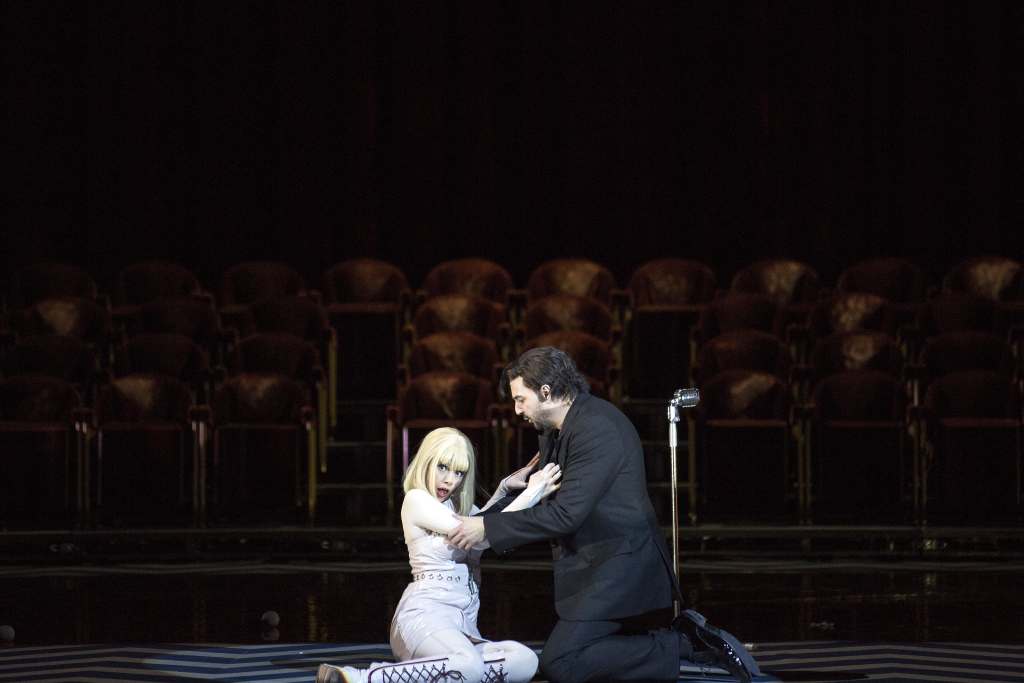
As the performance progresses, things calm down a bit. We see how Hoffmann's love for the doll Olympia ends in disappointment. French soprano Patricia Petibon takes on the four women in Hoffmann's life. She brings Olympia to life in the aria 'Les oiseaux dans la charmille' in a hilarious way, but perhaps a bit too comedic. Is that to hide the fact that she struggles to hit the coloratura notes for which this aria is so famous (and infamous)?
But even when in the third and fourth acts the mood definitively shifts and drama enters, she doesn't quite convince as the languishing Antonia—you miss the emotional depth—and as the ruthless Giulietta. Bringing this demanding role to a good end is an achievement in itself, but Petibon is not always on target. Does she have the right voice type for Offenbach's vocal acrobatics?
The exalted drunkard alias foolish Hoffmann is portrayed by the well-acting American tenor Eric Cutler, who struggled with his somewhat thin voice against the booming bass Gabor Bretz, who took on the four villains. And how! Bretz delivered an impressive performance. With him, the bad guys are really bad. He also has a particular stage presence. He is one of those soloists who fill the entire stage, even when standing somewhere in a corner. Eminence grise bass-baritone Sir Willard White is another, as is Sylvie Brunet-Grupposo, who beautifully portrayed her albeit small role as the voice from the grave of Antonia's mother. Michèle Losier was in her element in her dual role as Hoffmann's muse and companion Nicklausse.
For De Munt's chorus only praise. With their energetic performance, they brought the much-needed punch to the production.
And in the pit? There it seemed they mostly played it safe. It sounded a bit rough in places. It didn't really shine. It seemed as though conductor Altinoglu was having trouble getting his musicians on the edge of their seats. The refined instrumentation that characterizes this score didn't come through as well as it might have. But fortunately there are still ten more performances to grow into it!
Warlikowski's hypermodern approach leads not only to alienation but also to irritation. The question keeps popping up: how far can you really go in staging an 1881 opera? What does all this technology add to such a piece?
Such an approach applied to a written text or play, say Shakespeare, usually poses no problem. Ideas can be expressed in many ways. But with opera it's different. There the form is fixed. The composer has clearly indicated how he meant it all to be. And then there's always the music that reflects the spirit of the times and evokes a certain atmosphere. Offenbach is no exception.
Where is the line between Offenbach as staged by Warlikowski or Warlikowski's new vision set to Offenbach's music? And why does Warlikowski choose to use Offenbach's music at all instead of enlisting a contemporary composer to create a completely new Hoffmann? That would be true innovation!
While over the last fifty years classical music has made great efforts to bring performance practice closer to the original and the composer's intentions, opera seems to be moving in the opposite direction, with productions moving further and further away from the original. But does that old music really fit with those modern images? For me, that's where the greatest alienation lies. To judge by the success of this production, the audience has no problem with it.
When I caught myself this morning in the shower softly humming that moving aria 'Elle a fui, la tourterelle,' I could come to no other conclusion than that Offenbach has effortlessly made his case.
In about a hundred years, people will still be humming arias in the shower, but who was that Warlikowski again?
- WHAT: The Tales of Hoffmann by Jacques Offenbach
- WHO: Orchestra and Choir of De Munt, conducted by Alain Altinoglu
- PERFORMANCE SEEN: 10 November 2019, Muntschouwburg Brussels
- PHOTOS© Bernd Uhlig