I remember it like it was yesterday—the moment I rang the doorbell at Piet Swerts' place in Bertem in 1993. I had a camera crew with me to shoot a piece for the VRT News about this young composer. The reason was straightforward. He had won a prize at the Queen Elisabeth Competition. His "Zodiac" became the required piece for the final violin competition. It's not every day that an international jury selects a Belgian composer for such an honor. It was worth a spot on the News. the News .
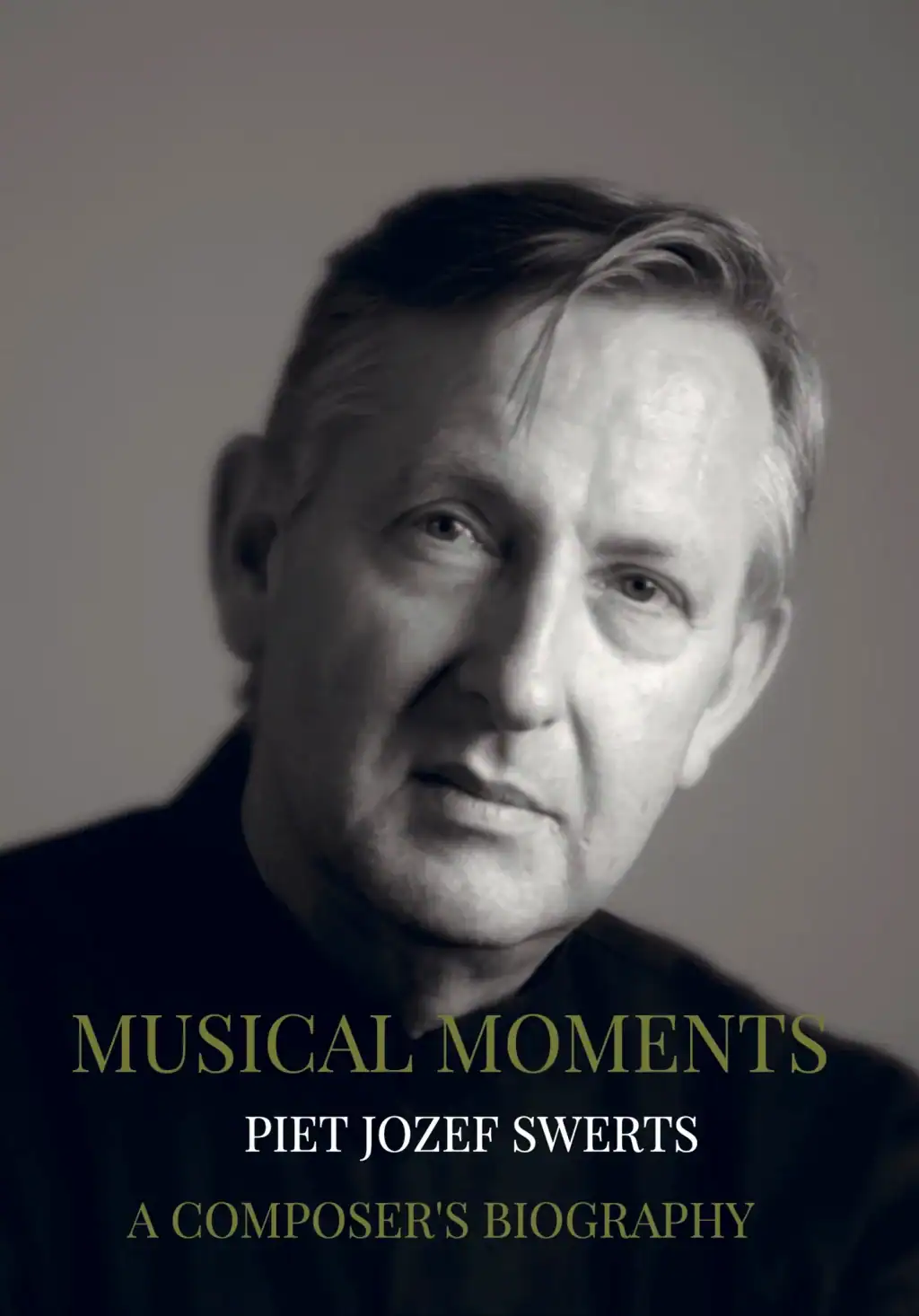
That memory came flooding back when I saw Piet Swerts recently during the final of the piano competition in the Bozar box, where he was handing over his book to Katelijne Boon during a panel discussion: "Musical Moments. Piet Jozef Swerts, a composer biography". Just like back then, Piet Swerts was beaming. Proud of what he had accomplished.
Not a heavyweight autobiography like the one André Laporte once wrote, but rather a meticulously written diary, almost a logbook, modest in scope. It's typical of the man, modesty personified. He describes it as a "rare glimpse into the inner workings of a professional composer". A retrospective then on a forty-year career of composing and—if you must know—of someone who turned sixty-five on November 14. From a brief family history we learn that he was a dreamy child and always wanted to be a writer, which he essentially still is: just with music instead!
The aha moment came when he heard the second theme from Bach at music school in Tongeren—just ten years old—and it was like "an explosion in my head." From that point on, he wanted to "make music," go to Lemmens in Leuven, where "one of the most beautiful and reckless periods of my youth began." It was pure joy and it came naturally. His talent became apparent quickly, he developed a Lutoslawski obsession, sprinkled with Debussy, and threw himself into composing, performing, and winning prizes: the Lemmens-Tinel Prize, the Baron Flor Peeters Prize, and in 1987, winner of the Queen Elisabeth Composition Competition. Well-Tempered Clavier With the commissioned work "Rotations" for the finalists of the piano competition, he gained national recognition and his name was made. Although he often got to turn the pages for his great role model and piano teacher Robert Groslot, becoming a concert pianist was no longer his dream—composing was his calling. And his crowning achievement came in 1993 with his violin concerto. It was another prize as the set work for the finalists of the Elisabeth Competition. He calls it a professional turning point that opened up new international opportunities. Swerts talks openly about where he draws his inspiration from, about the power of inspired improvisation, and describes how music sometimes simply writes itself: "Musical works have their own living world with their own rules. As a composer, you have to let it run its course, even if that's not what you would have wanted at all." He illustrates this with a beautiful story about his song cycle "Les Roses": "...it poured out like a flood, unstoppable (...) the music dictated itself."But composing isn't just about creative frenzy. Another quote makes that clear: "Sometimes you also learn how technical and with almost mathematical proportions the composition process is constructed."This isn't a dry rundown of how he wrote all these works—no, you get swept up in the composer's constructive mind. How those 24 "Straight Strung Sonatas" came to life on that new Maene piano, how that grand war oratorio "A Symphony of Trees" was created, that ethereal "Elegia" from his clarinet quintet. It's also worth noting that few people know he's written extensively for saxophone and wind band. They read like confessions, take the brief but moving In Memoriam for Wim Henderickx. One more thing about "". It was pure pleasure and it just flowed naturally. His talent became apparent quickly; he developed a Lutoslawski obsession, sprinkled with Debussy, and began composing prolifically, performing, and winning prizes: the Lemmens-Tinel Prize, the Baron Flor Peeters Prize, and in 1987 winner of the Queen Elisabeth Composition Competition.
With the assigned work "Rotations" for the finalists of the piano competition, he gained national recognition and launched his name. Although he often got to turn the pages for his great mentor and piano teacher Robert Groslot, becoming a concert pianist was no longer his dream—composing was his thing. And the crowning achievement came in 1993 with his violin concerto "Zodiac"It was another prize win with the required work for the Elisabeth Competition finalists. A professional turning point, as he calls it, that opened new and international opportunities.
Swerts talks without inhibition about where his inspiration comes from, about the power of inspired improvisation, and describes how music sometimes just comes: "Musical works have their own living world with their own laws. As a composer, you have to let that take its course, even if that's not what you would have wanted at all." He illustrates that with the beautiful story about his song cycle The Roses, "…it poured out like a gush, relentlessly (…) the music dictated itself". But composing doesn't only happen in a creative frenzy. Another quote makes that clear: "Sometimes you also learn how technical and almost mathematical the proportions are in the composition process itself.”
It's not a dry rundown of how he wrote all those works, no, because you get swept up in the composer's constructive mind. How those 24 "Straight Strung Sonatas" were born on that new Maene piano, how that grand war oratorio "A Symphony of Trees" came into being, that ethereal "Elegia" from his clarinet quintet. By the way, it's little known that he also wrote extensively for saxophone and concert band. They read like confessions, take the short but moving In Memoriam for Wim Henderickx. One more thing about "Piet SwertsStraight Strung Sonatas” were born on that new Maene piano, how that grand war oratorio “A Symphony of Trees” came into being, that ethereal Elegy ” from his clarinet quintet. Incidentally, little is known about the fact that he also wrote extensively for saxophone and wind orchestra. They read like intimate confessions, take the short but moving In Memoriam for Wim Henderickx. One more thing about “Glory to Ukraine!" is a Peace Hymn that testifies to his commitment, together with his Ukrainian wife, to the victims of the war in that country.
A completely open book in which a humble and sincere musician lays himself bare, along with his music. With so many fragments you can listen to thanks to the many QR codes the book contains. Certainly useful and necessary, as we hear far too little from many contemporary Flemish composers in our concert halls and on our broadcasters.
- Product code (EAN): 9789465128917
- Publication date: April 4, 2025
- Format: hardcover