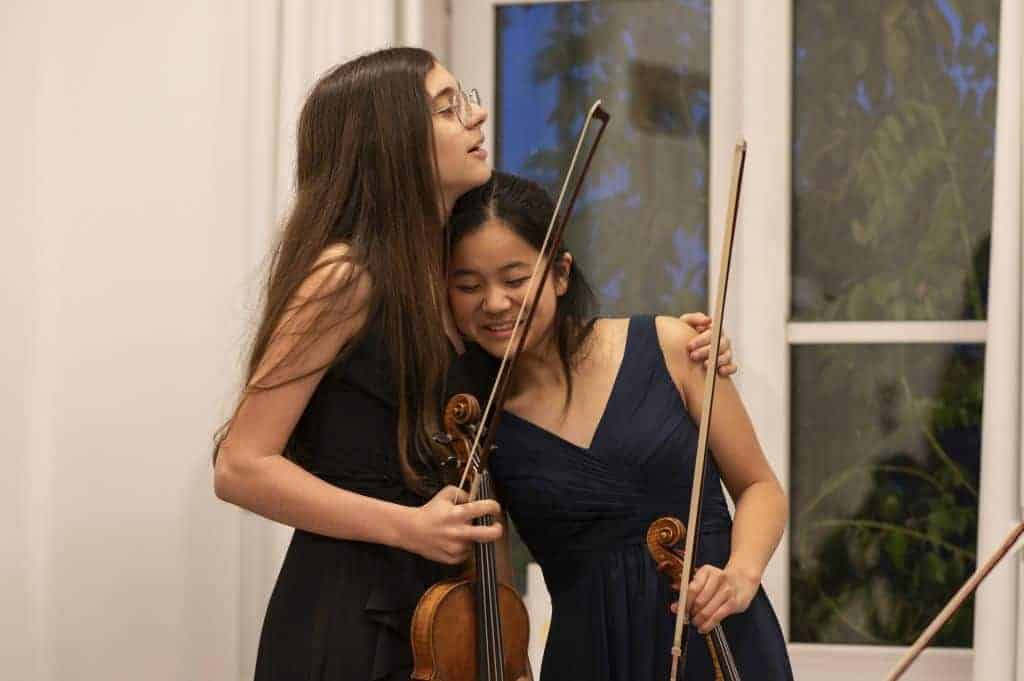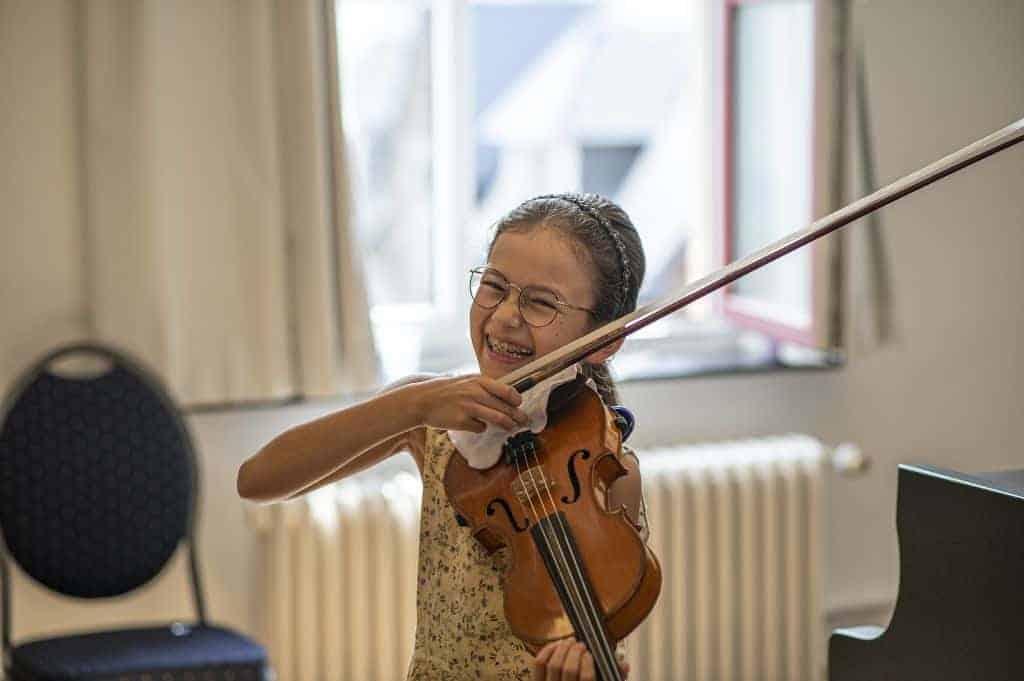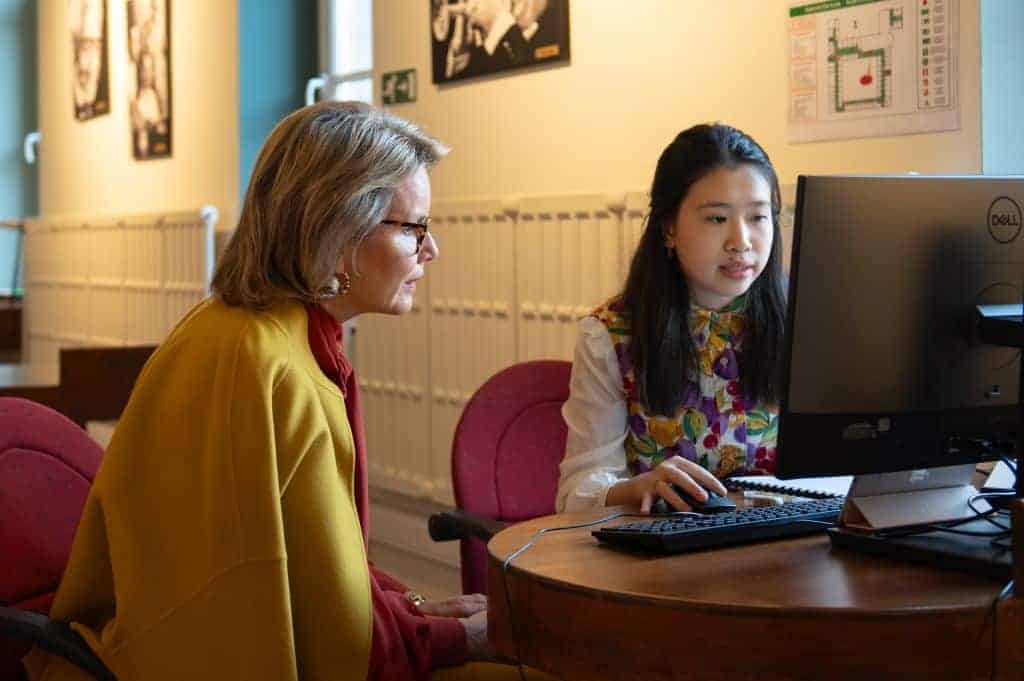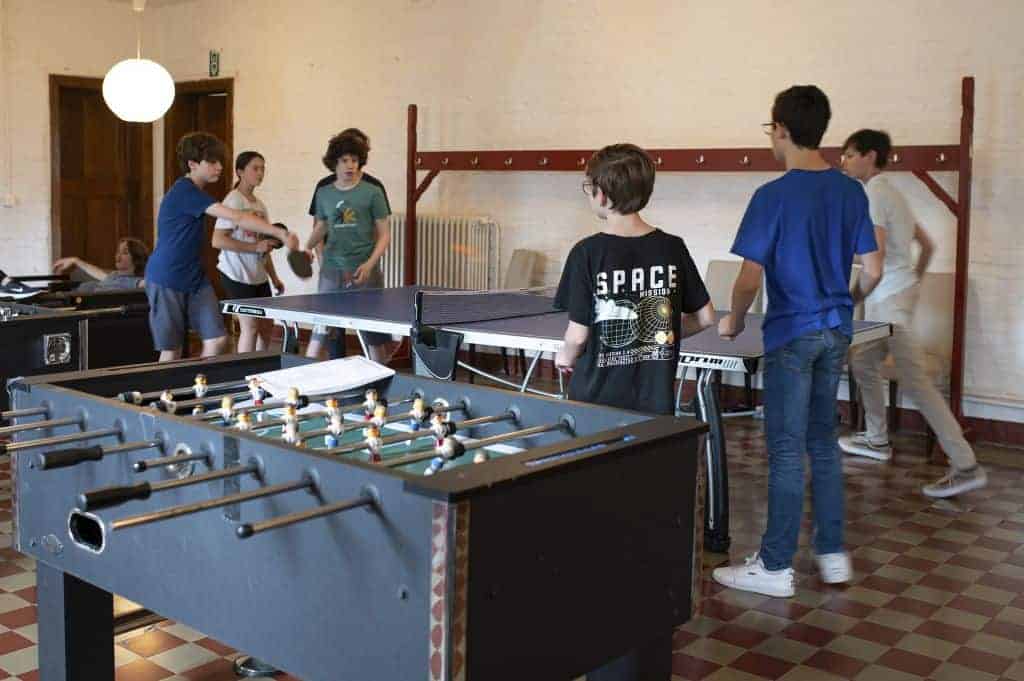

Who would have thought that somewhere in Waterloo, where once the ground was soaked with soldiers' blood, there stands an abandoned monastery that today houses a world-class music school for gifted young talents? It all started more than 25 years ago with the Musica Mundi Festival & Course at Lake Genval. What began as a concept evolved into a massive project that brings together exceptionally gifted young people from all corners of the globe to build the strongest possible foundation for a professional musical career.
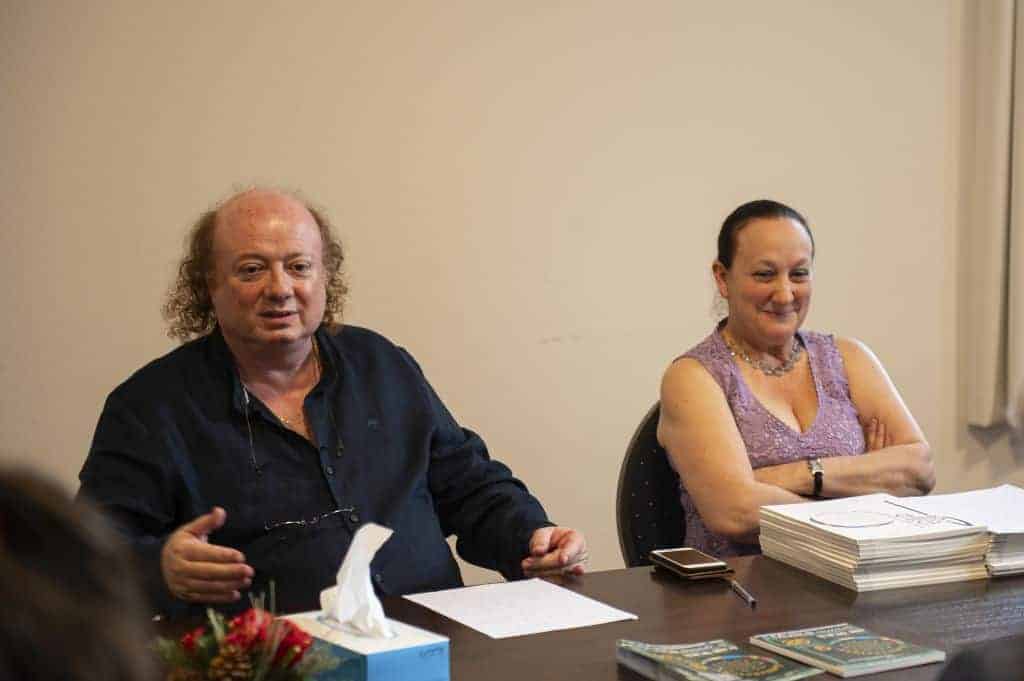
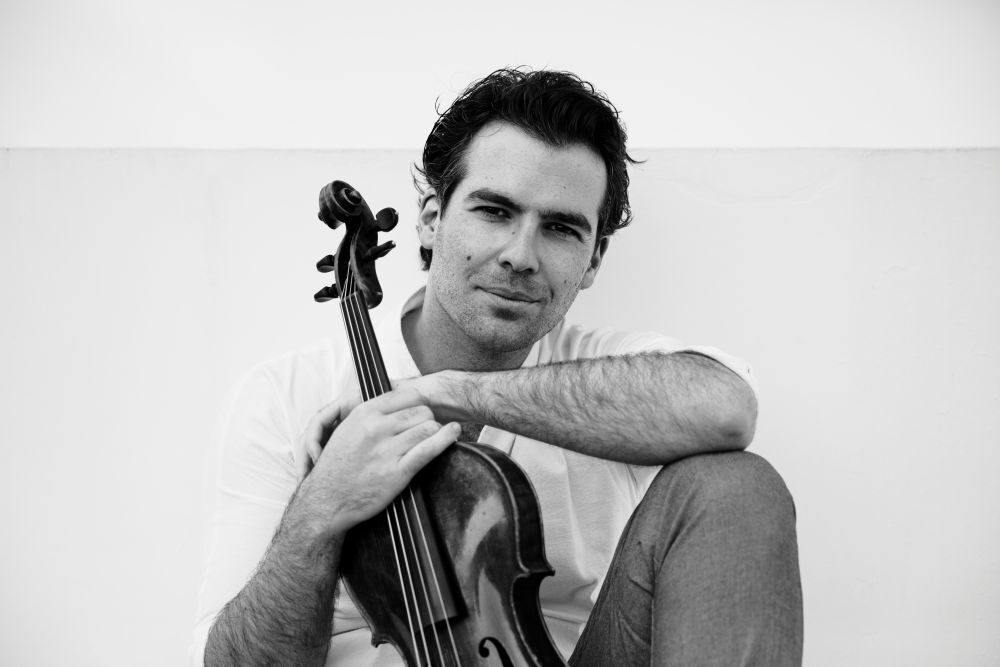
Leonid Kerbel and Hagit Hassid-Kerbel
The driving forces behind the institute—which celebrated its fifth anniversary in 2023—are pedagogue and violinist Leonid Kerbel and his wife, pedagogue and pianist Hagit Hassid-Kerbel. As a child, Leonid was fortunate to receive advanced training as a 'child prodigy' in the former USSR. To this day, Russia maintains schools specifically for exceptionally gifted children. These are children whose talents sometimes don't fit the conventional education system, which can lead them to completely lose their way as adults in a world where they couldn't develop their abilities. Through such talent schools, regardless of the discipline, that doesn't have to happen—and the results are remarkable. The education is tailored to the child's talent and maturity, which sometimes far surpasses that of ordinary adults, while still remembering that this is a child who needs to play, who deserves to be a child, despite their special gifts.
Schools like this don't really exist in Europe. In Flanders, for example, there is a talent school for athletes that might work in a similar way. There is the Arts Humanities program, but it's not quite sufficient for those exceptional talents we're talking about here: classical musicians.
"Music above all else"
This gap was—and still is—a problem many have grappled with. Leonid and his wife Hagit were among them. Shortly after launching the festival in 1998, the musical couple saw the need to establish such a school in Belgium, a country that could be seen as a kind of international hub. The courses attached to the Musica Mundi Festival lasted only two weeks—and note that these weren't your typical masterclass formula. They were extremely intensive, but the work was never finished. Two weeks is something, but it's simply too short, too limited.
Leonid and Hagit Kerbel were determined to make their vision happen, no matter what. How? Where? Who? Music would be the guiding light—music first and everything for music. General music education is readily available, as are conservatories, but can you really draw out everything from these exceptionally gifted children and young people within existing structures? To ask the question is to answer it, and the answer was clear: there's a need for an institute, a school where children can come from anywhere in the world to develop their talent as intensely as possible without neglecting the necessary general education.
An ambitious project. When you have to start from scratch? Nearly impossible. The Kerbels started from almost nothing, though not quite—they could draw on Leonid Kerbel's experience with what existed in the USSR and, moreover, he had traveled around much of the world studying music education systems in various schools and conservatories at multiple levels, comparing them, extracting the weaknesses and strengths, and connecting these insights to shape the overall educational framework. A rock-solid foundation upon which an ever-evolving pedagogical vision was built and continues to be refined as needed.
Ten to eighteen-year-old top talents at Musica Mundi School
Not everyone gets a chance; genuine talent must be present, and while those with innate talent are prioritized, exceptionally motivated young people without it may also be admitted to this selective student body.
 Leonid Kerbel:
The Musica Mundi School is recognized as a Cambridge School. This means that students who complete their studies at the school can be admitted to any music conservatory or university in the world, since the Cambridge diploma is recognized worldwide. While in their general studies students are grouped by age, in music studies they are not placed in classes by age category but in classes with other students at the same level. This means an 11-year-old can sit alongside a 17-year-old in music history or harmony. We want to guide our students optimally in their musical and intellectual development, and the Cambridge system seemed best for our students. They are often far ahead of their peers in certain respects. Not only musically, but also in other intellectual areas.
We chose young people who have essentially completed primary school. You could compare it roughly to secondary education in terms of age, but not in terms of teaching methods and content. We pay great attention to finding the perfect balance between musical and general academic education. That's what it's ultimately about. We train musicians at our school. Mind you, we don't want to train average musicians. The goal is to draw out the maximum and more from our young people through a very personalized form of teaching. The intensive music study combined with general education is so strong that anyone who earns their final diploma from Musica Mundi School will be readily accepted into higher music programs anywhere in the world.
Musically, we teach them not only to play their instrument like the best, but we teach them to listen, we teach them to understand that they are the performers of a creation that passes through them to the audience. Musicians who choose a solo career often become too much of a soloist and don't always listen well to the accompaniment, whether it's a piano or a full symphony orchestra. That's why we emphasized chamber music from the beginning in the courses that are part of the Musica Mundi Festival. It's all one thing, festival and courses. This ensemble playing is central to music education alongside giving plenty of concerts for the public. This ranges from class concerts to concerts in the country's grand halls, for unknown listeners as well as well-known personalities. If you've learned to listen, you're already one step ahead in becoming a soloist.
Donate – Patronage
Hagit Hassid-Kerbel who, in addition to teaching, oversees the finances such as patronage and donations, tells us with passion and shining eyes that the school does everything in its power to offer every suitable candidate student every opportunity to take lessons, no matter how far from home, no matter how poor or wealthy the parents may be. Of the 48 students, only 5 have parents who can fully cover the actual enrollment cost. Others pay part of the high sum. The amount to be paid is calculated based on income using tax returns.
This school year 2023-24 there is one foreign student whose sole parent – the child is half-orphaned – has no income. Through scholarships and patronage, the costs are covered. That's remarkable: the child in question must not become a victim because there's no money at home. Now they can flourish and are offered a future. That's powerful.
It touches the woman, her motherly heart speaks, as does the heart of the artist who believes that every child with talent, who is highly gifted, must be given every opportunity regardless. For that, donors are needed. These can be large donations, but also small ones, because many small contributions make a large one, and so another talent can develop. Anyone who feels called to make a one-time or ongoing donation can contact Musica Mundi School, hagit@musicamundischool.org tel: +32 495 20 05 95.
LINK: https://musicamundischool.org/